


Course Reviews
Vietnam’s Hoiana Shores and Da Nang’s Best Golf Courses
Explore 33,000+ golf courses in 180 countries.
Follow the latest news and trends in golf.
Connect with like-minded golfers.
Find everything you need for your golf equipment and gear needs.
Travel, golf resorts, lifestyle, gear, tour highlights and technology.
All Square
Suggestions
Course Reviews
Vietnam’s Hoiana Shores and Da Nang’s Best Golf Courses
Destinations
Monte Rei Enters a New Era: Deep Renovation to Preserve a Legendary Course
Course Reviews
Bernardus Golf: Europe’s Modern Masterpiece
Clubs
The New Phantom: Scotty Cameron Reinvents Its Mallet Legacy
Clubs
Gary Woodland’s Winning WITB at the 2026 Texas Children’s Houston Open
Clubs
Matt Fitzpatrick’s Precision Triumph: Winning WITB at the 2026 Valspar Championship
Course Reviews
Streamsong’s Newest Masterpiece: Why Bone Valley Might Be Its Boldest Statement Yet
Clubs
Cameron Young’s Winning WITB at the 2026 Players Championship
Clubs
Akshay Bhatia’s Winning WITB at the 2026 Arnold Palmer Invitational
Course Reviews
Argentario Golf & Wellness Resort: Tuscany’s Championship Gem
Clubs
Nico Echavarria’s Win: Inside the WITB at the 2026 Cognizant Classic
Clubs
TaylorMade Introduces Qi Max and Qi Max HL Irons: A New Era for Game-Improvement Performance
Destinations
Golf Trip to Casablanca: Morocco’s Atlantic Golf Escape
Clubs
Jacob Bridgeman Breaks Through at Riviera: WITB Behind His Genesis Invitational Victory
Destinations
24 Hours at a Luxury Golf Resort: A Day in Paradise
Destinations
Golf Resorts Perfect for a Proposal or Honeymoon
Course Reviews
The Best Golf Courses Near Pinehurst That Aren’t Pinehurst No. 2
Course Reviews
The Els Club Vilamoura: Golfing Grandeur in the Algarve
Destinations
Spring City Golf & Lake Resort — Golf and Lakeside Serenity
Destinations
Golf Trip to Agadir: Swinging Under the Moroccan Sun
Course Reviews
A Golf Trip to Pebble Beach: The Ultimate Coastal Golf Experience

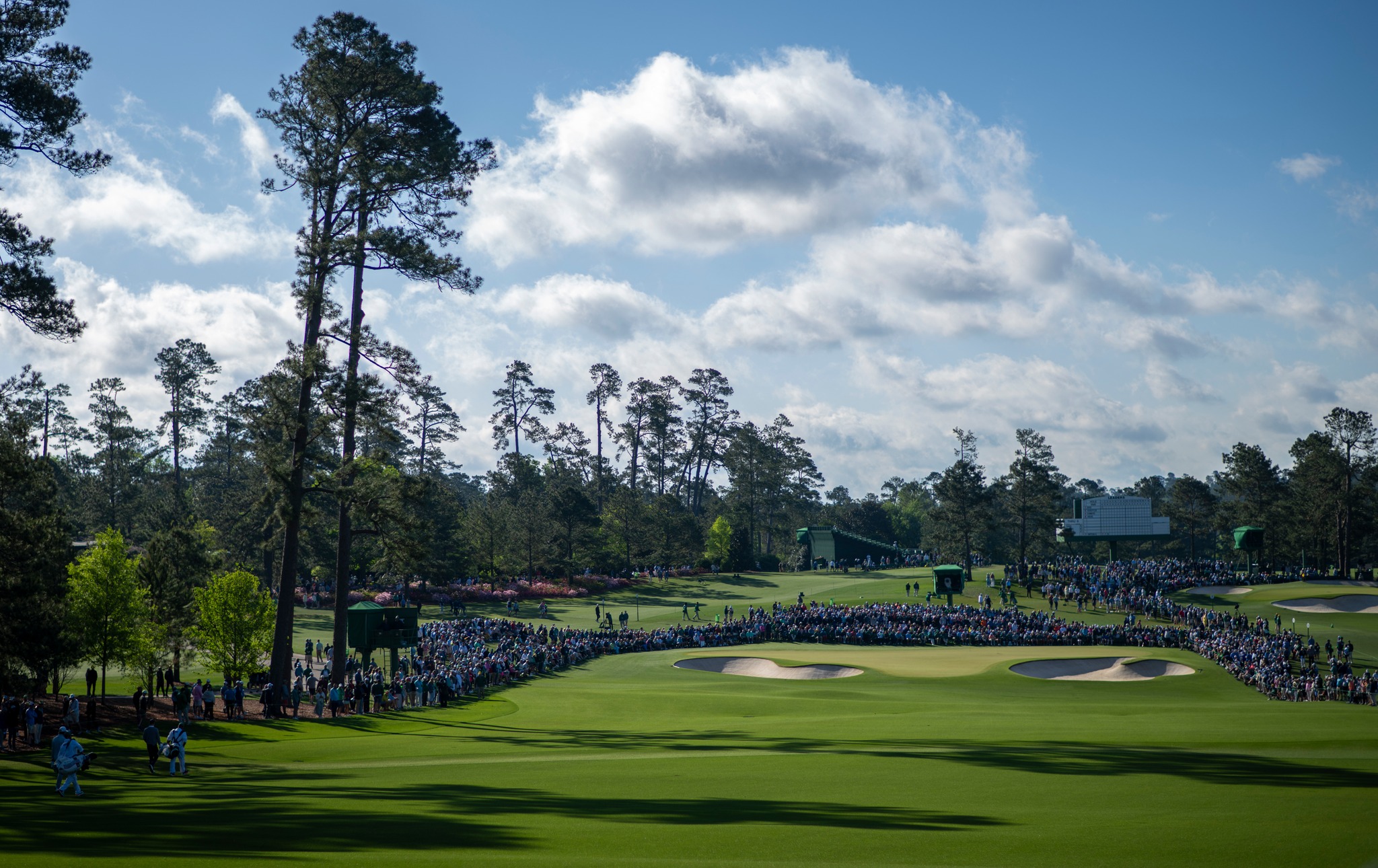
Ninety years. That is how long the world’s finest golfers have walked beneath the Georgia pines at Augusta National Golf Club, and in 2026, the 90th Masters Tournament arrives carrying the kind of quiet electricity that only this place can generate. The course, the history, and the traditions all return. But so does change, because Augusta never truly stands still.
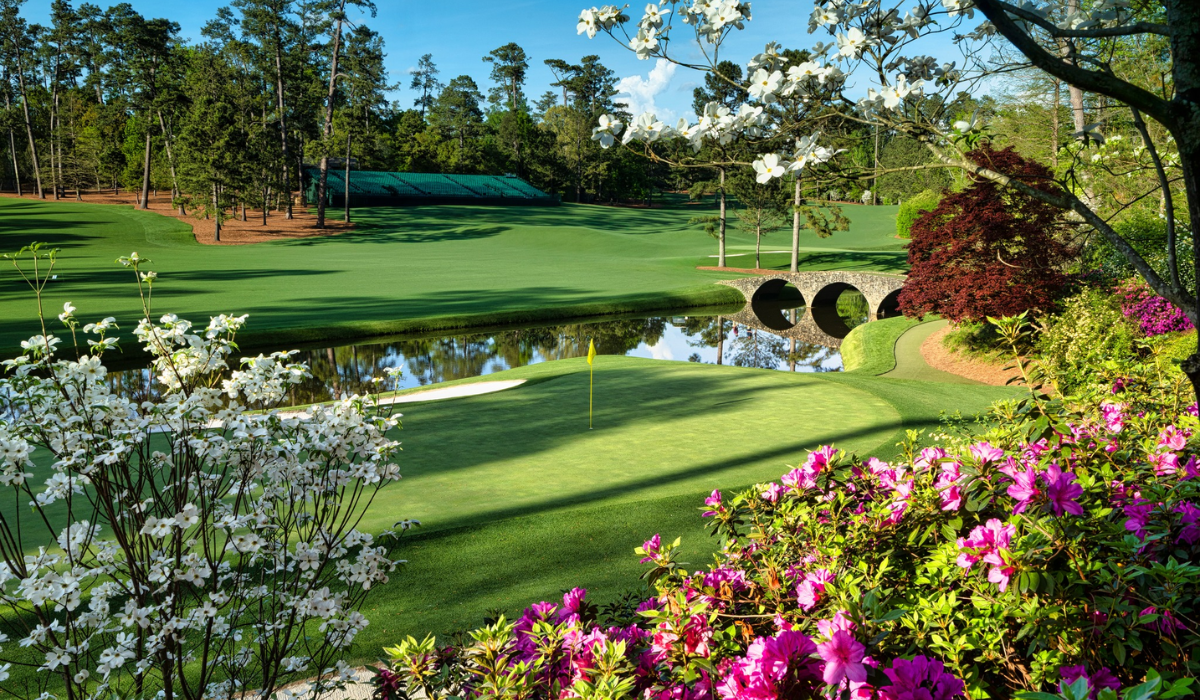
Augusta National was never meant to be a museum. Conceived by Bobby Jones and Alister MacKenzie in the early 1930s on a former plant nursery, the course has always been a dynamic organism — pruned, lengthened, and refined with each passing decade to meet the demands of an evolving game. The 2026 Masters celebrates the tournament’s 90th edition with a field of 91 competitors, including defending champion Rory McIlroy, whose 2025 playoff victory over Justin Rose completed his career Grand Slam.
The par-72 layout stretches to 7,565 yards in total, and six amateurs join 85 professionals in a field shaped equally by invitation tradition and on-course merit. As always, Augusta’s changes ahead of the tournament are deliberate and understated — but their implications ripple through every swing plan, every strategy board, and every swing thought among the world’s best.
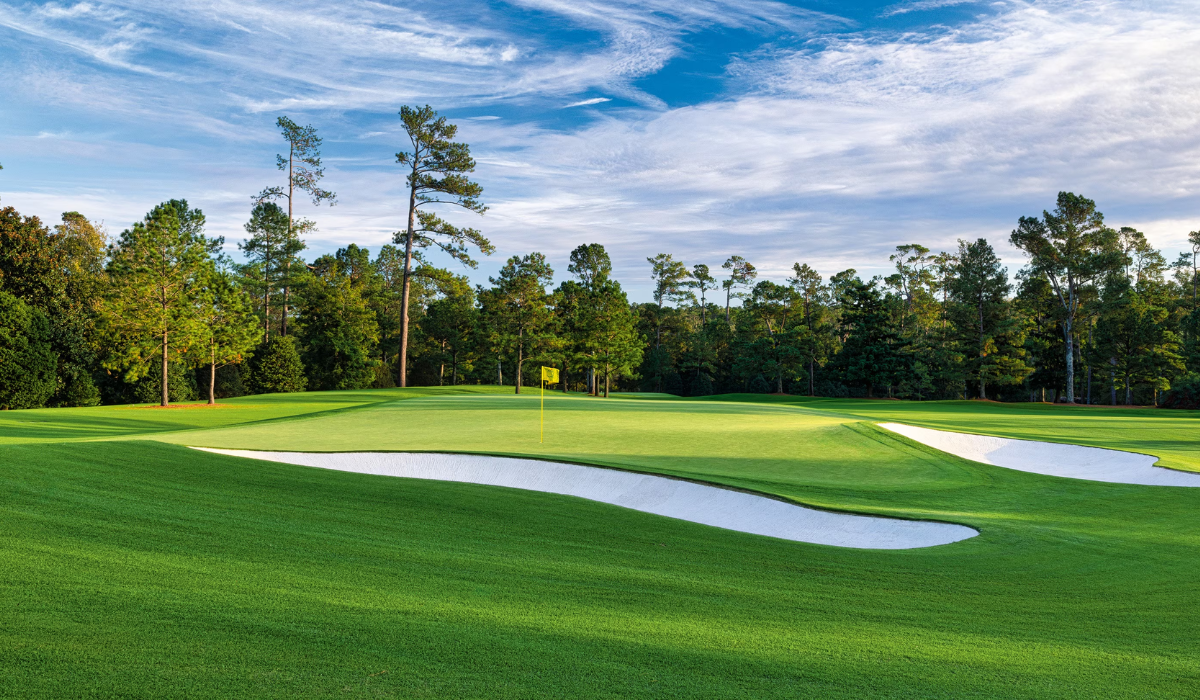
According to the official 2026 Masters media guide, the only significant course modification this year comes at the 17th hole, Nandina. The front of the tee box has been reduced by 12 yards, the tee marker repositioned, and the scorecard now lists the par-4 at 450 yards — up from 440 previously. True to Augusta tradition, every yardage ends in either a zero or a five. The new 450 fits perfectly, and the total course yardage rises to 7,565.
Context transforms a 12-yard shift into something far more significant. In 2025, the 17th ranked as the fourth-hardest hole on the course with a scoring average of 4.230. It was precisely here that Rory McIlroy struck his decisive birdie in the 2025 playoff before a closing bogey forced extra holes. The hole had not been touched since 2014, when the famous Eisenhower Tree — a loblolly pine that President Eisenhower once lobbied to have removed — was felled by an ice storm. Its history runs deeper still: in 1937, Byron Nelson drove the green when Nandina played at 320 yards, prompting Augusta to move the green back 20 yards and to the right, creating the elevated, five-bunker putting surface that competitors navigate today.
Moving the tee forward rather than backward is an interesting counter to Augusta’s usual trend of lengthening holes. By shortening the front of the tee, the club alters the approach angle and club selection at precisely the moment tournament pressure peaks. The tee shot still funnels through a chute of Georgia pines, and the approach still demands a precise iron to hold a green that falls away sharply in multiple directions. Ten yards here; ten yards there. That is the Augusta way.
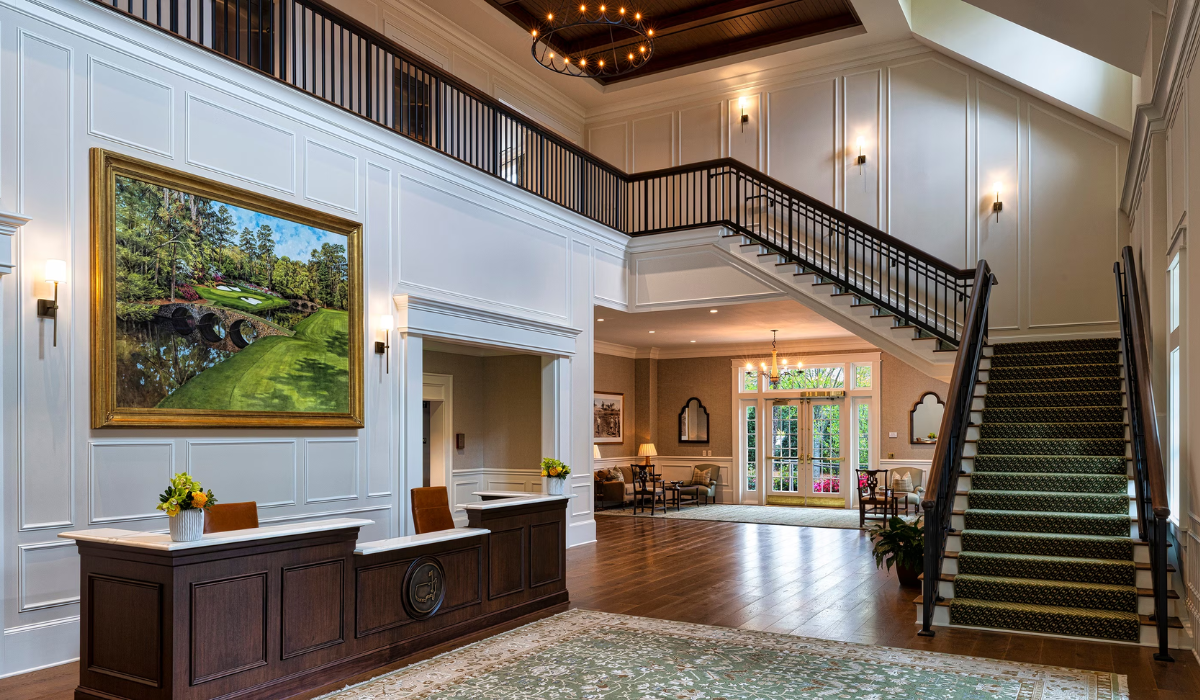
If the on-course change at the 17th is subtle, the transformation off the fairways is anything but. For 2026, Augusta National has completed Phase Two of its Player Services Project: a three-story building tucked among the trees behind the practice area that, in keeping with Augusta’s gift for construction, looks as though it has always been there. Phase One — an underground player parking garage beneath Magnolia Lane — was completed in 2025.
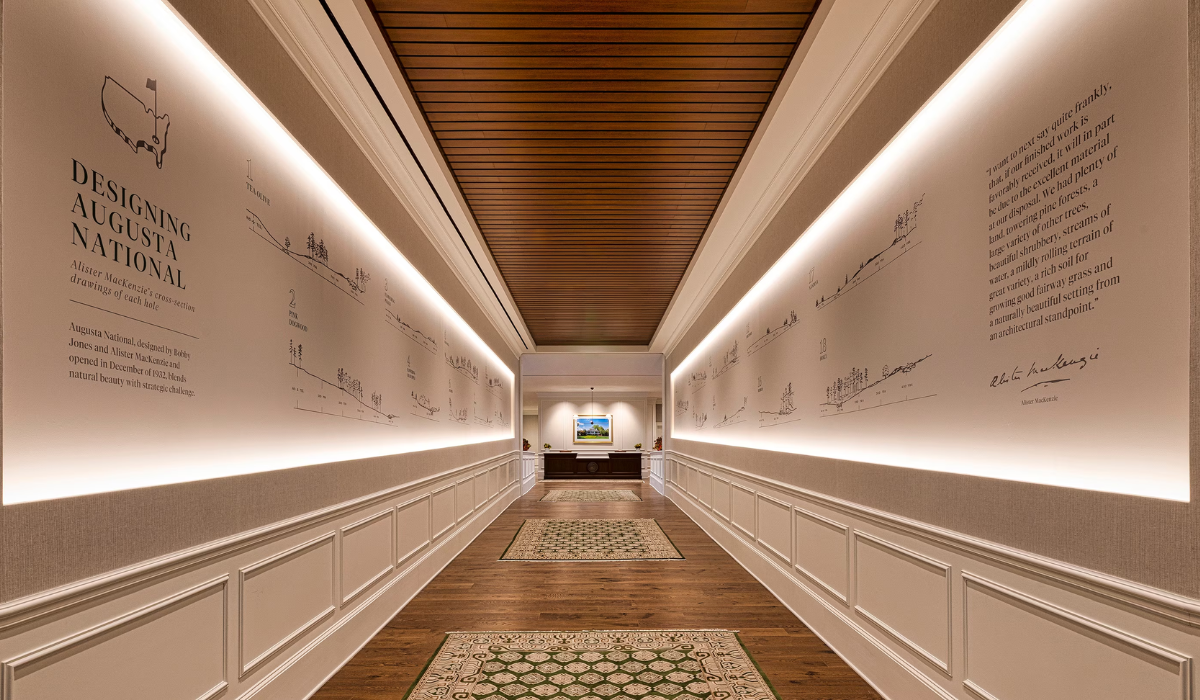
The corridor connecting garage to building is lined with Alister MacKenzie’s original cross-section drawings of every hole, turning the walk from car to locker room into a quiet architectural history lesson. Players emerge into a lobby flowing into a lounge displaying all four trophies from Bobby Jones’ 1930 Grand Slam, on loan from the Atlanta Athletic Club.
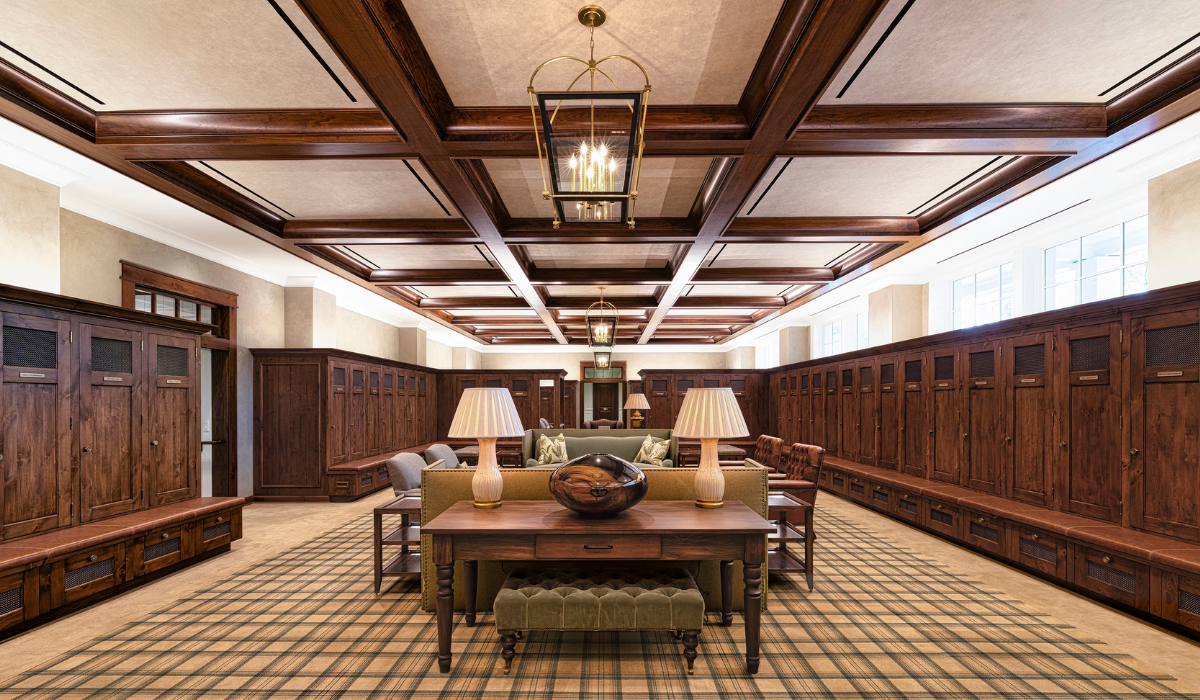
The ground floor houses a 100-locker locker room — a vast upgrade from the old clubhouse facility. Each locker carries a built-in safe, a phone-charging shelf, and a gold-plated Masters emblem on the handle. One of the central sitting-area tables is crafted from a magnolia tree felled on Magnolia Lane by Hurricane Helene in 2024. Each amateur in the field has been seated next to a Masters champion.
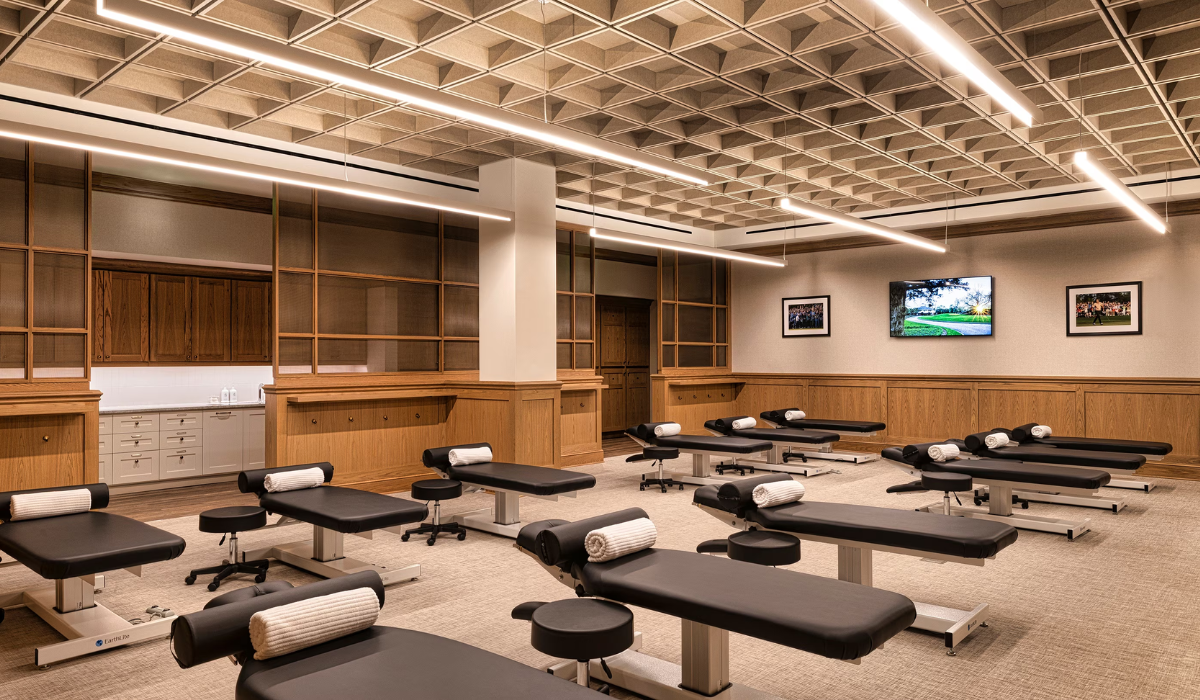
Downstairs is a full performance centre with weights, cables, medicine ball walls, and a recovery suite featuring three cold plunges, a hot tub, a sauna, and 16 physio tables. A hallway between the fitness and recovery areas carries over 1,400 nameplates — one for every player to have competed in the Masters’ 90-year history.
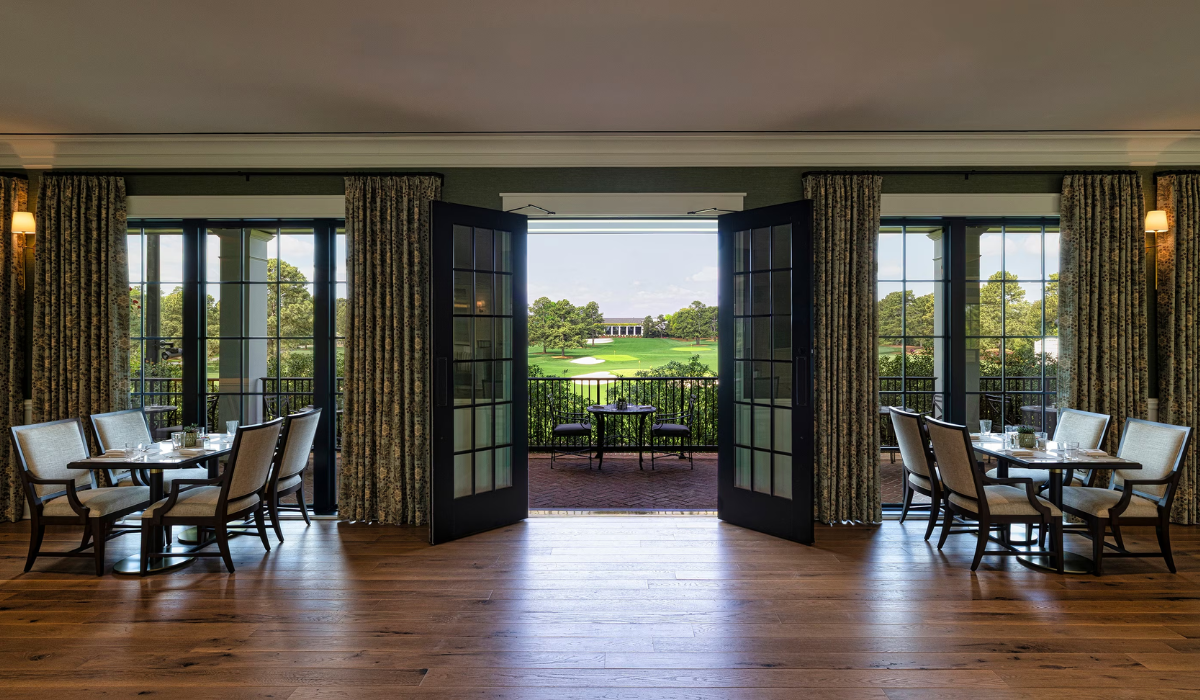
At the top of the building sits the Magnolia Dining Room, seating 150 inside and another 150 on a terrace overlooking the practice grounds. Augusta National chairman Fred Ridley described the ambition plainly when the project was announced: facilities from arrival until departure, “unlike anything in sports.” Rory McIlroy, after a preview visit, called it “IN-CREDIBLE.” Cam Smith noted that everything felt “disjointed” in previous years. Now, he said, it is all in one place: “I spend a little bit more time with the family, have lunch with them. It’s nice.”
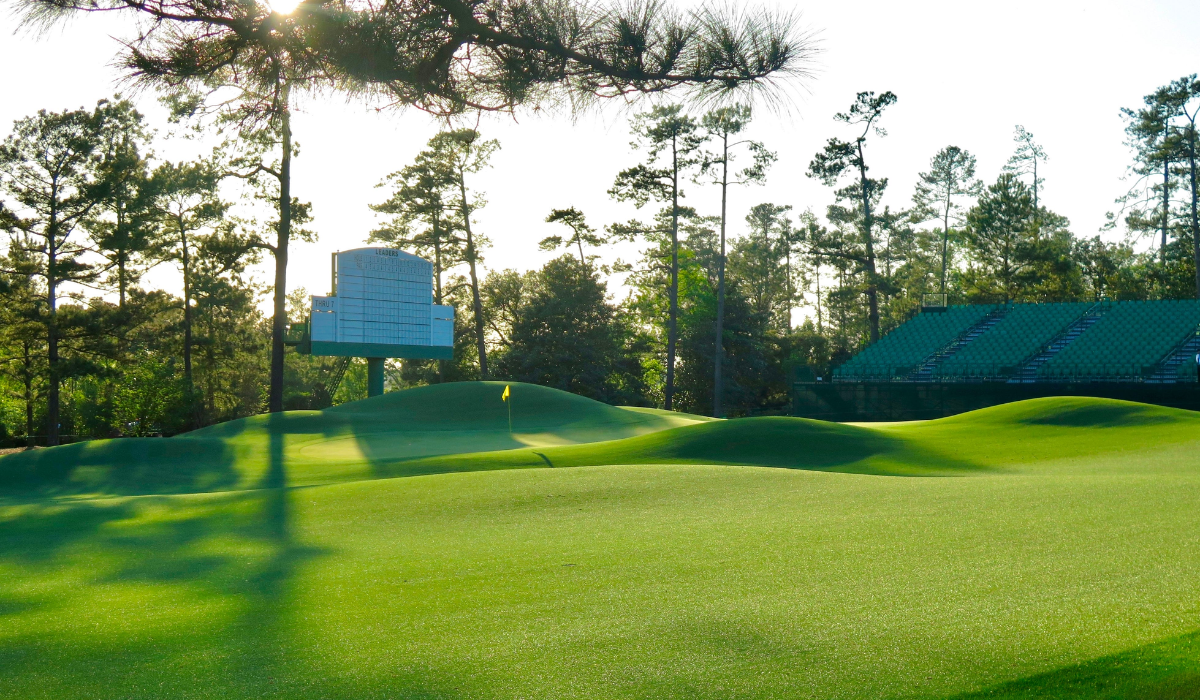
A year after Hurricane Helene caused significant damage to the club — including numerous fallen trees — Augusta National has recovered and looks immaculate heading into tournament week. With no rain in the early forecast and temperatures in the low-to-mid 70s, practice rounds pointed toward firm, fast conditions. Cam Smith offered a candid read after his Monday walk: “It seems like the grass is really full. There’s no rain in the forecast. They can really do whatever they want. It will be firm and fast, I would assume.”
Fast conditions at Augusta are the great equaliser and destabiliser in equal measure. The Bentgrass putting surfaces — among the fastest in professional golf — reward approach shots that find the correct tier of a green. Land on the wrong level and a three-putt becomes probable rather than merely possible. This dynamic underscores the central truth of Augusta: while driving distance remains a genuine advantage, the tournament is almost always decided by the quality of the second shot. Strokes gained on approach is, year after year, the single greatest statistical predictor of who earns the Green Jacket.

Scottie Scheffler enters as the overwhelming favourite at approximately +490 to +500 — the shortest odds on any Augusta player since Tiger Woods at +350 in 2013. He has won two Green Jackets (2022 and 2024), posted four consecutive top-10 finishes at Augusta, and accounts for 17.1% of total dollars wagered at BetMGM heading into the week. Defending champion Rory McIlroy returns around +1000 to +1175, chasing a feat no player has managed since Tiger Woods in 2002: back-to-back Masters titles.
Bryson DeChambeau arrives riding consecutive victories in Singapore and South Africa, while Jon Rahm — the 2023 Masters champion — draws serious attention at around +910. Ludvig Åberg, runner-up in his Masters debut and seventh in 2025, is widely regarded as one of the strongest value selections at approximately +1700. Notably, 2026 marks the first Masters since 1994 that neither Tiger Woods nor Phil Mickelson is competing, closing one of the great dual chapters in the tournament’s history.
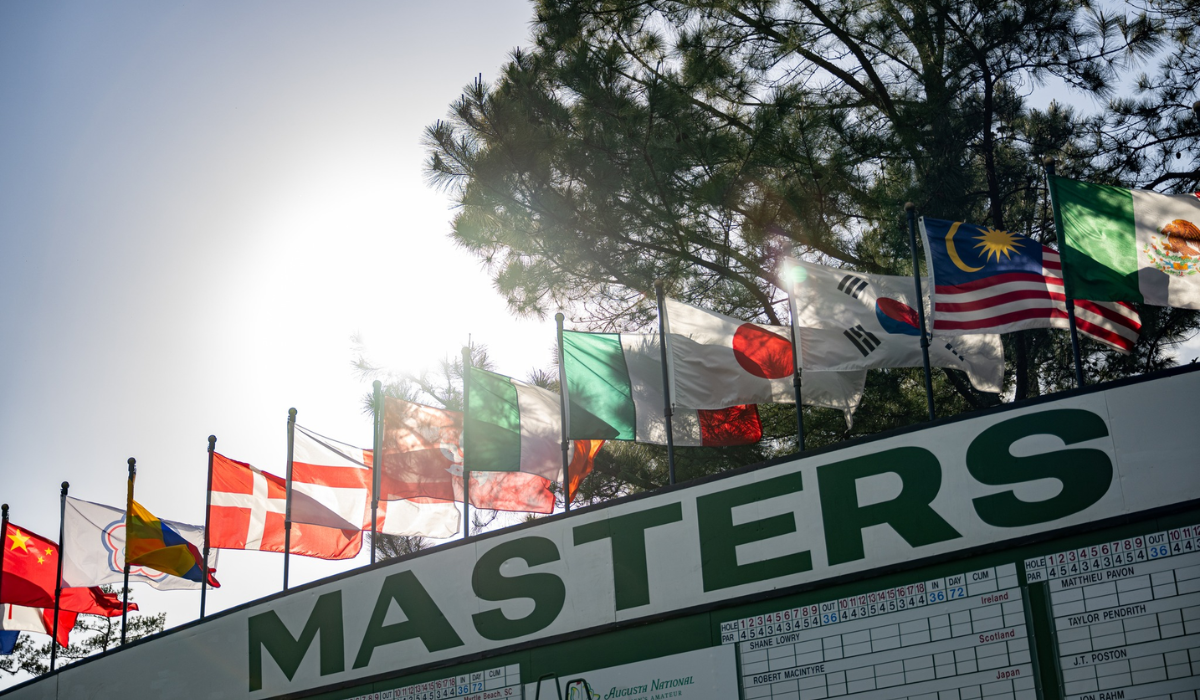
The sole official modification listed in the 2026 Masters media guide is a 12-yard reduction to the front of the tee box at Hole 17, Nandina. The tee marker has been repositioned, and the official scorecard now lists the par-4 at 450 yards, up from 440. This brings the total course yardage to 7,565 yards.
A three-story facility completed for 2026, located behind the tournament practice area. It features a 100-locker locker room, a fitness and recovery centre, dining areas including the top-floor Magnolia Dining Room, and a lounge displaying Bobby Jones’ four 1930 Grand Slam trophies. Access is restricted to players, immediate families, caddies, coaches, and trainers only.
The 90th Masters Tournament runs April 9–12, 2026, at Augusta National Golf Club in Augusta, Georgia. Practice rounds began April 6, with the Par 3 Contest on April 8. A field of 91 players is competing, including six amateurs.
Augusta adjusts holes periodically to preserve strategic challenge against advances in equipment and athleticism. The 17th was last altered in 2014 when the Eisenhower Tree was removed after an ice storm. Moving the tee forward shifts the approach angle and club selection on a hole that ranked fourth-hardest in 2025 with a scoring average of 4.230.
For the first time, Augusta National is offering a Masters-branded candy bar ($2) — a dark-milk chocolate blend with caramel, rice crisps, and hazelnut crunch by Atlanta-based Bitzel’s Chocolate. All classic concession staples return. The 2026 Masters gnome collectible features a functional opening and closing umbrella, expected to be a popular merchandise item.
Scottie Scheffler leads the market at +490 to +500, with Rory McIlroy close at +1000 to +1175. Bryson DeChambeau (+1000–1075), Jon Rahm (+910), and Ludvig Åberg (+1700) round out the top tier of contenders. 2026 is the first Masters since 1994 without Tiger Woods or Phil Mickelson in the field.
Augusta’s Bentgrass putting surfaces are among the fastest in professional golf, featuring multiple tiers and severe undulation. Missing the correct section of a green — even by a modest margin — can leave a nearly impossible two-putt. This is why strokes gained on approach is consistently the top statistical predictor of Masters success.
Hurricane Helene caused significant damage to Augusta National in 2024, including numerous fallen trees. The course was fully restored in the months that followed. One of the fallen magnolia trees from Magnolia Lane was repurposed as a table inside the new Player Services Building locker room — a quiet tribute to the club’s resilience.
CBS and ESPN share the TV broadcast. ESPN carries the first two rounds on Thursday and Friday (3–7:30 p.m. ET each day), as well as Wednesday’s Par 3 Contest (2–4 p.m. ET). CBS takes over for the third and final rounds on Saturday and Sunday (2–7 p.m. ET each day). New for 2026, Amazon Prime Video streams exclusive early coverage for Rounds 1 and 2 (1–3 p.m. ET), while Paramount+ offers exclusive early streaming on Saturday and Sunday (12–2 p.m. ET) before the CBS broadcast begins. For wall-to-wall coverage all week, Masters.com and the Masters App provide free streams including Featured Groups, Featured Holes (Amen Corner, Holes 4–5–6, and Holes 15–16), and an “Every Shot, Every Hole” feed. The ESPN App, DirecTV, and Golf Channel (“Live From The Masters”) round out the viewing options. Radio coverage is available on SiriusXM.

What makes Augusta National so enduringly compelling is not any single change in any single year. It is the accumulation — the layers of history pressed into every slope, every bunker face, every contoured green, and every azalea bloom. The course has been refined, not reinvented. The building has changed, not the building’s soul.
A 12-yard tee shift at Nandina. A three-story monument to athletic preparation. A candy bar for $2. And 91 golfers, each convinced — as they must be — that this is the year they slip on the Green Jacket. That is the Masters. Ninety years in, it remains the most wonderful contradiction in sport: a place where everything changes, and nothing does.

Course Reviews
Golfing Paradise in Mauritius
Stay at one of these four luxury resorts in the Indian Ocean paradise of Mauritius and play unlimited golf at courses designed by Bernhard Langer and Ernie Els. Luxury hotel group Sunlife has four incredible resorts in Mauritius to choose from, each with privileged access to a Bernhard Langer golf course on its very own […]

All Square
2023 Omega European Masters: Preview
Ryder Cup selection is up for grabs as the Omega European Masters on the DP World Tour tees off at Golf Club Crans-sur-Sierre in the Swiss Alps. Played August 31 – September 3, South African Thriston Lawrence is defending his crown after overcoming England’s Matt Wallace in a play-off in 2022. Located in Crans-Montana in […]