


Course Reviews
Vietnam’s Hoiana Shores and Da Nang’s Best Golf Courses
Explore 33,000+ golf courses in 180 countries.
Follow the latest news and trends in golf.
Connect with like-minded golfers.
Find everything you need for your golf equipment and gear needs.
Travel, golf resorts, lifestyle, gear, tour highlights and technology.
All Square
Suggestions
Course Reviews
Vietnam’s Hoiana Shores and Da Nang’s Best Golf Courses
Clubs
Gary Woodland’s Winning WITB at the 2026 Texas Children’s Houston Open
Clubs
Nico Echavarria’s Win: Inside the WITB at the 2026 Cognizant Classic
Clubs
The New Phantom: Scotty Cameron Reinvents Its Mallet Legacy
Course Reviews
Bernardus Golf: Europe’s Modern Masterpiece
Clubs
Matt Fitzpatrick’s Precision Triumph: Winning WITB at the 2026 Valspar Championship
Course Reviews
Streamsong’s Newest Masterpiece: Why Bone Valley Might Be Its Boldest Statement Yet
Clubs
Cameron Young’s Winning WITB at the 2026 Players Championship
Clubs
Akshay Bhatia’s Winning WITB at the 2026 Arnold Palmer Invitational
Course Reviews
Argentario Golf & Wellness Resort: Tuscany’s Championship Gem
Clubs
TaylorMade Introduces Qi Max and Qi Max HL Irons: A New Era for Game-Improvement Performance
Destinations
Monte Rei Enters a New Era: Deep Renovation to Preserve a Legendary Course
Destinations
Golf Trip to Casablanca: Morocco’s Atlantic Golf Escape
Clubs
Jacob Bridgeman Breaks Through at Riviera: WITB Behind His Genesis Invitational Victory
Destinations
24 Hours at a Luxury Golf Resort: A Day in Paradise
Destinations
Golf Resorts Perfect for a Proposal or Honeymoon
Course Reviews
The Best Golf Courses Near Pinehurst That Aren’t Pinehurst No. 2
Course Reviews
The Els Club Vilamoura: Golfing Grandeur in the Algarve
Destinations
A Golf Trip to Mauritius: Sun, Sea, and Championship Swings
Destinations
Spa & Swing: Resorts for Golfers Who Love Wellness
Clubs
Inside Chris Gotterup’s WITB at the 2026 Phoenix Open

Golf is a game of precision, patience, and moments that take your breath away. While long par‑4s and par‑5s often steal the spotlight, there’s something uniquely memorable about a par‑3. These holes condense all the drama of golf into a single, often nerve‑wracking shot. One swing can make or break your round, testing not only your skill but also your focus and nerve.
Par‑3s come in all shapes, lengths, and settings — from tiny, perfectly manicured “Postage Stamps” to sweeping oceanfront cliffs and island greens surrounded by water. They demand accuracy, strategy, and a touch of bravery, offering moments of triumph or heart-stopping suspense in just a few seconds. For golfers, both amateur and professional, certain par‑3s leave a lasting imprint, becoming the kind of holes you remember long after the round is over.
In this article, we explore the Top 10 par‑3s you’ll never forget — holes that combine beauty, challenge, and unforgettable moments. From legendary courses in the U.S. and U.K. to coastal gems that seem perched on the edge of the world, these are the par‑3s every golfer dreams of playing.

Few holes in golf are more instantly recognisable than the 17th at TPC Sawgrass. It’s short — only 137 yards from the back tees — yet brutal in its demand for precision. The green is essentially an island (or peninsula) surrounded by water, with only a narrow walkway providing access. A slight miscalculation, a bit of wind, or a poor club selection and your ball is swimming instead of rolling. Club selection and mental composure become everything. Over 100,000 balls are retrieved from the surrounding water each year — a testament to just how many players have failed the test, at all levels.
For many golfers — pros and weekend players alike — the 17th at TPC Sawgrass feels like a microcosm of golf itself: beauty, danger, pressure, reward — all in one single swing.

At Augusta National Golf Club, the 12th hole — “Golden Bell” — stands as one of the most famous par-3s in the world. It measures around 155 yards, but that number belies the complexity lurking behind it: a narrow green, Rae’s Creek guarding the front, and multiple bunkers forming a treacherous trap for any shot that misses slightly. The wind — often swirling unpredictably around the tall pines — makes club selection and shot shape pivotal.
Over the decades, the 12th has repeatedly shaped outcomes at The Masters Tournament. Many a hopeful champion has seen their dreams slip away with a misjudged tee shot here. It’s a hole that packs as much psychological weight as technical demand — and even among the world’s best, it never gets any easier.

Tiny, deceptive, and notoriously punishing — that’s the 8th hole at Royal Troon Golf Club, better known as the “Postage Stamp.” At just 123 yards, it is the shortest hole in the rota of The Open Championship, but its compact green, severe bunkering, and coastal winds make it anything but easy.
The green is small, the margin for error razor-thin — miss slightly, and you might be scraping for bogey. Many consider this hole the ultimate test of precision and nerve. Despite its brevity, Postage Stamp ranks among the most feared and respected par 3s in golf.

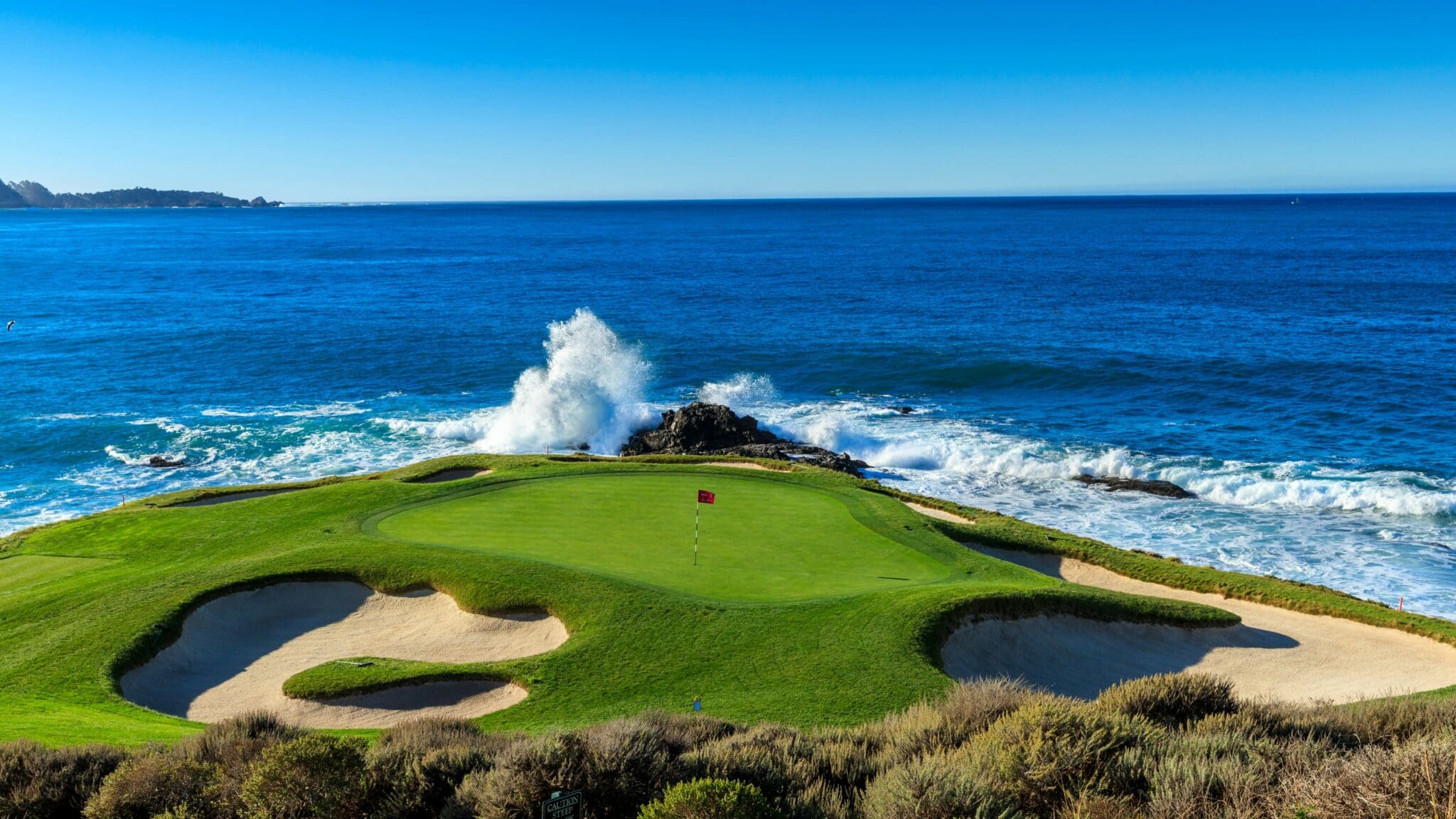
Few images evoke the romance of golf like the 7th hole at Pebble Beach Golf Links — a short par‑3 carved right on the edge of the Pacific Ocean. The tee sits on a bluff above the sea, and most shots carry over a narrow strip of beach before landing on a tiny green perched atop rocky coastline. The ocean spray, the wind off the water, and the sea breeze combine to make club selection feel like gambling.
Despite being among the shorter par 3s in the world, the 7th demands respect. It tests not just a golfer’s skill, but their comfort under pressure — especially if the surf is lively and the wind picks up. Many golfers describe teeing off there as one of the purest “golfing experiences” imaginable — beautiful, invigorating, humbling. For its combination of breathtaking scenery and inherent risk, the 7th at Pebble remains a must-play on any golfer’s bucket list.

The 16th hole at Cypress Point Club is often hailed not just as one of the greatest par‑3s — but as one of the greatest holes in all of golf, regardless of par. From the tee, players face a breathtaking carry: the Pacific Ocean lies below, cliffs plunge into the sea, and the green sits precariously, perched at the edge. According to one influential ranking, this hole outscored many by virtue of its dramatic setting, bold design and elevated difficulty.
Strike your ball right, and you might have one of the most memorable par‑3 shots of your life. Miss it — or get the wind wrong — and the ocean comes calling. It’s a hole that represents risk and reward at the highest level, where nature and design coalesce into pure golf poetry.

Nestled along the English coastline, Royal St George’s 11th hole is a par‑3 that perfectly blends history and difficulty. Measuring just over 190 yards from the championship tees, it’s deceptively challenging due to its elevated tee, deep bunkers, and swirling coastal winds. Often a pivotal hole during The Open Championship, a misjudged shot can easily lead to bogey or worse. The undulating green rewards accuracy and punishes even minor mistakes, making this hole a test of nerves and skill for every golfer who steps up to the tee.

Known as “The Tee Shot from Hell” to some and a classic to others, the 4th hole at St Andrews is deceptively simple on paper, just 174 yards from the back tees. But the combination of deep bunkers — the “Principal’s Nose” and the “Dyke” — along with unpredictable coastal winds, turns this short hole into a strategic puzzle. The green is large but subtly sloped, meaning putting remains a real challenge. History has cemented this hole’s reputation: decades of Open Championships have shown that even the best golfers can falter here.

Not all memorable Augusta par‑3s are short and tame. The 16th hole, a 170-yard challenge, is a classic risk-reward setup. The green slopes dramatically from right to left, while a pond guards the front, tempting golfers to be aggressive. Champions have been made and broken here; one of the most famous moments came during the 1986 Masters when Jack Nicklaus executed a near-perfect shot to this green en route to one of his legendary victories. The hole requires both courage and precision — a true Augusta masterpiece.

Carnoustie’s 12th hole may not have the fame of Augusta or Pebble Beach, but it’s a classic example of Scottish links golf at its most demanding. This 210-yard par‑3 features an exposed tee, natural bunkering, and a green that slopes sharply toward the sea. The swirling winds off the North Sea mean that club selection can change in an instant, and the holes’ long history in The Open Championship has produced countless memorable moments of triumph and despair.

Rounding out our Top 10 is the 6th hole at the Kapalua Plantation Course in Maui. Often called the “Sunrise Par‑3,” this 195-yard hole plays downhill toward the ocean, with panoramic views that can distract even the most seasoned golfer. The green is elevated and surrounded by native Hawaiian landscaping, demanding an accurate tee shot. The combination of scenic beauty, gentle breezes, and challenging pin placements makes this hole a favourite for photographers and golfers alike — an unforgettable par‑3 in every sense.

Par‑3 holes are often overlooked in favour of the long, dramatic par‑4s and towering par‑5s, yet there’s a reason many golfers remember the one‑shotters most vividly. A well‑designed par‑3 demands precision over power, strategy over brute force. It distils golf’s essence: a single swing, one shot, and the entire fate of the hole hinges on it. As one writer reflecting on thousands of par‑3s put it:
“Par 3s come in all shapes, lengths and sizes … boasting targets that range from large and inviting to virtually invisible.”
Whether it’s the fear and suspense of a watery island green, the menacing bunkers and swirling wind at Augusta, the cliffside beauty of Pebble or Cypress, or the tiny, unyielding “Postage Stamp” at Royal Troon — the magic of a great par‑3 lies in its ability to deliver drama, beauty, challenge and memory all in one.

Destinations
Myrtle Beach – Golf’s Supermarket
They call it the supermarket of golf as there are few places that rival the choice on offer. Myrtle Beach, South Carolina has a course that every golfer will love. Being in South Carolina it also means that the climate makes for great conditions all year around too. For destination of the week this week […]

Destinations
Luxury resorts for golfers visiting Cairo
We have chosen some fantastic resorts in Egypt‘s historic capital Cairo for the most luxurious and exotic of golf trips, with glorious year-round weather and manicured fairways with views of the Great Pyramids. JW Marriott Hotel Cairo The luxury JW Marriott Hotel Cairo offers 5-star accommodation and award-winning service. Located in New Cairo, an upscale […]