



Clubs
Cameron Young’s Winning WITB at the 2026 Players Championship
Explore 33,000+ golf courses in 180 countries.
Follow the latest news and trends in golf.
Connect with like-minded golfers.
Find everything you need for your golf equipment and gear needs.
Travel, golf resorts, lifestyle, gear, tour highlights and technology.
All Square
Suggestions
Clubs
Cameron Young’s Winning WITB at the 2026 Players Championship
Clubs
The New Phantom: Scotty Cameron Reinvents Its Mallet Legacy
Clubs
Gary Woodland’s Winning WITB at the 2026 Texas Children’s Houston Open
Course Reviews
Bernardus Golf: Europe’s Modern Masterpiece
Course Reviews
Vietnam’s Hoiana Shores and Da Nang’s Best Golf Courses
Clubs
Matt Fitzpatrick’s Precision Triumph: Winning WITB at the 2026 Valspar Championship
Course Reviews
Streamsong’s Newest Masterpiece: Why Bone Valley Might Be Its Boldest Statement Yet
Clubs
Akshay Bhatia’s Winning WITB at the 2026 Arnold Palmer Invitational
Course Reviews
Argentario Golf & Wellness Resort: Tuscany’s Championship Gem
Clubs
Nico Echavarria’s Win: Inside the WITB at the 2026 Cognizant Classic
Clubs
TaylorMade Introduces Qi Max and Qi Max HL Irons: A New Era for Game-Improvement Performance
Destinations
Monte Rei Enters a New Era: Deep Renovation to Preserve a Legendary Course
Destinations
Golf Trip to Casablanca: Morocco’s Atlantic Golf Escape
Clubs
Jacob Bridgeman Breaks Through at Riviera: WITB Behind His Genesis Invitational Victory
Destinations
24 Hours at a Luxury Golf Resort: A Day in Paradise
Destinations
Golf Resorts Perfect for a Proposal or Honeymoon
Course Reviews
The Best Golf Courses Near Pinehurst That Aren’t Pinehurst No. 2
Course Reviews
The Els Club Vilamoura: Golfing Grandeur in the Algarve
Clubs
WITB: The Clubs Justin Rose Trusted at 2026 Farmers Insurance Open
Majors
PGA Tour 2026: Season Overview
LPGA
LPGA Season 2026 Calendar: A Global Showcase of Women’s Golf


Golf may look calm from the outside, but anyone who plays knows the truth: it is a sport that demands precision, power, mental clarity, and full-body coordination. Over the past decade, more golfers — from elite tour players to weekend enthusiasts — have turned to yoga as a way to strengthen these exact qualities. What once seemed like an unlikely pairing has now become a performance-enhancing strategy supported by sports science, physical therapists, and instructors across the world.

More and more professional golfers credit yoga for improved performance. Players like Dustin Johnson, Brooks Koepka, and Lexi Thompson have all incorporated yoga and mobility training into their routines to stay strong, prevent injuries, and maintain focus under pressure. Studies in sports medicine also show that yoga significantly improves joint mobility, proprioception (awareness of body position), and core activation — three pillars of an efficient golf swing.

The modern golf swing is a powerful, rotational movement that relies on a wide shoulder turn, hip mobility, and spinal flexibility. Yoga directly enhances these physical qualities.
Tight hips limit rotation. A stiff thoracic spine prevents a full turn. A tight chest shortens the backswing. Yoga counters these limitations by increasing the range of motion in the areas golfers need most: hip flexors, hamstrings, glutes, obliques, and upper back.
A flexible body doesn’t just feel better — it creates a mechanically efficient swing, leading to cleaner ball contact, more consistent tempo, and increased clubhead speed without extra effort.
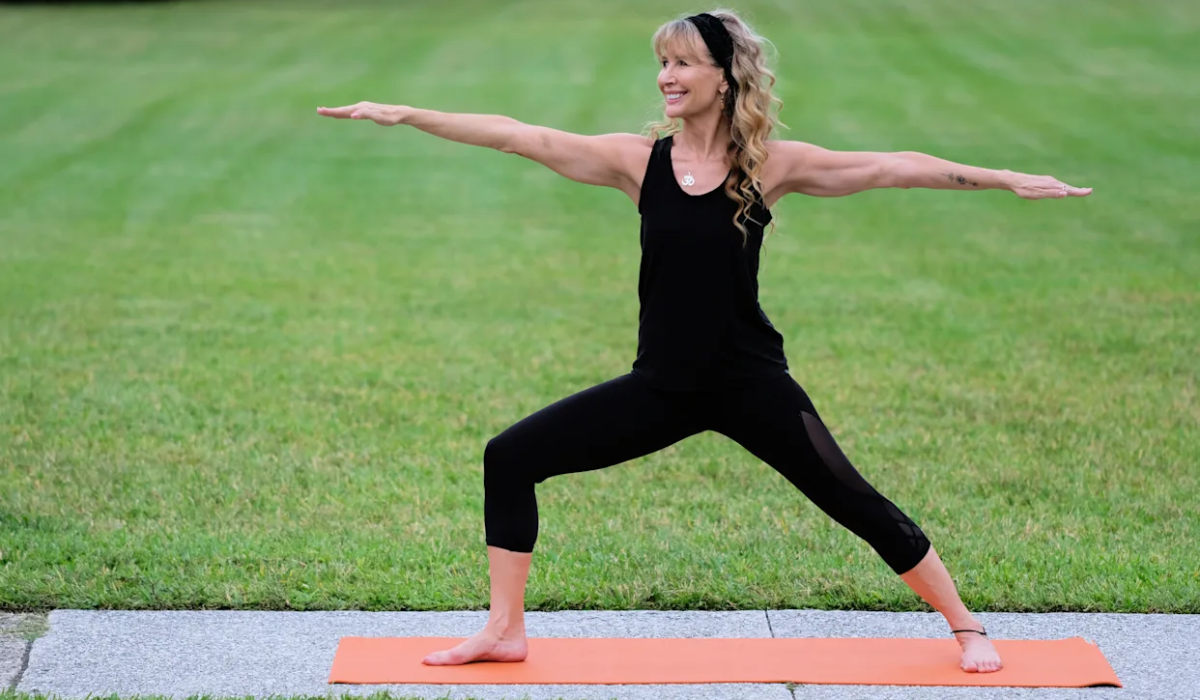
Golf requires surprising strength, especially in the core, glutes, and stabilising muscles around the spine and shoulders. Yoga builds strength using controlled movements and sustained postures, targeting exactly these areas.
Poses like Chair Pose, Warrior II, and various planks help develop balanced strength, something golfers often lack due to muscular asymmetry. Because the golf swing is so one-sided, inconsistencies build up over time, often leading to lower back pain or shoulder issues. Yoga restores muscular balance and reduces the stress placed on joints during play.
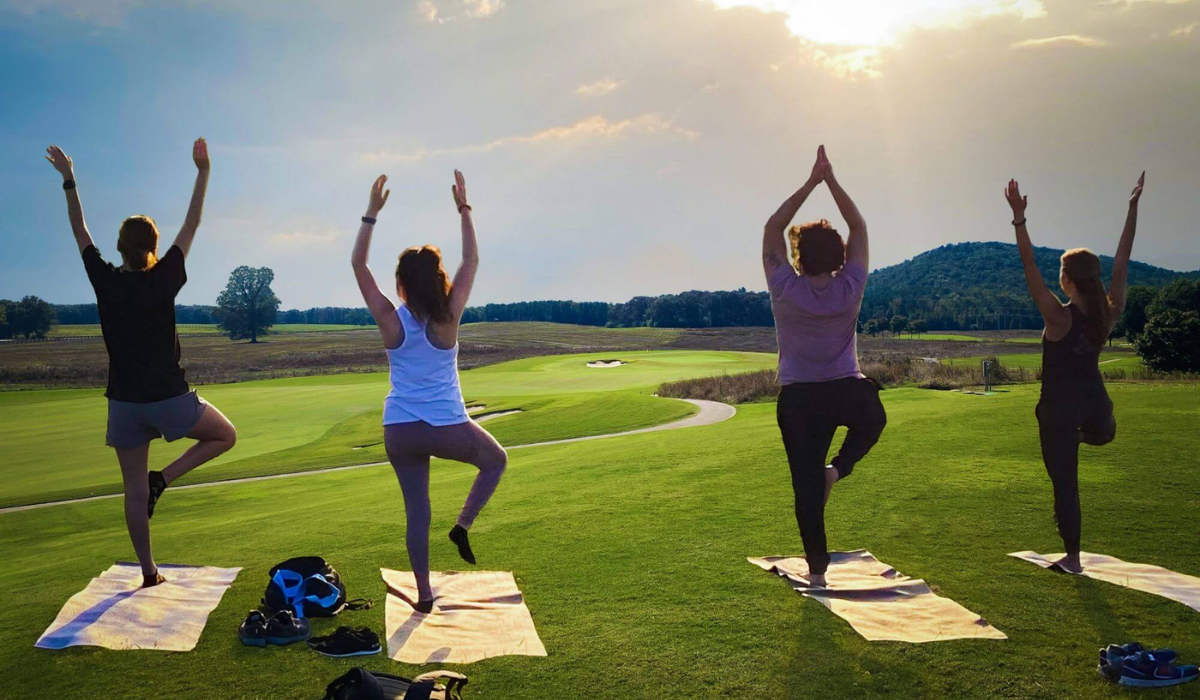
Balance is an underrated skill in golf, but it affects nearly every part of the swing — from the takeaway to the follow-through. Yoga enhances proprioception, trains the stabilising muscles of the feet and core, and builds a stronger connection between the body and the ground.
Better balance results in more controlled transitions, smoother weight shifts, and a far more consistent strike pattern. It can also extend a golfer’s career by reducing reliance on overcompensating muscles and poor mechanics.
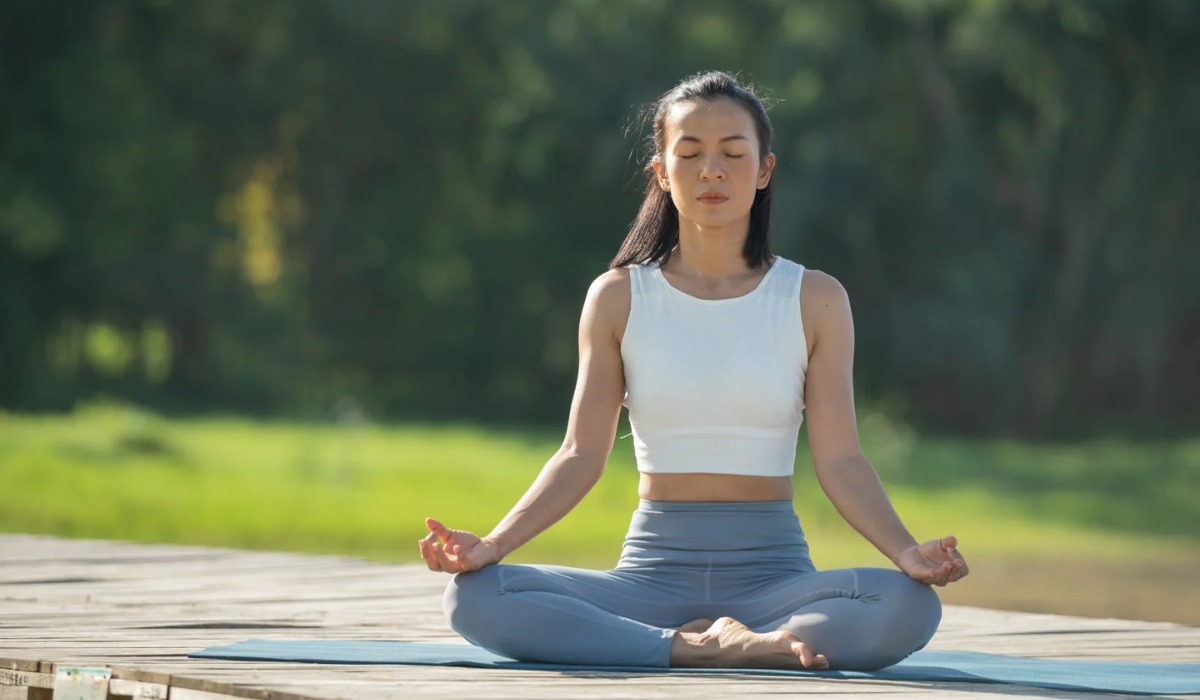
Yoga is as much about the mind as the body. The breath control taught in yoga has a direct impact on golf performance. Deep, diaphragmatic breathing helps regulate heart rate, improve focus, and reduce tension — essential skills for tee-box nerves, competitive pressure, or recovering after a poor shot. Professional golfers often use breathwork as part of their pre-shot routine to stay calm, keep their swing rhythm steady, and remain mentally present through all 18 holes.
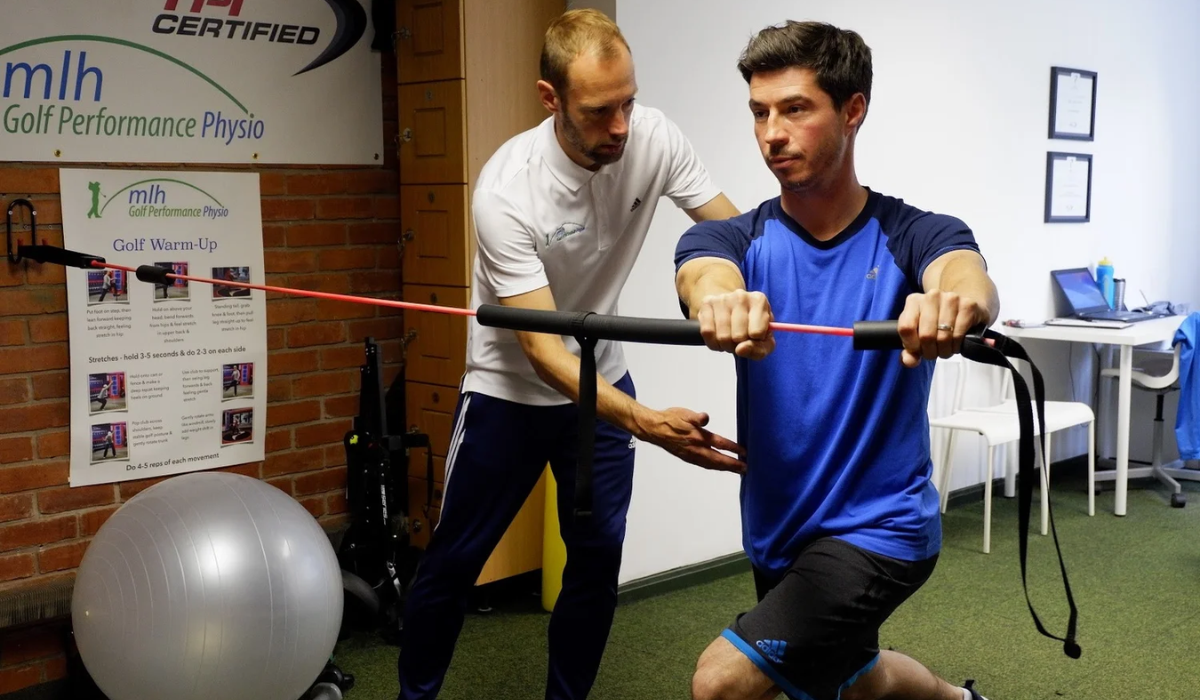
Back pain, elbow tendinitis, and shoulder strains are among the most common golf-related injuries. Many of them come from poor mobility, weakness, or overuse. Yoga combats all of these by improving posture, strengthening the spine, and encouraging proper movement patterns. For ageing golfers, yoga also increases bone density, improves circulation to muscles and joints, and maintains the mobility needed for a comfortable, powerful swing well into later life.

Golf may not look exhausting, but walking the course, carrying a bag, and repeating high-speed swings takes a toll. Yoga enhances blood flow to muscles, reduces soreness, and speeds up recovery by lengthening tight areas and removing tension. Even a short 10-minute yoga session after a round can prevent stiffness the next morning and prepare the body for the next game.
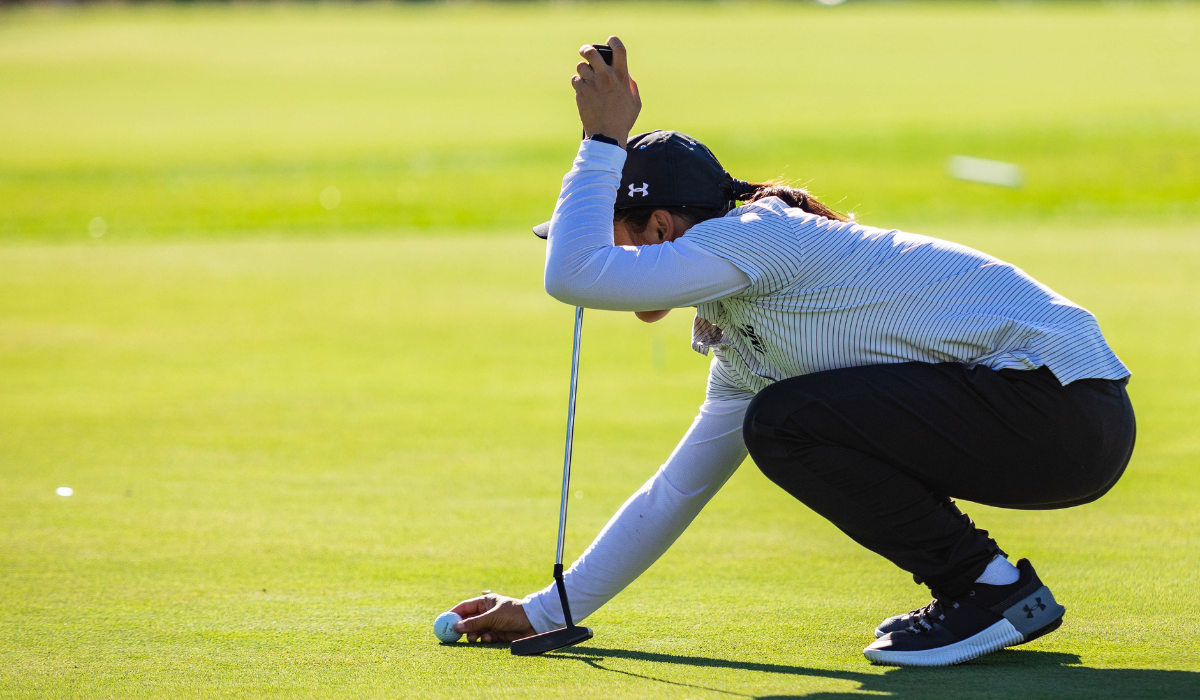
Golf rewards mental resilience as much as physical skill. Yoga improves mindfulness — the ability to stay aware, present, and in control of your thoughts. Regular practitioners experience better concentration, fewer emotional swings, and the ability to reset quickly after mistakes.
This mental stability often becomes a competitive advantage. Golfers who practice yoga report improved patience, a calmer mind, and a more positive approach to adversity on the course.

One of the best things about combining yoga and golf is its accessibility. You don’t need to be flexible or experienced to start. A simple routine of 10–15 minutes a few times per week can lead to noticeable improvements in mobility, posture, and consistency.
Golfers who integrate yoga into their training often find that not only does their game improve, but their overall well-being, sleep, and energy levels do too.

Clubs
The Evolution of Golf Clubs: Then vs. Now
Golf has always been a sport of tradition, but nowhere is the passage of time more visible than in the tools of the game. From hand-crafted wooden clubs of centuries past to today’s technologically advanced equipment designed with aerospace engineering principles, the evolution of golf clubs tells a fascinating story of innovation, craftsmanship, and performance. […]

Lifestyle
Roger Federer’s golf swing goes viral
Roger Federer posted a video of his golf swing on social media, catching the attention of his famous sports friends including women’s world No. 1 golfer Nelly Korda. The tennis icon shared the video of him teeing it up on the golf course on Instagram this week, writing “trying to take up a new hobby”. […]