


Clubs
Aaron Rai’s Winning WITB at the 2026 PGA Championship
Explore 33,000+ golf courses in 180 countries.
Follow the latest news and trends in golf.
Connect with like-minded golfers.
Find everything you need for your golf equipment and gear needs.
Travel, golf resorts, lifestyle, gear, tour highlights and technology.
All Square
Suggestions
Clubs
Aaron Rai’s Winning WITB at the 2026 PGA Championship
Clubs
Matt Fitzpatrick Wins 2026 RBC Heritage: Inside His Triumph WITB
Destinations
The Rise of Wellness-Integrated Golf Hotels
Course Reviews
Minthis Resort: Cyprus Golf Escape
Destinations
Boutique Golf Hotels with Personality
Course Reviews
The Masterpiece Reawakens: Aronimink 2026
Clubs
Kristoffer Reitan’s Winning WITB at the 2026 Truist Championship
Destinations
The Auberge du Jeu de Paume: A Golfer’s Royal Retreat
Clubs
Cameron Young’s WITB 2026 at the Cadillac Championship
Clubs
Team Fitzpatrick’s Winning WITB from Zurich Classic Victory
Destinations
The View Agadir: Morocco’s Newest Luxury Golf Base Has Arrived
Destinations
Inside Dunluce Lodge: Northern Ireland’s Ultimate Golf Retreat
Destinations
Seaton House: The Home of Golf Finally Has the Hotel It Deserves
Course Reviews
Sustainability in Golf: The World’s Most Environmentally Conscious New Courses
Clubs
Rory McIlroy 2026 Masters WITB: Winning Setup at Augusta
Majors
Masters 2026: Augusta National Course Preview & FAQ
Course Reviews
The Best Golf Courses Near Pinehurst That Aren’t Pinehurst No. 2
Course Reviews
The Els Club Vilamoura: Golfing Grandeur in the Algarve
Majors
PGA Tour 2026: Season Overview
Clubs
Akshay Bhatia’s Winning WITB at the 2026 Arnold Palmer Invitational
Clubs
Inside Chris Gotterup’s WITB at the 2026 Phoenix Open
Clubs
Scottie Scheffler’s Winning WITB at the 2026 American Express

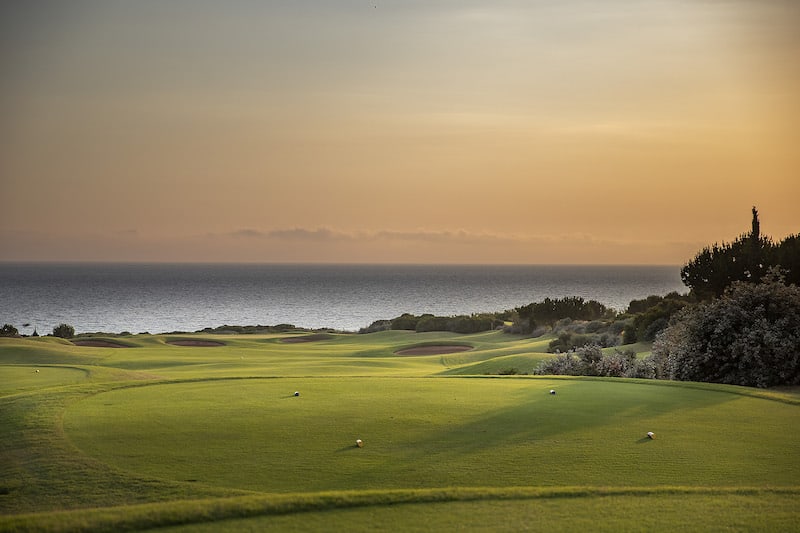
Golf is in the middle of a quiet revolution. Once criticised for heavy water use and chemical dependency, the sport is now embracing a new identity — one where world-class design meets environmental responsibility. And nowhere is this shift more evident than in the newest generation of courses built with sustainability at their core.
From Caribbean cliffs to Mediterranean olive groves, modern eco-conscious golf destinations are proving that luxury, playability, and environmental stewardship can coexist — and even enhance each other.
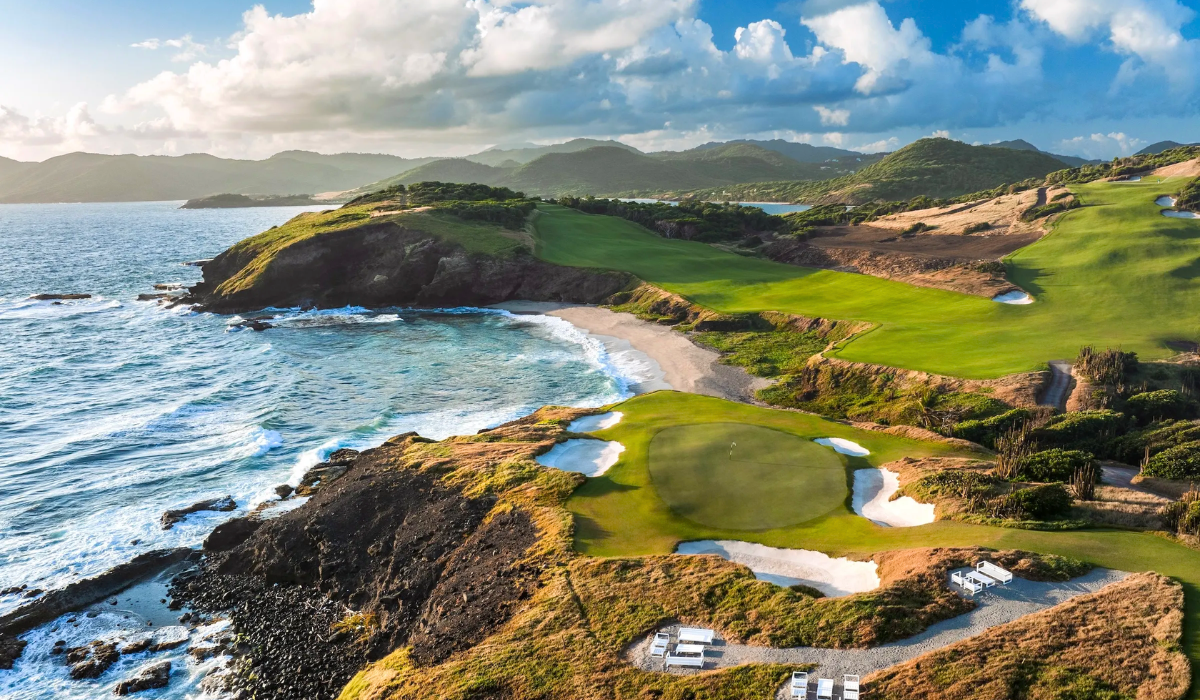
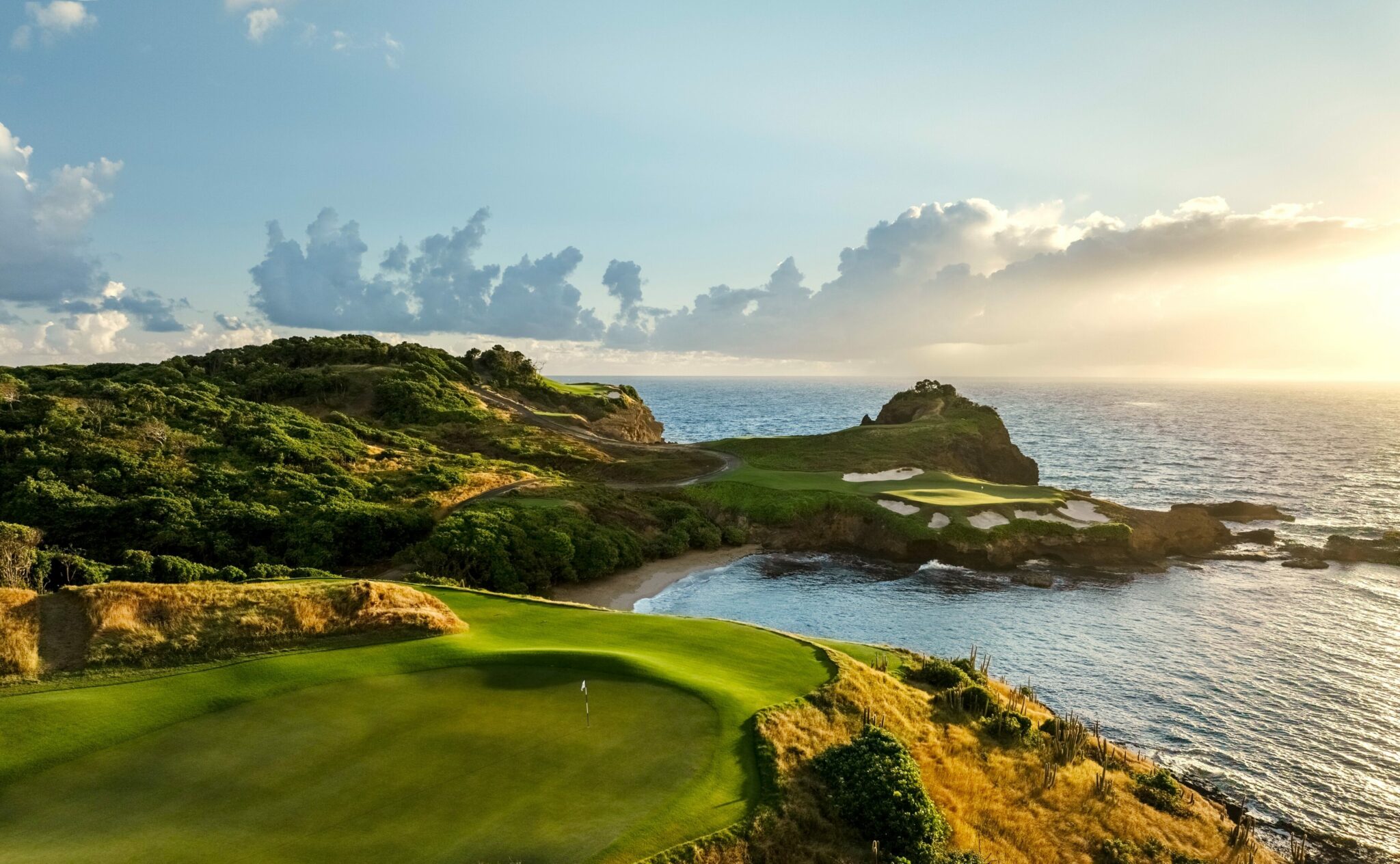
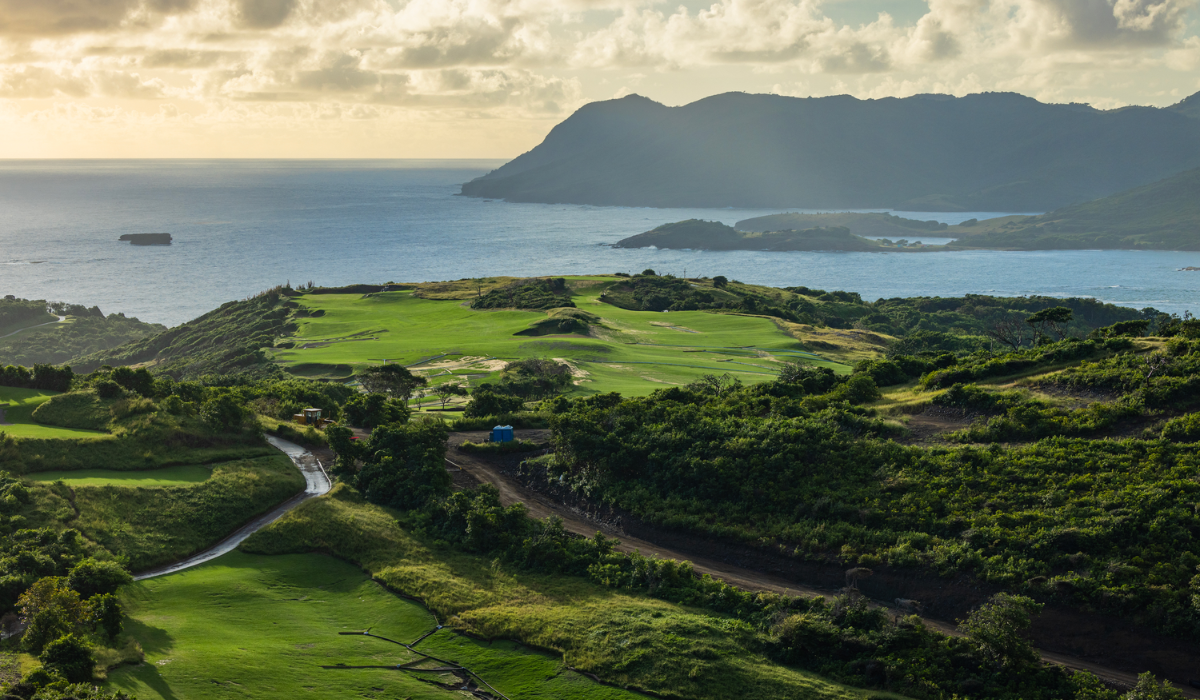
One of the standout recent additions to the global golf scene is Point Hardy Golf Club at Cabot Saint Lucia, a course that perfectly captures what the future of sustainable golf looks like.
Designed by legendary architects Bill Coore and Ben Crenshaw, the course is carved into dramatic coastal terrain, featuring nine oceanfront holes and panoramic views from virtually every tee. But beyond the visuals, what sets Point Hardy apart is its deeply integrated environmental philosophy.
Instead of forcing the land to fit the course, the routing follows the natural contours of Saint Lucia’s volcanic coastline. This approach minimises earth movement, reduces construction impact, and preserves the site’s ecological integrity — a key principle in modern sustainable design.
Water management is another defining feature. The course uses drought-tolerant turf and relies heavily on collected rainwater and desalination systems, significantly reducing pressure on the island’s limited freshwater resources.
It’s not just a golf course — it’s a case study in how to build responsibly in fragile environments.
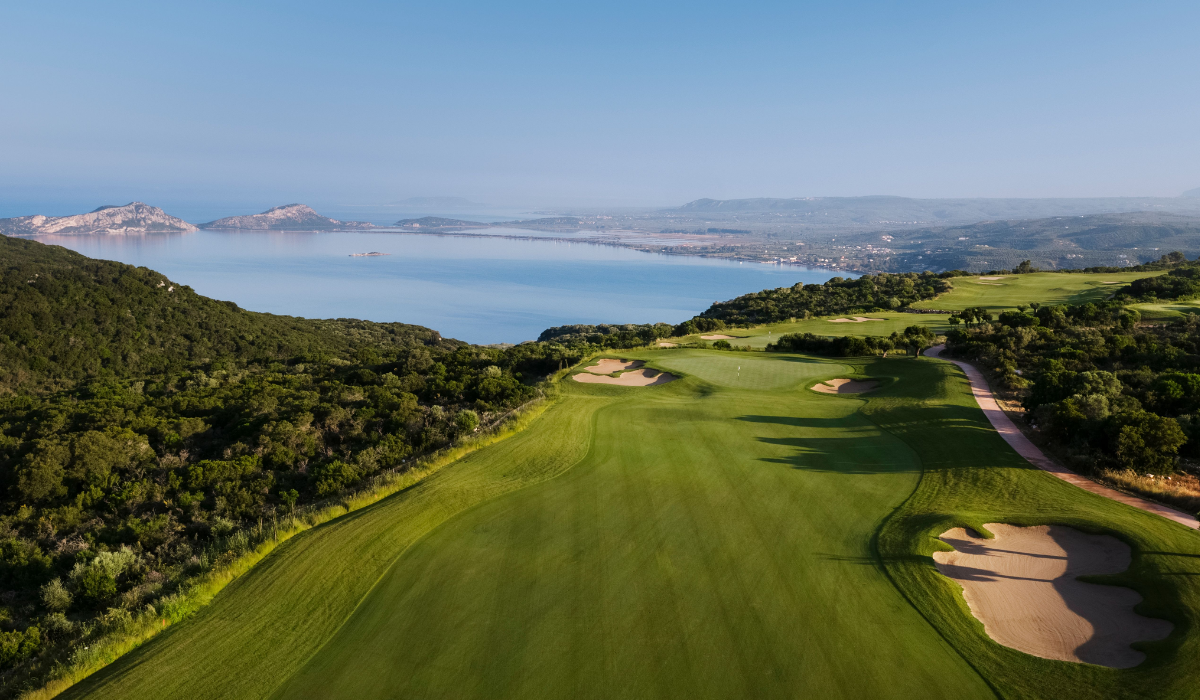
In southern Greece, Costa Navarino’s International Olympic Academy Course and The Hills Course represent another leap forward in environmentally conscious golf.
Set among ancient olive groves and rugged natural terrain, these courses were designed by José María Olazábal with a clear intention: to blend seamlessly into the landscape rather than dominate it.
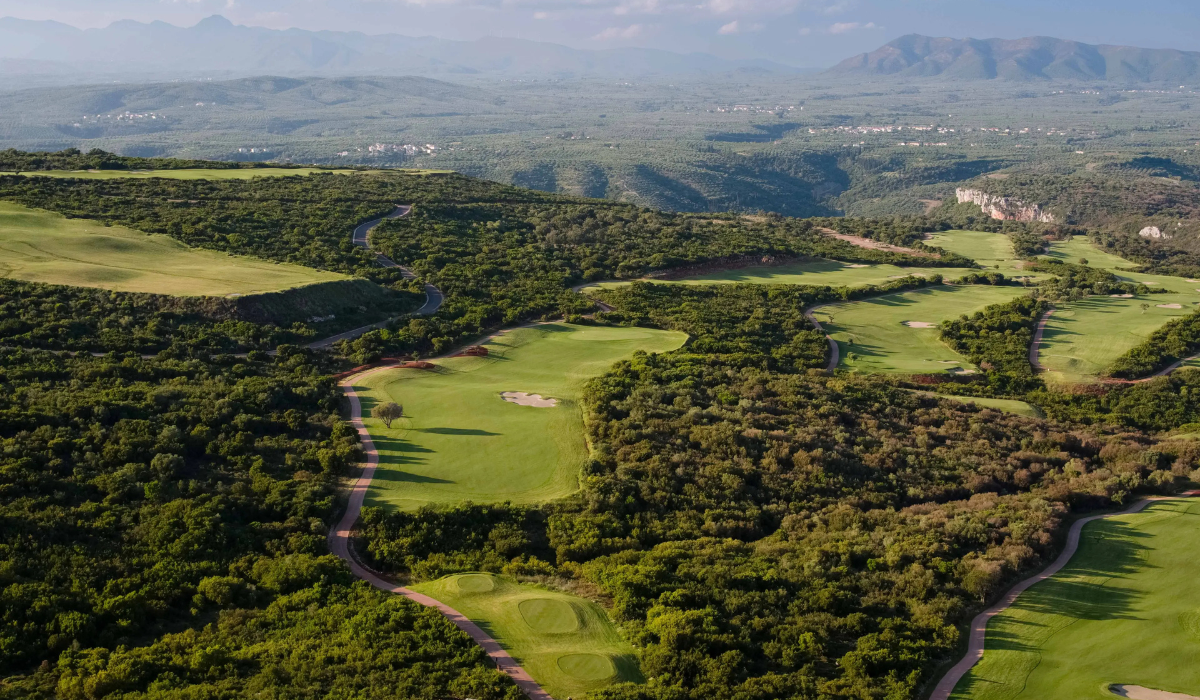
The design philosophy emphasises minimal disruption, native vegetation, and strategic routing that works with natural elevation changes. This reduces the need for excessive irrigation and reshaping — two of the biggest environmental costs in traditional golf development.
This approach reflects a broader industry trend: sustainability is no longer an add-on feature, but a guiding principle from the earliest planning stages.
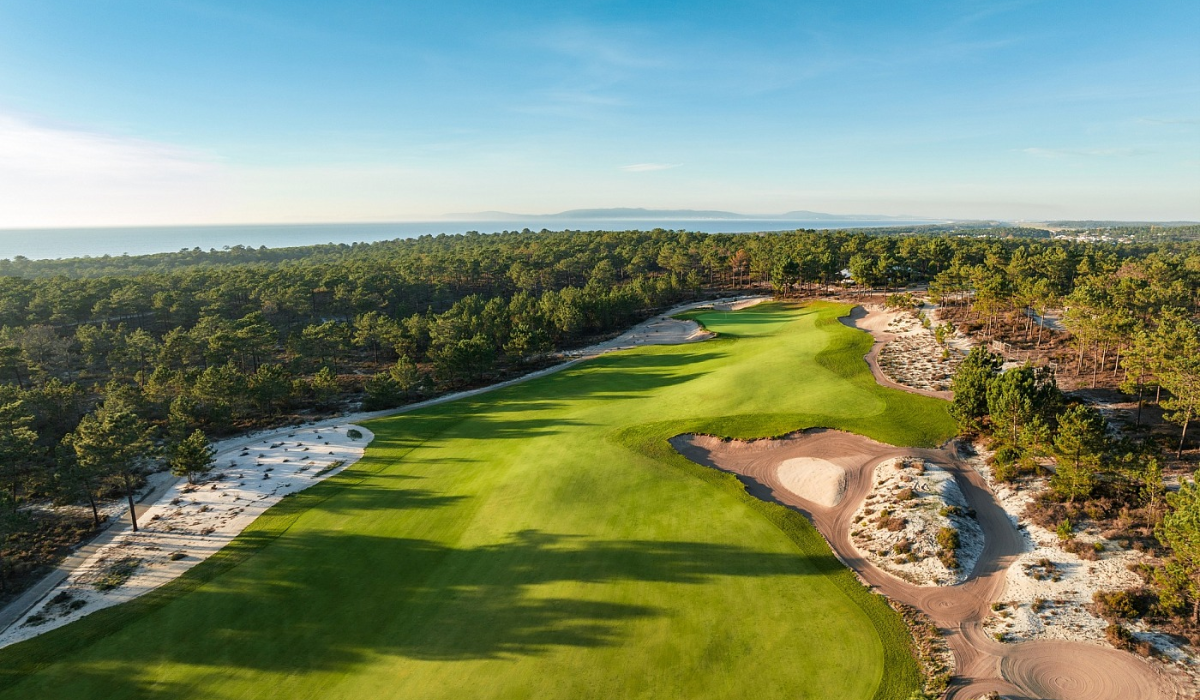
One of the newest and most talked-about courses in Europe is the Torre Course at Terras da Comporta in Portugal, designed by Masters champion Sergio García.
Opened in 2025 and already named World’s Best New Course, Torre stands out for its minimalist, links-inspired design built across natural dune landscapes.
Rather than relying on artificial features, the course embraces sandy waste areas, native grasses, and natural wind patterns to shape play. This reduces maintenance needs, limits water usage, and preserves the fragile dune ecosystem.
The result is a course that feels raw, strategic, and environmentally aligned — a rare combination in modern golf.
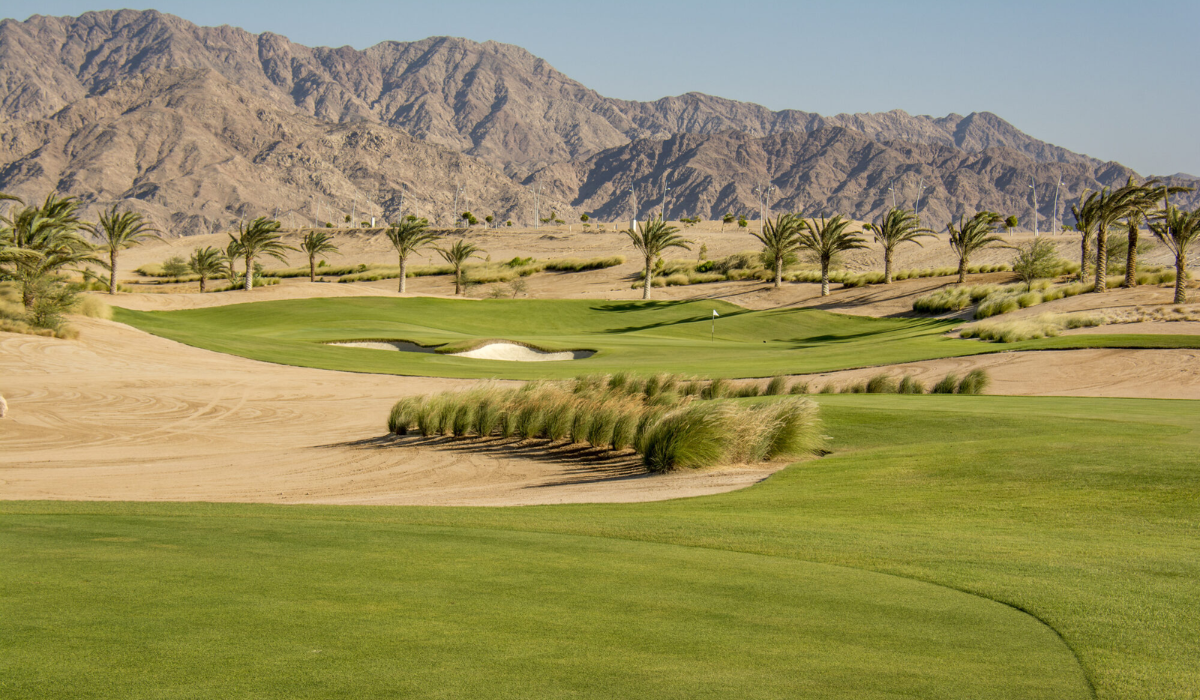
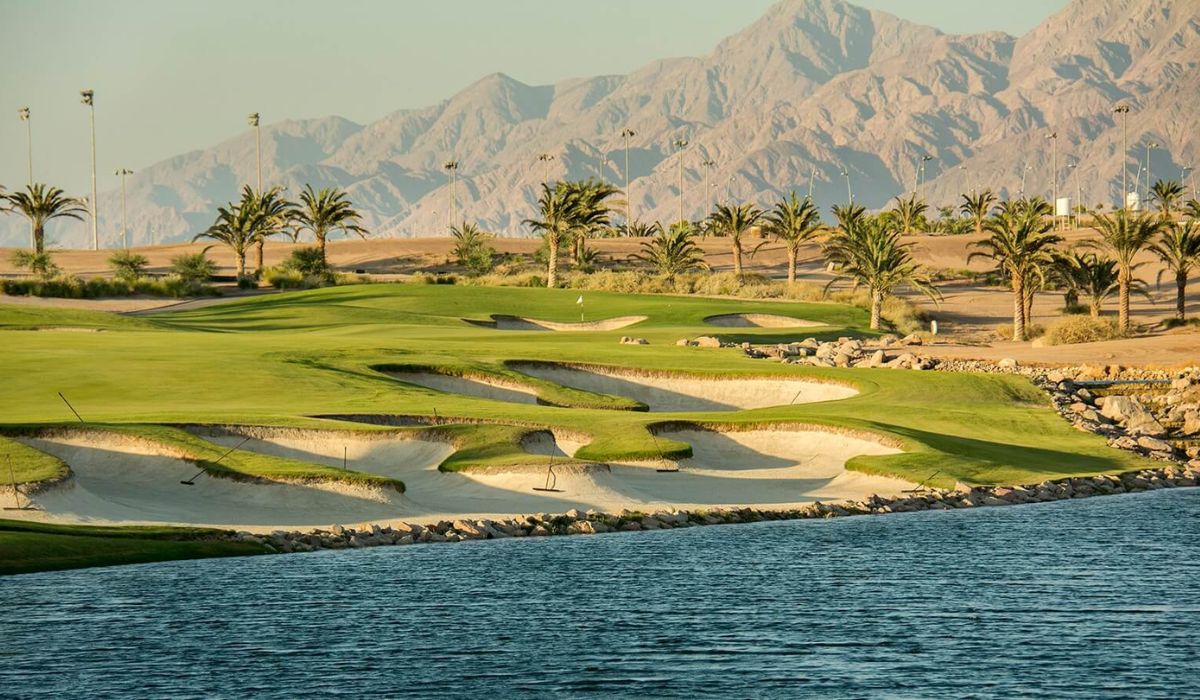
While not brand new, Ayla Golf Club in Jordan continues to set the benchmark for sustainable golf operations and remains a key reference point for newer developments.
Recognised at the 2025 Sustainable Luxury Awards, Ayla integrates environmental thinking across every level — from design and construction to daily operations.
Located in a desert environment, the course demonstrates how golf can exist responsibly even in water-scarce regions, using advanced irrigation systems and careful resource management.
The newest environmentally conscious golf destinations share several defining characteristics:
These practices are not just ethical — they’re increasingly expected. Studies suggest that nearly 73% of golfers now prefer environmentally responsible courses, signalling a major shift in consumer demand.
The newest generation of sustainable golf courses isn’t about compromise — it’s about evolution.
Courses like Point Hardy and Torre prove that environmental responsibility can actually enhance the golfing experience, creating more authentic, strategic, and visually striking layouts. Meanwhile, destinations like Costa Navarino show how large-scale developments can grow without sacrificing ecological balance.
As pressure mounts on the golf industry to reduce its footprint, these courses are leading by example. They’re not just places to play — they’re models for what the game can become.
And if this new wave is any indication, the future of golf will be greener, smarter, and far more connected to the landscapes that make the sport so special.

Course Reviews
Golf in Gran Canaria
Gran Canaria is a great option for year-round sunny golf with spectacular desert and volcanic courses and 5-star resorts offering golf at multiple venues. Here’s our quick tour. The third largest of the Canary Islands, located off the Atlantic coast of Northwest Africa, enjoys a superb climate for golf. Temperatures rarely drop below an average […]
Travel
Europe’s best residential communities: Sotogrande, Spain
Home to luxurious villas and some of Europe’s most revered golf courses, Sotogrande is one of the most prestigious residential golf communities in Europe – and there are fantastic properties for sale. You can own your very own slice of Adalusian paradise in one of Sotogrande’s gated communities – so let’s take a look at […]