



Course Reviews
Vietnam’s Hoiana Shores and Da Nang’s Best Golf Courses
Explore 33,000+ golf courses in 180 countries.
Follow the latest news and trends in golf.
Connect with like-minded golfers.
Find everything you need for your golf equipment and gear needs.
Travel, golf resorts, lifestyle, gear, tour highlights and technology.
All Square
Suggestions
Course Reviews
Vietnam’s Hoiana Shores and Da Nang’s Best Golf Courses
Destinations
The View Agadir: Morocco’s Newest Luxury Golf Base Has Arrived
Destinations
Inside Dunluce Lodge: Northern Ireland’s Ultimate Golf Retreat
Destinations
Seaton House: The Home of Golf Finally Has the Hotel It Deserves
Clubs
Matt Fitzpatrick Wins 2026 RBC Heritage: Inside His Triumph WITB
Course Reviews
Sustainability in Golf: The World’s Most Environmentally Conscious New Courses
Clubs
Rory McIlroy 2026 Masters WITB: Winning Setup at Augusta
Majors
Masters 2026: Augusta National Course Preview & FAQ
Clubs
J.J. Spaun’s Winning WITB: 2026 Valero Texas Open
Clubs
The New Phantom: Scotty Cameron Reinvents Its Mallet Legacy
Course Reviews
Bernardus Golf: Europe’s Modern Masterpiece
Clubs
Gary Woodland’s Winning WITB at the 2026 Texas Children’s Houston Open
Clubs
Matt Fitzpatrick’s Precision Triumph: Winning WITB at the 2026 Valspar Championship
Course Reviews
Streamsong’s Newest Masterpiece: Why Bone Valley Might Be Its Boldest Statement Yet
Clubs
Cameron Young’s Winning WITB at the 2026 Players Championship
Clubs
Akshay Bhatia’s Winning WITB at the 2026 Arnold Palmer Invitational
Course Reviews
The Best Golf Courses Near Pinehurst That Aren’t Pinehurst No. 2
Course Reviews
The Els Club Vilamoura: Golfing Grandeur in the Algarve
LPGA
LPGA Season 2026 Calendar: A Global Showcase of Women’s Golf
Course Reviews
Argentario Golf & Wellness Resort: Tuscany’s Championship Gem
Destinations
Spring City Golf & Lake Resort — Golf and Lakeside Serenity
Course Reviews
Love on the Links: Most Romantic Golf Getaways in Europe for Valentine’s Day
Destinations
A Golf Trip to Mauritius: Sun, Sea, and Championship Swings


Golf balls are a fascinating piece of sports engineering. From their once-smooth surfaces to the meticulously designed dimples seen today, these small spheres hold a key to maximizing performance on the course. But why do golf balls have dimples? The answer lies in physics and aerodynamics, with a hint of historical innovation.

Originally, golf balls were smooth. Early golfers noticed that older, scuffed balls flew farther and straighter than brand-new ones. This discovery led to the creation of intentionally designed surfaces – a game-changing innovation. By the early 1900s, manufacturers began experimenting with textured patterns, eventually leading to the standardized dimples we know today.
The dimples on a golf ball aren’t random; they serve a specific aerodynamic purpose. When a golf ball is struck, it experiences two primary forces: lift and drag. Dimples create a thin layer of turbulent air around the ball, enhancing the Magnus effect. This phenomenon allows the ball to generate lift when spinning, making it soar higher and longer. At the same time, a smooth ball experiences a large amount of drag, which slows it down significantly. Dimples disrupt the airflow, reducing drag and allowing the ball to travel farther with greater stability.
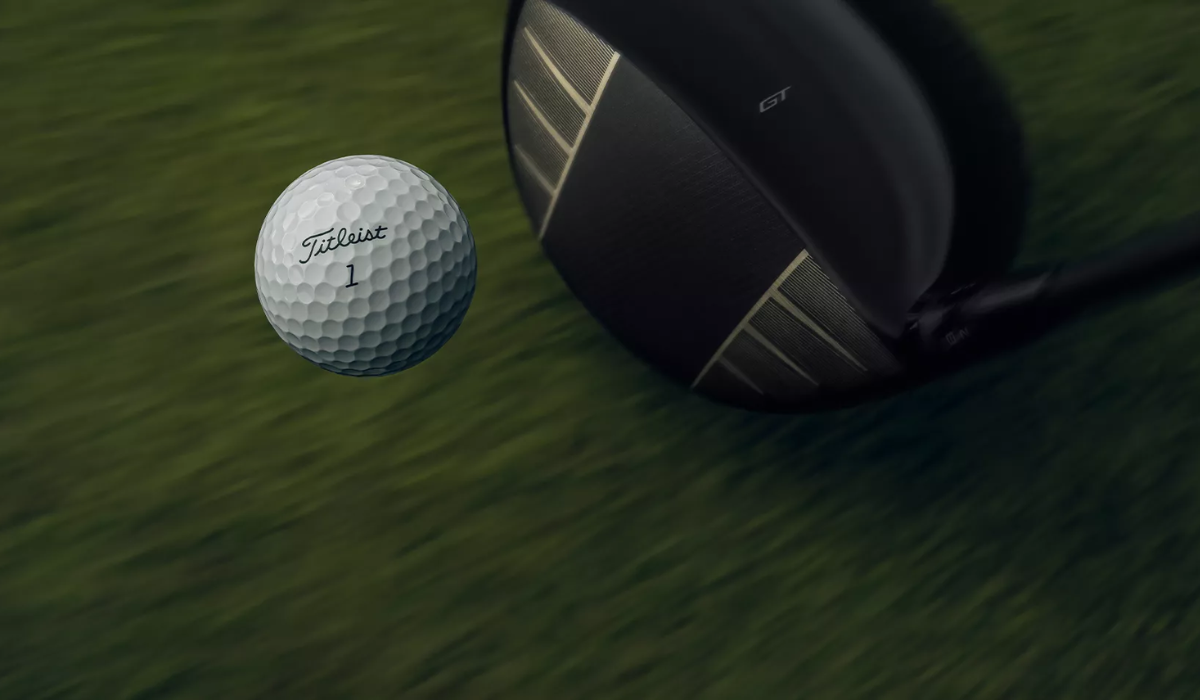
Today, golf ball manufacturers use precise engineering and testing to determine the optimal dimple pattern for performance. A standard golf ball features around 300-500 dimples, each meticulously shaped and sized. Variations in depth, shape, and pattern affect the ball’s flight, spin, and control, giving players options tailored to their game. Reduced drag and optimized lift mean longer distances off the tee. Spin-enhancing dimple designs improve control for approach shots and chips. Dimples also minimize unpredictable flight paths, ensuring consistency.

The number of dimples on a golf ball can vary, with some balls featuring over 500 dimples. Modern advancements include hexagonal and even asymmetrical dimple designs for enhanced aerodynamics. Titleist, a leading golf ball manufacturer, has tested thousands of dimple patterns to create their iconic Pro V1 and Pro V1x models. So the next time you tee up, take a moment to appreciate those tiny dimples – they’re doing a lot more work than meets the eye.

Clubs
Sami Valimaki: What’s In The Bag?
Let’s take a look in the golf bag of exciting young gun Sami Valimaki, who recently became the first Finnish player to be named the European Tour’s Rookie of the Year. The 22-year-old, from Nokia in Finland, won the Sir Henry Cotton award after an impressive 2020 season which included winning the Oman Open in […]

Clubs
Harris English: What’s In The Bag?
Harris English got his season off to the perfect start in January with a victory at the Sentry Tournament of Champions in Hawaii. The 31-year-old American ended his seven-year title drought at the Plantation Course at the Kapalua Resort on the island of Maui in Hawaii by making a six-feet birdie putt on the first […]