



Destinations
Golf Resorts Perfect for a Proposal or Honeymoon
Explore 33,000+ golf courses in 180 countries.
Follow the latest news and trends in golf.
Connect with like-minded golfers.
Find everything you need for your golf equipment and gear needs.
Travel, golf resorts, lifestyle, gear, tour highlights and technology.
All Square
Suggestions
Destinations
Golf Resorts Perfect for a Proposal or Honeymoon
Clubs
WITB: Anthony Kim’s Long-Awaited Return to Glory in Adelaide
Course Reviews
Streamsong’s Newest Masterpiece: Why Bone Valley Might Be Its Boldest Statement Yet
Clubs
Cameron Young’s Winning WITB at the 2026 Players Championship
Clubs
Akshay Bhatia’s Winning WITB at the 2026 Arnold Palmer Invitational
Course Reviews
Argentario Golf & Wellness Resort: Tuscany’s Championship Gem
Clubs
Nico Echavarria’s Win: Inside the WITB at the 2026 Cognizant Classic
Clubs
TaylorMade Introduces Qi Max and Qi Max HL Irons: A New Era for Game-Improvement Performance
Destinations
Monte Rei Enters a New Era: Deep Renovation to Preserve a Legendary Course
Destinations
Golf Trip to Casablanca: Morocco’s Atlantic Golf Escape
Clubs
Jacob Bridgeman Breaks Through at Riviera: WITB Behind His Genesis Invitational Victory
Destinations
24 Hours at a Luxury Golf Resort: A Day in Paradise
Clubs
Inside Winning Bag of Collin Morikawa at the AT&T Pebble Beach Pro-Am 2026
Course Reviews
Love on the Links: Most Romantic Golf Getaways in Europe for Valentine’s Day
Destinations
After the 18th Hole: Local Delicacies You Must Try in Spain
Course Reviews
The Best Golf Courses Near Pinehurst That Aren’t Pinehurst No. 2
Course Reviews
The Els Club Vilamoura: Golfing Grandeur in the Algarve
Course Reviews
Europe’s Best Golf Resorts with Exceptional Practice Facilities
Destinations
How to Build the Perfect Golf & Wine Vacation in Spain
Destinations
Hotel & Spa du Castellet: A Provençal Golf & Lifestyle Retreat
Course Reviews
Golf Meets Art: Courses with Cultural Connections


In modern golf, power off the tee may dominate the highlight reels, but the game is still won — and often lost — inside 125 yards. The world’s best players separate themselves not just with drivers, but with their ability to control flight, spin, and distance using wedges and short irons. While there’s no single public metric that perfectly isolates “wedge play,” analysis from PGA Tour statistics and Data Golf provides a convincing picture of who’s excelling this season.

Wedge performance can be split into two broad categories: approach play (roughly 50–125 yards) and short game (shots from inside about 50 yards, including sand and rough). The PGA Tour’s “Approaches from 50–125 yards” stat highlights players who consistently hit their wedges close, while the “Around the Green” and “Scrambling from Sand” metrics show who performs best when missing greens. Combined with Data Golf’s Skill Rankings for Approach and Short Game, they paint a nuanced picture of true wedge mastery.
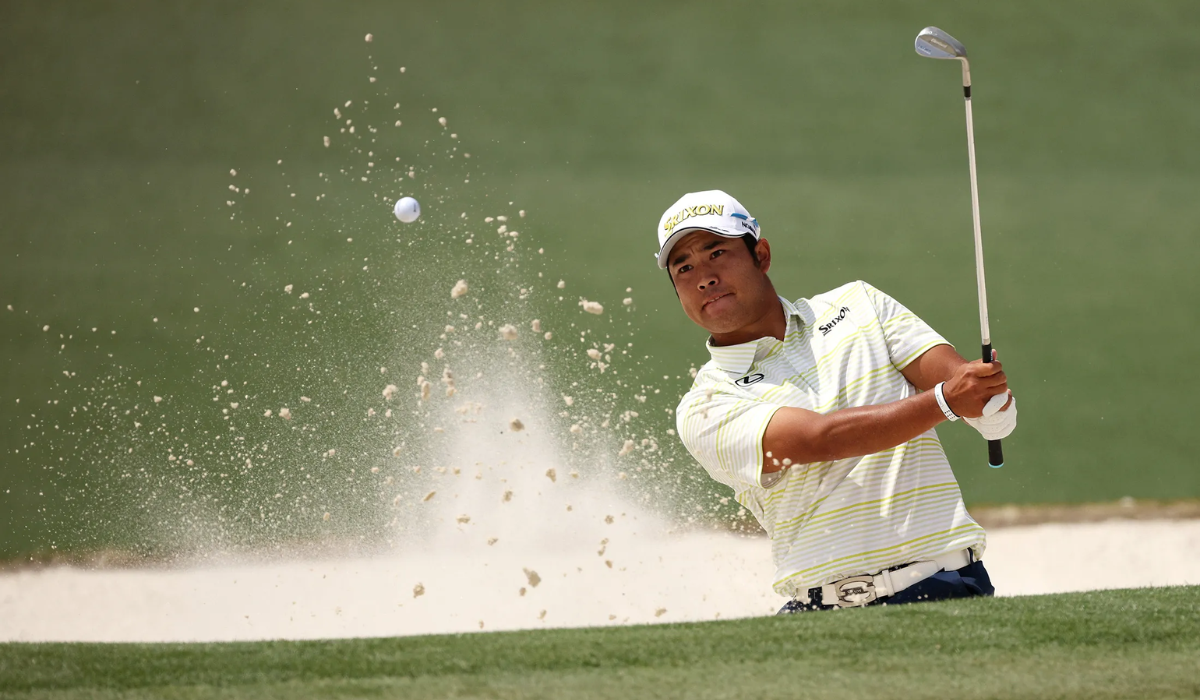
Hideki Matsuyama’s short game has been nothing short of world-class in 2025. He currently leads the PGA Tour in scrambling from the sand, converting roughly 74 percent of bunker saves — a remarkable rate even by tour standards. Matsuyama’s unique blend of shallow-angle strikes and extraordinary tempo allows him to produce consistent spin and trajectory control from a variety of lies.
Beyond the bunkers, his overall Strokes Gained: Around the Green numbers remain among the best on tour. Matsuyama’s creativity and confidence near the greens make him one of the toughest players to beat in tight scoring situations, where a single delicate flop or bump-and-run can determine momentum for an entire round.
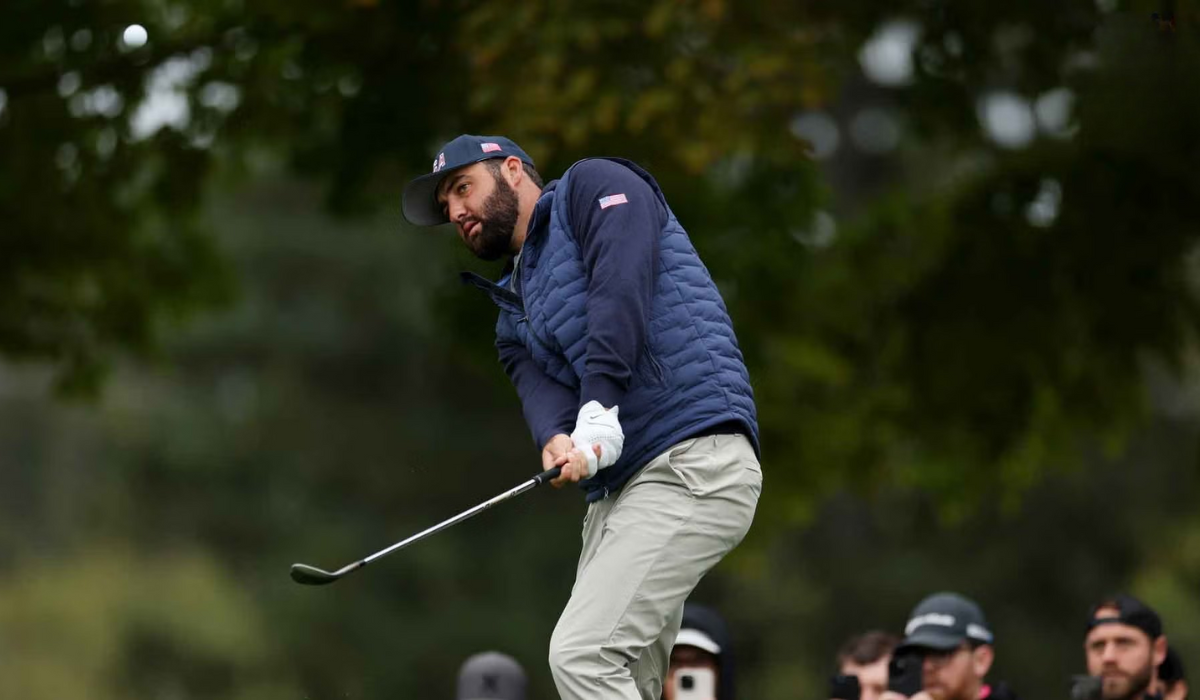
If Matsuyama reigns supreme within 50 yards, Scottie Scheffler dominates from the wedge-to-short-iron range. The world No. 1 leads the PGA Tour in approaches from 50–125 yards, averaging a proximity that routinely gives him realistic birdie chances.
Data Golf’s Approach Skill tool — breaking performance into yardage buckets — confirms Scheffler’s consistency in these scoring zones. His precise control of spin, launch, and trajectory allows him to attack tucked pins without over-spinning the ball. In the “Short Game Skill” category on Data Golf, Scheffler ranks among the top performers with a score near +0.89, reinforcing just how balanced his wedge-and-short-iron play has been.
Scheffler’s dominance tee-to-green is well documented, but these wedge numbers reveal why he converts so many opportunities. When the driver puts him in position, it’s his precision from 75 to 125 yards that turns rounds from good to great.

Another player quietly excelling in 2025 is Shane Lowry, whose deft hands and natural feel for distance control have long been admired. Though not leading in raw proximity statistics, Lowry remains one of the most reliable wedge players in the game. His trajectory management in windy conditions — particularly links-style setups — shows a mastery few can replicate. Lowry’s touch and creativity continue to make him a fixture near the top of leaderboards when scoring depends on precision rather than power.

Taken together, the numbers suggest a shared crown. Hideki Matsuyama stands out as the best short-game wedge player — elite from the sand and around the greens — while Scottie Scheffler leads in approach-wedge performance from 50–125 yards. Both display a level of control that transforms birdie chances into near-certainties and rescues pars when others would struggle.
If there were a single title for the best wedge player so far this season, the nod likely goes to Scottie Scheffler — for pairing world-class precision with unmatched consistency across every wedge distance. But Matsuyama and Lowry deserve every bit of recognition for keeping artistry and finesse alive in an era defined by speed and distance.

Majors
Kingsbarns Golf Links and the Ricoh Women’s British Open
The world’s best female golfers have arrived in Scotland for the Ricoh Women’s British Open Championship. All eyes are on Kingsbarns Links from 3 to 6 August 2017 as this incredible course holds its first major. With one of the most spectacular settings in golf, it is guaranteed to provide a sensational backdrop to the season’s […]

Gear
The All Square 2017 Golf Ball Guide
The golf ball industry has been in the news a lot lately. Tiger certainly helped that with the announcement that he’s been secretly playing Bridgestone for years. Also Bubba is now using Volvik balls. What do you use? Should you think about changing? Here’s what’s out there. Golf balls make up around 20% of all […]