


Clubs
WITB: Ryan Fox’s Winning Clubs at the 2026 Open Championship
Explore 33,000+ golf courses in 180 countries.
Follow the latest news and trends in golf.
Connect with like-minded golfers.
Find everything you need for your golf equipment and gear needs.
Travel, golf resorts, lifestyle, gear, tour highlights and technology.
All Square
Suggestions
Clubs
WITB: Ryan Fox’s Winning Clubs at the 2026 Open Championship
Course Reviews
Golf in Madeira: Cliffs, Clouds and Two Unforgettable Courses
Destinations
Thai Caddie Culture Explained: Tipping, Etiquette and What to Expect
Course Reviews
Best Golf Courses Around Munich: Where Championship Golf Meets Bavarian Beauty
Course Reviews
Marrakech vs Agadir for Golf: Which Moroccan Destination Should You Choose?
Accessories
Best Push Carts and Electric Trolleys for Golf in 2026
Course Reviews
Rediscover Monte Rei: Portugal’s Iconic Golf Course Reopens After Major Renovation
Course Reviews
Best Golf Courses Around Rome: Where Ancient History Meets Modern Golf
Instruction
Links vs Parkland vs Heathland: What’s the Difference?
Clubs
The Best Irons on the Market in 2026
Clubs
Austin Smotherman WITB: The Clubs Behind His 2026 Bank of Utah Championship Win
Destinations
Barrière Golf Properties: French Golf Escapes Where the Resort Is Part of the Experience
Destinations
Conrad Algarve Renovations: A New Chapter of Luxury in Quinta do Lago
Gear
Garmin Golf Watches Guide: Which Garmin Watch Is Right for Your Game?
PGA Tour
Presidents Cup 2026 Results & Winners: Team USA Completes Historic Comeback
Course Reviews
Cullinan Golf Links Resort, Belek: Where Golf Meets the Mediterranean
Course Reviews
New Opening: Limassol Greens — Cyprus’ New Golf Destination
PGA Tour
Presidents Cup 2026 Preview: Everything to Know Before Medinah
Community
How Modern Golf Courses Conserve Water and Protect Wildlife
PGA Tour
Changes on the PGA Tour from 2028
Course Reviews
Tee Off in Tuscany: Golfing Italy’s Most Picturesque Countryside
Course Reviews
The Best Golf Courses Near Pinehurst That Aren’t Pinehurst No. 2
Course Reviews
Lofoten Golf Experience: Playing at the Edge of the World
Course Reviews
Sustainability in Golf: The World’s Most Environmentally Conscious New Courses
Clubs
Rory McIlroy 2026 Masters WITB: Winning Setup at Augusta
Course Reviews
A Golf Trip to Pebble Beach: The Ultimate Coastal Golf Experience
Clubs
Matt Fitzpatrick Wins 2026 RBC Heritage: Inside His Triumph WITB

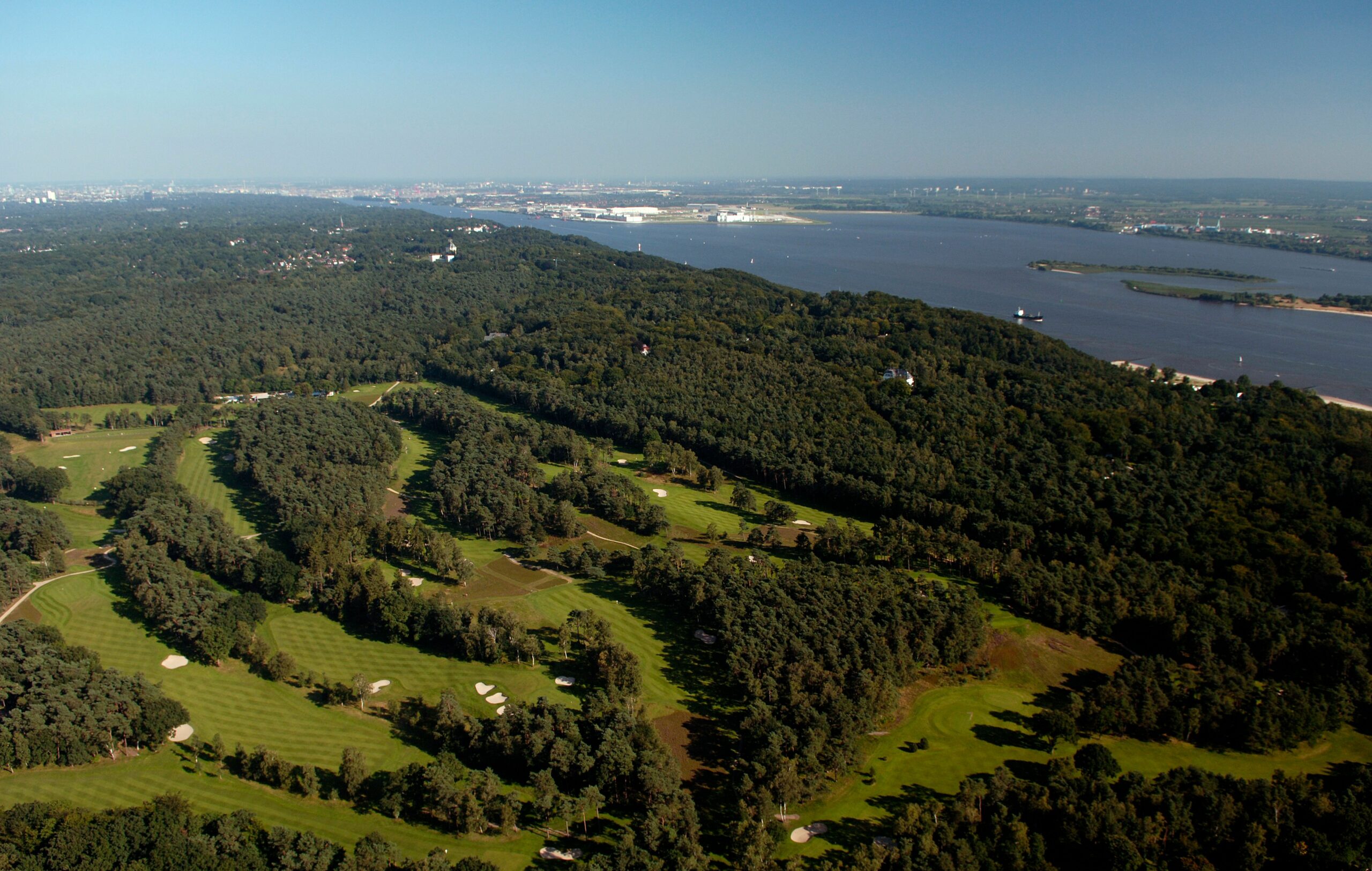
Golf in Germany rarely gets the attention it deserves. Talk of European golf trips tends to gravitate toward Scotland’s links, Spain’s Costas, or Portugal’s Algarve, while Germany quietly sits on one of the continent’s most varied golf landscapes: heathland courses shaped by the same designers who built England’s finest clubs, a genuine North Sea links carved out of an abandoned military base, and Alpine fairways that run beneath the peaks of Bavaria. With 736 golf clubs and more than 600,000 registered golfers, Germany also has the infrastructure — and, crucially, the affordability — to back up the scenery. Green fees and hotel rates remain notably reasonable next to comparable golf destinations in Western Europe, which makes it easier to justify playing several of the country’s standout courses on a single trip.
Germany has also produced two of the game’s genuine greats, Bernhard Langer and Martin Kaymer, and its clubs carry that pedigree with quiet pride rather than loud marketing. Here are the experiences that make a golf trip to Germany worth planning.
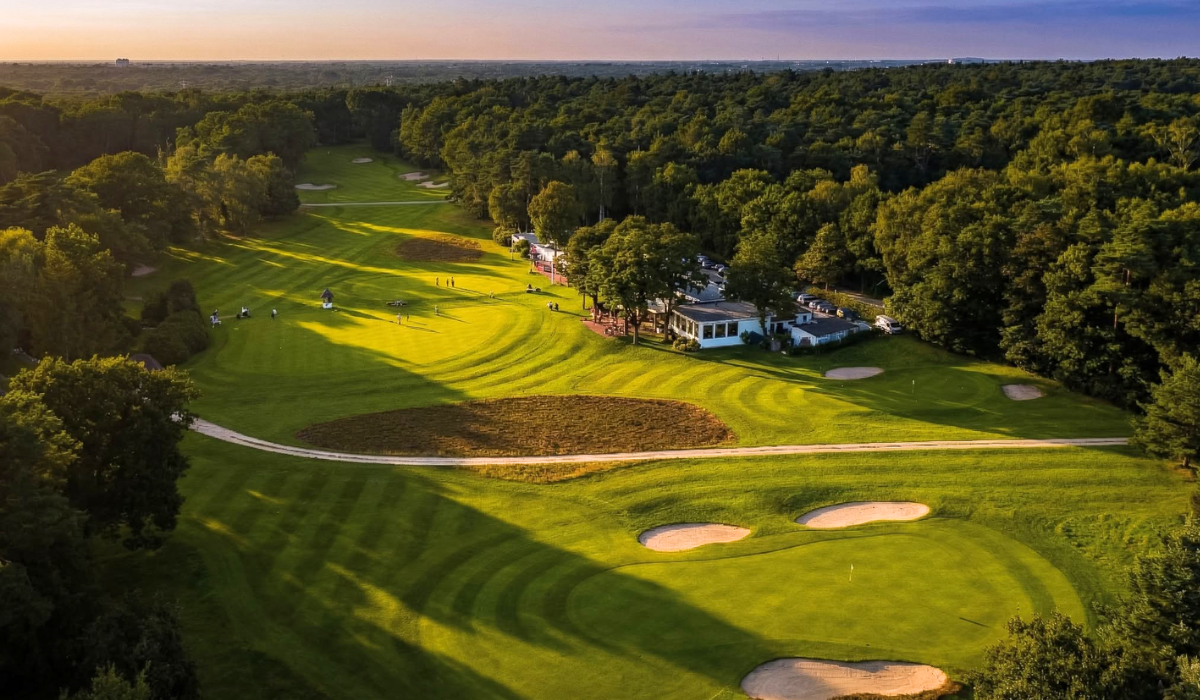
If there is one round every serious golfer visiting Germany should build a trip around, it’s Falkenstein. Hamburger Golf-Club, founded in 1906, moved to its current site on the edge of the Elbe in 1930, where English design trio Harry Colt, Charles Alison, and John Morrison routed a course through pine and birch heathland that still plays, almost a century later, like a lesson in restraint and strategy. The firm of Colt, Alison and Morrison was originally commissioned to design the course, and it has since undergone changes, the first being a renovation by Bernhard von Limburger in the 1960s, and the second a 2015 renovation by Frank Pont that reconstructed the bunkers and reshaped the greens to better match the original design.
The heather-lined fairways, small green complexes tucked into natural folds of land, and a routing that rarely offers a straightforward tee shot have earned Falkenstein a reputation as one of continental Europe’s finest heathland tracks, spoken of in the same breath as Morfontaine in France and De Pan in the Netherlands. It’s also a course with genuine championship history: a 24-year-old Bernhard Langer won his first German Open here in 1981, the first German to claim the title since the tournament’s founding in 1911, and Falkenstein has hosted German Opens and international amateur team events over the decades. For golfers who want to understand why German golf is taken seriously by architecture purists, Falkenstein is the starting point.
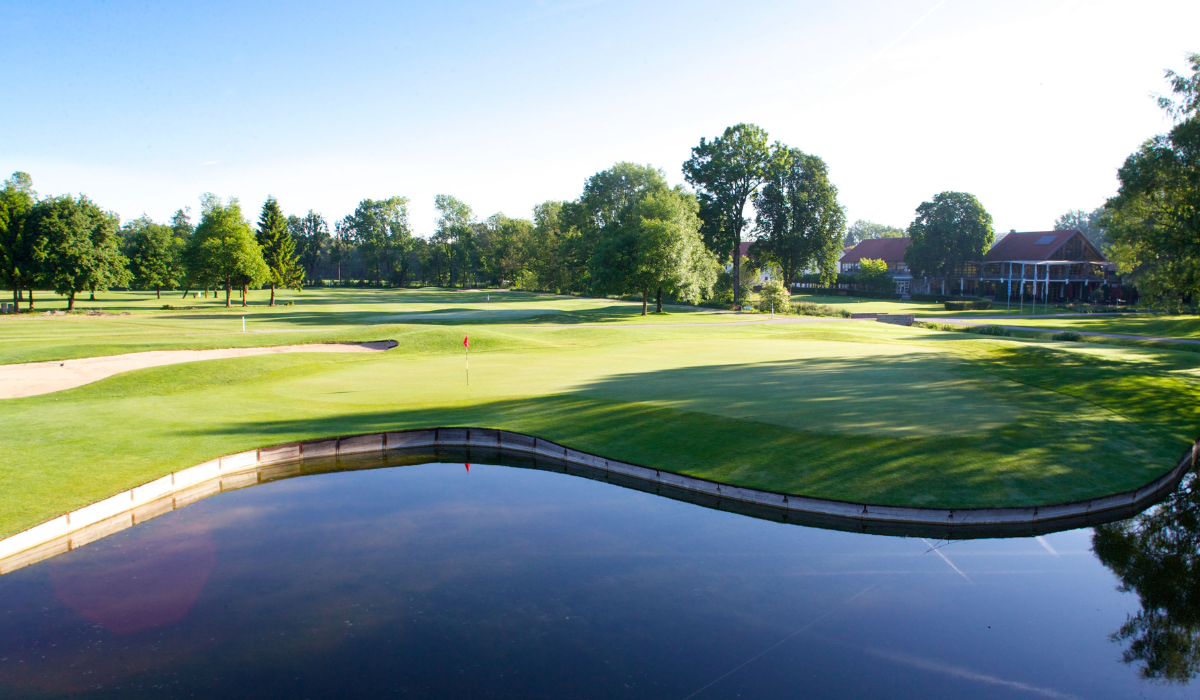
Germany’s biggest annual tournament, the BMW International Open, has alternated for decades between two very different but equally polished venues: Golfclub München Eichenried near Munich and Golf Club Gut Lärchenhof near Cologne. Eichenried hosted the event from its founding in 1989 through most of the following two decades, while Gut Lärchenhof, a Jack Nicklaus design near Pulheim, took its turn in 2012, 2014, 2016, and 2018. Nicklaus’s layout is famously honest — few blind shots, generous sightlines from tee to green — which rewards accurate iron play over raw length, and it has also hosted the Linde German Masters and the Mercedes-Benz Championship.
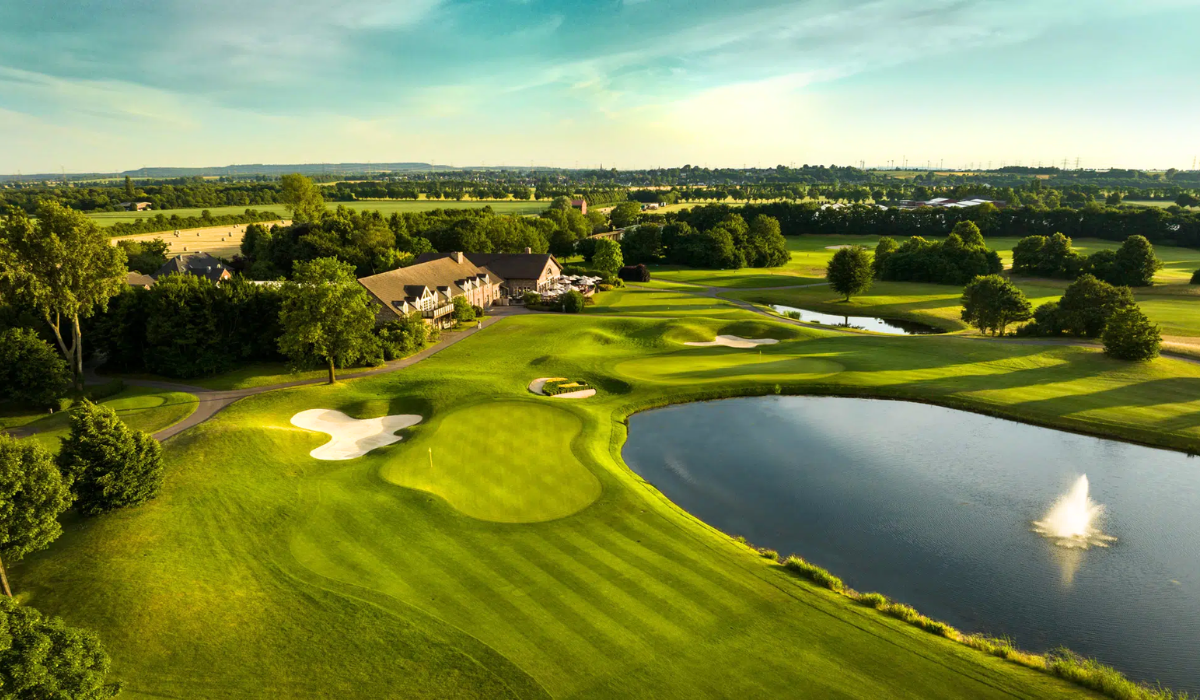
Playing either course gives visitors a genuine sense of tournament-grade conditioning, and both clubs welcome visiting golfers outside tournament weeks. It’s one of the few places in Europe where you can walk fairways that hosted Henrik Stenson and Martin Kaymer battling for a European Tour title, then sit down in the same clubhouse restaurant the pros used that week.
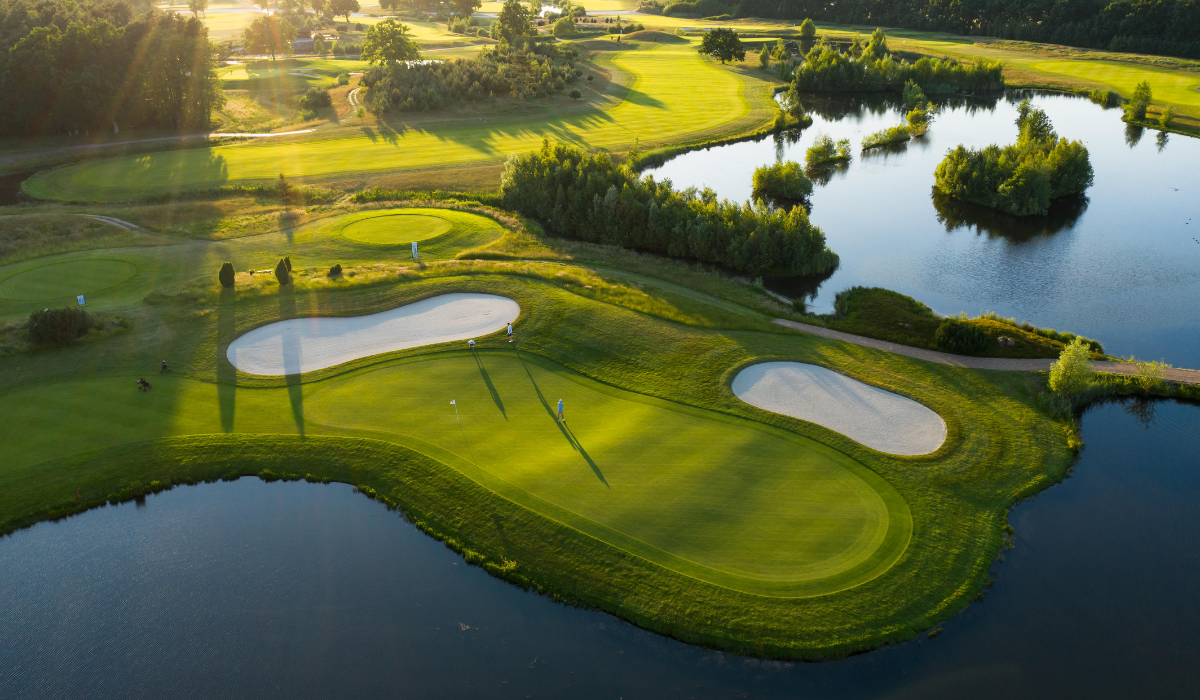
South of Hamburg, near the towns of Winsen and Radbruch, Green Eagle Golf Courses has become the fixed home of the Porsche European Open on the DP World Tour since 2017. The Porsche North Course stretches to 7,882 yards off the back tees, making it one of the longest tests in professional golf, and Germany’s national golf federation has rated it the most difficult course in the country — not just for its length, but for its severely undulating greens and water hazards that come into play on all but a single hole. Recent champions include Laurie Canter in 2024, whose maiden DP World Tour win came at Green Eagle in front of roughly 25,000 spectators over tournament week.
Beyond the championship North Course, the club operates a more forgiving South Course and a six-hole par-3 layout, plus what is billed as the largest driving range in northern Germany, so a visit here can be tailored to any handicap rather than reserved for scratch golfers chasing a brutal test.
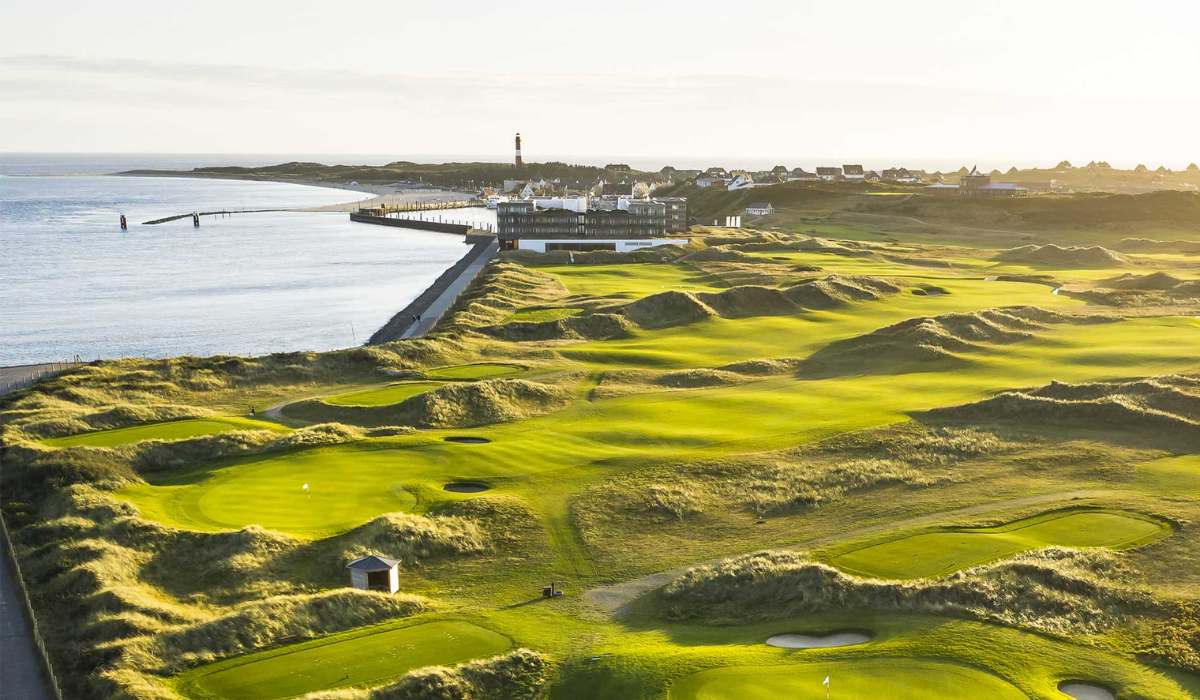
For golfers who assume proper links golf belongs to Scotland and Ireland, Budersand on the island of Sylt is the corrective. The course sits at the southern tip of Sylt in Hörnum, built on the site of a former WWII seaplane military base that had lain derelict for decades before local architect Rolf-Stephan Hansen transformed 73 hectares of paved runways and protected dunes into an 18-hole layout that opened in 2008. Reaching Sylt takes some effort — a causeway train from the mainland or a ferry from Denmark — but the reward is a rare thing on the European continent: firm, fast, wind-exposed golf routed through genuine dune land, with more than 90 pot bunkers guarding the fairways and greens.
The second hole is often singled out as the course’s calling card, its elevated tee offering a view of the North Sea on one side and the Wadden Sea mudflats on the other. Reviewers who have played the great links of Scotland and Ireland consistently note that Budersand holds its own against that company, and the club’s boutique hotel on-site makes it easy to build a two- or three-night stay entirely around the course.
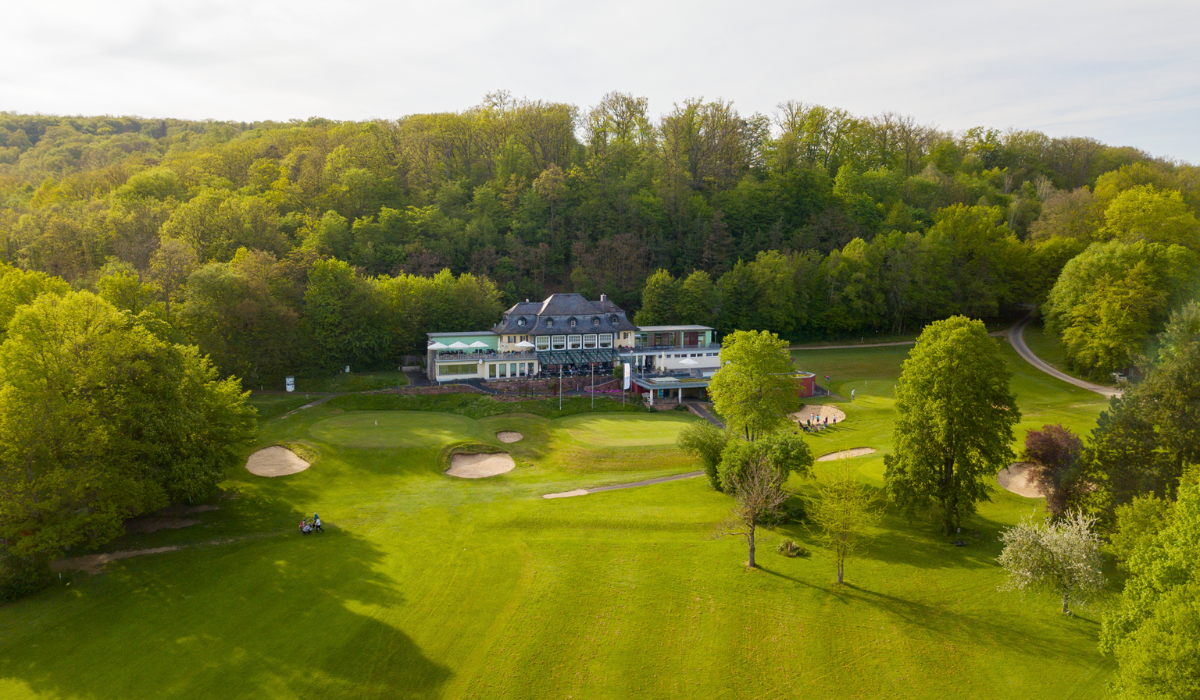
Southern Germany offers a completely different mood. Bavaria and neighbouring Baden-Württemberg together host 248 golf clubs, and the closer you get to the Alps, the more the mountains start doing the scenic work for you. Clubs like Golf Club Bad Kissingen — founded in 1910 and the oldest course in Bavaria — sit alongside newer resort developments such as Achental Golf, part of the Achental resort area, and the Quellness & Golf Resort near Bad Griesbach, which bills itself as Europe’s largest golf resort, combining five courses and a short course with thermal spa facilities. Golfclub Reit im Winkl, though technically registered with an Austrian address, is a member of the German Golf Federation and plays out beneath Alpine peaks near the Austrian border.
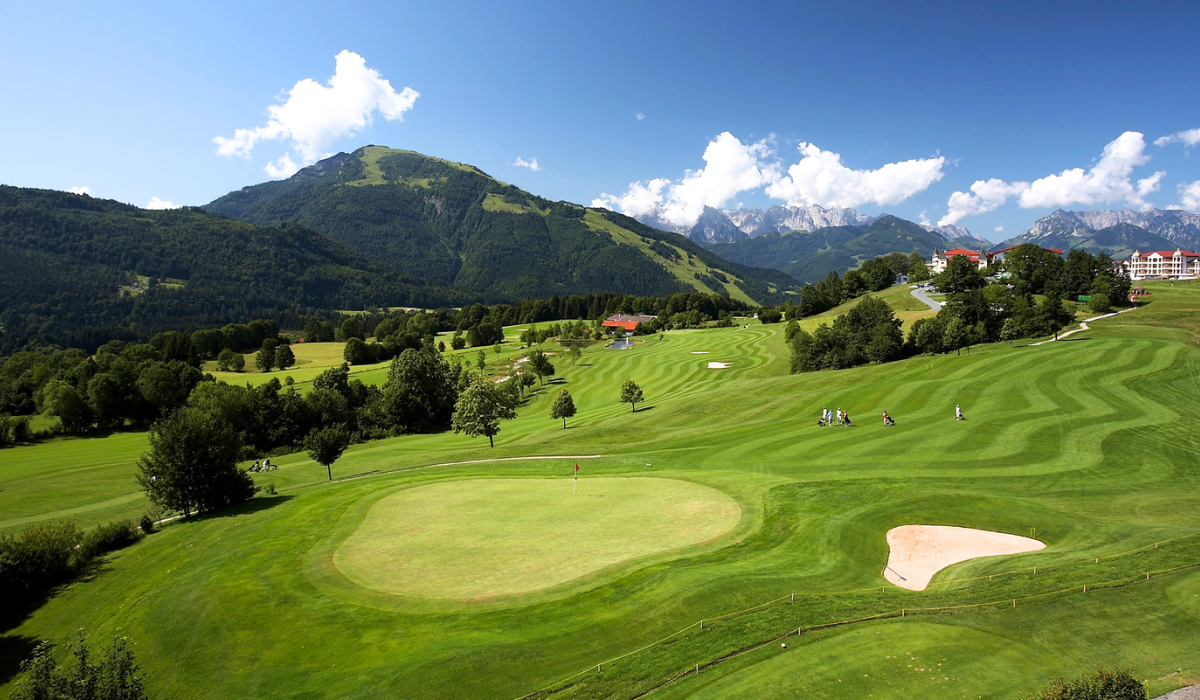
This is where German golf becomes as much about the surroundings as the course itself: rounds framed by the Bavarian Alps, followed by an afternoon at a thermal spa or an evening in a medieval town square, make the region a natural base for a multi-day golf-and-culture trip rather than a single-course pilgrimage.
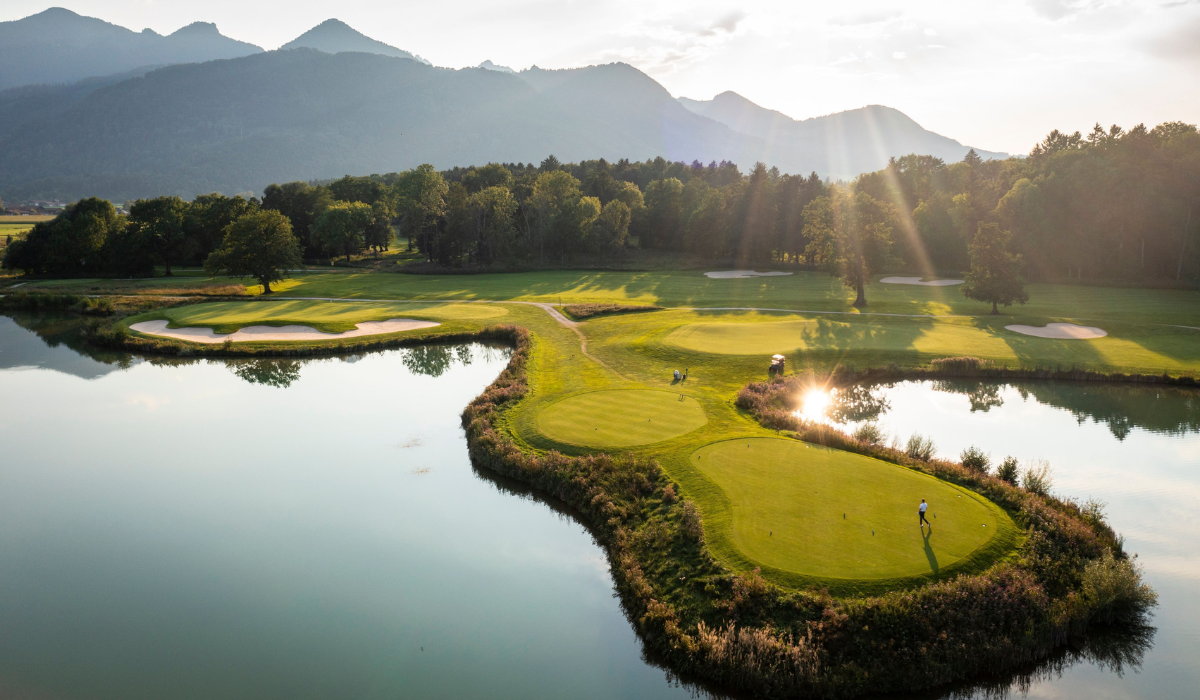
A few practical notes make a real difference when planning a golf trip to Germany. Many clubs — particularly the older, tradition-bound ones — don’t serve food or drinks before midday, so a pre-round coffee is best sourced at the hotel rather than the clubhouse. Visitor access at private clubs like Falkenstein typically requires a valid handicap certificate and advance booking, while resort courses such as Green Eagle and Budersand are considerably more relaxed about walk-up play. Weather is genuinely changeable, with the northern coastal courses exposed to North Sea wind and the Alpine south holding a shorter, more defined peak season through spring and summer.
None of this should discourage a visit. What Germany offers, uniquely among Europe’s golf destinations, is genuine variety within a single, easily connected country: a Colt-designed heathland classic in Hamburg one day, a wind-battered links on a North Sea island the next, and Alpine fairways under snow-capped peaks a few days later — all without ever needing more than a train ticket or a short domestic flight between rounds.
Details to Relaunch Donnafugata Golf Resort in Sicily
Your Golf Trip to Phuket: Tropical Fairways, Championship Courses, and Island Adventures

Clubs
Inside Winning Bag of Collin Morikawa at the AT&T Pebble Beach Pro-Am 2026
Collin Morikawa’s victory at the 2026 AT&T Pebble Beach Pro-Am marked a powerful return to top form, blending precision iron play with calm execution under pressure. Competing across the iconic coastal layout at Pebble Beach Golf Links, Collin Morikawa navigated tricky winds and demanding greens with trademark consistency. Finishing at 22-under par, he sealed the […]
Destinations
Top Golf Resorts with Private Villas
If you love golf and value privacy, space, and a home-away-from-home vibe, staying in a private villa at a golf resort turns a great trip into an unforgettable one. Villas combine the convenience and service of a luxury resort (think pro shops, top instructors, spas and great food) with private pools, kitchens, multiple bedrooms for […]