



Destinations
Conrad Algarve Renovations: A New Chapter of Luxury in Quinta do Lago
Explore 33,000+ golf courses in 180 countries.
Follow the latest news and trends in golf.
Connect with like-minded golfers.
Find everything you need for your golf equipment and gear needs.
Travel, golf resorts, lifestyle, gear, tour highlights and technology.
All Square
Suggestions
Destinations
Conrad Algarve Renovations: A New Chapter of Luxury in Quinta do Lago
Destinations
Thai Caddie Culture Explained: Tipping, Etiquette and What to Expect
Course Reviews
Best Golf Courses Around Munich: Where Championship Golf Meets Bavarian Beauty
Course Reviews
Marrakech vs Agadir for Golf: Which Moroccan Destination Should You Choose?
Accessories
Best Push Carts and Electric Trolleys for Golf in 2026
Course Reviews
Rediscover Monte Rei: Portugal’s Iconic Golf Course Reopens After Major Renovation
Course Reviews
Best Golf Courses Around Rome: Where Ancient History Meets Modern Golf
Instruction
Links vs Parkland vs Heathland: What’s the Difference?
Clubs
The Best Irons on the Market in 2026
Clubs
Austin Smotherman WITB: The Clubs Behind His 2026 Bank of Utah Championship Win
Destinations
Barrière Golf Properties: French Golf Escapes Where the Resort Is Part of the Experience
Gear
Garmin Golf Watches Guide: Which Garmin Watch Is Right for Your Game?
PGA Tour
Presidents Cup 2026 Results & Winners: Team USA Completes Historic Comeback
Course Reviews
Cullinan Golf Links Resort, Belek: Where Golf Meets the Mediterranean
Course Reviews
New Opening: Limassol Greens — Cyprus’ New Golf Destination
PGA Tour
Presidents Cup 2026 Preview: Everything to Know Before Medinah
Clubs
WITB: Ryan Fox’s Winning Clubs at the 2026 Open Championship
Community
How Modern Golf Courses Conserve Water and Protect Wildlife
PGA Tour
Changes on the PGA Tour from 2028
Course Reviews
Tee Off in Tuscany: Golfing Italy’s Most Picturesque Countryside
Course Reviews
The Best Golf Courses Near Pinehurst That Aren’t Pinehurst No. 2
Course Reviews
Playing Golf on the Edge: Cliffside Courses Worth the Nerves
Destinations
Golf Trip to Agadir: Swinging Under the Moroccan Sun
Clubs
Scottie Scheffler WITB: The Clubs Behind His 2026 TOUR Championship Victory
Destinations
How to Access the Old Course, St Andrews: Getting There and Getting On
Destinations
Boutique Golf Hotels with Personality

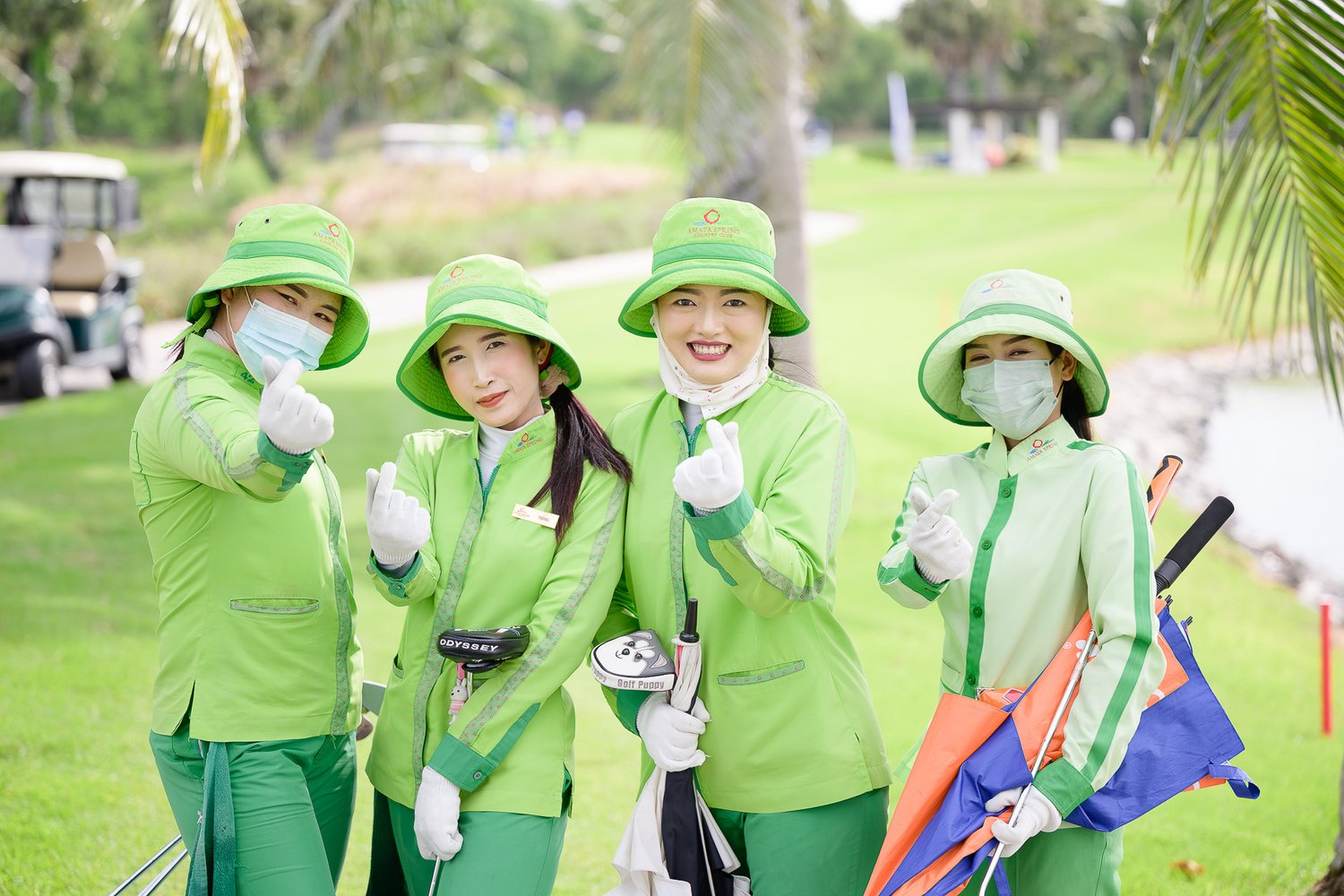
Golf in Thailand is about much more than championship courses, tropical landscapes and luxurious clubhouses. One of the country’s most distinctive golfing traditions is its caddie culture, which offers visitors a uniquely personal experience on the course.
Unlike in many European or North American destinations, where caddies are often considered a luxury, having a personal caddie is standard practice at almost every golf course in Thailand. From helping players navigate unfamiliar fairways to reading tricky greens and offering local advice, Thai caddies play an essential role in the golfing experience.
However, first-time visitors often have questions. Are caddies compulsory? How much should you tip? What is considered polite behaviour? And why are so many Thai caddies women?
Understanding these customs before your first round will help you avoid awkward situations, appreciate your caddie’s expertise and discover one of the most memorable aspects of playing golf in Thailand.
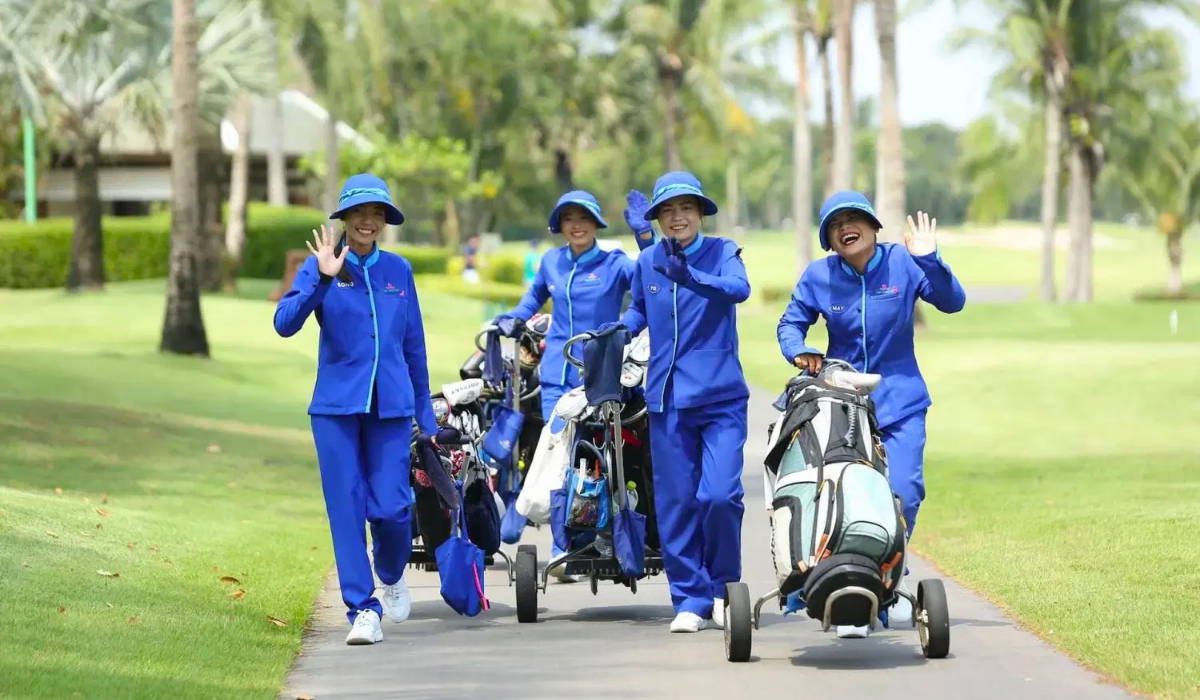
In Thailand, caddies aren’t considered an optional luxury. At the vast majority of golf courses, every golfer is assigned a personal caddie, whether they’re playing at an affordable local club or a prestigious championship venue.
This one-caddie-per-golfer approach is deeply embedded in the country’s golf industry. While golfers elsewhere may be accustomed to carrying their own bags or using electric trolleys, Thai courses operate around a more personalised service model.
One particularly distinctive characteristic is that most Thai golf caddies are women. Although male caddies also work at Thai clubs, women have traditionally dominated the profession. They are often recognisable by their colourful uniforms, wide-brimmed hats, gloves and protective clothing, which help shield them from the intense tropical sun.
Many caddies develop impressive knowledge of their home courses over years of experience. They know where hidden hazards lie, how prevailing winds affect certain holes and which greens have particularly deceptive breaks. Some have walked the same fairways thousands of times, making their local expertise extremely valuable.
The profession also provides employment opportunities within surrounding communities. For many returning golfers, building relationships with familiar caddies becomes an important part of their annual golf holidays.
Your caddie experience typically begins at the golf club’s bag-drop area, where staff collect your clubs before assigning you a caddie. Some clubs operate a rotation system, while others allow golfers to request a particular caddie in advance.
Once introduced, your caddie will generally take responsibility for your golf bag, prepare clubs and accompany you throughout the round. Depending on the club’s arrangements, they may also drive your golf cart.
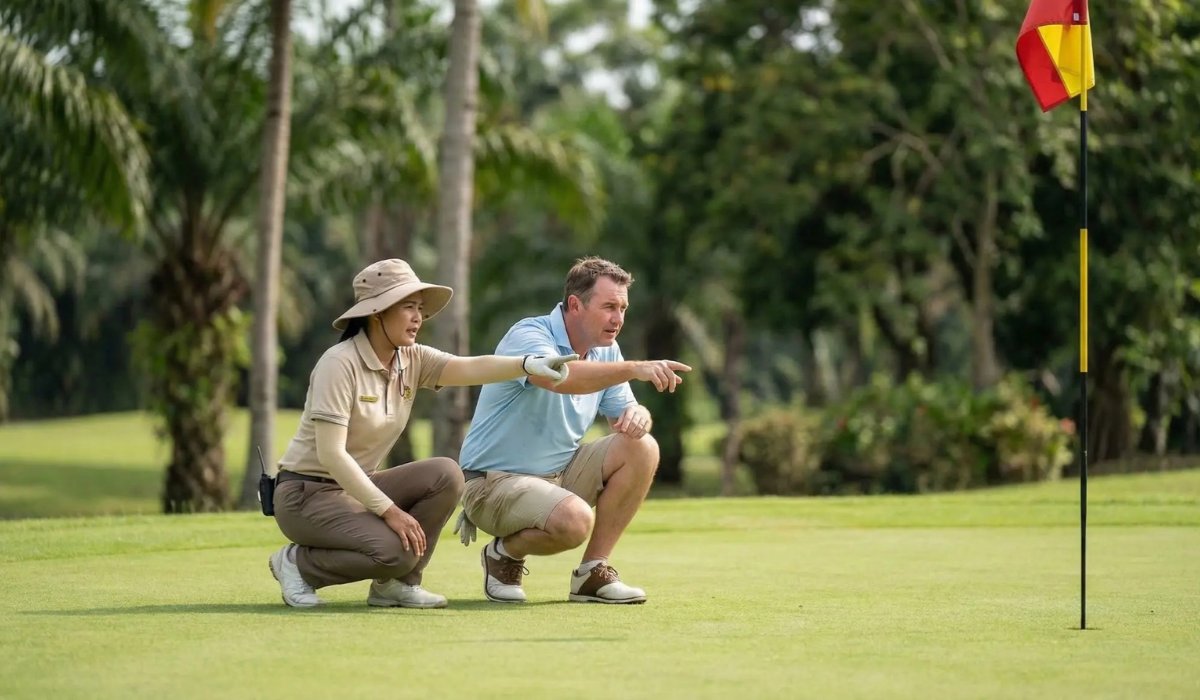
However, their responsibilities extend far beyond handling equipment. Experienced Thai caddies help estimate distances, recommend clubs, identify hazards and suggest the most effective strategies for unfamiliar holes.
Their expertise is particularly noticeable on the putting greens. Many Thai courses feature warm-season grasses, including Bermuda varieties, where the direction of the grain can influence putting speed and ball movement. Caddies who know these greens intimately can often identify subtle slopes and breaks that visiting golfers might overlook.
They also clean clubs, retrieve golf balls, rake bunkers and help locate wayward shots. Some assist with scoring and offer advice on course management.
While their recommendations can be extremely helpful, remember that caddies aren’t necessarily qualified golf instructors. They provide local knowledge rather than formal swing lessons, and the final decision about every shot remains yours.
Communication is another important consideration. At popular international golf destinations such as Phuket, Hua Hin and Bangkok, many caddies understand common English golfing expressions. Others may communicate through basic English, Thai and gestures.
Simple questions such as “How far?”, “Left or right?” or “Which club?” usually work well. A friendly introduction and a brief explanation of your playing preferences can also help establish a comfortable partnership.
Tipping is one of the most important aspects of Thai golf culture and often causes confusion among first-time visitors.
The first thing to understand is that the caddie fee and the caddie tip are separate payments.
The caddie fee is charged by the golf club and usually paid before your round. It may be listed separately or included in a golf package alongside green fees and cart rental.
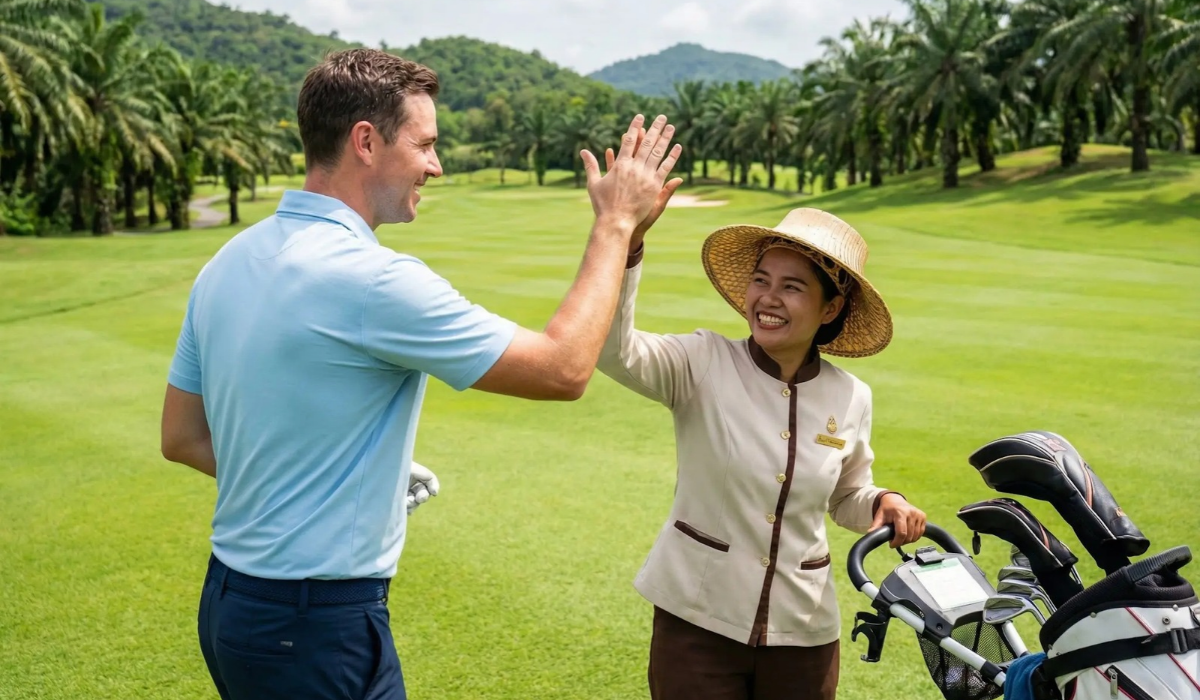
The tip, meanwhile, is paid directly to your caddie after the round. Although technically discretionary, gratuities are an established tradition in Thailand and represent an important part of many caddies’ earnings.
For an 18-hole round, the following amounts are useful guidelines:
These amounts aren’t official nationwide rates, and expectations may vary depending on the course. For example, Pineapple Valley Golf Club in Hua Hin recommends a minimum gratuity of THB 400 per caddie for 18 holes.
Golfers should also remember that a prepaid golf package doesn’t necessarily include caddie tips. At Laguna Golf Phuket, for example, the published 18-hole caddie fee is THB 400, while an individual golf cart costs THB 700. These charges are separate from any gratuity unless a package specifically states otherwise.
It’s best to carry sufficient Thai baht in cash and hand the tip directly to your caddie after the round, accompanied by a friendly thank-you.
If you’re planning several rounds during your holiday, budgeting THB 500 per round for tips is a practical starting point, although more may be appropriate depending on the service and course.
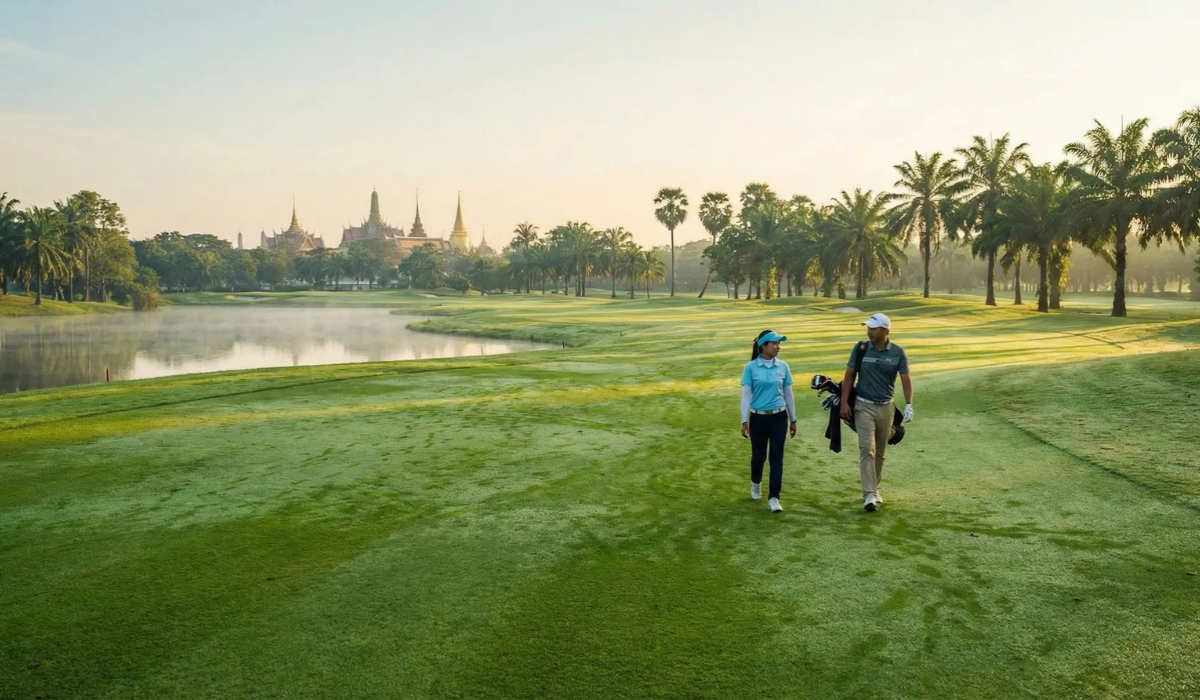
Thailand is famous for its hospitality and emphasis on politeness, and these cultural values are reflected in the country’s golfing traditions.
A good relationship with your caddie begins with simple courtesy. Greet them warmly, learn their name if possible and treat their advice with respect.
A few Thai expressions can make the interaction more enjoyable. Sawasdee means hello, while khop khun means thank you. The polite ending is generally khrap for male speakers and kha for female speakers.
You don’t need to speak Thai fluently, but showing an interest in local customs is often appreciated.
It’s equally important to remain patient when communication becomes difficult. English proficiency varies, so misunderstandings can occasionally occur, particularly when discussing distances or club selection.
If you disagree with a recommendation, simply choose the club or shot you prefer. Your caddie provides guidance, but they aren’t responsible for every outcome.
Avoid raising your voice or blaming them after a poor shot. Thai social customs generally place considerable value on calm communication and avoiding unnecessary public confrontation.
Another thoughtful gesture is offering your caddie a drink during particularly hot rounds. With temperatures frequently exceeding 30°C, caddies spend many hours outdoors, often walking considerable distances while handling equipment.
Remember that their work can be physically demanding, especially during humid weather or unusually slow rounds. Respecting their workload and acknowledging exceptional effort can make the experience more enjoyable for everyone.
Some clubs also allow golfers to request their favourite caddies for future rounds. Caddies commonly wear identifying numbers, making it easier to remember someone who provided excellent service.
If you’ve enjoyed playing with a particular caddie, ask the pro shop whether you can request them again. Availability isn’t guaranteed, but many returning golfers develop long-standing relationships with their preferred caddies.
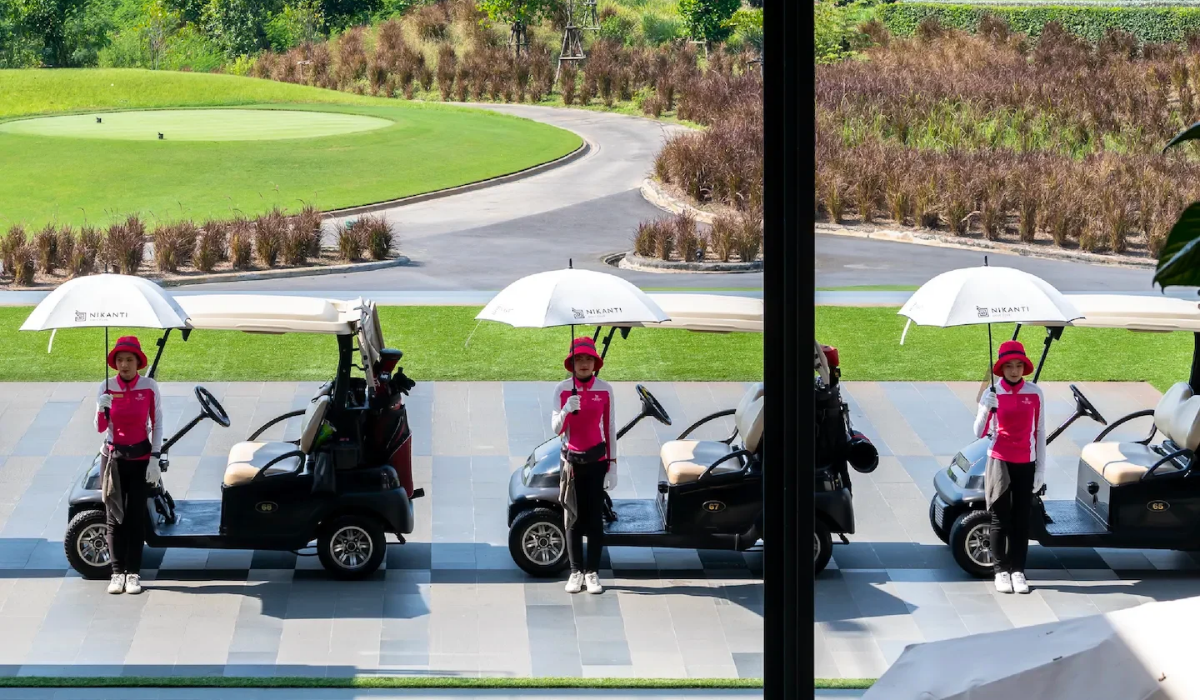
For most visitors, the answer is no. At the overwhelming majority of Thailand’s full-length golf courses, caddies are compulsory, even when golfers use golf carts.
This can surprise players accustomed to carrying their own bags or playing independently. However, Thailand’s golf industry operates around a system where personalised caddie service is part of the standard golfing experience.
Some clubs permit walking with a caddie, while others require carts because of course layouts, operating policies or local conditions. It’s always worth checking these details before booking.
Although compulsory caddie service might initially feel unfamiliar, many golfers quickly discover its advantages. Having someone who knows the course can save time, improve decision-making and reduce the frustration of navigating unfamiliar holes.
The experience can be particularly valuable at Thailand’s more challenging courses, where elevation changes, water hazards and difficult green complexes make local advice helpful.
At Red Mountain Golf Club in Phuket, for instance, the dramatic terrain and elevation changes create situations where familiarity with the layout is especially useful. In Hua Hin, championship venues such as Black Mountain Golf Club and Pineapple Valley Golf Club offer another opportunity to experience Thailand’s distinctive approach to personalised golf service.
Bangkok, Pattaya and Chiang Mai also provide numerous courses where caddies are a central part of the experience.
Whichever destination you choose, consider your caddie an important partner rather than simply someone responsible for carrying your clubs.
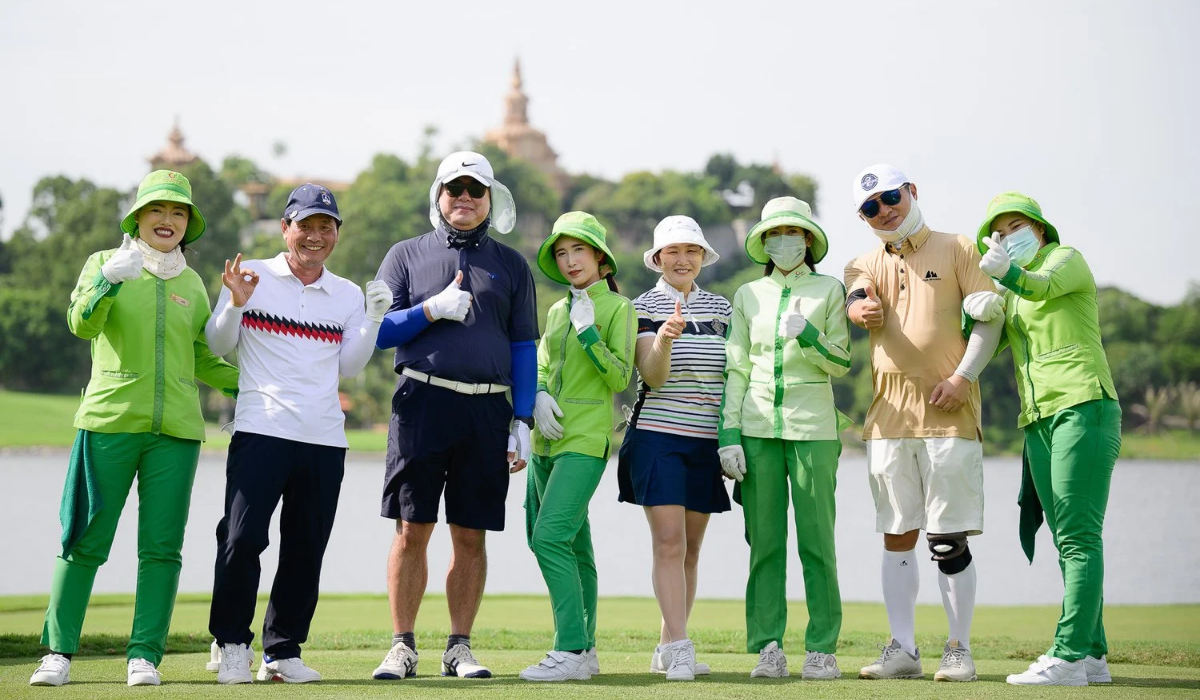
What truly distinguishes Thai caddie culture isn’t just the level of service but the personal connection that can develop during a round.
Over four or five hours, your caddie becomes a familiar presence, helping you navigate difficult holes, celebrating successful shots and sometimes sharing a laugh after an unfortunate bunker escape.
An experienced caddie might correctly predict a seemingly impossible putting break, recommend a surprising club choice or help recover a ball that appeared completely lost.
These moments often become lasting memories of a golf holiday, regardless of the final score.
Of course, experiences vary between courses and individuals. Not every caddie has the same level of experience, language proficiency or approach to service. However, approaching the relationship with respect, patience and an appreciation of local expertise can transform an ordinary round into something genuinely special.
Thailand’s world-class golf courses, tropical scenery and luxurious resorts make it an exceptional destination, but its caddie culture adds something that even the most advanced golf technology cannot replicate: personal attention, human connection and an intimate understanding of the course.
So, when you next find yourself standing on a sunlit fairway in Thailand, take a moment to appreciate the person beside you. They may help you choose the right club, discover a hidden break or simply make the round more enjoyable.
And even if your scorecard doesn’t turn out exactly as planned, there’s a good chance your caddie will be one of the reasons you remember the experience long after your holiday ends.
Marrakech vs Agadir for Golf: Which Moroccan Destination Should You Choose?
Rediscover Monte Rei: Portugal’s Iconic Golf Course Reopens After Major Renovation

Destinations
Vancouver Island, the Only Year-Round Golf Destination in Canada
Known as the Garden City, Victoria is the capital city of the province of British Columbia on the Pacific coast of Canada. Situated on the southern tip of Vancouver Island, Victoria is 100 km from the mainland and Vancouver, the largest city in western Canada. Vancouver Island is the only area of Canada that offers […]

Community
Rewilding the Rough: Nature-First Golf Design
For more than a century, golf-course architecture largely pushed the landscape toward manicured uniformity — closely mown turf, sculpted bunkers, irrigation systems working overtime and roughs that behaved more like semi-fairways than natural habitat. Today, a very different design philosophy is gaining momentum. “Rewilding the rough” invites nature back in, restoring the textures, unpredictability and […]