


Clubs
Austin Smotherman WITB: The Clubs Behind His 2026 Bank of Utah Championship Win
Explore 33,000+ golf courses in 180 countries.
Follow the latest news and trends in golf.
Connect with like-minded golfers.
Find everything you need for your golf equipment and gear needs.
Travel, golf resorts, lifestyle, gear, tour highlights and technology.
All Square
Suggestions
Clubs
Austin Smotherman WITB: The Clubs Behind His 2026 Bank of Utah Championship Win
Destinations
Barrière Golf Properties: French Golf Escapes Where the Resort Is Part of the Experience
Clubs
The Best Irons on the Market in 2026
Destinations
Conrad Algarve Renovations: A New Chapter of Luxury in Quinta do Lago
Course Reviews
Marrakech vs Agadir for Golf: Which Moroccan Destination Should You Choose?
Accessories
Best Push Carts and Electric Trolleys for Golf in 2026
Course Reviews
Rediscover Monte Rei: Portugal’s Iconic Golf Course Reopens After Major Renovation
Course Reviews
Best Golf Courses Around Rome: Where Ancient History Meets Modern Golf
Instruction
Links vs Parkland vs Heathland: What’s the Difference?
Gear
Garmin Golf Watches Guide: Which Garmin Watch Is Right for Your Game?
PGA Tour
Presidents Cup 2026 Results & Winners: Team USA Completes Historic Comeback
Course Reviews
Cullinan Golf Links Resort, Belek: Where Golf Meets the Mediterranean
Course Reviews
New Opening: Limassol Greens — Cyprus’ New Golf Destination
PGA Tour
Presidents Cup 2026 Preview: Everything to Know Before Medinah
Clubs
Jacob Bridgeman WITB: The Clubs Behind His 2026 Biltmore Championship Victory
Course Reviews
Play Golf at Pebble Beach: What to Know Before You Go
Professional Golf
Solheim Cup Results & Winners 2026: Europe Reclaims the Trophy
Clubs
This Year’s Best Drivers on the Market: A 2026 Buyer’s Guide
Clubs
WITB: Ryan Fox’s Winning Clubs at the 2026 Open Championship
Community
How Modern Golf Courses Conserve Water and Protect Wildlife
PGA Tour
Changes on the PGA Tour from 2028
Course Reviews
Tee Off in Tuscany: Golfing Italy’s Most Picturesque Countryside
Course Reviews
The Best Golf Courses Near Pinehurst That Aren’t Pinehurst No. 2
Course Reviews
Why Comporta, Portugal, Is the Next Big Golf Destination
Destinations
Golf in Rome: Where History Meets Championship Fairways


Watch a tour player stand over an approach shot at a major championship, and you’ll notice something odd: they’re barely looking at the flag. Instead, their eyes drift to the slope behind the green, the direction the grass is growing, the way the wind is bending the flagstick on a nearby hole. Reading a championship course is a different discipline from simply hitting good shots. It’s closer to reading a chessboard — understanding not just where you want to go, but where the architect wants to punish you for getting there carelessly.
The best players in the world aren’t guessing their way around Shinnecock Hills or Royal Birkdale. They’re decoding a set of deliberate clues left behind by the course designer, the maintenance crew, and the weather. Here’s how they do it, and how you can start doing the same.
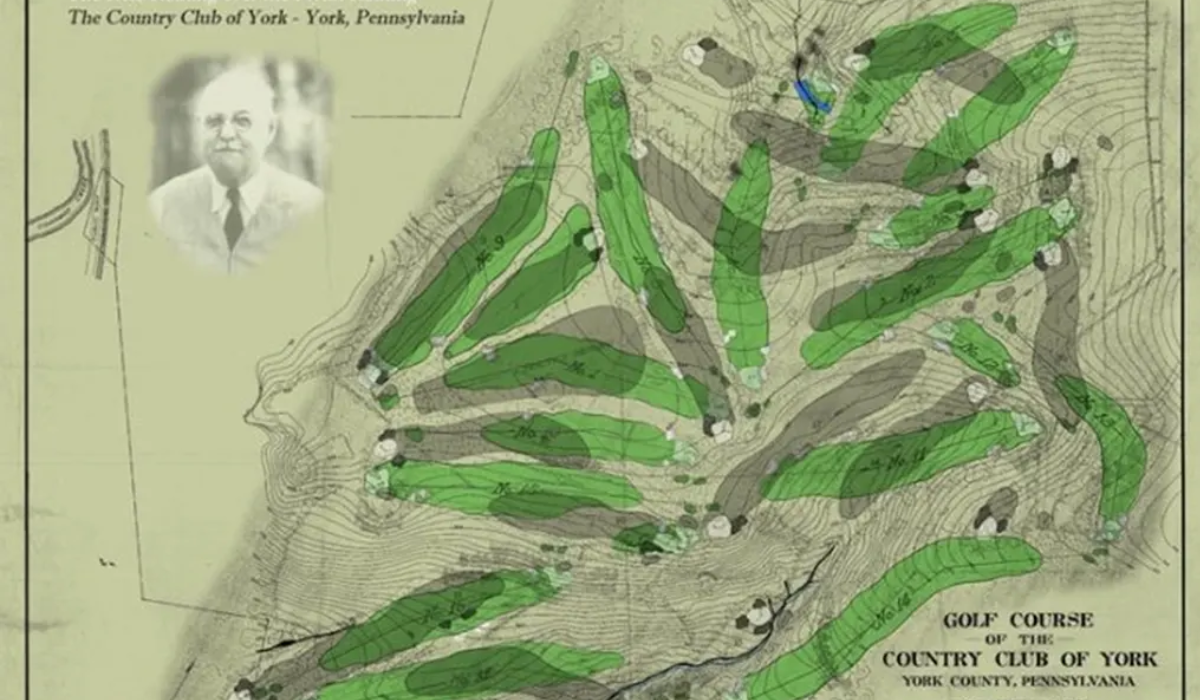
Every championship course tells you what it wants before you ever swing a club — you just have to know where to look. Golden Age architects like Donald Ross, A.W. Tillinghast, and Seth Raynor rarely built a hole that only had one correct way to play it. Instead, they built “strategic” holes: wider fairways that reward a player willing to take on risk from one side in exchange for a better angle into the green, and narrower, safer routes that leave a much harder second shot.
This is the opposite of “penal” design, where a single ideal line exists, and anything else is simply punished. Reading a course like a pro starts with figuring out which philosophy is at work on a given hole. A fairway that looks unusually wide from the tee is rarely an accident — it’s an invitation to commit to a specific side, and the false sense of ease is often the first trap.
Modern restorations have leaned hard into this thinking. Gil Hanse, the architect most in demand among major championship venues over the past decade, has restored the strategic width and firm turf of Golden Age designs at Oakmont, Los Angeles Country Club, Southern Hills, and both Winged Foot courses, among others — part of a broader trend of clubs stripping away decades of narrowing rough and encroaching trees to expose the original, more thoughtful strategy underneath.
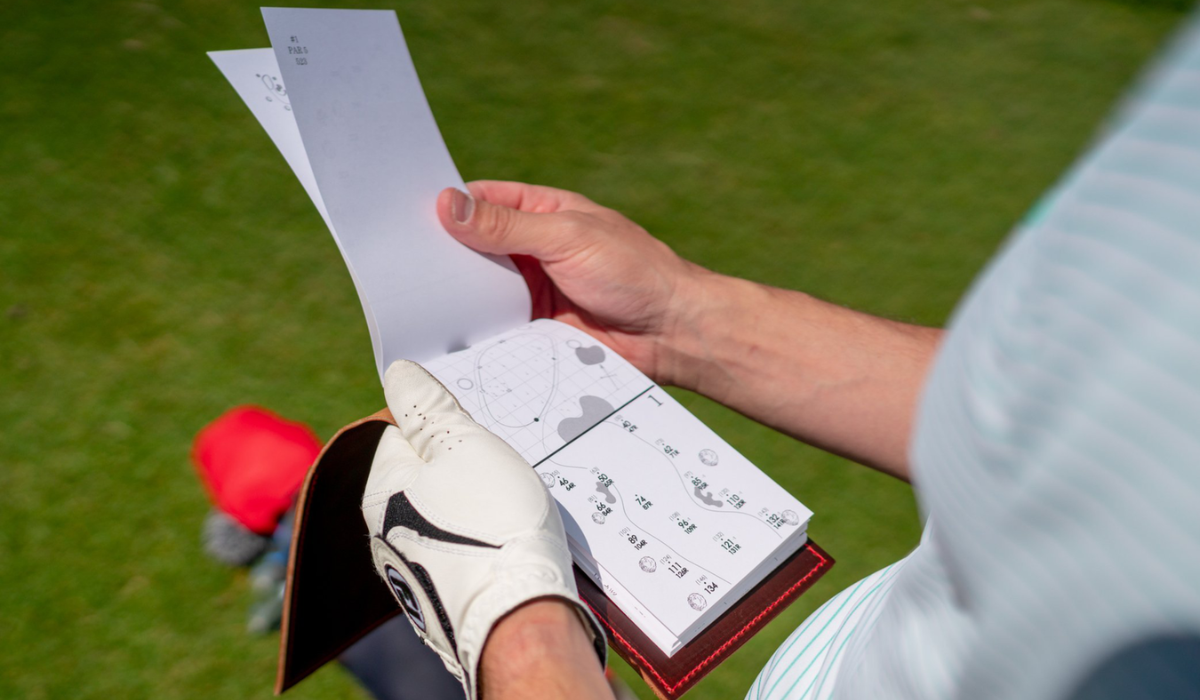
For decades, professional golfers leaned on laser-mapped green books that broke every putting surface into detailed percentage grades, effectively removing guesswork from reading a line. That changed on January 1, 2022, when the USGA and R&A introduced a Model Local Rule restricting players and caddies to committee-approved yardage books that show only minimal green information — general slope indicators rather than precise, laser-generated breaks. The rule was written specifically to push players back toward reading greens with their eyes, their feet, and their experience, rather than a printed formula.
That shift matters for anyone trying to read a green like a pro, because it means the fundamentals actually matter again. Walk the full length of a putt where possible, not just the last few feet. Check the grain — grass that appears shiny or light typically means you’re looking down-grain, while a duller, darker look means you’re looking into it, which slows a putt down and can hold it straighter through the break. Look for the broader tilt of the green complex first, since subtle micro-slopes near the hole are often just an extension of a bigger, more obvious fall line running through the whole putting surface.

At most courses, wind is a nuisance to be calculated and forgotten. At true championship venues, it reshapes the entire strategic puzzle hole to hole. Shinnecock Hills, host of the 2026 U.S. Open, is a textbook example: its routing changes direction constantly as it winds across the Long Island property, with three distinct stretches of holes — the fourth through sixth, the tenth through thirteenth, and the fourteenth through sixteenth — forming triangular sequences that force players to solve a different wind angle on nearly every shot. Reading a course like this well means thinking several holes ahead, understanding that the two-club wind you just fought on one hole may be a helping crosswind on the next, and planning your ball flight and shot shape accordingly rather than reacting hole by hole.
Firm, fast conditions amplify everything wind does. At Shinnecock, sandy soil produces quick-draining, push-up greens that repel anything less than a precisely shaped, soft-landing approach — and green surrounds with no rough to catch mistakes, so a ball that drifts even slightly off target can run thirty or forty yards away from the putting surface. Reading a firm-and-fast course means constantly asking not just “where do I want this ball to land,” but “where will it end up ten seconds after it lands.”

There’s no better way to sharpen course-reading instincts than studying how the world’s best players actually navigated a championship layout under pressure. The 2026 U.S. Open at Shinnecock Hills offered a vivid lesson in adapting to a moving target: after early rounds were intentionally softened and slowed to guard against the volatile, wind-driven conditions that caused chaos there in 2004 and 2018, the USGA firmed up and quickened the greens for the weekend, catching several players off guard. Wyndham Clark handled the shifting test well enough to go wire-to-wire and win by a single stroke over Sam Burns, becoming just the ninth player in U.S. Open history to lead from start to finish.
Weeks later, the Open Championship returned to Royal Birkdale for the eleventh time, a course widely praised by players for asking golfers to solve visible, honest problems rather than relying on blind shots or quirky bounces. Its recent renovation work, guided by architects Tom Mackenzie and Martin Ebert, raised several greens onto more pronounced platforms and lifted bunkers above the water table so they drain and play firmer — changes that reward players who read the ground game correctly rather than those who simply fly the ball at the flag. Ryan Fox closed with four birdies in his final six holes to win the Claret Jug by one shot, a finish that rewarded exactly the kind of patient, angle-conscious play the course is designed to demand.

One habit separates strong course-readers from everyone else: they evaluate the ground between them and the target as carefully as the target itself. On firm, links-style, or heavily contoured championship setups, the shortest route to the pin is rarely a straight line through the air. Slopes feed balls toward specific quadrants of a green, false fronts reject anything landing short, and collection areas are built deliberately to gather mis-hit approaches away from the hole. Before committing to a shot, professionals ask what the ground will do to the ball on arrival — whether a run-up shot under the wind is smarter than an aerial one, and which side of a green offers the safest miss if the shot comes up slightly off.

You don’t need a laser-mapped green book or a tour caddie to read a course more like a professional. Walk a portion of every long putt when you can, notice which direction water would run off a green if it rained, and pay attention to how a course’s architecture is nudging you toward one side of a fairway. Championship courses reward patience and observation over raw aggression — and that’s a lesson any golfer, on any course, can put into practice the very next time they tee it up.

Amateur Golf
How to Prepare My Child for College Golf?
For many young athletes, the dream of playing college golf represents not just an opportunity to compete at a higher level but also a chance to gain a quality education while pursuing their passion. However, preparing your child for this journey requires much more than having a low handicap. It involves a combination of athletic, […]

PGA Tour
Scottie Scheffler’s incredible season and what to expect
When Masters champion Scottie Scheffler won the WGC-Dell Technologies Match Play in March he became the world’s number one ranked golfer – and he got one up on Tiger Woods in the process. The 26-year-old’s victory at Austin Country Club was his third PGA Tour win of the season and saw him overtake Jon Rahm […]