



PGA Tour
Presidents Cup 2026 Results & Winners: Team USA Completes Historic Comeback
Explore 33,000+ golf courses in 180 countries.
Follow the latest news and trends in golf.
Connect with like-minded golfers.
Find everything you need for your golf equipment and gear needs.
Travel, golf resorts, lifestyle, gear, tour highlights and technology.
All Square
Suggestions
PGA Tour
Presidents Cup 2026 Results & Winners: Team USA Completes Historic Comeback
Instruction
Links vs Parkland vs Heathland: What’s the Difference?
Accessories
Best Push Carts and Electric Trolleys for Golf in 2026
Course Reviews
Rediscover Monte Rei: Portugal’s Iconic Golf Course Reopens After Major Renovation
Course Reviews
Best Golf Courses Around Rome: Where Ancient History Meets Modern Golf
Clubs
The Best Irons on the Market in 2026
Clubs
Austin Smotherman WITB: The Clubs Behind His 2026 Bank of Utah Championship Win
Destinations
Barrière Golf Properties: French Golf Escapes Where the Resort Is Part of the Experience
Destinations
Conrad Algarve Renovations: A New Chapter of Luxury in Quinta do Lago
Gear
Garmin Golf Watches Guide: Which Garmin Watch Is Right for Your Game?
Course Reviews
Cullinan Golf Links Resort, Belek: Where Golf Meets the Mediterranean
Course Reviews
New Opening: Limassol Greens — Cyprus’ New Golf Destination
PGA Tour
Presidents Cup 2026 Preview: Everything to Know Before Medinah
Clubs
Jacob Bridgeman WITB: The Clubs Behind His 2026 Biltmore Championship Victory
Course Reviews
Play Golf at Pebble Beach: What to Know Before You Go
Professional Golf
Solheim Cup Results & Winners 2026: Europe Reclaims the Trophy
Clubs
This Year’s Best Drivers on the Market: A 2026 Buyer’s Guide
Clubs
WITB: Ryan Fox’s Winning Clubs at the 2026 Open Championship
Community
How Modern Golf Courses Conserve Water and Protect Wildlife
PGA Tour
Changes on the PGA Tour from 2028
Course Reviews
Tee Off in Tuscany: Golfing Italy’s Most Picturesque Countryside
Course Reviews
The Best Golf Courses Near Pinehurst That Aren’t Pinehurst No. 2
Destinations
Seaton House: The Home of Golf Finally Has the Hotel It Deserves
Destinations
From Vineyard to Fairway: Wine-Infused Golf Trips
Course Reviews
The Masterpiece Reawakens: Aronimink 2026
Destinations
Golf Trip to Casablanca: Morocco’s Atlantic Golf Escape

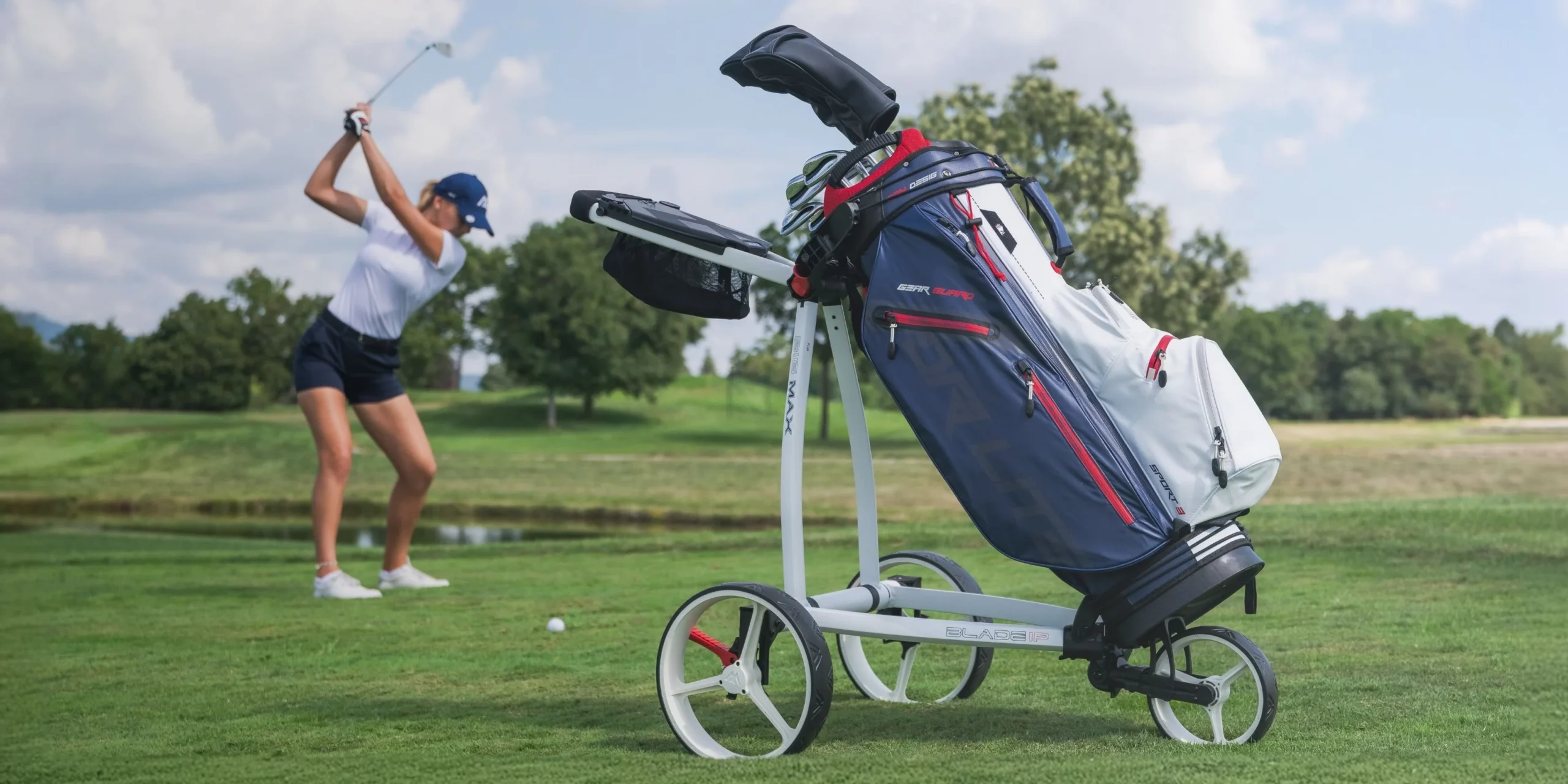
Golf has always been a walking game, but carrying a fully loaded bag for four or five hours is not for everyone. That is where modern push carts and electric trolleys come in. Far removed from the basic two-wheel pull carts of the past, today’s best models combine compact folding systems, excellent stability, powerful lithium batteries and increasingly sophisticated technology.
For golfers who want simplicity, a manual push cart remains one of the most practical pieces of equipment they can buy. For those who regularly play hilly courses, carry heavier bags or simply want to conserve energy for their golf swing, an electric trolley can make an even bigger difference.
The choice has also become much broader in 2026. Traditional three-wheel carts now compete with ultra-flat folding designs and four-wheel models, while premium electric trolleys offer intelligent slope compensation, electronic braking, GPS technology and remote control. Here are some of the standout options.
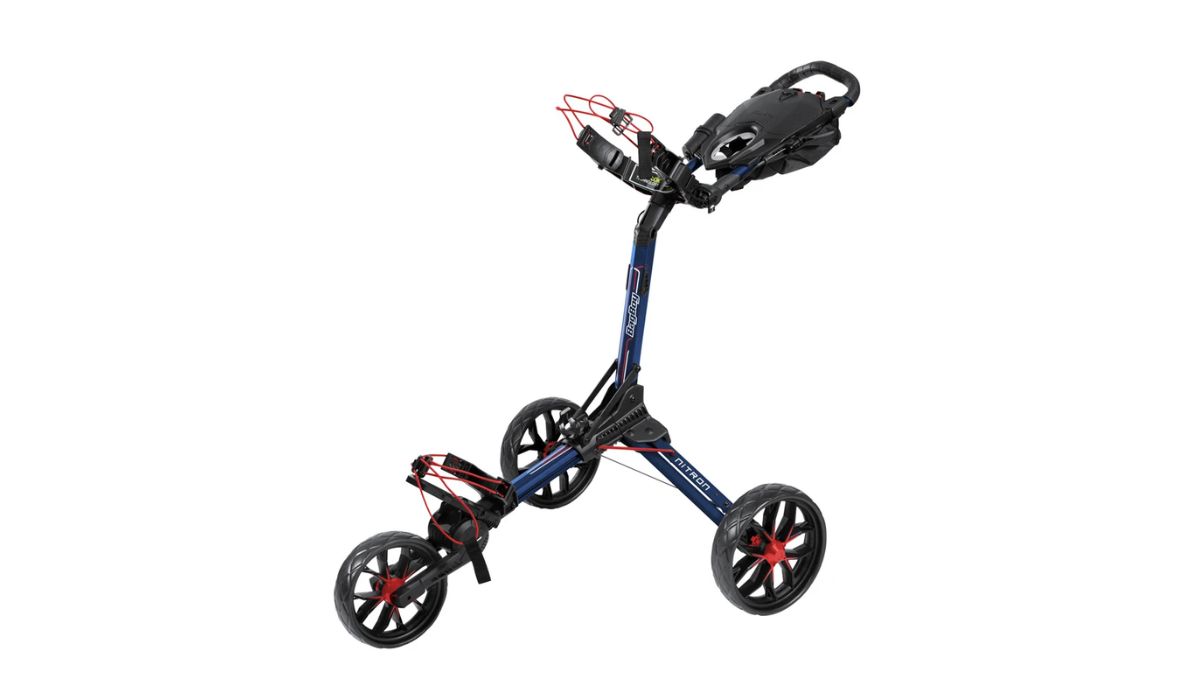
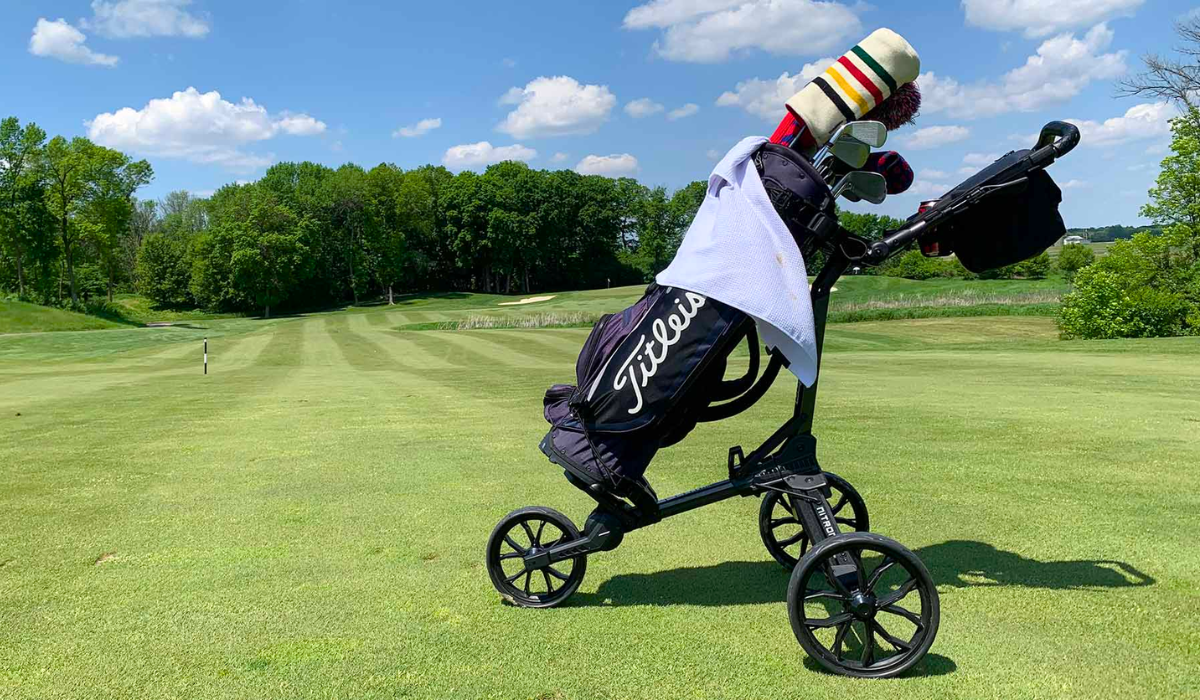
The Bag Boy Nitron has become one of the most recognisable premium push carts largely because of its clever opening system. Rather than requiring several separate folding steps, its nitrogen-assisted mechanism allows the frame to open quickly, making it particularly convenient for golfers who want to get from the car park to the first tee without wrestling with their equipment.
The Nitron combines a stable three-wheel layout with useful storage around the handle and a secure bag-support system. Versions with a swivelling front wheel also offer easier steering around greens, pathways and tight corners, while the wheel can be locked when greater straight-line stability is required.
It is not the smallest or lightest push cart available, but its combination of convenience, sturdy construction and straightforward operation makes it one of the strongest all-round choices for golfers who walk frequently.
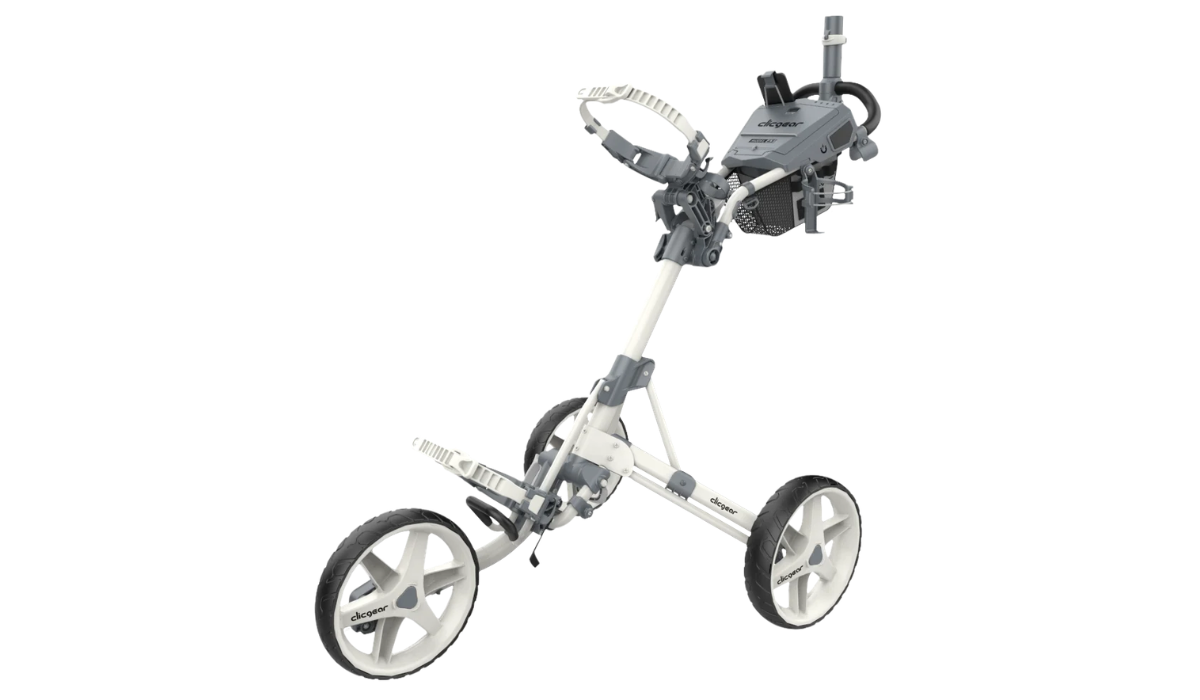
Clicgear has developed a reputation for making exceptionally solid push carts, and the Model 4.5 continues that philosophy. It is a three-wheel design aimed at golfers who value stability, durability and accessory compatibility rather than simply choosing the lightest possible trolley.
Its substantial frame gives it a planted feel on uneven ground, while the compact folding design still makes it practical to transport. Clicgear also offers a broad ecosystem of accessories, allowing golfers to customise their cart with items such as umbrella holders, seats and additional storage.
The Model 4.5 is therefore particularly attractive to regular walkers who want a cart that can become a long-term part of their golf setup.
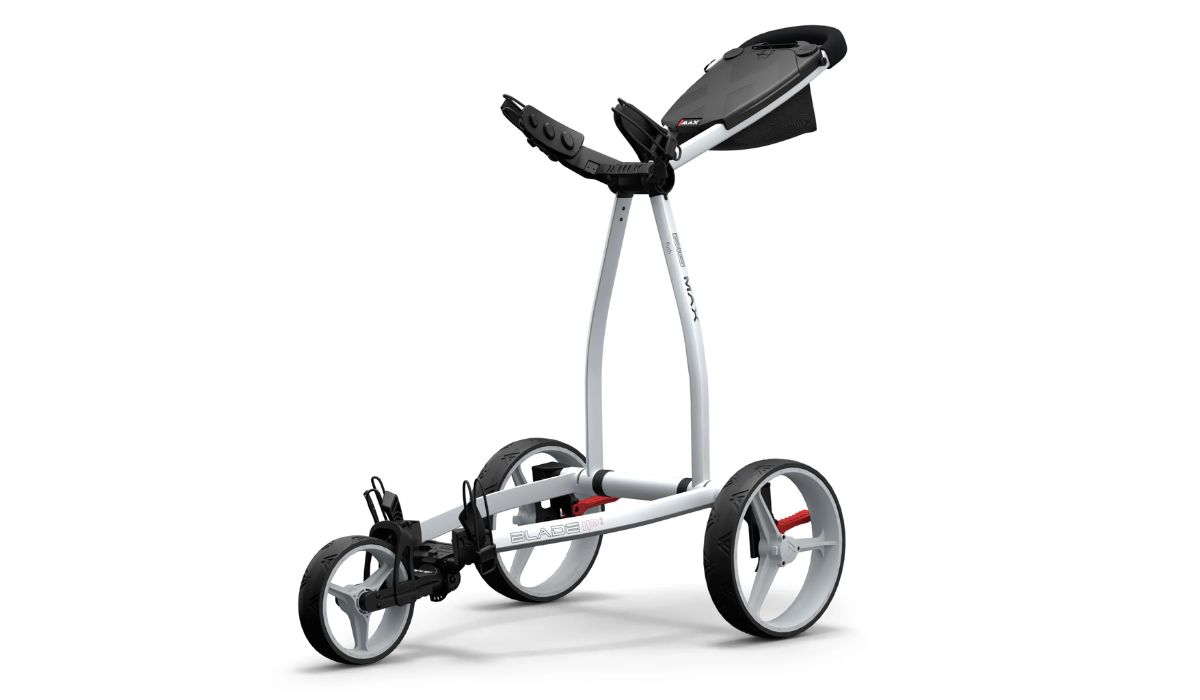
One of the biggest problems with push carts is not using them on the golf course but storing them afterwards. The Big Max Blade IP 2 tackles that problem with an unusually flat folding design.
Rather than collapsing into a thick rectangular shape, the Blade IP 2 folds almost completely flat, making it easier to slide into a crowded car boot or store against a wall at home. Despite its slim folded profile, it remains a fully capable three-wheel cart once opened.
The design makes it particularly appealing to golfers with smaller cars, limited storage space or several golf bags and pieces of equipment already competing for room.
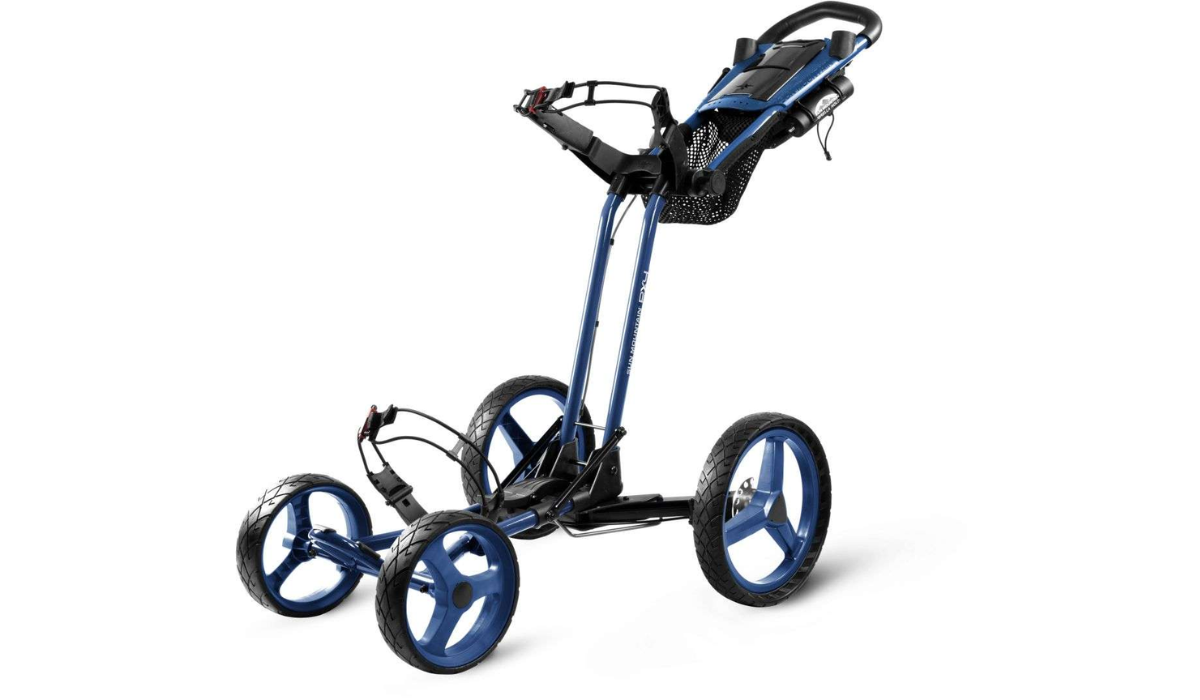
Three wheels dominate the push-cart market, but four-wheel designs remain an excellent alternative for golfers who prioritise stability. The Sun Mountain PX4 uses four wheels to create a broad, balanced platform while still maintaining good manoeuvrability.
It is particularly useful for golfers carrying larger cart bags because the chassis is designed to accommodate substantial bag sizes without allowing them to interfere with the wheels. A hand-operated brake also makes stopping and parking straightforward.
Four-wheel carts can require slightly more effort to turn than highly manoeuvrable three-wheel swivel models, but their stability can be particularly reassuring on slopes or when carrying a heavy bag.
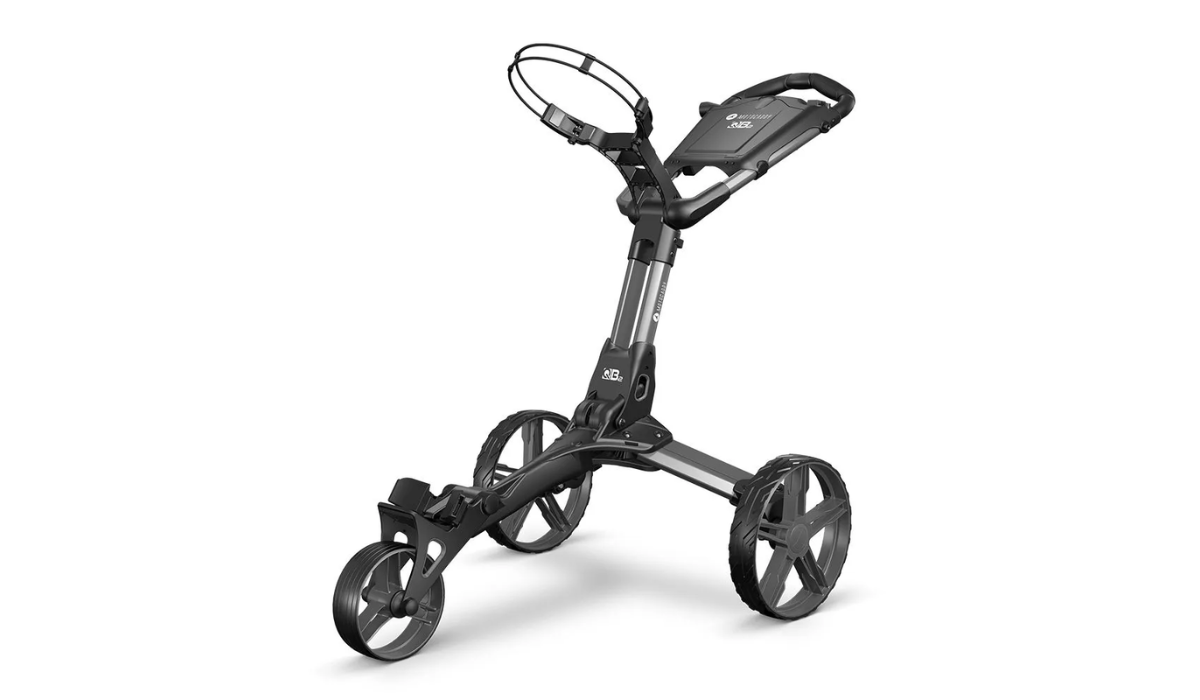
Motocaddy may be better known for its electric trolleys, but the QB2 demonstrates how much engineering is now going into premium manual designs as well.
Its appeal lies in combining a compact folding system, large wheels and clean contemporary styling with the simplicity of a conventional push trolley. There is no battery to charge and considerably less weight to transport than with a powered alternative.
For golfers who like the design and build quality associated with Motocaddy but do not need electric assistance, the QB2 offers a practical middle ground.
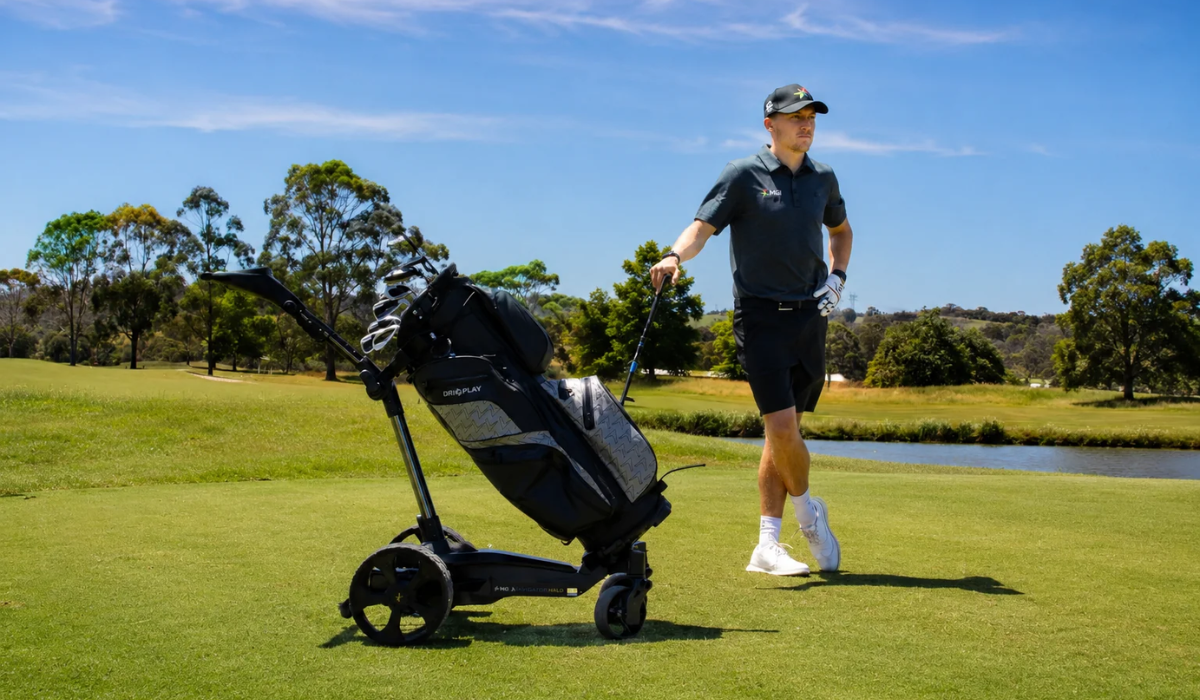
The fundamental advantage of an electric trolley is simple: its motor carries the workload of moving the golf bag around the course. Over 18 holes, particularly on layouts featuring long walks and significant elevation changes, that can reduce fatigue considerably.
Modern electric trolleys, however, now do much more than simply move forward. Electronic downhill braking can maintain a controlled speed on descents, slope-compensation systems help keep the trolley travelling in a straight line across uneven ground, and programmable distance functions allow golfers to send their trolley ahead before walking to the next shot.
Premium models increasingly add GPS, remote controls and sophisticated lightweight materials such as carbon fibre and titanium. Battery technology has progressed as well, with several current trolleys offering enough capacity for considerably more than a standard 18-hole round.
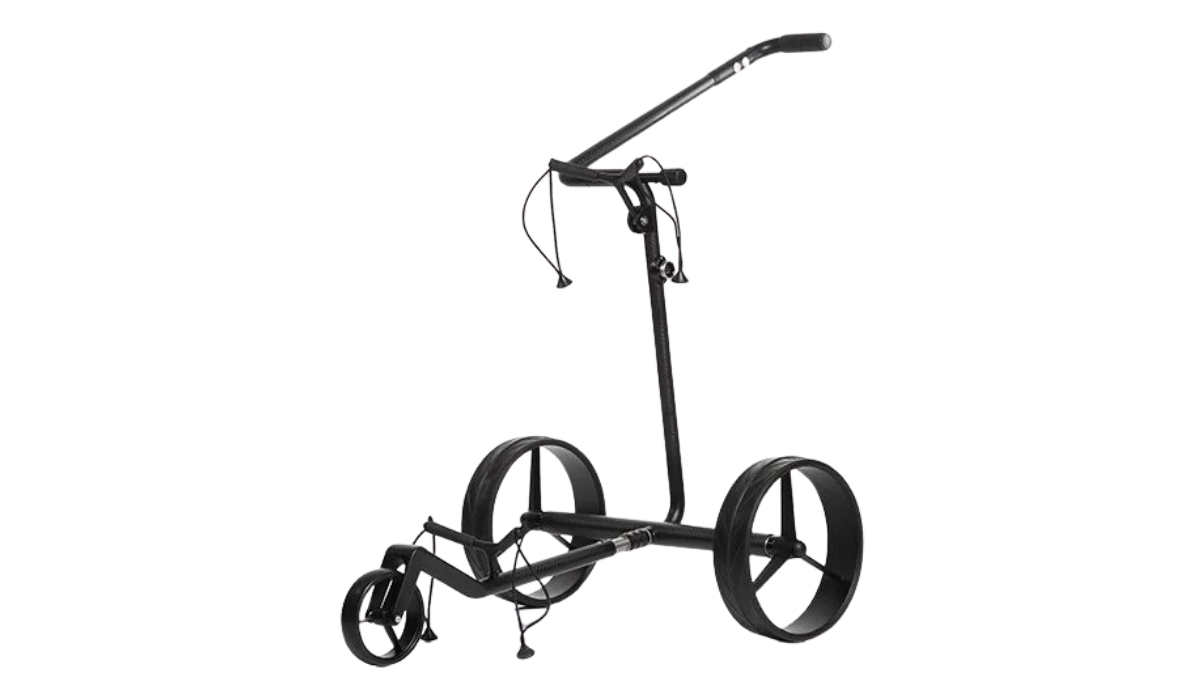
The JuCad Carbon Drive Classic 3.0 is one of the most distinctive premium electric trolleys on the market. Its full carbon frame weighs just 5.5 kg, including the wheels, making it particularly attractive to golfers who want electric assistance on the course without having to lift a bulky trolley into the car afterwards.
The 2026 version incorporates JuCad’s Technology Package 3.0. Quiet brushless motors are paired with electronic parking brakes on both sides, while the company’s new Slope Balance Control is designed to compensate for gradients and help the trolley stay on its intended line. A 48V drive system and stepless rotary speed control keep operation deliberately straightforward.
There is also an automatic distance function for 10, 20 or 30 metres, electronic downhill braking and the option to add remote control. The lithium battery is rated for up to 45 holes, while the trolley folds flat to approximately 65 x 60 x 10cm.
The Carbon Drive Classic 3.0 therefore combines two characteristics that do not always appear together in an electric trolley: sophisticated drive technology and exceptionally low weight.
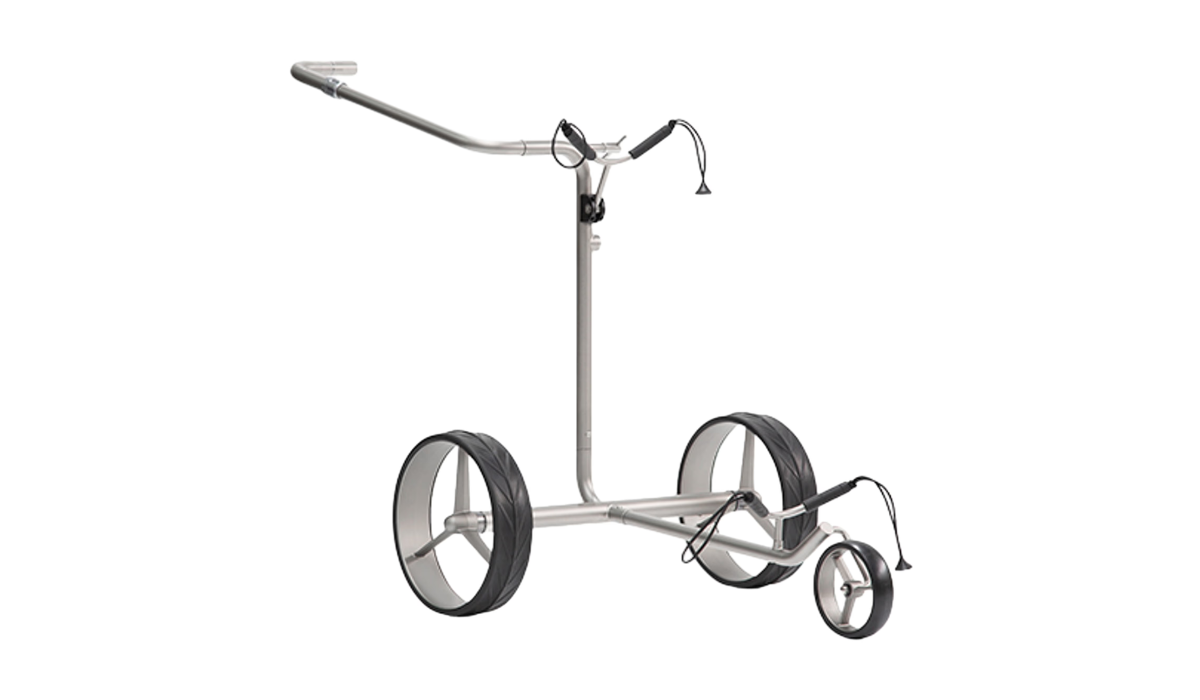
For golfers who regularly travel with their clubs, the JuCad Drive SL Titan Travel eX 3.0 takes compact engineering even further.
Its high-grade titanium frame weighs only 5.9kg including the wheels, and an additional travel joint allows the trolley to break down to approximately 65 x 35 x 15cm. JuCad specifically designed the model so that it can fit alongside a golf bag inside many travel covers, making it an unusually practical premium trolley for golf holidays.
Despite its low weight, it has a comprehensive specification. JuCad’s 3.0 technology package includes brushless motors, electronic parking brakes, Slope Balance Control, a 48V drive system and electronic downhill braking. The lithium battery is rated for up to 45 holes.
The eX package also includes JuCad’s remote control and a transport bag as standard, distinguishing it from the conventional Titan Travel 3.0 configuration. Golfers can therefore operate the trolley either from the handle or remotely depending on the terrain.
It is an especially interesting option for golfers who want premium materials and technology but place equal importance on portability.
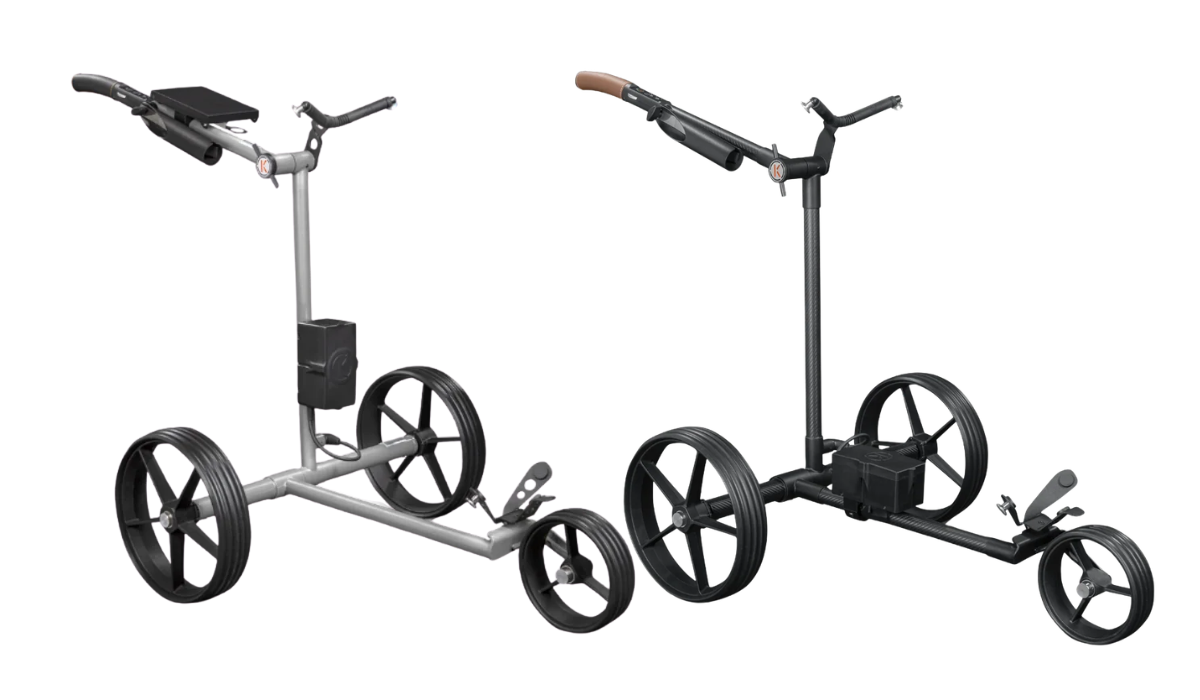
The KIFFE K5 and K7 share much of the same technology, making them sensible models to consider together. The K5 acts as the core premium option, while the K7 takes the concept further with a carbon frame.
The K5 features Speed Memory, Downhill Control, 10 and 20-metre preset distance functions, Soft Control steering, SafeStop electronic braking and slope compensation. Anti-tip protection is designed to provide additional security on uneven ground, while the trolley is also prepared for remote-control operation.
Its lithium-ion battery is specified for at least 27 holes on topographically demanding courses and requires around three to four hours to charge. The K5 trolley itself weighs approximately 6.2kg, with separate wheels and battery bringing additional weight.
The K7 essentially builds on that specification rather than introducing an entirely different operating concept. It retains the K5’s key features — including downhill control, slope compensation, preset distances, SafeStop and remote readiness — but upgrades the construction with a carbon frame.
That makes the decision relatively straightforward: the K5 offers KIFFE’s advanced driving technology in its established K-Steel construction, while the K7 is the more exclusive choice for golfers who also want carbon-fibre engineering.
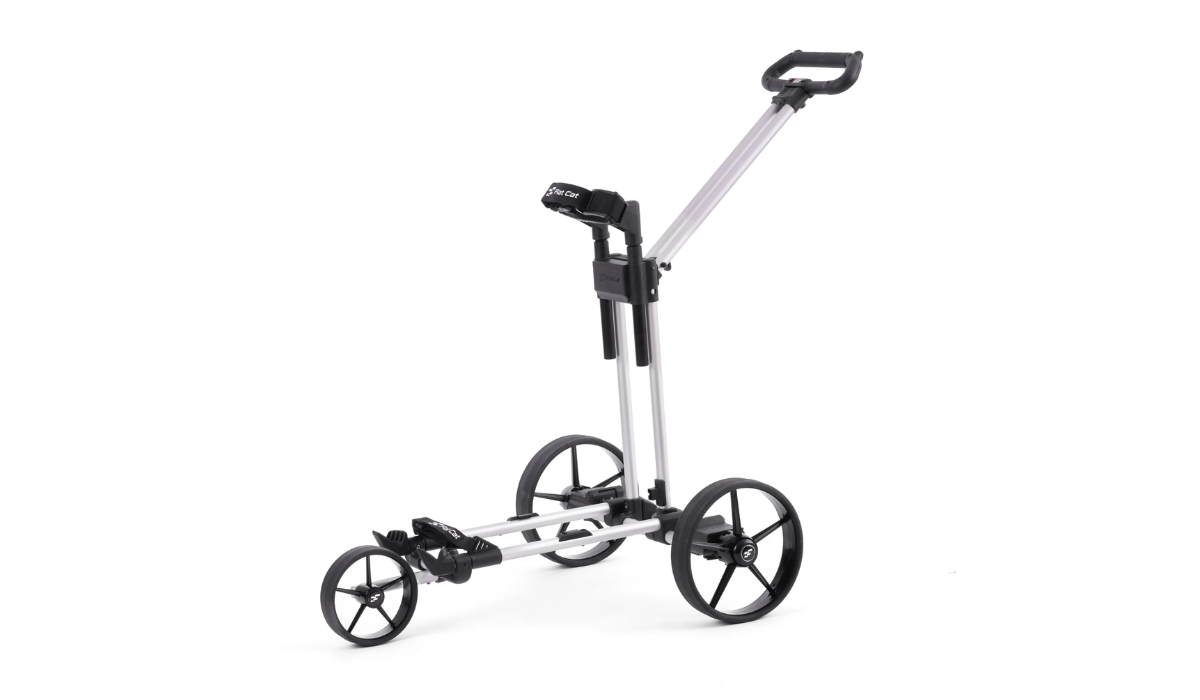
The Flat Cat Gear 3.0 takes a somewhat different approach from increasingly complicated premium electric trolleys. Rather than filling the handle with screens and extensive controls, it focuses on straightforward operation and solid mechanical performance.
Two 90W DC motors positioned directly at the rear wheels provide the drive, with quiet planetary gearing designed to deliver effective power transfer and climbing ability. Speed is controlled through a traditional rotary dial, while programmable distance functions allow the trolley to continue ahead automatically.
The Gear 3.0 uses an 8Ah lithium iron phosphate battery with a stated range of 36 holes and a maximum charging time of three hours. The trolley weighs 8kg, with the battery adding approximately 2kg, and it can support a maximum payload of 40kg.
A manual parking brake, USB connection and height-adjustable bag support add useful everyday functionality. Flat Cat also highlights the use of recycled aluminium, glass-fibre-reinforced plastic and a cobalt-free battery in the trolley’s construction.
For golfers who want effective electric assistance without making GPS screens or remote control the centre of the experience, the Gear 3.0 is an interesting alternative.
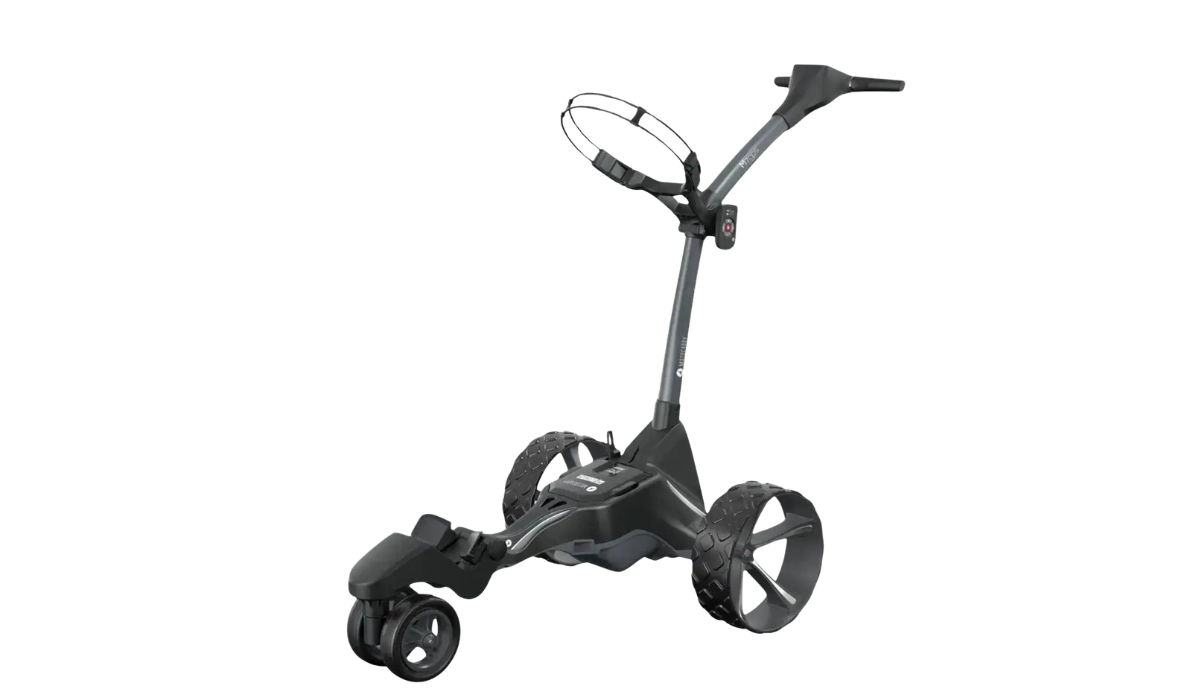
The Motocaddy M7 GPS Remote combines remote trolley control with one of the brand’s most advanced integrated GPS systems.
Its touchscreen provides detailed course information while the trolley retains full remote-control capability. The latest system includes 2D and 3D mapping, zoom functionality, movable targets for shot planning and hole flyovers, turning the trolley handle into a comprehensive course-management display.
The trolley also incorporates technology designed to make remote operation more secure on uneven terrain, including stability assistance and downhill speed management. Golfers can switch between remote operation and conventional handle control depending on where they are on the course.
It is inevitably a premium option, but golfers who would otherwise carry a separate GPS device while also using a powered trolley may appreciate having several functions incorporated into one piece of equipment.
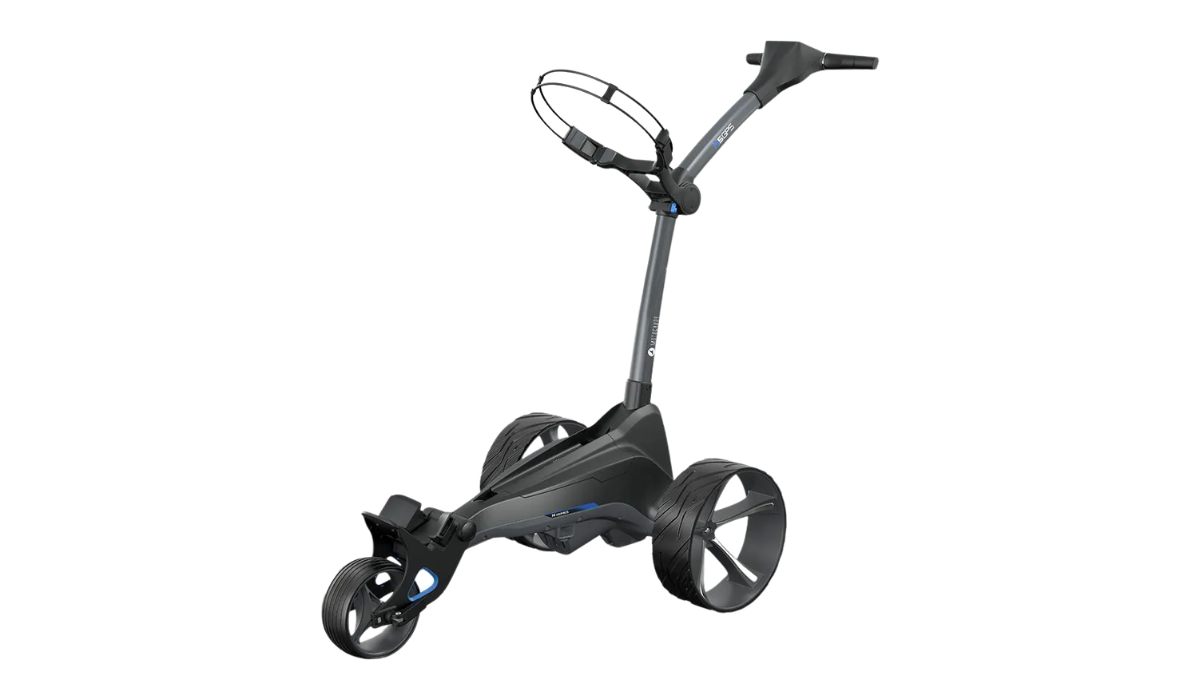
Not every golfer wants to control a trolley from a distance. For those who prefer walking directly behind their equipment, the Motocaddy M5 GPS provides many of the company’s premium digital features without making remote steering central to the experience.
Integrated GPS gives golfers immediate access to course information and yardages from the trolley handle, reducing the need to continually consult a separate watch or handheld device.
It is a useful middle ground for players who want motorised assistance and modern course technology but prefer the straightforward operation of a traditional electric trolley.
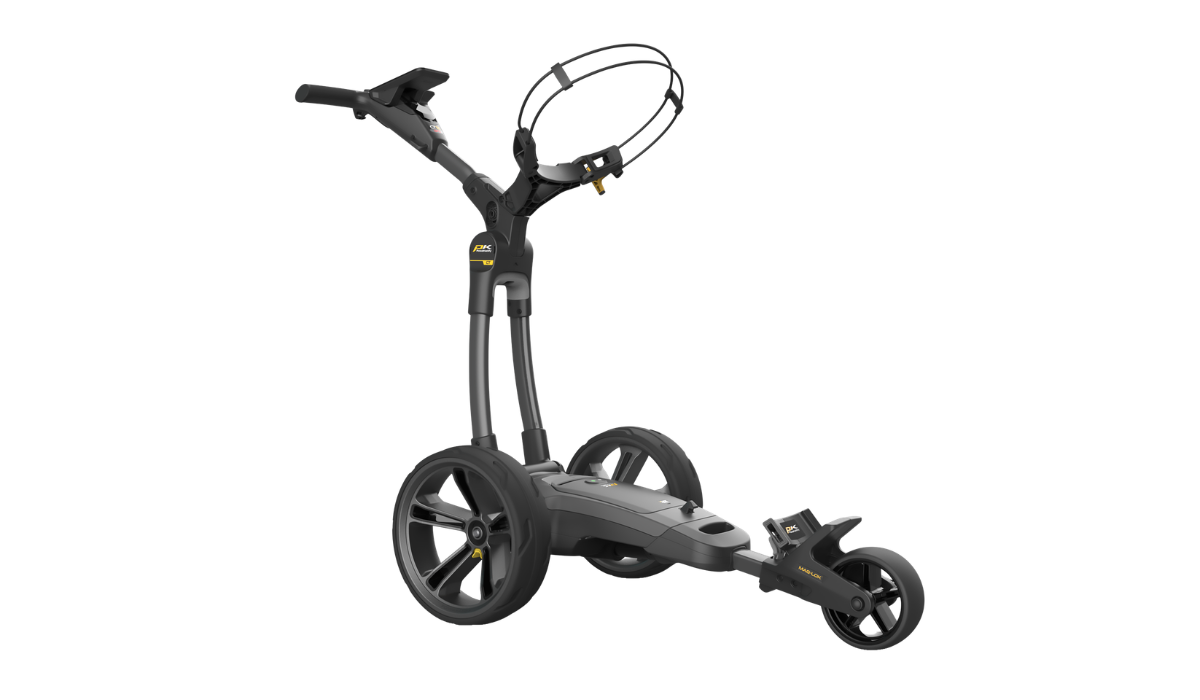
PowaKaddy remains one of the major names in electric golf trolleys, and the CT12 GPS is aimed at players looking for integrated technology in a compact format.
One of its defining features is its large portrait-oriented GPS touchscreen. Rather than treating navigation as a secondary addition, the display forms a central part of the trolley experience and provides golfers with course information directly from the handle.
Compact folding is another important element of the CT concept. This becomes particularly valuable with an electric trolley because motors, batteries and electronics can otherwise make storage considerably more difficult than with a conventional push cart.
For golfers who want a premium powered trolley with GPS at the centre of its design, the CT12 GPS is one of the more technology-focused choices.
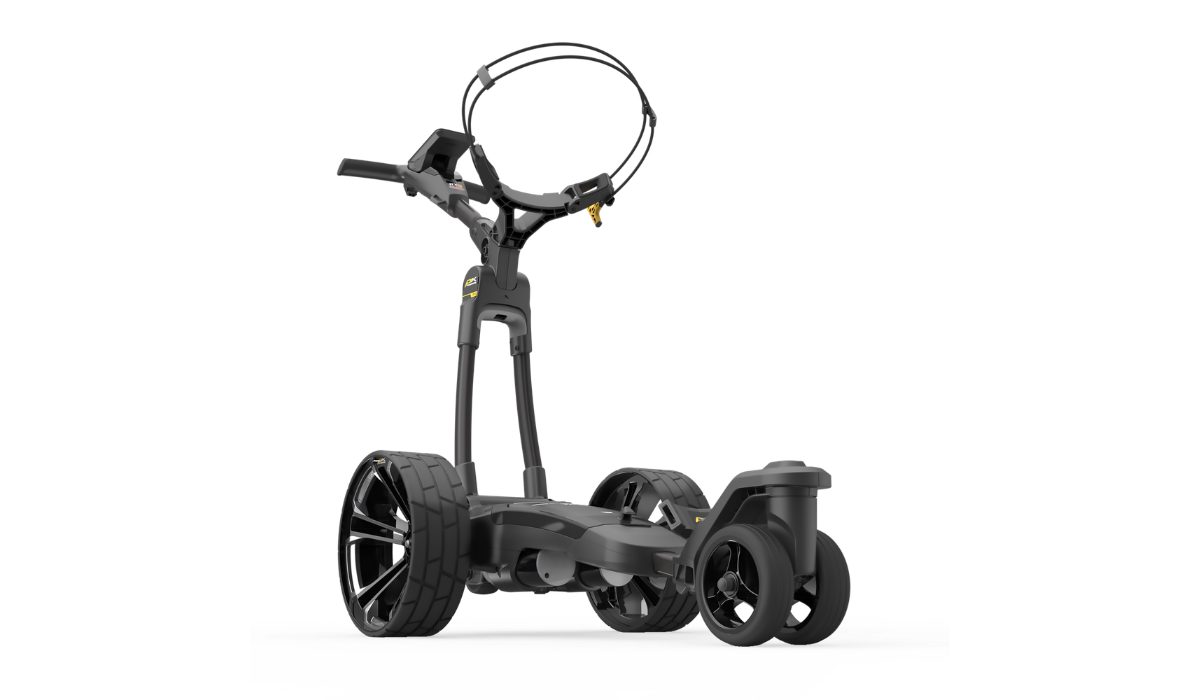
The PowaKaddy RX12 GPS takes that concept further by combining integrated GPS with remote-control functionality.
Its large display gives golfers access to course information without continually checking a separate golf watch or handheld GPS, while remote operation allows the trolley to be repositioned without the golfer remaining directly behind the handle.
The RX12 reflects one of the clearest trends in premium trolley design: electric carts are increasingly becoming integrated on-course technology platforms rather than simply motorised bag carriers.
For golfers who value both remote movement and detailed course information, it represents one of PowaKaddy’s most comprehensive options.
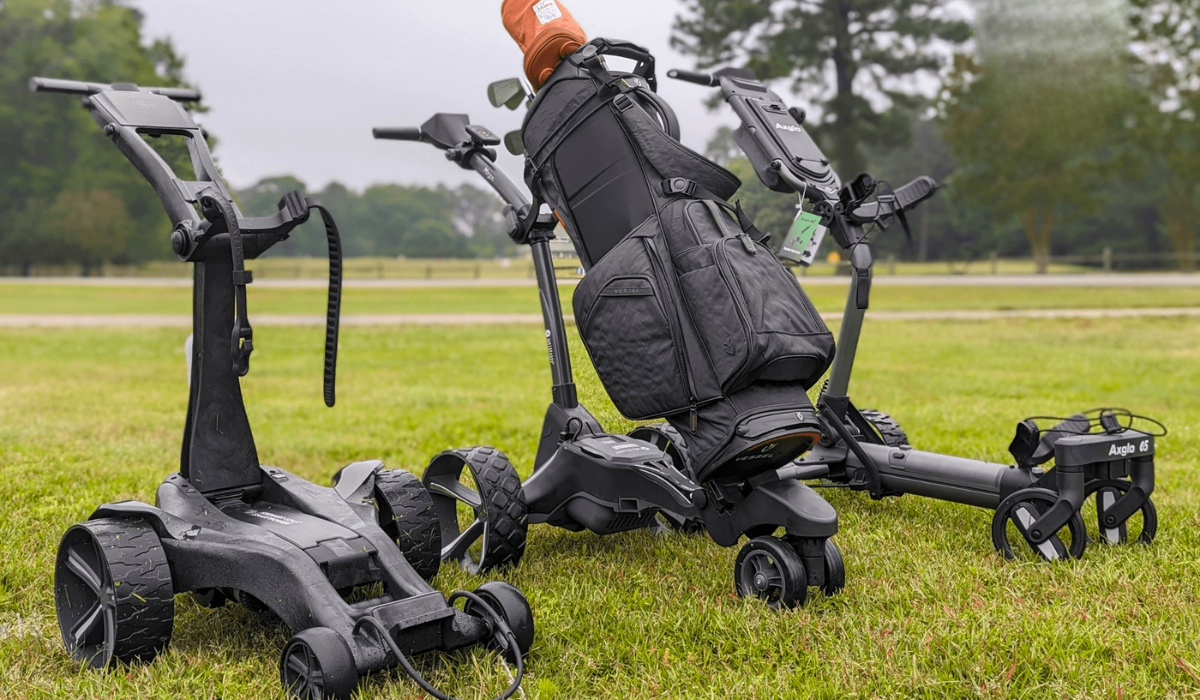
Choosing between the two depends mainly on how and where you play.
A push cart is cheaper, lighter, easier to transport and requires virtually no preparation beyond unfolding it. For relatively flat courses and golfers who are comfortable walking, it is difficult to beat for practicality.
An electric trolley becomes more compelling on long or hilly layouts. The physical difference may seem modest over the opening holes, but by the back nine there can be a noticeable benefit from not continuously pushing a heavy golf bag uphill.
Remote and GPS-equipped models add another level of convenience, although they also increase cost, weight and technological complexity. Premium lightweight models from manufacturers such as JuCad and KIFFE demonstrate another direction for the category, concentrating on high-end materials and refined driving systems rather than simply adding larger displays.
Folded dimensions deserve almost as much attention as on-course performance. A trolley that works beautifully during a round but barely fits alongside your golf bag in the car can quickly become frustrating. This is especially important for golfers who travel regularly, where compact systems such as JuCad’s Travel models can offer a genuine advantage.
Weight is another important consideration. Electric models require little physical effort on the course but still need to be lifted into and out of a vehicle. Lightweight carbon and titanium designs can reduce this problem considerably, although they normally command premium prices.
Battery capacity should also match the way you play. Golfers who generally play 18 holes do not necessarily need maximum battery range, while anyone regularly completing 27 or 36 holes should pay close attention to manufacturers’ stated capacities.
Course terrain matters too. On predominantly flat layouts, sophisticated slope-management technology may offer relatively little benefit. On hilly courses, features such as downhill speed control, electronic braking, anti-tip protection and automatic slope compensation can become genuinely useful.
Finally, consider whether GPS and remote control will actually improve your rounds. Both can be excellent additions, but golfers who already use a GPS watch or laser rangefinder may find a simpler electric trolley provides everything they need.
Shop Golf Clubs and Accessories at The Golf Store by All Square

Clubs
What’s in Tommy Fleetwood’s winning golf bag?
Tommy Fleetwood won the Dubai Invitational using TaylorMade’s new Qi10 driver after Rory McIlroy bogeyed the last. Here’s what he had in the bag. The Englishman birdied the 17th and 18th at Dubai Creek to finish on 19-under, one stroke ahead of Thriston Lawrence and McIlroy, who led by one on the final tee but […]
Clubs
TaylorMade’s New Spider GT putters
TaylorMade has expanded its highly popular Spider GT putter family with the launch of four new models delivering high performance for every type of golfer. TaylorMade’s Spider revolutionized the putter market since its introduction in 2008, and has been used by major winners Dustin Johnson, Rory McIlroy and Jason Day. The Spider range proved extremely […]