



Course Reviews
Marrakech vs Agadir for Golf: Which Moroccan Destination Should You Choose?
Explore 33,000+ golf courses in 180 countries.
Follow the latest news and trends in golf.
Connect with like-minded golfers.
Find everything you need for your golf equipment and gear needs.
Travel, golf resorts, lifestyle, gear, tour highlights and technology.
All Square
Suggestions
Course Reviews
Marrakech vs Agadir for Golf: Which Moroccan Destination Should You Choose?
Accessories
Best Push Carts and Electric Trolleys for Golf in 2026
Course Reviews
Rediscover Monte Rei: Portugal’s Iconic Golf Course Reopens After Major Renovation
Course Reviews
Best Golf Courses Around Rome: Where Ancient History Meets Modern Golf
Instruction
Links vs Parkland vs Heathland: What’s the Difference?
Clubs
The Best Irons on the Market in 2026
Clubs
Austin Smotherman WITB: The Clubs Behind His 2026 Bank of Utah Championship Win
Destinations
Barrière Golf Properties: French Golf Escapes Where the Resort Is Part of the Experience
Destinations
Conrad Algarve Renovations: A New Chapter of Luxury in Quinta do Lago
Gear
Garmin Golf Watches Guide: Which Garmin Watch Is Right for Your Game?
PGA Tour
Presidents Cup 2026 Results & Winners: Team USA Completes Historic Comeback
Course Reviews
Cullinan Golf Links Resort, Belek: Where Golf Meets the Mediterranean
Course Reviews
New Opening: Limassol Greens — Cyprus’ New Golf Destination
PGA Tour
Presidents Cup 2026 Preview: Everything to Know Before Medinah
Clubs
Jacob Bridgeman WITB: The Clubs Behind His 2026 Biltmore Championship Victory
Course Reviews
Play Golf at Pebble Beach: What to Know Before You Go
Professional Golf
Solheim Cup Results & Winners 2026: Europe Reclaims the Trophy
Clubs
This Year’s Best Drivers on the Market: A 2026 Buyer’s Guide
Clubs
WITB: Ryan Fox’s Winning Clubs at the 2026 Open Championship
Community
How Modern Golf Courses Conserve Water and Protect Wildlife
PGA Tour
Changes on the PGA Tour from 2028
Course Reviews
Tee Off in Tuscany: Golfing Italy’s Most Picturesque Countryside
Course Reviews
The Best Golf Courses Near Pinehurst That Aren’t Pinehurst No. 2
Lifestyle
10 Common Mistakes When Booking Golf Trips
Course Reviews
Playing Golf on the Edge: Cliffside Courses Worth the Nerves
Course Reviews
Your Golf Vacation in Saint-Tropez
Course Reviews
Minthis Resort: Cyprus Golf Escape
Clubs
WITB: The Clubs Justin Rose Trusted at 2026 Farmers Insurance Open
Course Reviews
Golf Meets Art: Courses with Cultural Connections

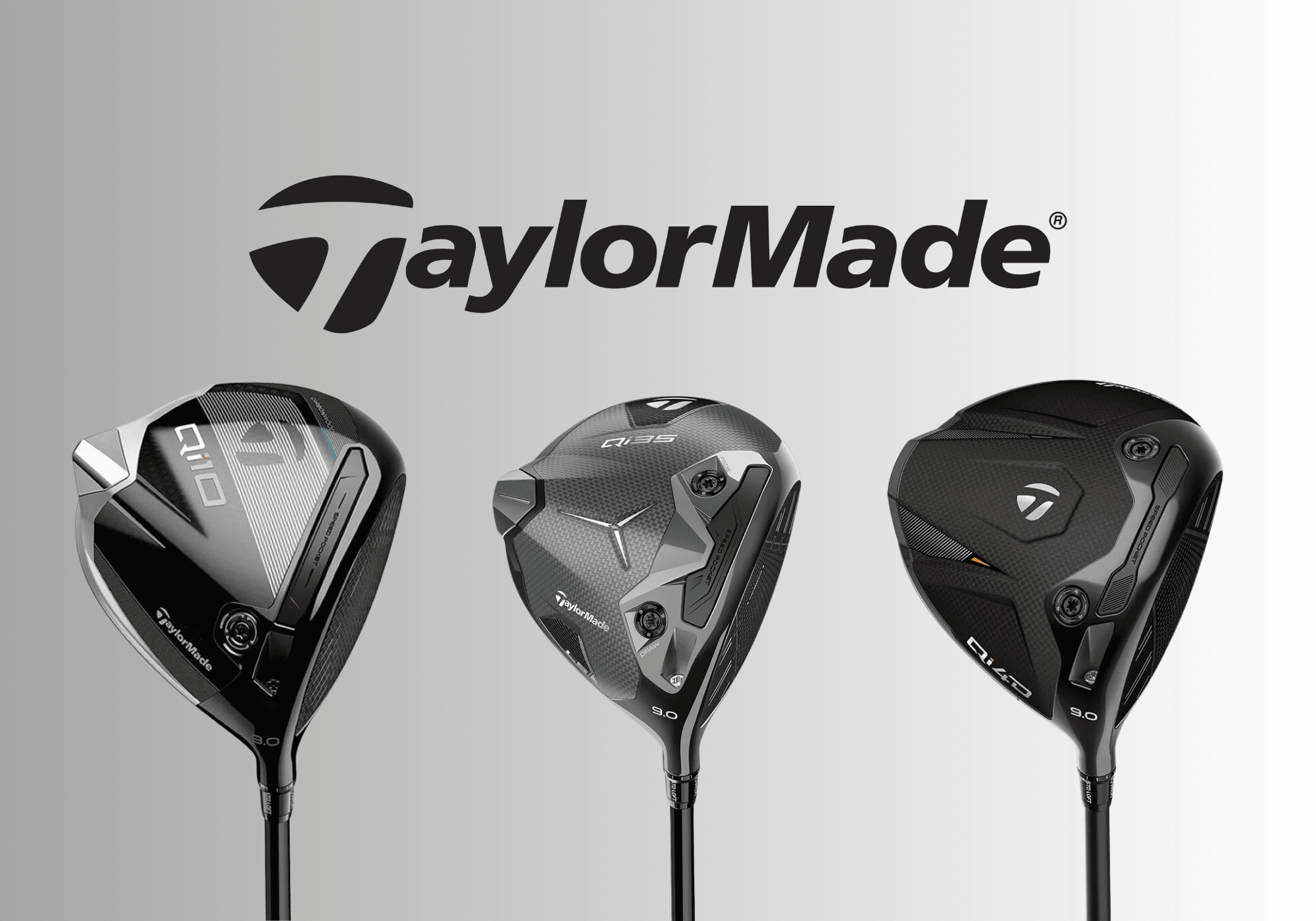
Three letters have quietly taken over the top of TaylorMade’s driver line-up. Qi10. Qi35. Qi4D. If you’ve stood in a pro shop in the last two years, or watched Scottie Scheffler tee off at a major, you’ve seen the badge without necessarily knowing the story behind it. The Qi name isn’t a marketing throwaway — it stands for “Quest for Inertia,” and it marks one of the more coherent multi-year engineering pushes in modern club design. Here’s how the family came to be, what separates each generation, and which model actually belongs in your bag.

TaylorMade introduced the Qi10 in 2024 as the first driver in the industry to consistently break the 10,000 g/cm² MOI (moment of inertia) mark — the number that has since become the informal benchmark for a “forgiving” modern driver. The name pays tribute to that milestone: Qi for Quest for Inertia, 10 for the five-figure MOI it chased. Every generation since has kept the Qi prefix while swapping the number or suffix to signal what’s new — Qi35 nodded to a refined face geometry, and Qi4D marks the fifth iteration of TaylorMade’s carbon-composite face technology, first introduced in 2022.

The Qi10 family arrived as a three-headed line-up — Qi10, Qi10 Max, and Qi10 LS — built around a 60X Carbon Twist Face and an Infinity Carbon Crown that covered 97% of the crown’s total area, freeing up mass for TaylorMade’s engineers to redistribute toward the perimeter. That mass shift lowered the centre of gravity projection and pushed MOI figures higher than the preceding Stealth 2 line, without asking golfers to sacrifice ball speed. Visually, it was a departure too: TaylorMade dropped the dominant red colourway of the Stealth era for a cleaner black, silver and blue finish, with a light grey top-face edge added specifically to help golfers align at address.
The Qi10 wasn’t just a good driver on paper. Scottie Scheffler played it to six wins in 2024 and Nelly Korda strung together five in a row with the Qi10 Max. It remains one of the most decorated drivers of the last decade and, on the used market, one of the best-value driver golfers can still buy today.

The Qi35 arrived in 2025 as the Qi10’s successor, expanding to four models — Qi35, Qi35 Max, Qi35 LS, and a new Qi35 Max Lite aimed at golfers chasing swing speed through lighter total club weight. Technically, the headline was “near-zero CG projection,” a refinement to where the centre of gravity sits relative to the face that widens the sweet spot for the launch-and-spin combination golfers actually want on off-centre strikes. TaylorMade also introduced a Trajectory Adjustment System with movable rear and forward weights, letting fitters dial in a specific launch and spin window rather than relying purely on loft changes.
Performance-wise, independent testing rated the Qi35 highly — it topped several 2025 “best driver” round-ups — but the generation is remembered almost as much for its manufacturing headaches. TaylorMade hand-grinds each carbon face to shape, and small inconsistencies from unit to unit meant some golfers didn’t see the same numbers on the course that they saw in a fitting bay. It slowed tour adoption noticeably, and by the back half of 2025, TaylorMade’s own engineers were already talking about fixing it for 2026.

Qi4D launched in January 2026 as the direct answer to those Qi35 inconsistencies, and it’s the driver family you’ll find on shelves right now. TaylorMade rebuilt the line around a fifth-generation carbon composite face with a new roll radius designed to tighten spin variability across the whole vertical face — in other words, more consistent numbers on strikes that land high or low, not just dead centre. A redesigned, finite-element-analysed Speed Pocket adds flexibility low on the face, which is exactly where most amateur mishits occur.
The family now runs four distinct heads, each built for a genuinely different golfer rather than a marginal variation on the same shape:
Qi4D (Core) is the standard, tour-preferred shape — the one Rory McIlroy put in play at the Abu Dhabi HSBC Championship in late 2025. It carries four movable Trajectory Adjustment System weights (two at 9g and two at 4g), giving golfers a genuine choice between maximum distance, maximum forgiveness, or a touch of draw or fade bias, depending on where the weights sit. It’s offered in 8°, 9°, 10.5° and 12° lofts with a 4° adjustable loft sleeve.
Qi4D LS is the low-spin, tour-shaped option for faster swingers who want to flight the ball down and keep every yard of ball speed on the table. It uses a two-weight TAS system (15g and 4g) rather than four, prioritising a more traditional profile over outright forgiveness. Tommy Fleetwood and Collin Morikawa both gamed the LS model heading into 2026, and on the DP World Tour, Jayden Schaper won back-to-back starts with it in his bag.
Qi4D Max is TaylorMade’s first-ever Max driver to feature adjustable TAS weights — a genuine first for the forgiveness-focused end of the range. A forged and machined 7075 aircraft-grade aluminium collar replaces the heavier titanium construction of past Max models, which frees up mass for two movable weights (13g and 4g) without compromising the head’s overall stability.
Qi4D Max Lite takes the Max shape and strips weight everywhere — head, shaft and grip — for golfers whose priority is generating clubhead speed rather than fine-tuning ball flight. It’s the most forgiving, lightest-swinging option in the family, and it comes with a single TAS weight rather than a pair.

All four Qi4D drivers launched at a consistent €699 — TaylorMade deliberately avoided the price tiering it had used for the Qi35 LS, which cost more than its siblings. Most European retailers discount it to somewhere around €600–€630 shortly after launch. A Launch Monitor Enabled (LME) version, with face graphics designed for cleaner tracking on simulators and launch monitors, adds a small premium of around €30–€50 across most retailers.

If you’re a mid-handicap golfer who wants one driver that does everything reasonably well, the standard Qi4D is the sensible starting point — it’s the shape TaylorMade designed for the widest range of swing speeds. Golfers who slice, struggle with consistency, or simply want the largest possible margin for error should look at the Qi4D Max, especially now that it offers real weight adjustability for the first time. Faster swingers chasing every last yard, or better players who prioritise workability over forgiveness, are the natural fit for the Qi4D LS. And if swing speed — not accuracy — is the limiting factor in your distance, the Max Lite’s stripped-down build is worth a proper test before you commit to anything heavier.
Whichever head ends up in the bag, it’s worth remembering that TaylorMade’s own fitting data is built on more than 11 million recorded swings, feeding into the REAX shaft range that ships stock across the Qi4D family. A short session with a fitter — many golf resorts and academies now offer this as part of a pre-round warm-up package — will tell you more about which Qi4D model suits your swing than any spec sheet ever will.
Callaway Golf Balls Family Explained: A Complete Guide to the 2026 Lineup
Ping G440 Family Explained: Inside the Most Complete Game-Improvement Lineup in Golf

Clubs
New putter in Scottie Scheffler’s winning golf bag
Scottie Scheffler heeded Rory McIlroy’s putter advice and has now earned his sixth PGA Tour title at the Arnold Palmer Invitational at Bay Hill. Here’s his club set-up. The world No. 1 made the change to his choice of putter in the lead up to the tournament. Putting is the one part of his game […]

Clubs
TaylorMade launches updated P700 irons
With input from Tiger Woods and Rory McIlroy, TaylorMade has launched their updated P700 irons for better players who want a compact club that delivers extra distance and feel. The update sees new TaylorMade P770, P7MC (cavity-back), and P7MB (muscle-back blade) irons. They are all designed for lower handicap players who like the smaller size […]