


Clubs
WITB: Ryan Fox’s Winning Clubs at the 2026 Open Championship
Explore 33,000+ golf courses in 180 countries.
Follow the latest news and trends in golf.
Connect with like-minded golfers.
Find everything you need for your golf equipment and gear needs.
Travel, golf resorts, lifestyle, gear, tour highlights and technology.
All Square
Suggestions
Clubs
WITB: Ryan Fox’s Winning Clubs at the 2026 Open Championship
Gear
Garmin Golf Watches Guide: Which Garmin Watch Is Right for Your Game?
Destinations
Barrière Golf Properties: French Golf Escapes Where the Resort Is Part of the Experience
Destinations
Conrad Algarve Renovations: A New Chapter of Luxury in Quinta do Lago
PGA Tour
Presidents Cup 2026 Results & Winners: Team USA Completes Historic Comeback
Course Reviews
Cullinan Golf Links Resort, Belek: Where Golf Meets the Mediterranean
Course Reviews
New Opening: Limassol Greens — Cyprus’ New Golf Destination
PGA Tour
Presidents Cup 2026 Preview: Everything to Know Before Medinah
Clubs
Jacob Bridgeman WITB: The Clubs Behind His 2026 Biltmore Championship Victory
Course Reviews
Play Golf at Pebble Beach: What to Know Before You Go
Professional Golf
Solheim Cup Results & Winners 2026: Europe Reclaims the Trophy
Clubs
This Year’s Best Drivers on the Market: A 2026 Buyer’s Guide
Course Reviews
Fancourt: The Garden Route Estate Where South African Golf Grew Up
Course Reviews
Best Golf Courses Around Madrid
Clubs
TaylorMade Spider ZT Putter Review: What It Is, How It Performs, and Whether It’s Worth the Upgrade
Course Reviews
Your Golf Trip to Tunisia: Courses, Costs, and What to Actually Expect
Clubs
Thriston Lawrence WITB of Three-Time Omega European Masters Champion
Amateur Golf
Charlie Woods Signs with TaylorMade: What’s in His Bag?
LPGA
Solheim Cup 2026 Preview & FAQ: Everything to Know Before Bernardus
Course Reviews
Golf in Croatia: What You Can Actually Play, and What to Expect
Community
How Modern Golf Courses Conserve Water and Protect Wildlife
PGA Tour
Changes on the PGA Tour from 2028
Course Reviews
Tee Off in Tuscany: Golfing Italy’s Most Picturesque Countryside
Course Reviews
The Best Golf Courses Near Pinehurst That Aren’t Pinehurst No. 2
Clubs
Matt Fitzpatrick Wins 2026 RBC Heritage: Inside His Triumph WITB
Clubs
TaylorMade Introduces Qi Max and Qi Max HL Irons: A New Era for Game-Improvement Performance
European Tour
The 2026 LET: A Global Celebration of Women’s Golf
Destinations
A Golf Trip to Mauritius: Sun, Sea, and Championship Swings

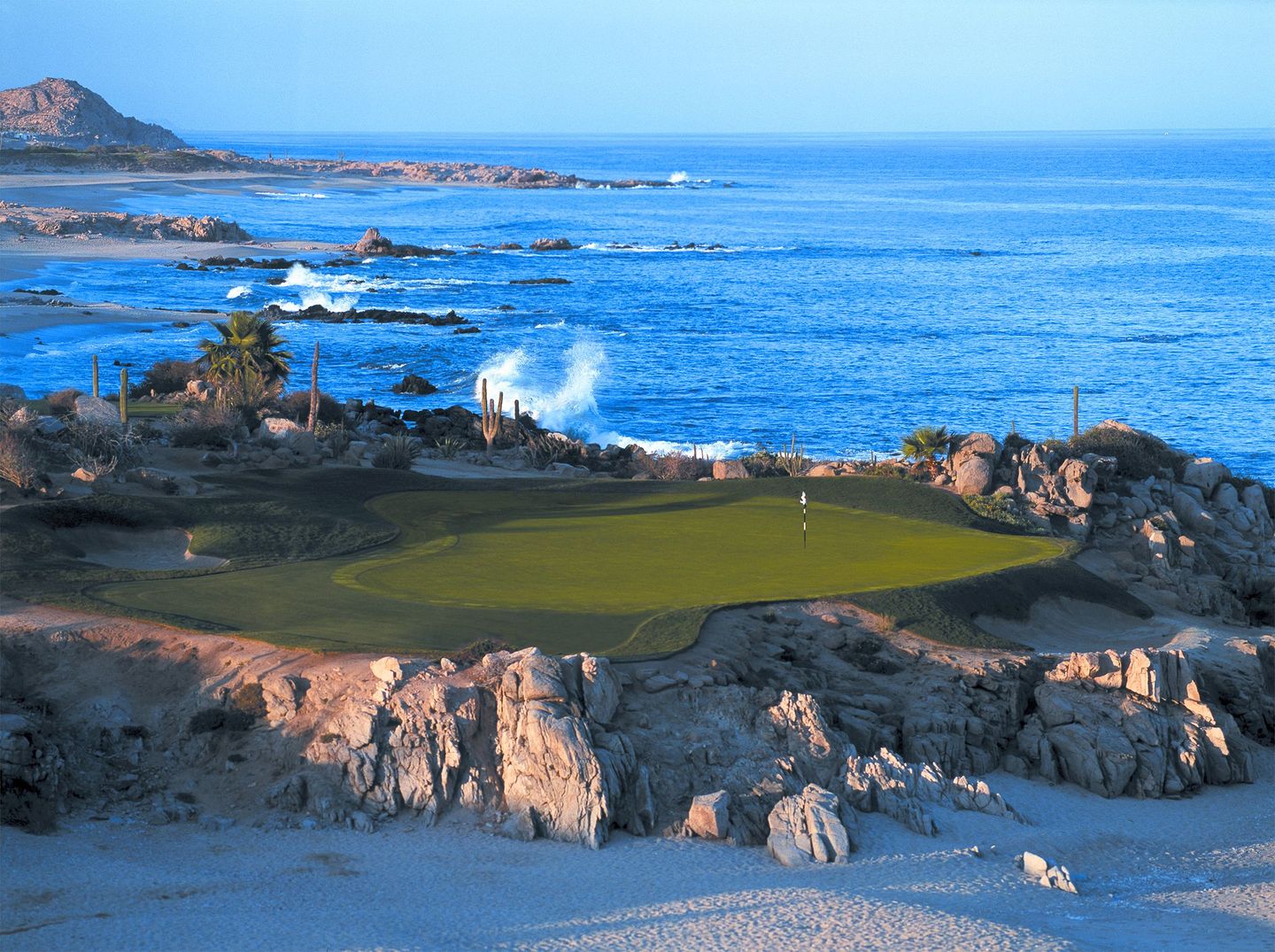
There are golf destinations, and then there is Cabo San Lucas. At the southern tip of Mexico’s Baja California Peninsula, two oceans collide — the Pacific and the Sea of Cortez — and the courses built along that meeting point are unlike anything else in the game. Fairways run beside sand dunes, tee boxes perch on granite cliffs 200 feet above crashing surf, and cacti stand sentinel where rough would normally grow. It’s a landscape golf architects dream about, and over the past two decades, some of the biggest names in course design have gotten their hands on it.
A golf trip to Cabo isn’t about ticking off one great round. It’s a rotation — a different flavour of drama every day, from cliffside par 3s to genuine Pacific dune-land golf that architects themselves have compared to the linksland of Scotland. Here’s what a well-planned Cabo golf trip actually looks like, course by course.
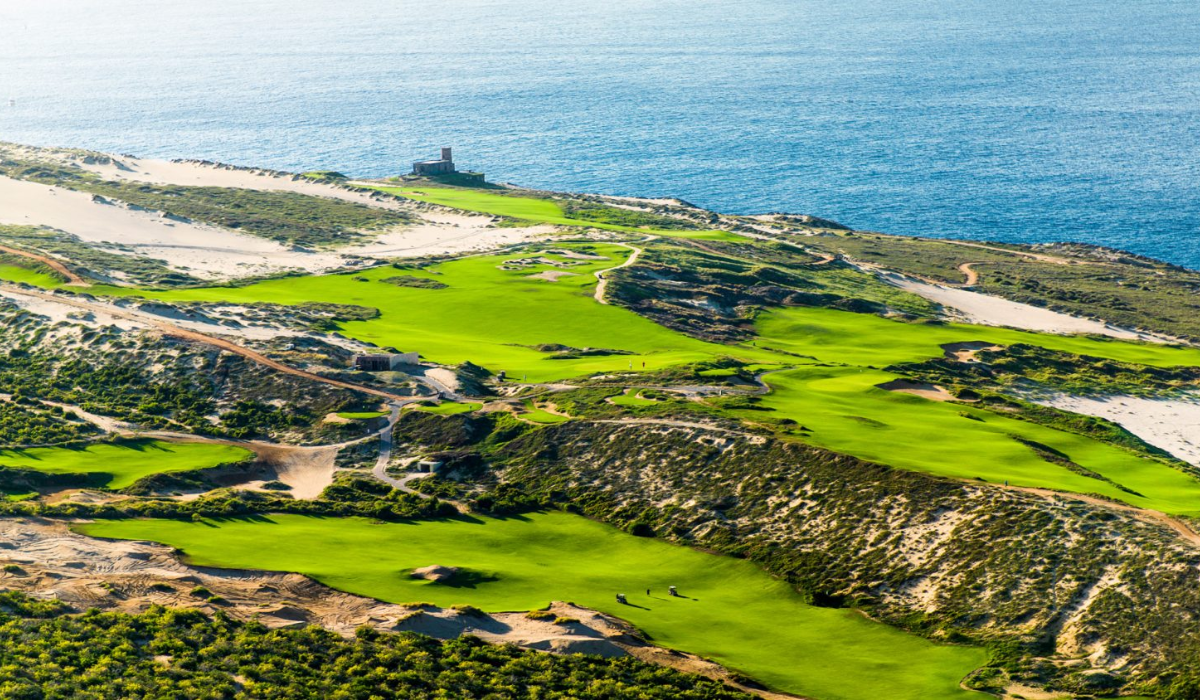
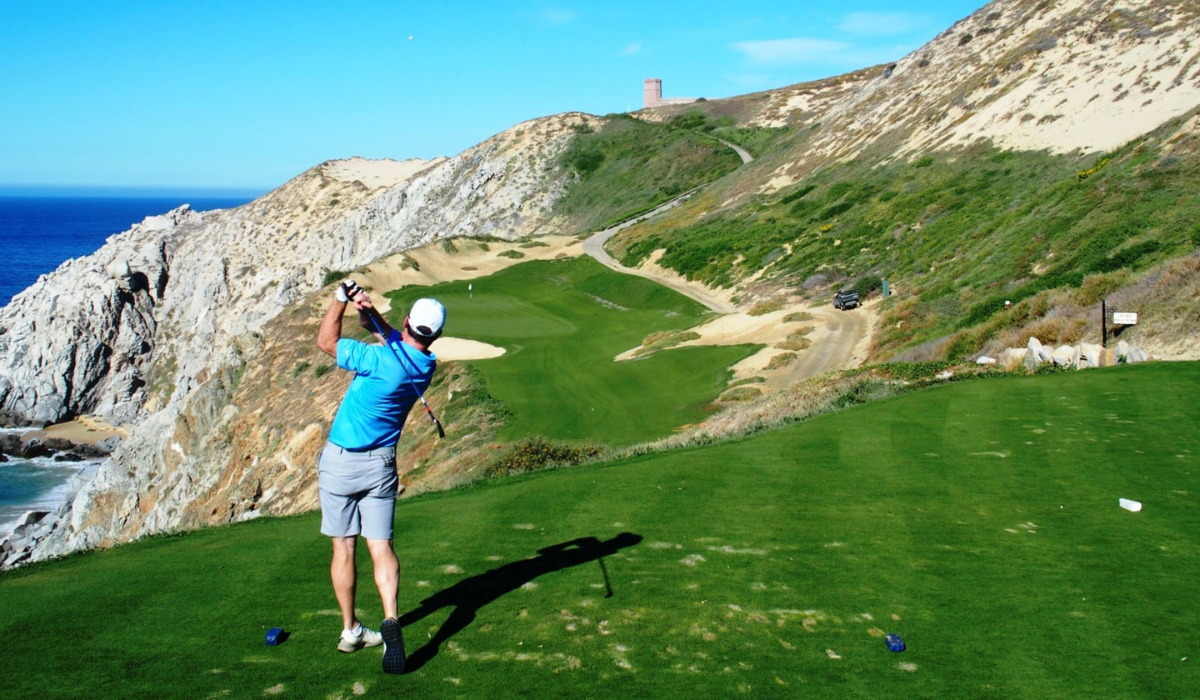
If one course defines the modern image of Cabo golf, it’s Quivira. Designed by Jack Nicklaus and built into the cliffs at Land’s End, the course begins at sea level, climbs more than 350 feet above the ocean at its highest point, and delivers Pacific views from every single hole — more oceanfront exposure than any other course in Los Cabos.
The routing is the story here. The par-4 5th plays from a tee perched roughly 275 feet above the water, short enough from the forward markers to tempt a drive at the green, with disaster waiting for anyone who misses left. The par-3 6th and par-3 13th are cut directly into the rock, the 13th requiring nothing more than a short iron to one of the smallest greens Nicklaus has ever built, guarded by nothing but a sheer drop to the sea — no bunkers needed. In between, the par-5 12th plunges downhill toward the water on a green measuring some 55 yards front to back, playing dramatically shorter than its yardage suggests.
Quivira is reserved for guests of the Pueblo Bonito resorts, which makes it as much a lodging decision as a golf one. Like most of Cabo’s premium courses, the round comes with on-course comfort stations serving tacos, margaritas, and tequila — included in the green fee, a detail that catches first-time visitors pleasantly off guard.
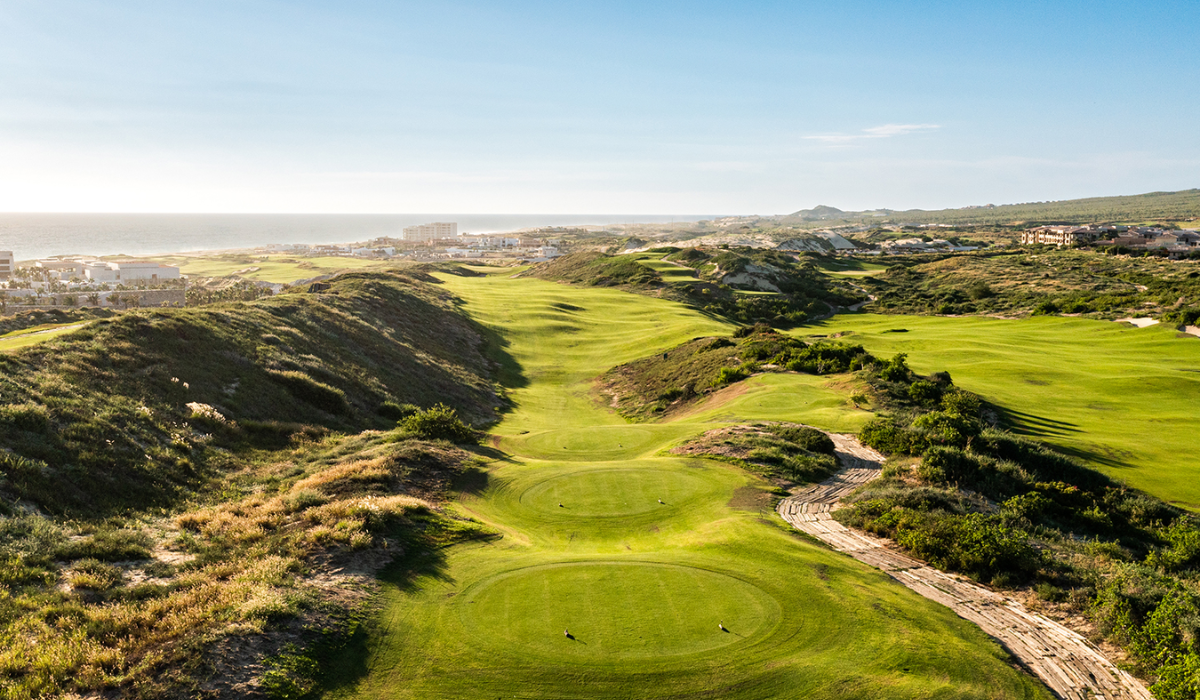
A short drive up the Pacific coast sits Diamante, home to two courses that could each anchor a golf trip on their own.
The Dunes Course, designed by Davis Love III with his brother Mark and architect Paul Cowley, is routed through genuine wind-sculpted sand dunes that Love reportedly likened to arriving at St. Andrews. It’s a true links experience transplanted to the desert — firm, undulating fairways, enormous dunes framing the holes, and greens that reward a ground game as much as an aerial one. Golf Digest has ranked it among the top 100 courses in the world and the best in Mexico.
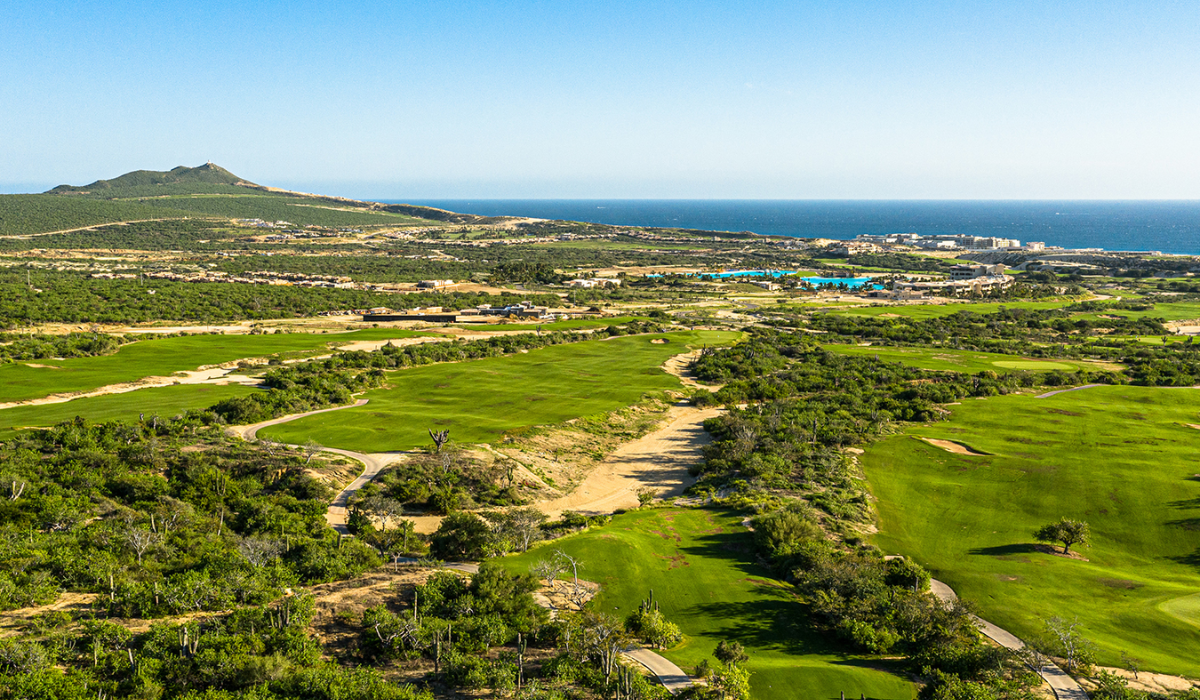
Next door is El Cardonal, notable for being Tiger Woods’ first completed golf course design, opened in 2014 through his TGR Design studio. Where the Dunes leans coastal and wild, El Cardonal sits on higher desert ground with a more “Old California” character — wide, playable fairways and flashed bunkers influenced by the municipal courses Woods grew up playing. Since 2023, El Cardonal has hosted the World Wide Technology Championship, the PGA Tour’s oldest event in Mexico and, notably, the first PGA Tour event ever played outside the United States and Canada when it debuted in 2007. The 2025 edition ran November 6–9, with Ben Griffin closing at 29-under to win by a wide margin — a reminder that these are the same fairways recreational players get to walk.
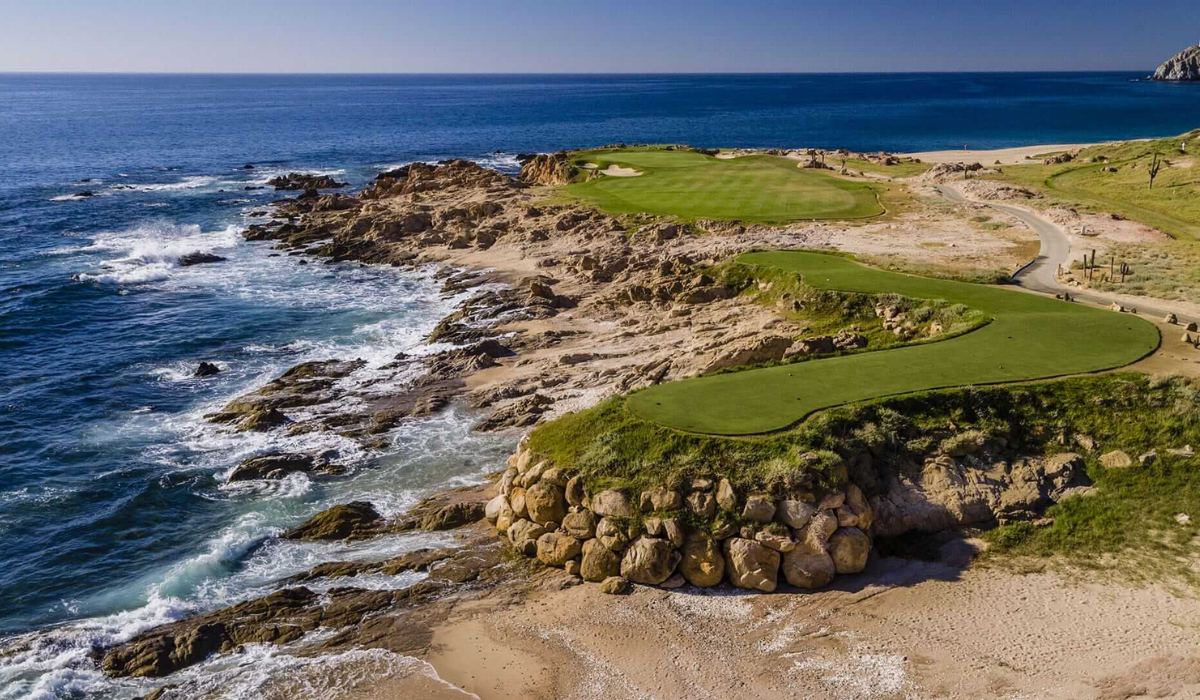
Cabo del Sol’s Ocean Course, designed by Tom Weiskopf, is frequently ranked among the finest golf experiences in Mexico, and it earns that reputation in its closing stretch. The par-3 14th plays along the Pacific with the green tucked against the rocks, and the par-4 18th finishes on a genuine cliffside hole that has become one of the most photographed closing holes in golf. Course conditioning has had its ups and downs in recent seasons according to visitor reports, but the routing and the ocean-hugging back nine remain the draw — this is the hole-for-hole scenery that put Los Cabos on the golf map in the first place.
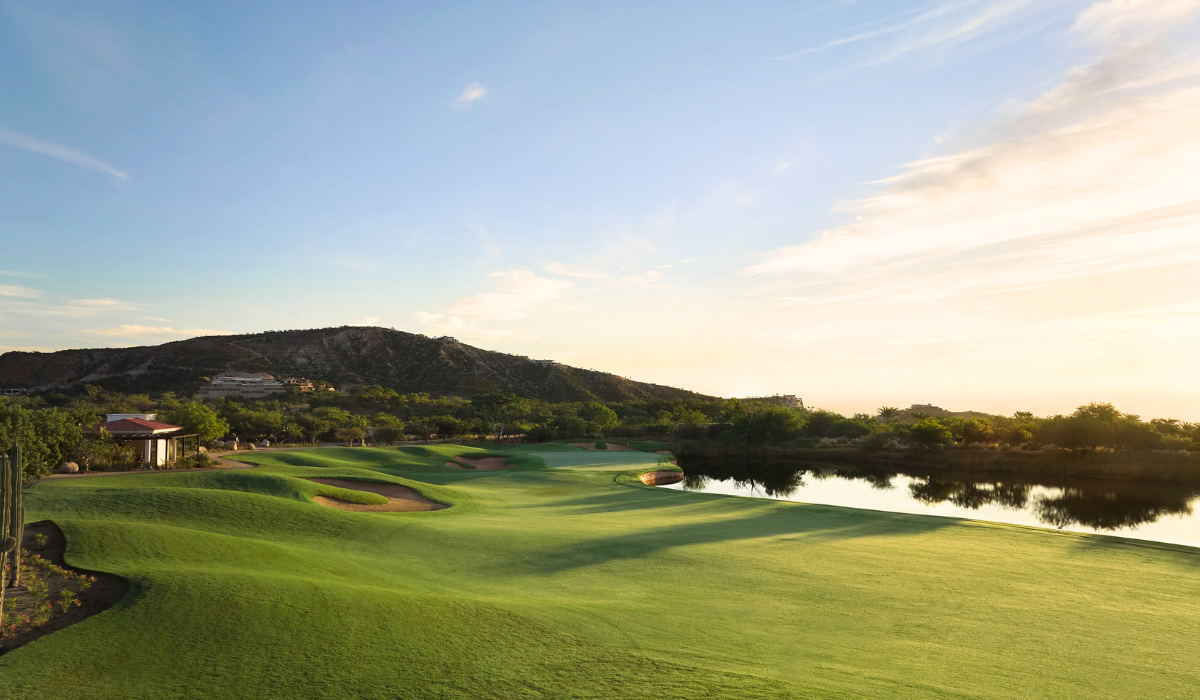
For golfers who want history alongside the views, Palmilla is Cabo’s oldest championship layout, designed by Jack Nicklaus and built around three distinct nine-hole courses — the Ocean, Mountain, and Arroyo nines — that can be combined in different 18-hole pairings. The Ocean nine hugs the coastline with the sport’s classic dramatic vistas, while the Mountain nine climbs into the hills for elevated greens and long inland views. It’s a more forgiving test than Quivira or the Ocean Course at Cabo del Sol, which makes it a smart choice for a group with a range of handicaps, or for a lower-stakes round earlier in the trip before tackling the cliffside courses.

One thing that separates a Cabo golf trip from almost anywhere else is what happens between shots. Nearly every premium course in the region — Quivira, Diamante, Cabo del Sol among them — dots the routing with staffed “comfort stations” every few holes, serving tacos, guacamole, fresh ceviche, and a rotating selection of tequila, mezcal, and margaritas, typically included in the green fee. It’s a distinctly Baja touch that turns a round of golf into something closer to a moving fiesta, and it’s worth building extra time into the tee sheet to actually enjoy it rather than rushing through.
Los Cabos plays year-round, but the sweet spot for most golfers falls between October and May, when daytime temperatures sit comfortably in the 70s and 80s Fahrenheit and humidity drops well below the summer peak. November is a particularly good window — cooler air, calmer winds off the Pacific, and, for spectators, a chance to catch the World Wide Technology Championship at El Cardonal before playing the same course yourself a few days later.
Most of Cabo’s marquee courses are tied to specific resorts — Quivira to the Pueblo Bonito properties, the Diamante courses to Diamante’s own resort community and, on a limited basis, guests of the Hard Rock and Nobu hotels nearby. Booking accommodation with course access in mind, rather than treating golf as an afterthought, tends to make or break a trip here. Green fees at the top courses generally run from around $150 into the $300–400 range depending on season, time of day, and resort affiliation, so it pays to build a mixed itinerary — a bucket-list cliffside round at Quivira or Cabo del Sol, balanced against a more relaxed day at Palmilla or a public option like Cabo Real.
Between rounds, San José del Cabo’s Art District comes alive on Thursday evenings with its gallery walk, and Medaño Beach offers the easiest base for golfers who want restaurants, nightlife, and transport options within reach rather than tucked inside a single resort. However the days are arranged, the throughline is consistent: golf in Cabo is never just golf. It’s desert, ocean, and fairway sharing the same frame, hole after hole.
A New Chapter on an Old Fairway: Inside the Hyatt Regency Vilamoura Algarve
Course Reviews
Discover the Underrated Golf Courses of Eastern Europe
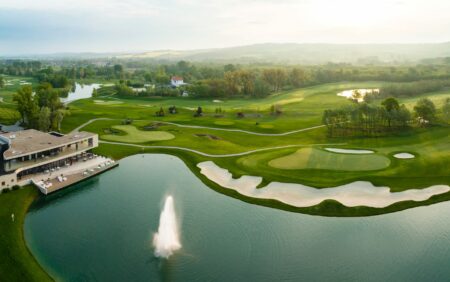
When most golfers think of Europe, their minds drift to the rolling links of Scotland, the dramatic cliffside holes of the Algarve, or the storied fairways around Dublin. But tucked into the forested hills, thermal valleys, and seaside cliffs of Eastern Europe are some truly special golf courses — hidden gems that many players overlook. […]
Destinations
The Six Best Golf Hotels in Portugal
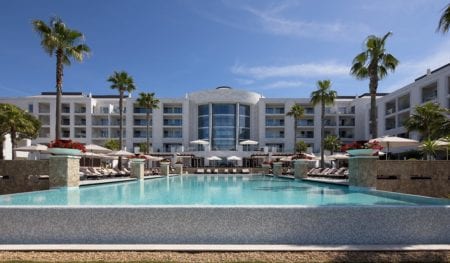
Beautiful landscapes, a fascinating culture, and an abundance of world-class courses ensure Portugal is one of golf’s most popular destinations. Whether you travel to the ever-popular Algarve, the country’s mesmerising Silver Coast, or the historic town of Obidos, you will not only find great golf but a selection of Europe’s finest golf hotels. To ensure […]