


Instruction
Links vs Parkland vs Heathland: What’s the Difference?
Explore 33,000+ golf courses in 180 countries.
Follow the latest news and trends in golf.
Connect with like-minded golfers.
Find everything you need for your golf equipment and gear needs.
Travel, golf resorts, lifestyle, gear, tour highlights and technology.
All Square
Suggestions
Instruction
Links vs Parkland vs Heathland: What’s the Difference?
Clubs
The Best Irons on the Market in 2026
Clubs
Austin Smotherman WITB: The Clubs Behind His 2026 Bank of Utah Championship Win
Destinations
Barrière Golf Properties: French Golf Escapes Where the Resort Is Part of the Experience
Destinations
Conrad Algarve Renovations: A New Chapter of Luxury in Quinta do Lago
Gear
Garmin Golf Watches Guide: Which Garmin Watch Is Right for Your Game?
PGA Tour
Presidents Cup 2026 Results & Winners: Team USA Completes Historic Comeback
Course Reviews
Cullinan Golf Links Resort, Belek: Where Golf Meets the Mediterranean
Course Reviews
New Opening: Limassol Greens — Cyprus’ New Golf Destination
PGA Tour
Presidents Cup 2026 Preview: Everything to Know Before Medinah
Clubs
Jacob Bridgeman WITB: The Clubs Behind His 2026 Biltmore Championship Victory
Course Reviews
Play Golf at Pebble Beach: What to Know Before You Go
Professional Golf
Solheim Cup Results & Winners 2026: Europe Reclaims the Trophy
Clubs
This Year’s Best Drivers on the Market: A 2026 Buyer’s Guide
Course Reviews
Fancourt: The Garden Route Estate Where South African Golf Grew Up
Course Reviews
Best Golf Courses Around Madrid
Clubs
TaylorMade Spider ZT Putter Review: What It Is, How It Performs, and Whether It’s Worth the Upgrade
Course Reviews
Your Golf Trip to Tunisia: Courses, Costs, and What to Actually Expect
Clubs
WITB: Ryan Fox’s Winning Clubs at the 2026 Open Championship
Community
How Modern Golf Courses Conserve Water and Protect Wildlife
PGA Tour
Changes on the PGA Tour from 2028
Course Reviews
Tee Off in Tuscany: Golfing Italy’s Most Picturesque Countryside
Course Reviews
The Best Golf Courses Near Pinehurst That Aren’t Pinehurst No. 2
Course Reviews
Streamsong’s Newest Masterpiece: Why Bone Valley Might Be Its Boldest Statement Yet
Clubs
What’s In The Bag: Michael Thorbjornsen’s Winning Clubs at the 2026 Rocket Classic
LPGA
Solheim Cup 2026 Preview & FAQ: Everything to Know Before Bernardus
Destinations
Spa & Swing: Resorts for Golfers Who Love Wellness
Clubs
Scottie Scheffler’s Winning WITB at the 2026 American Express
Gear
TaylorMade Golf Balls Explained: Complete Overview

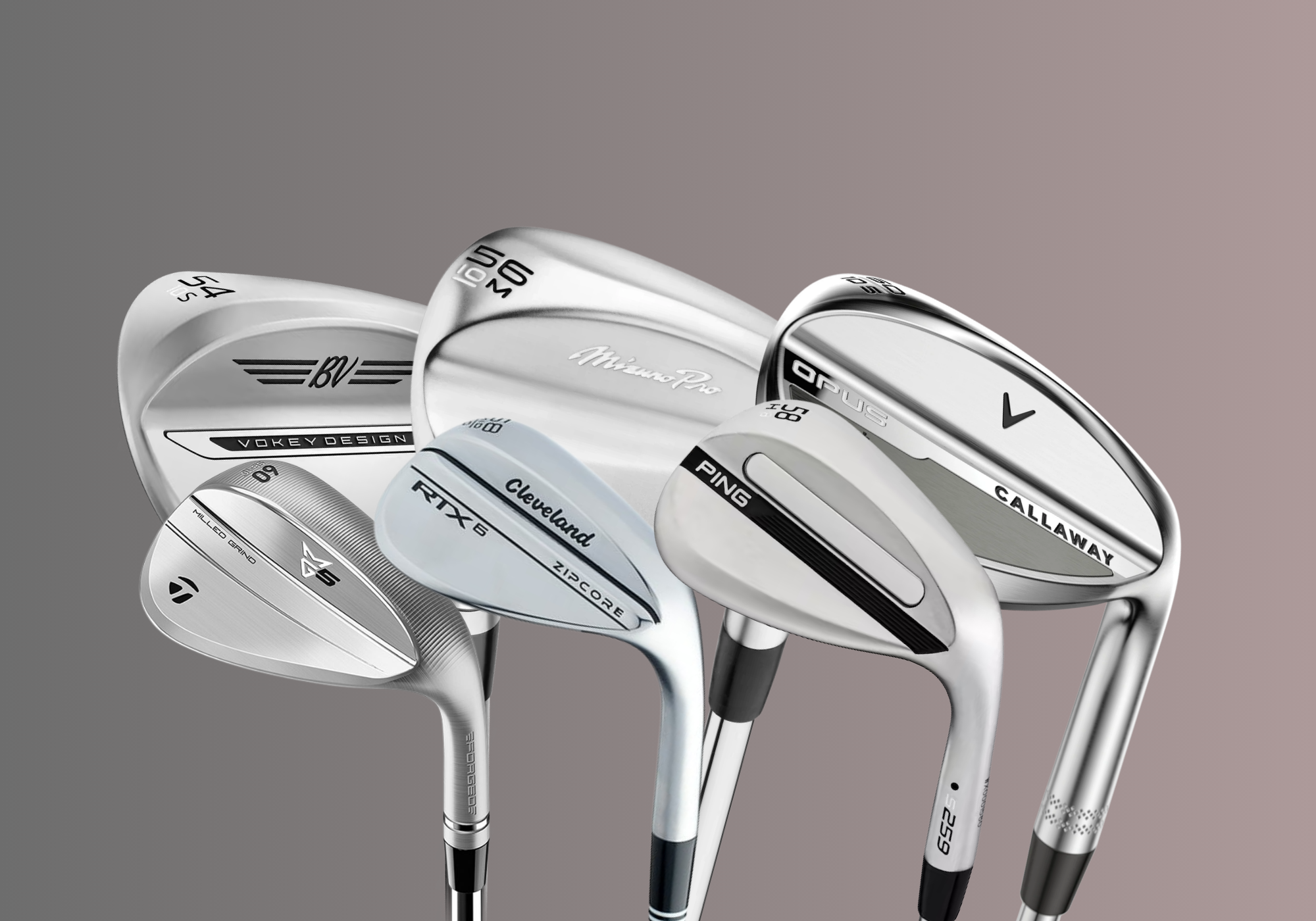
Wedge design has quietly gone through one of its more substantial refresh cycles this year, and it’s worth understanding why before comparing individual models. Titleist rebuilt the Vokey line around a single, grind-independent center-of-gravity position — something the brand had never standardised before. Callaway pushed its Spin Pocket construction further with a larger cavity and a new groove angle. TaylorMade, meanwhile, fully forged a Milled Grind wedge for the first time, pairing that construction with saw-milled grooves and a moisture-channelling face treatment aimed squarely at wet-weather spin retention. Ping refined its grind geometry rather than reinventing it. And several manufacturers have converged on the same basic idea: tightly spaced, loft-specific groove patterns paired with rougher face-texturing to fight spin loss in wet or dirty conditions. None of this is marketing dressing — groove tolerances, CG placement, and sole geometry is the actual levers that determine how a wedge performs from 100 yards and in, and this year’s releases move those levers in measurable ways. Below are six current-production wedges worth knowing about, spanning tour-level options down to genuinely strong value alternatives.
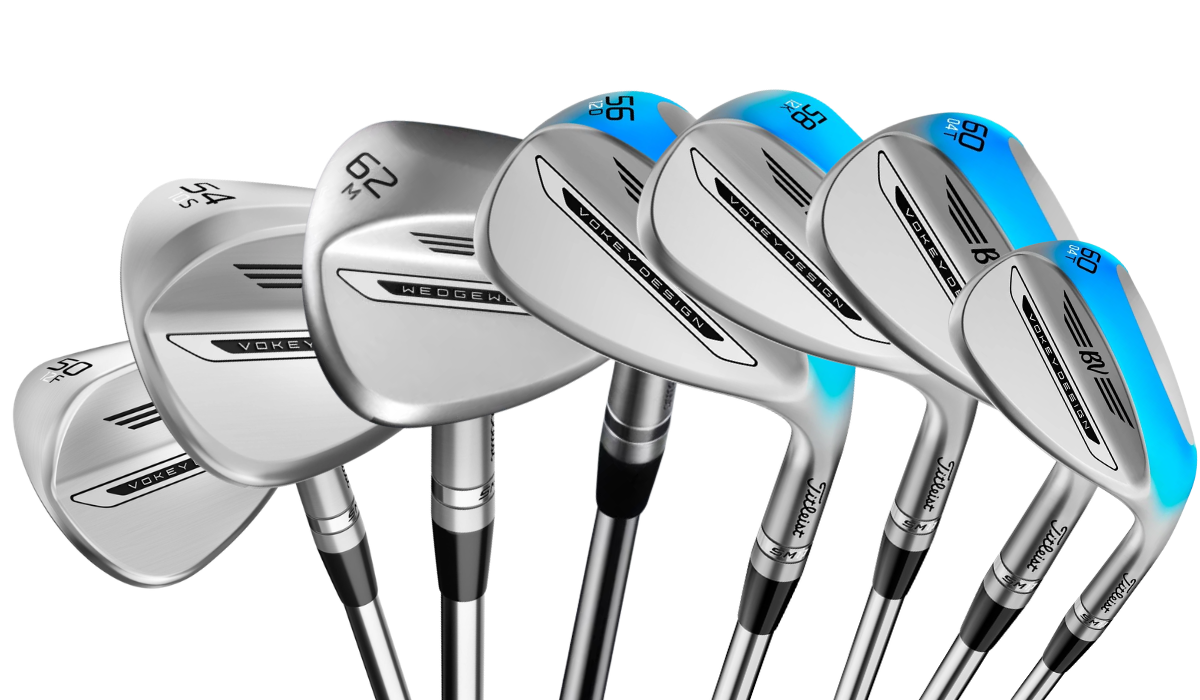
The SM11 is Titleist’s most extensive Vokey release to date, offered across 27 loft, bounce, and grind combinations built on six sole grinds (F, S, M, D, K, and T), with lofts running from 44 to 60 degrees. The headline engineering change is that Titleist now holds an identical center-of-gravity position within a given loft regardless of which grind is chosen, which removes a variable that used to make switching grinds feel like switching wedges entirely. Spin comes from what Titleist calls the Vokey Spin System: an angled face texture, three loft-dependent groove shapes, deeper spin-milled grooves that are 5% larger by volume, and a heat-treatment process intended to extend groove life. It’s best suited to players who already have a clear sense of their preferred grind and want to fine-tune loft and bounce combinations with a fitter, rather than golfers in Europe. What sets it apart technically is the consistent CG-per-loft approach — a detail that sounds minor but directly addresses a long-standing inconsistency in how Vokey grinds used to launch and feel.
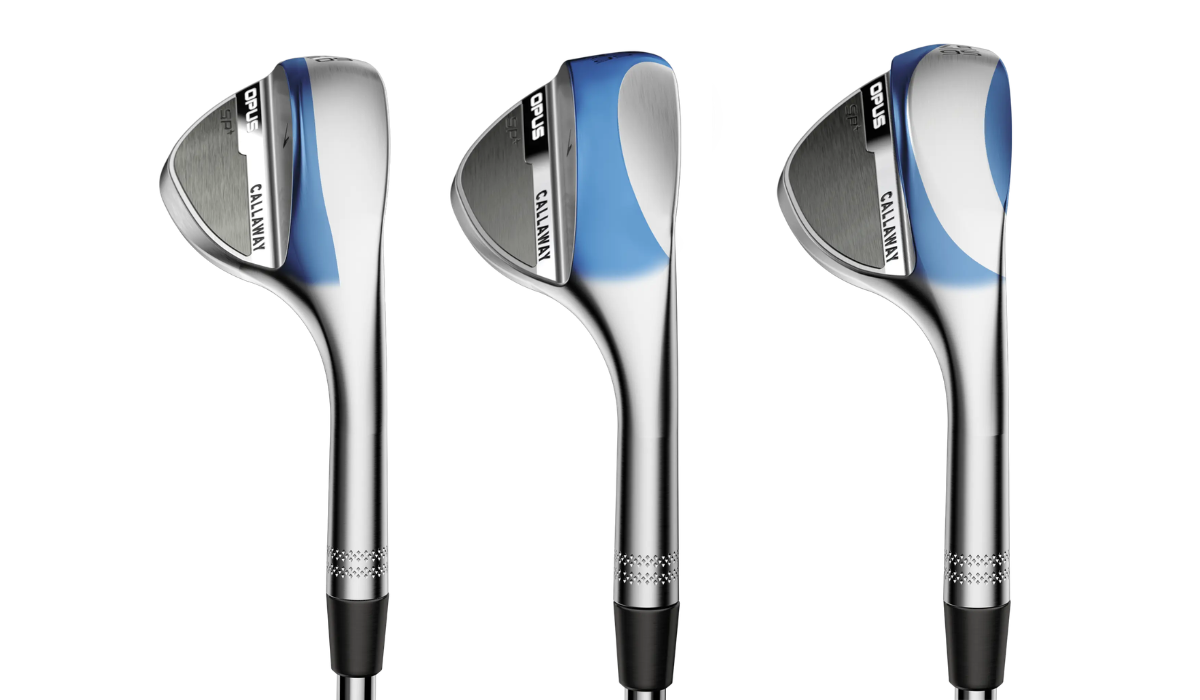
Callaway’s Opus SP+ builds on the original Opus SP by enlarging the Spin Pocket cavity by 25% and repositioning more tungsten higher in the head, which raises the center of gravity and produces a noticeably flatter, more penetrating ball flight rather than the high, floaty trajectory many wedges default to. The face itself has been reworked with a new 17-degree groove angle, tighter groove spacing, and a deeper cross-hatch laser texture across the face — Callaway’s engineers describe this as the most advanced face geometry in Opus history, aimed specifically at maintaining spin consistency across a range of lies rather than just posting a high number on a launch monitor. It’s offered in three grinds (Z, X, and S) across 54 to 60 degrees, at 199€ per wedge. This is a wedge for better players who prioritise a lower, more controlled ball flight and are willing to pay a premium for it; it’s not the first choice for someone who needs a forgiving, high-launching option. The raised CG and enlarged Spin Pocket combination is the genuine differentiator here — it’s a specific structural answer to the “wedges shouldn’t balloon” argument, not just a marketing claim about spin.
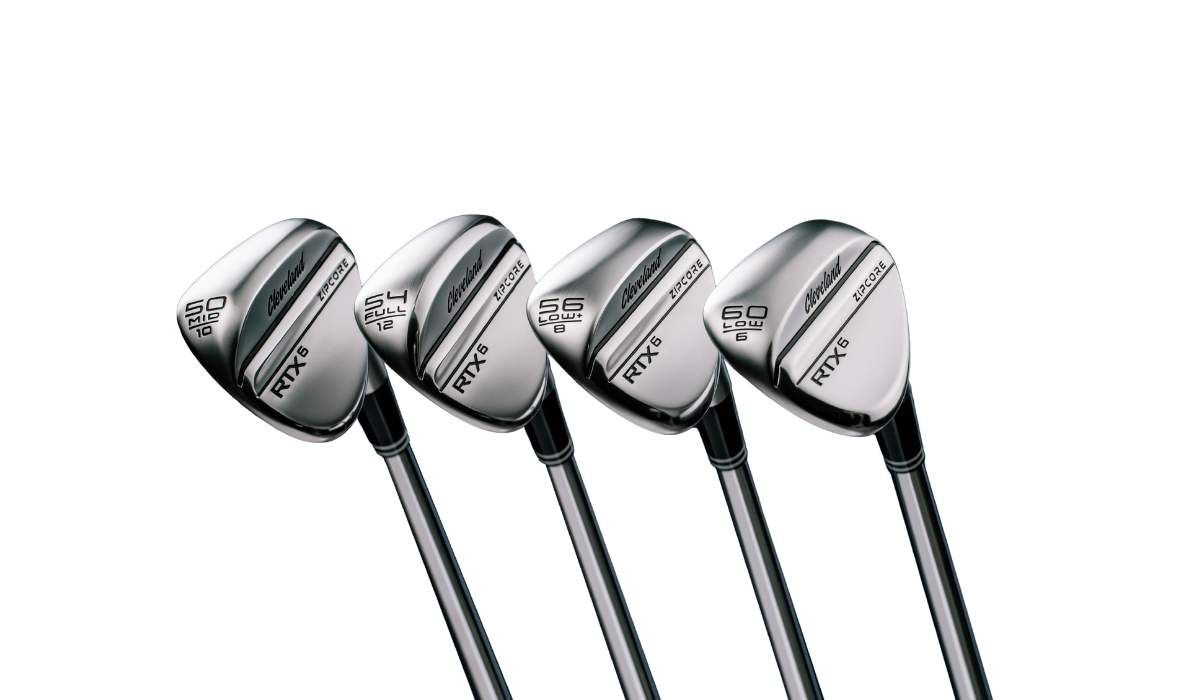
The RTX 6 ZipCore remains one of the strongest value propositions in the premium wedge category, typically priced around 199€ (often available for less depending on retailer promotions), which undercuts most tour-brand offerings by 20–30€ per club while posting spin numbers that compete directly with them in independent testing. It’s built around Cleveland’s ZipCore construction — a low-density compound that replaces mass in the hosel and heel area, freeing up roughly 21 grams to reposition the center of gravity closer to the strike zone — combined with UltiZip grooves that are sharper and more tightly spaced than previous Cleveland lines, plus a HydraZip face treatment that adds laser-milled roughness for friction in wet or gritty conditions. Four sole grinds (Low, Low+, Mid, and Full) cover lofts from 46 to 60 degrees in two-degree increments. This wedge is best suited to mid-to-low handicap players who want tour-caliber spin performance without tour-level pricing, and the Mid grind in particular is forgiving enough to work across a range of attack angles. What genuinely sets it apart is the ZipCore mass redistribution itself — it’s a real internal engineering solution to CG placement, not just a groove or finish update layered onto an old casting.
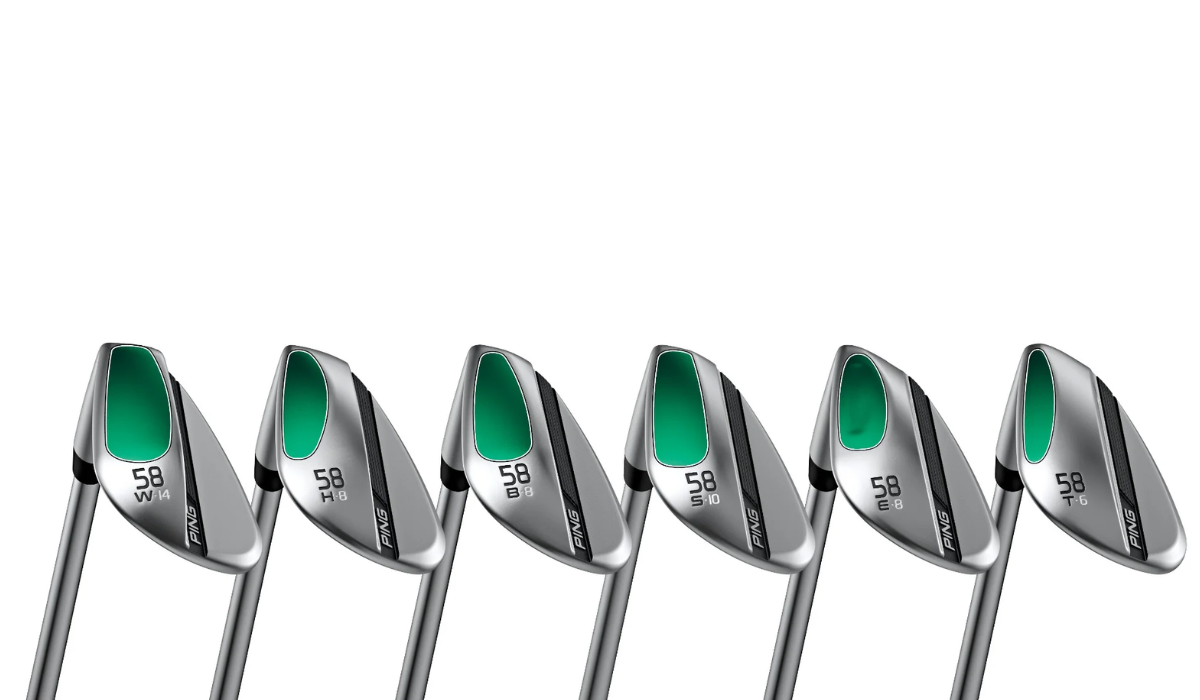
Ping’s s259 replaces the well-regarded s159 with six sole grinds (B, H, S, T, W, and E) spanning 25 loft-and-grind combinations from 46 to 62 degrees, priced at 229€ in steel and 239€ in graphite. The standout technical feature is the wheel-cut groove system, which varies by loft: the 54-to-62-degree wedges use tightly spaced MicroMax grooves optimised for greenside spin, while the 46-to-52-degree wedges use a wider 20-degree sidewall groove designed to maximise volume for full-swing control. A face-blast texture adds surface roughness on top of the grooves themselves to help with spin consistency in wet conditions. The E grind — a descendant of the classic Ping Eye 2 shape — has been reshaped for a more conventional look at address while keeping its wide-sole, high-bounce bunker performance, and the T grind now offers the lowest effective bounce in the lineup at 6 degrees for players who like to work the face open. This is a genuinely well-suited option for the broadest range of players, from mid-handicappers who want the S grind’s forgiveness to better players chasing the T grind’s low-bounce versatility, largely because Ping’s WebFit Wedge tool and six-grind spread make self-fitting more approachable than most competitors. The loft-specific groove volume split is the detail that separates it from wedges that just apply one groove pattern across the whole set.
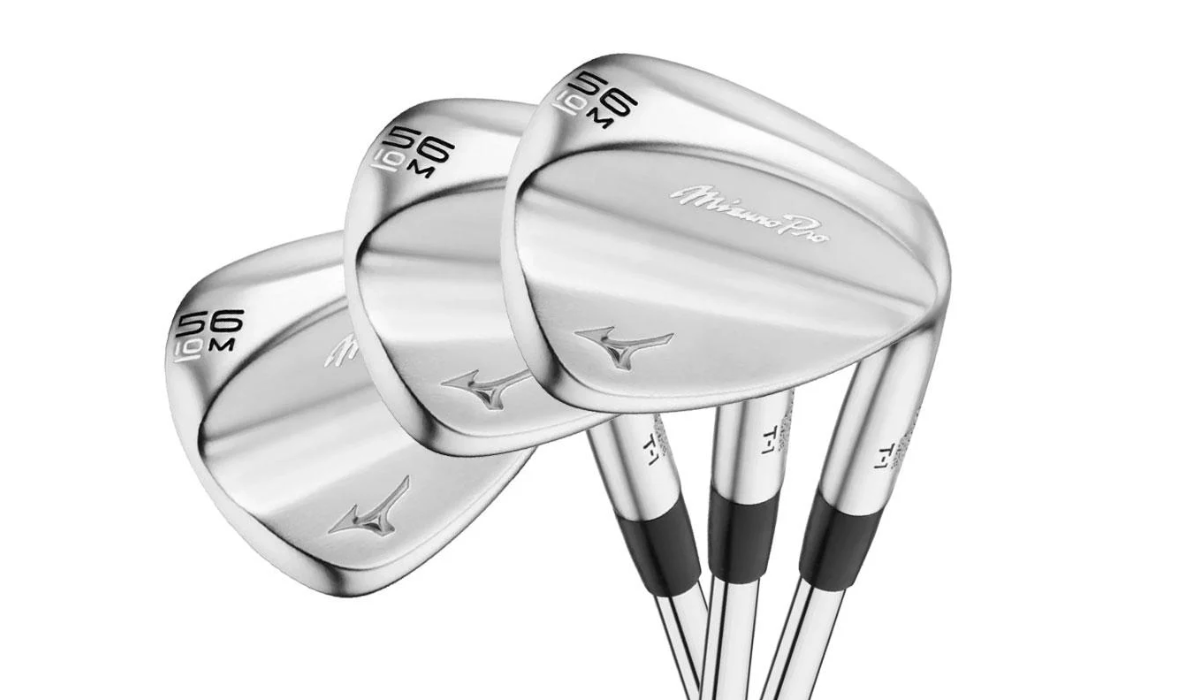
The Pro T-1 is forged in Mizuno’s Hiroshima facility using Grain Flow Forged HD technology from 1025 mild carbon steel with a copper underlay beneath the finish, and that construction shows up directly in how the wedge feels off the face — softer and more communicative than cast alternatives, which is the primary reason better players gravitate toward it. It’s available in six sole grinds (S, M, P, C, V, and X) across lofts from 46 to 62 degrees, priced at 230€ per wedge. Spin comes from Quad Cut+ grooves paired with Hydroflow Micro Grooves, which channel moisture away from the strike zone to reduce spin loss in wet conditions; groove geometry is tuned differently for the stronger lofts (which prioritise consistency on full shots) versus the higher lofts (which prioritise maximum spin around the green). This wedge is built for better players and low-handicappers who value feel and shot-shaping ability over forgiveness — the grinds favour versatility rather than anti-dig insurance, so higher-handicap golfers with steep or inconsistent attack angles may find it less forgiving than a Cleveland or Ping equivalent. The copper underlay beneath the finish is the specific detail worth noting; it’s an unusual construction choice aimed purely at softening feedback at impact, not at any performance metric a launch monitor would capture.
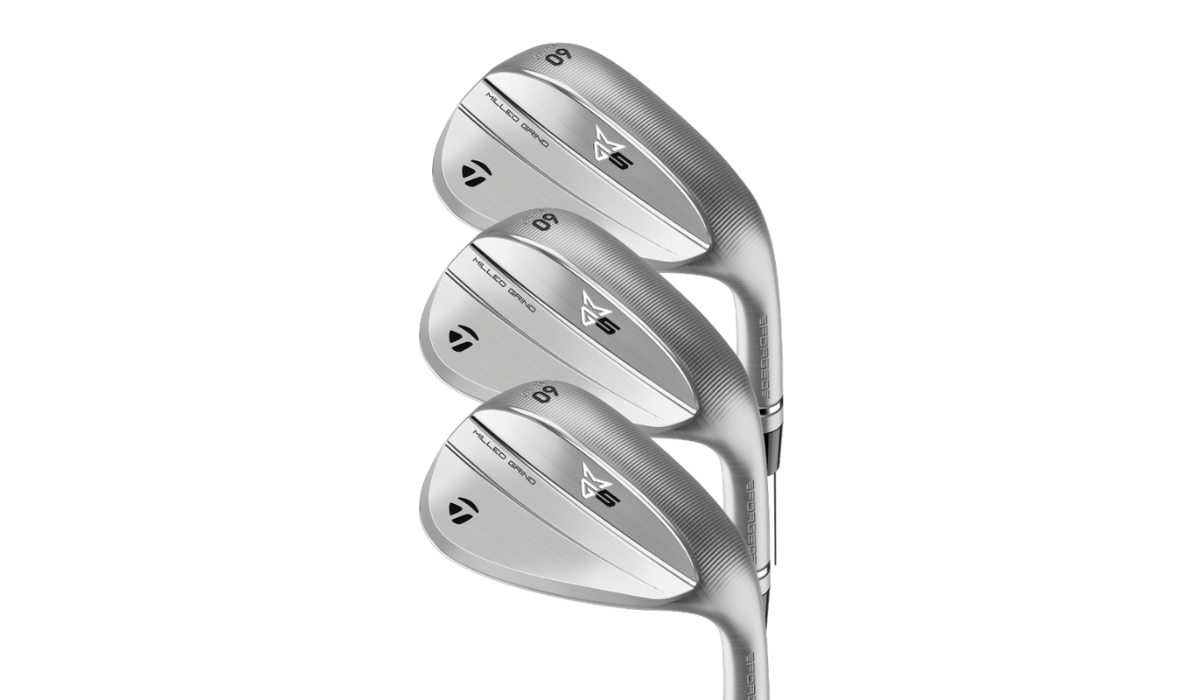
The MG5 marks the first time TaylorMade has fully forged a Milled Grind wedge rather than relying on CNC-milled castings, a change made directly in response to staff player feedback asking for softer feel on pitches and chips. Each head is forged from a single billet of soft carbon steel, then precision-milled to dial in the grind, grooves, and hosel geometry, which also improves head-to-head consistency compared with hand-polished models. Six grinds are available — LB, SB, SC, SX, HB, and the Tiger Woods-developed TW — spanning lofts from 46 to 60 degrees, with standard grinds priced at around €190 and the TW grind at around €210. The groove technology is the other major update: saw-milled grooves with steeper walls and sharper radii are paired with Spin Tread, a system of laser-etched channels on the raw, unfinished face that function like tire treads to divert moisture and debris away from the strike zone. TaylorMade reports 13% better spin retention than its predecessor once moisture is introduced, which matters more than dry-condition spin numbers for anyone who plays early-morning or dew-covered rounds. This wedge suits better players who want tour-level feel and are willing to manage a raw face that will develop patina over time, and the SB grind’s forgiving, wide sole with constant trailing-edge relief also makes it workable for less precise strikers who still want that forged feel. What sets it apart from the field is the combination of full forging with saw-milled grooves — most forged wedges sacrifice some groove precision for feel, and TaylorMade’s manufacturing process is built specifically to avoid that trade-off.
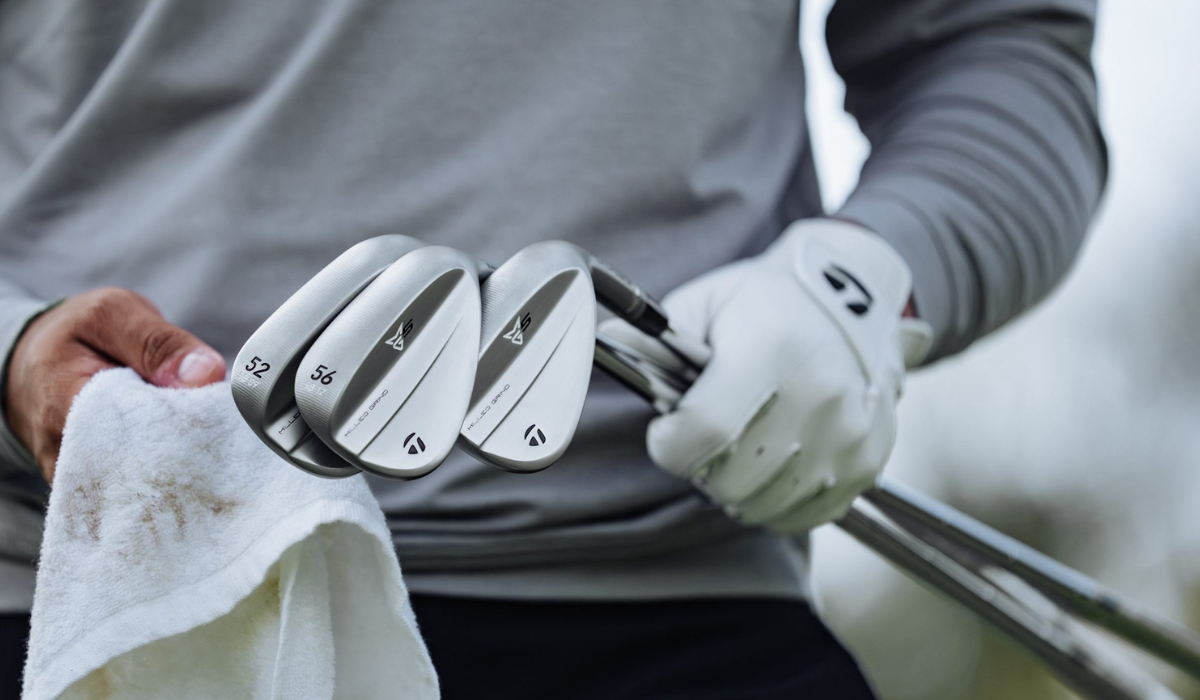
None of these wedges is objectively “the best” — the right one depends on three things: how much spin you actually need versus how much forgiveness you need, how your attack angle interacts with turf, and how much you’re willing to spend to get there. If you take steep divots or play mostly on soft ground, look toward wider, higher-bounce grinds like Cleveland’s Full sole, Ping’s W or H grind, or TaylorMade’s HB or SX grind. If you sweep the ball with a shallower strike and play firm, fast turf, lower-bounce options like Vokey’s T grind, Callaway’s Z grind, or Mizuno’s X grind will let you manipulate the face without the leading edge sitting up. Better players chasing maximum spin and flatter trajectory should look closely at the Opus SP+ or SM11; golfers who want tour-level feel without going fully custom should weigh the MG5’s forged construction against the RTX 6 ZipCore’s more budget-friendly spin performance. And if you’re unsure which grind actually matches your swing, that’s a case where an in-person or online wedge fitting is genuinely worth doing before you buy — bounce and grind matter more to how a wedge performs for you than the brand name stamped on the back.
Shop Golf Clubs and Accessories at The Golf Store by All Square
McLaren Golf: What Golfers Need to Know About the F1 Team’s New Equipment Brand
Accessories
Best Laser Rangefinders 2021
We pick out some of the best GPS laser rangefinders on the market in 2021. Designed to give you pinpoint distances to the flag, they are revolutionizing the way golf is played. Casual and amateur golfers have been using rangefinders for years. Then, in 2019, the Rules of Golf according to the R&A and the […]

Clubs
Victor Perez: What’s In The Bag?
We delve into the golf bag of Victor Perez, the talented Frenchman who won his first European Tour title at the 2019 Alfred Dunhill Links Championship in his first full season. The 28-year-old has made an exciting start to his career after rising quickly through the ranks on the Challenge Tour. In January 2020, Perez […]