


Course Reviews
Marrakech vs Agadir for Golf: Which Moroccan Destination Should You Choose?
Explore 33,000+ golf courses in 180 countries.
Follow the latest news and trends in golf.
Connect with like-minded golfers.
Find everything you need for your golf equipment and gear needs.
Travel, golf resorts, lifestyle, gear, tour highlights and technology.
All Square
Suggestions
Course Reviews
Marrakech vs Agadir for Golf: Which Moroccan Destination Should You Choose?
Clubs
WITB: Ryan Fox’s Winning Clubs at the 2026 Open Championship
Course Reviews
Golf in Madeira: Cliffs, Clouds and Two Unforgettable Courses
Destinations
Thai Caddie Culture Explained: Tipping, Etiquette and What to Expect
Course Reviews
Best Golf Courses Around Munich: Where Championship Golf Meets Bavarian Beauty
Accessories
Best Push Carts and Electric Trolleys for Golf in 2026
Course Reviews
Rediscover Monte Rei: Portugal’s Iconic Golf Course Reopens After Major Renovation
Course Reviews
Best Golf Courses Around Rome: Where Ancient History Meets Modern Golf
Instruction
Links vs Parkland vs Heathland: What’s the Difference?
Clubs
The Best Irons on the Market in 2026
Clubs
Austin Smotherman WITB: The Clubs Behind His 2026 Bank of Utah Championship Win
Destinations
Barrière Golf Properties: French Golf Escapes Where the Resort Is Part of the Experience
Destinations
Conrad Algarve Renovations: A New Chapter of Luxury in Quinta do Lago
Gear
Garmin Golf Watches Guide: Which Garmin Watch Is Right for Your Game?
PGA Tour
Presidents Cup 2026 Results & Winners: Team USA Completes Historic Comeback
Course Reviews
Cullinan Golf Links Resort, Belek: Where Golf Meets the Mediterranean
Course Reviews
New Opening: Limassol Greens — Cyprus’ New Golf Destination
PGA Tour
Presidents Cup 2026 Preview: Everything to Know Before Medinah
Community
How Modern Golf Courses Conserve Water and Protect Wildlife
PGA Tour
Changes on the PGA Tour from 2028
Course Reviews
Tee Off in Tuscany: Golfing Italy’s Most Picturesque Countryside
Course Reviews
The Best Golf Courses Near Pinehurst That Aren’t Pinehurst No. 2
Destinations
The Rise of Wellness-Integrated Golf Hotels
Clubs
Wyndham Clark WITB: The Clubs Behind His 2026 BMW Championship Victory
Course Reviews
Mazagan Beach & Golf Resort: Morocco’s Atlantic Jewel
Course Reviews
Lofoten Golf Experience: Playing at the Edge of the World

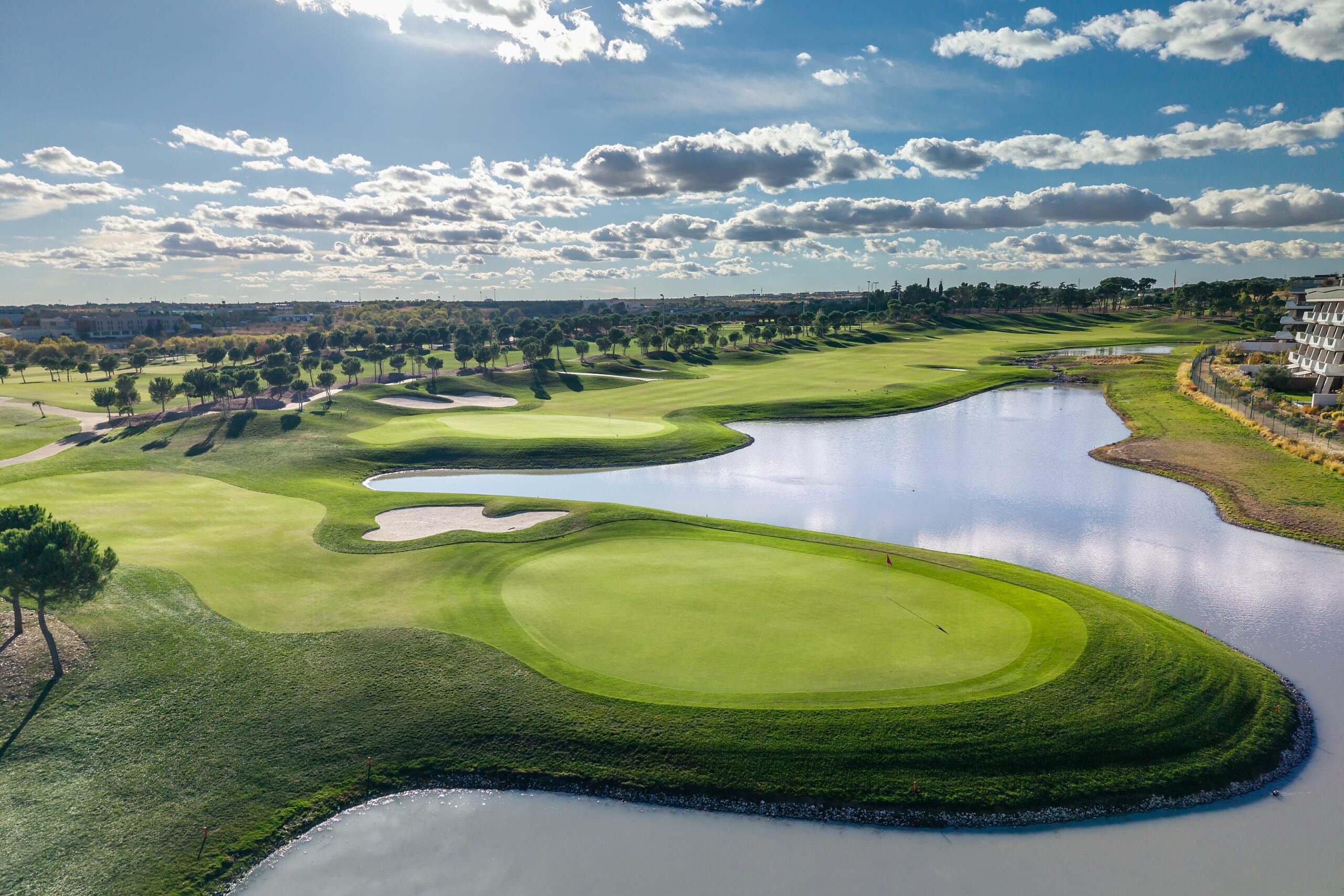
Spain’s golf reputation tends to orbit the coasts — the Costa del Sol, Valderrama, the Balearics. Madrid rarely gets top billing, yet the Spanish capital and the wooded, mountain-fringed countryside surrounding it hold one of the deepest concentrations of golf history anywhere in continental Europe. This is where Spanish golf itself was born, where a teenage caddie named Ángel de la Torre became the country’s first touring professional, and where Seve Ballesteros, Ian Woosnam and Bernhard Langer all won titles years before their Masters green jackets. Add a dry, sunny climate, a landscape of holm oak forest and Sierra de Guadarrama foothills, and excellent access from Madrid–Barajas Airport, and it becomes clear why the region deserves a closer look. Here are the courses that define golf around Madrid.
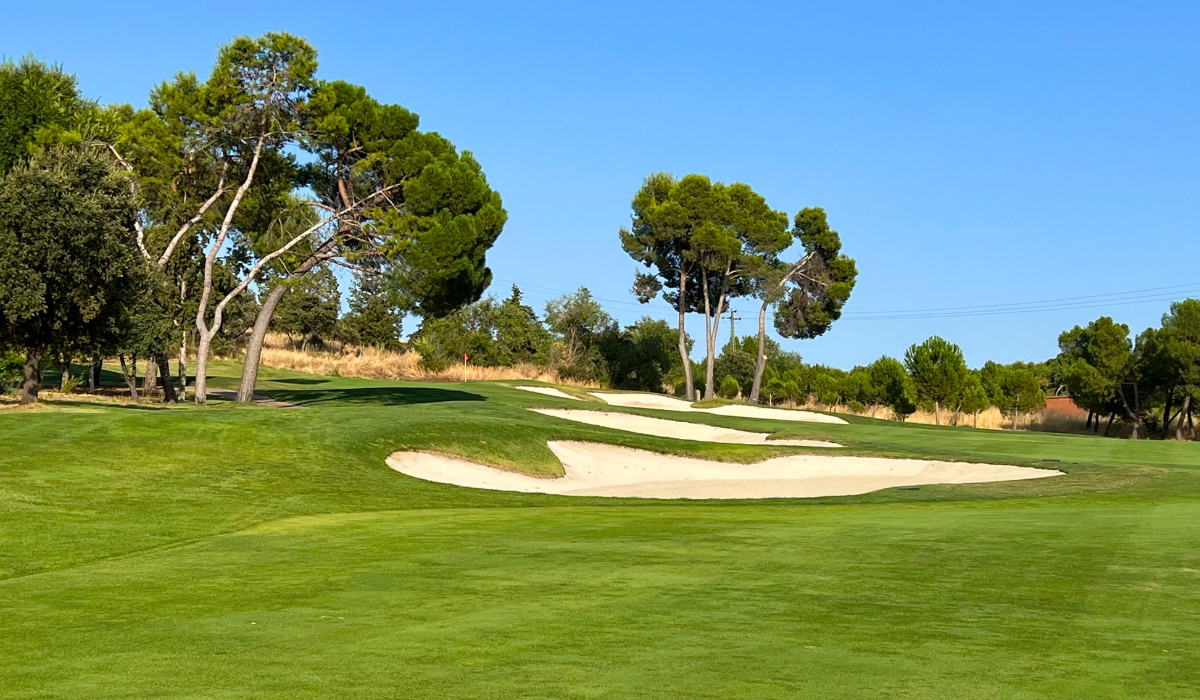
No course carries more weight in Spanish golf history than Puerta de Hierro. Founded in 1895 as a polo club by a group of noblemen led by the 16th Duke of Alba, with the enthusiastic backing of a young King Alfonso XIII, it was built to rival the grandest clubs of London and Paris. Golf followed a few years later, and by 1914 Harry Colt had laid out the club’s first proper 18 holes at its present site near the Puerta de Hierro arch northwest of the city. Tom Simpson reworked sections in the 1920s, and Colt himself returned in 1931 to refine it further.
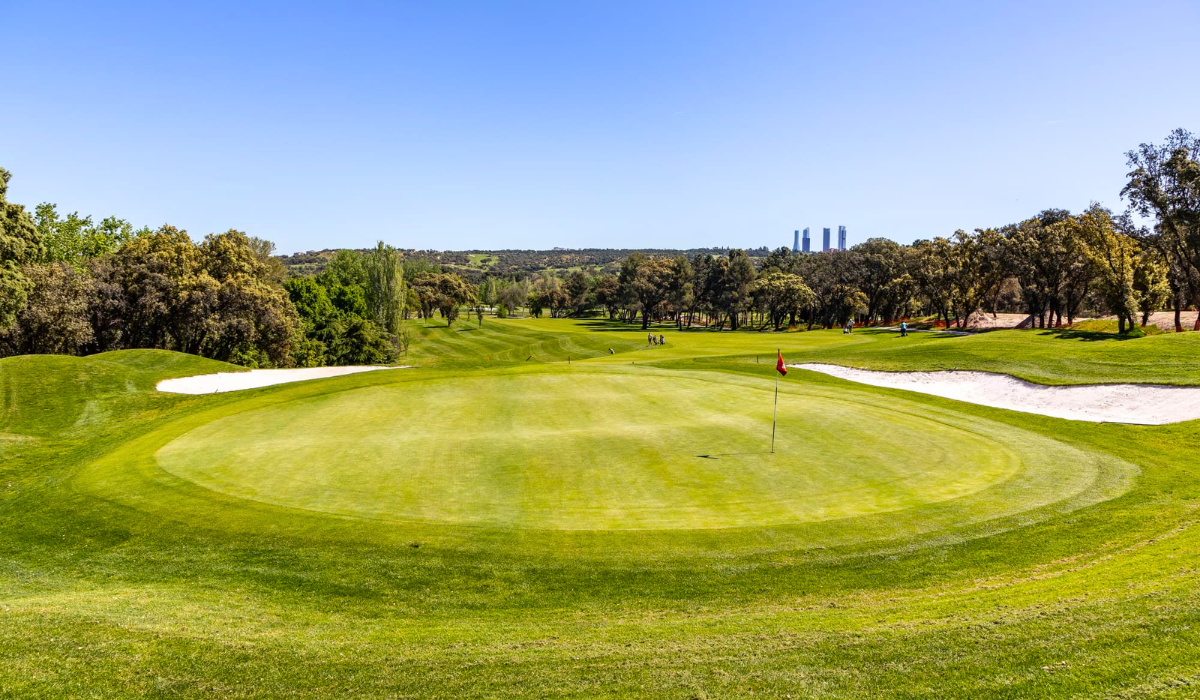
The club’s Abajo (Low) course hosted every edition of the Open de España between 1912 and 1941, and later staged the Madrid Open nineteen times between 1972 and 1993 — a run in which Seve Ballesteros, Manuel Piñero and Howard Clark each claimed three titles between them. In 1998, Robert Trent Jones Jr. and Kyle Phillips gave the Abajo a full redesign that remains in play today, threading tight, strategic holes through centuries-old oak forest with the Guadarrama mountains as a backdrop. The Arriba (Upper) course, one of the oldest layouts in Spain, has been undergoing a careful restoration under architect Frank Pont since 2018. Gerald Ford once called Puerta de Hierro “the club of kings and the king of clubs,” and it remains strictly members-and-guests-only — but its influence on Spanish golf is impossible to overstate.
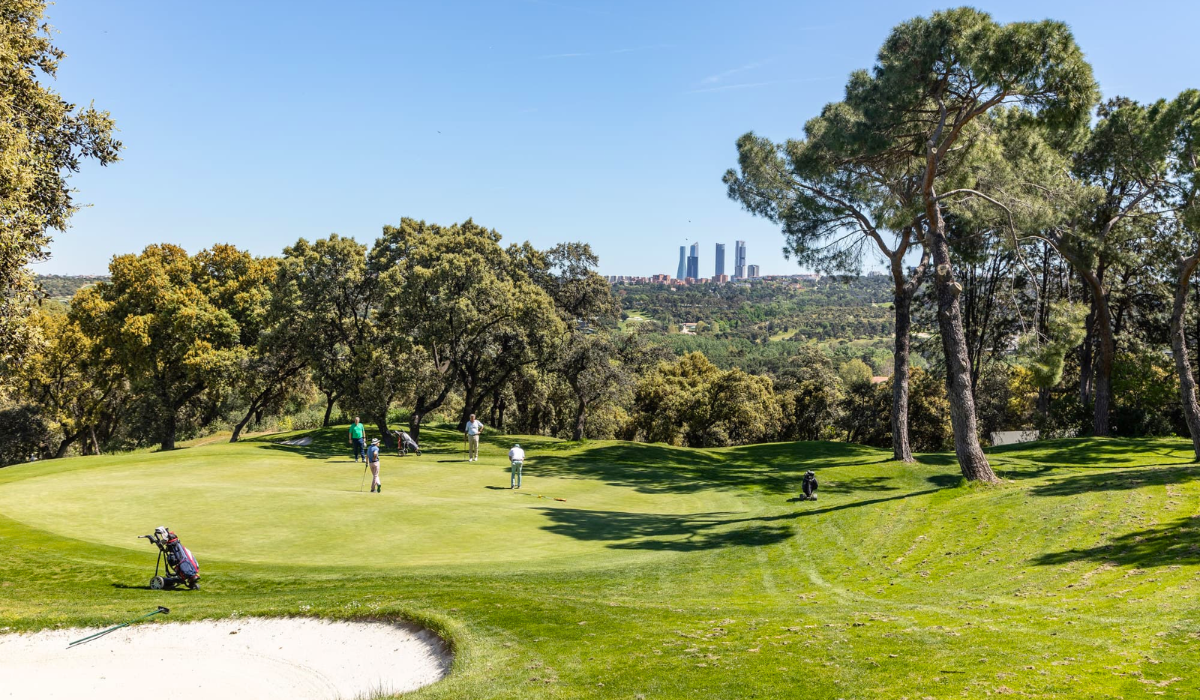
Founded in 1929, Club de Campo sits close to the city center and has arguably hosted more editions of the Open de España than any other Spanish venue. Its Negro (Black) course, designed by Javier Arana and opened in 1956, has staged the national open repeatedly over the decades and continues to test the game’s biggest names — it has also hosted the Longines Global Champions Tour showjumping series. The club’s second course, the Amarillo (Yellow), was designed by Seve Ballesteros himself, giving Club de Campo a rare distinction: two courses shaped by two of the most important figures in Spanish golf, sitting side by side within the same sprawling sporting complex.
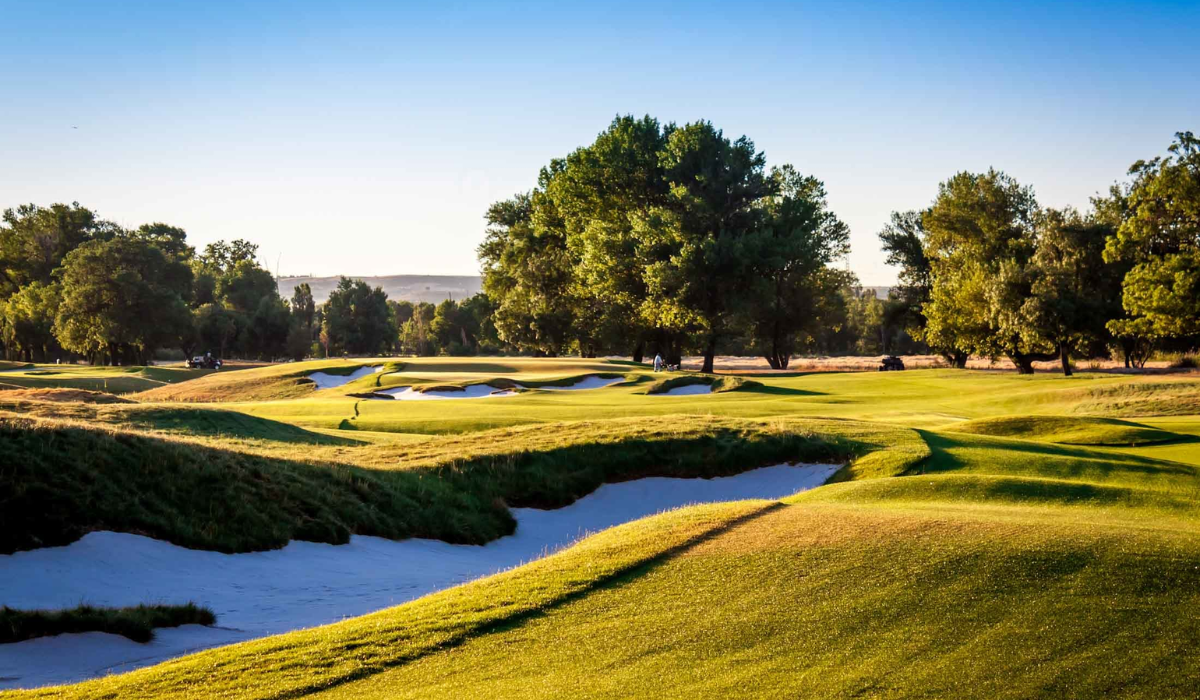
If Puerta de Hierro represents Madrid’s golfing past, La Moraleja represents its expansion into the modern era. Founded in 1973 in the affluent Alcobendas district north of the city, it grew into the largest golf club in Spain by hole count and one of the biggest in metropolitan Europe, eventually encompassing four full 18-hole courses — all designed under the Jack Nicklaus banner. Course 1 opened in 1976 as a tight, technical test where lakes and out-of-bounds shape every decision. Course 2, laid out by Ron Kirby of Nicklaus Design and opened in 1990, is the club’s marquee venue: it stretches beyond 7,000 yards and hosted the 1992 World Cup of Golf, where Fred Couples and Davis Love III took the team title for the United States. Courses 3 and 4, added at a second site in Algete in 2013, pushed the club’s footprint even further. La Moraleja is private, but its scale and tournament pedigree make it one of the defining clubs of Spanish golf.
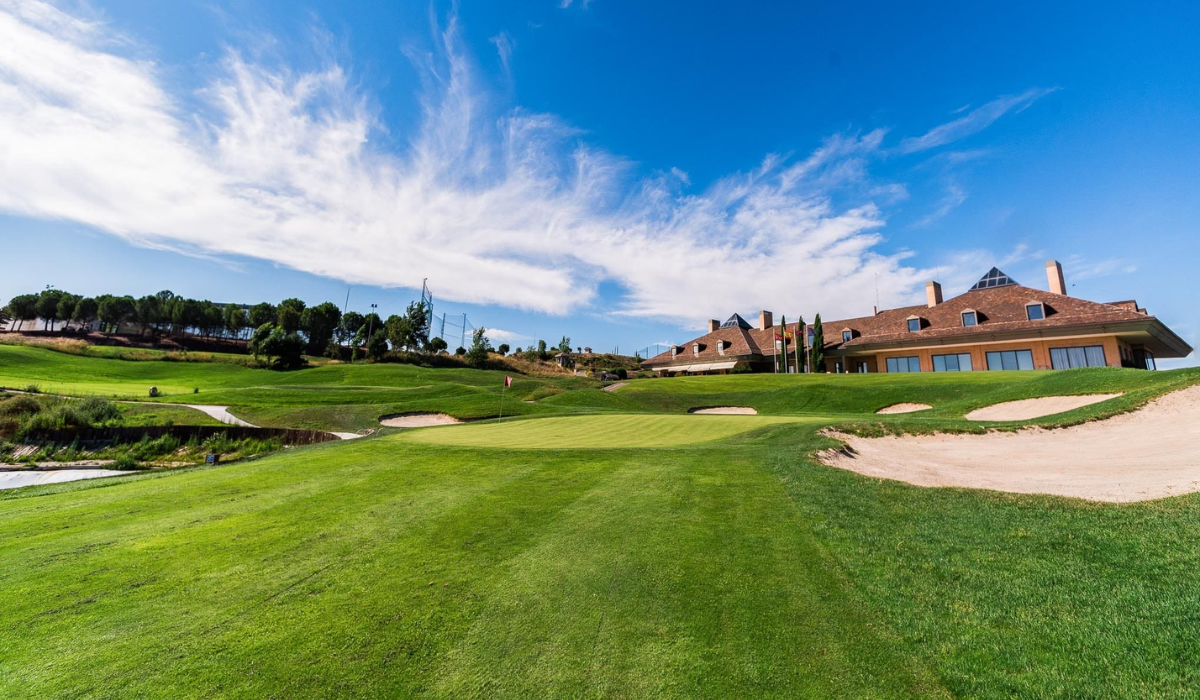
For golfers without a members’ introduction, Centro Nacional de Golf offers something rare near a European capital: a genuinely links-style 18 holes open to the public. Owned and operated by the Real Federación Española de Golf (the Spanish golf federation) and designed by Dave Thomas — the architect behind The Belfry, Abama and Terre Blanche — the course opened in 2006 on land that had previously served as a municipal landfill. Stretching past 7,200 yards with minimal tree cover and generous rough, it plays like a British seaside links dropped into central Spain, with wind doing much of the defending. It has hosted three DP World Tour events since opening — the Open de España in both 2007 and 2018, and the Madrid Masters in 2009 — and its practice facility, fitted with Toptracer Range technology across 80 bays, ranks among the largest of its kind in Europe. Well connected by public transport and priced for accessibility, it is the course most likely to welcome a visiting golfer without a local contact.
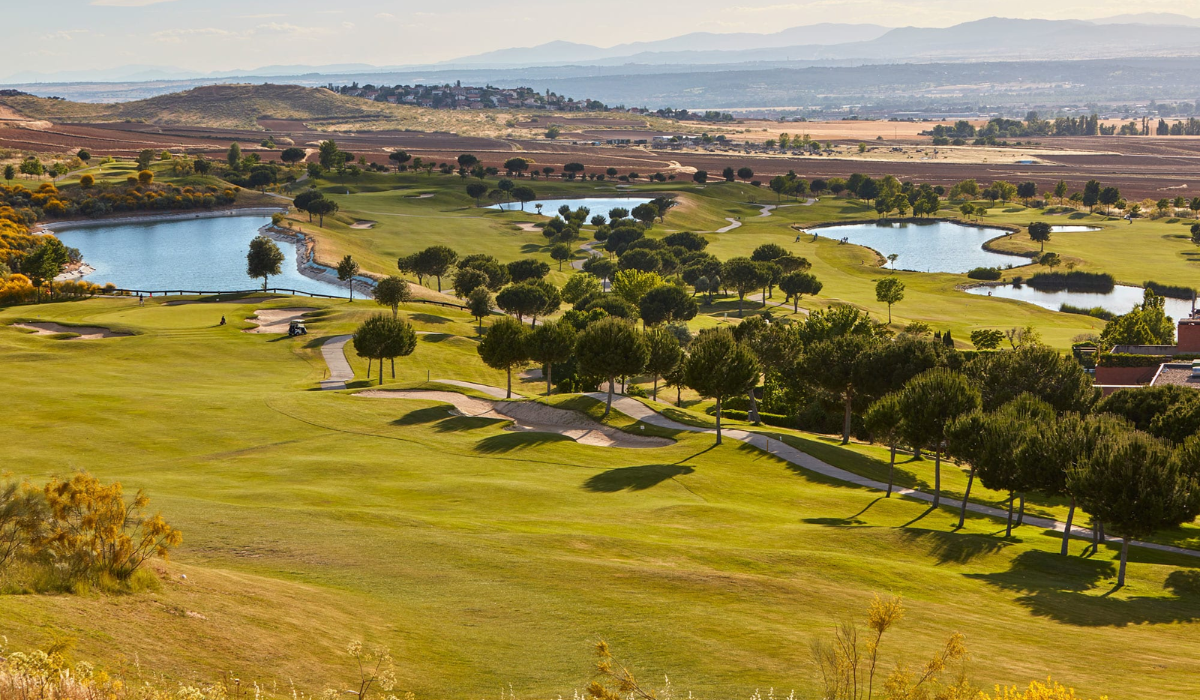
North of the city near Alalpardo, Club de Golf Retamares holds a distinction no other course in the Community of Madrid can claim: it is the region’s only course designed by José María Olazábal, the two-time Masters champion, working alongside Integral Golf Design. Opened in 1993 and fully renovated in 2007, the par-72 layout spans 720,000 square metres and weaves around eight lakes, with the Madrid skyline and surrounding mountains visible from much of the round. True to its designer, the course rewards a thinking game over raw power, following the land’s natural contours rather than fighting them — nowhere more so than at the par-four 18th, where water pinches the fairway from both sides with no bunker to soften the blow. Retamares has built a genuine tournament résumé for a course of its size, hosting three editions of the Madrid Ladies Masters on the Ladies European Tour as well as Challenge Tour events including the Open Mahou and the Reale Challenge de España.
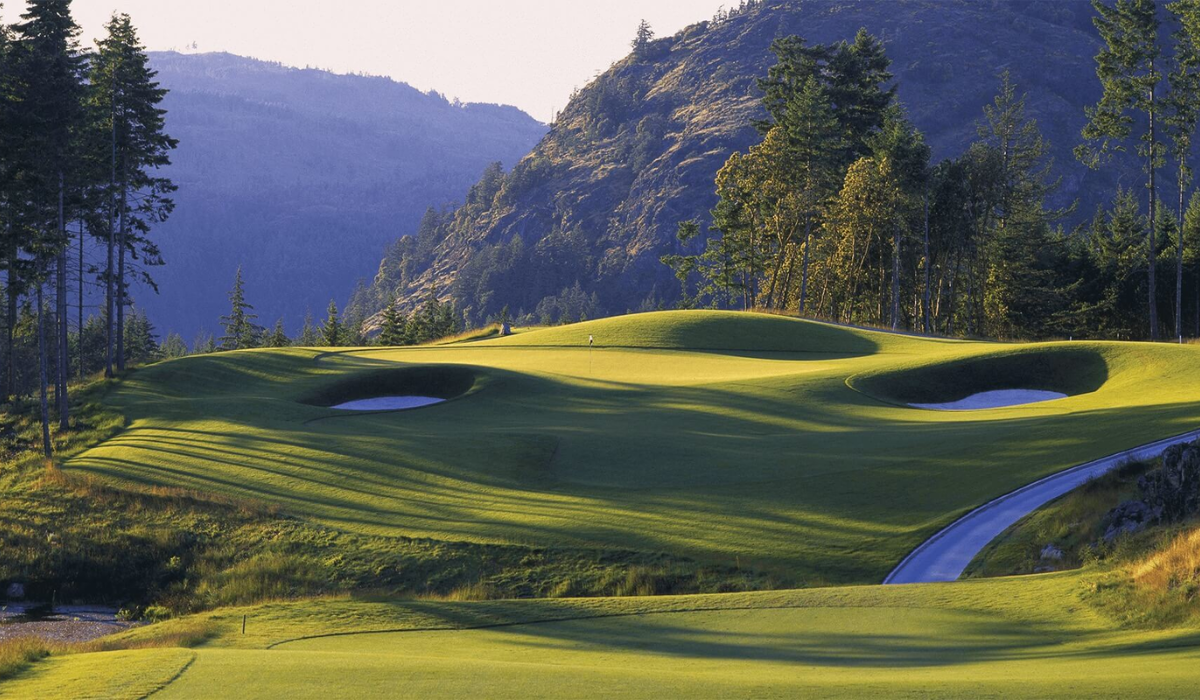
For scenery alone, few Madrid-area courses match La Herrería. Set in the foothills of the Sierra de Guadarrama within the grounds of the Royal Site of San Lorenzo de El Escorial — a UNESCO World Heritage complex — the course has been played since 1966 through native oak forest, with the imposing Monastery of El Escorial visible across much of the round. The elevation changes here are dramatic by regional standards, and the historical setting makes it as much a cultural outing as a round of golf. It sits roughly 45 minutes from central Madrid, making it a natural pairing with a day trip to the monastery itself.
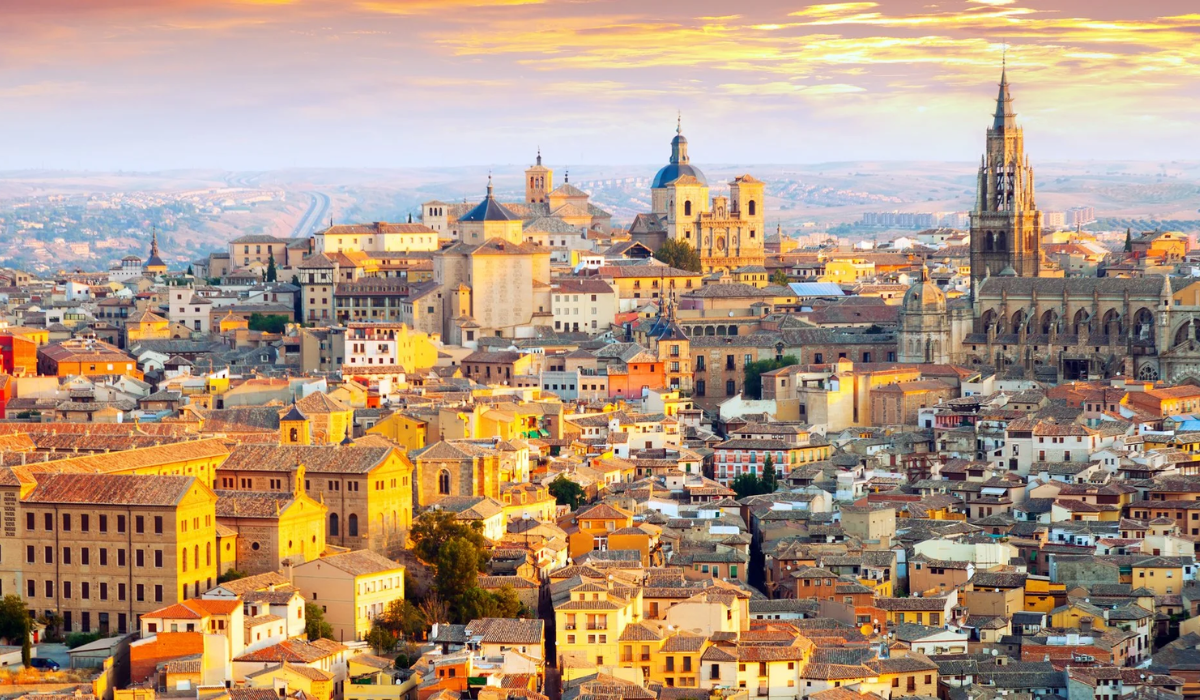
Madrid’s golf calendar runs comfortably from spring through autumn, with the dry Castilian climate keeping courses playable for more months of the year than many visitors expect, though summer afternoons can run hot and courses like Centro Nacional get genuinely windy. The region’s mix is unusual for a capital city: a handful of storied private clubs that have shaped Spanish golf for over a century sit within a short drive of accessible public options, and several — Puerta de Hierro and La Moraleja among them — will admit outside players as guests of a member, so a local contact or a golf tour operator familiar with the clubs can open doors that a standing reservation cannot. Pair a round at Centro Nacional or Retamares with a cultural stop at El Escorial or a night in the capital itself, and Madrid holds up as a golf destination in its own right — not just a stopover on the way to the coast.
All Square can arrange the finer details — preferred tee times, private transfers, and hand-picked accommodation — for a Madrid golf trip tailored to how you want to play it.
Book Golf Travel with All Square
Golf in Croatia: What You Can Actually Play, and What to Expect
Course Reviews
Zimbali Golf Resort
Located along South Africa‘s beautiful south-east coast, nestled between forest and the Indian Ocean, Zimbali Golf Resort combines world-class golf with five-star luxury for a relaxing, luxurious vacation. The resort is only a half hour drive from Durban and 20 minutes from The King Shaka International Airport. Golf Course The resort is home to one […]
Course Reviews
The New Wave of Short Courses
Across North America, Europe, and even the Bahamas, a new generation of short courses is emerging—compact, creative layouts that swap distance for fun, strategy, and pure shot-making joy. Some glow under lights after sunset, others can be played in reverse, and many sit beside vibrant practice areas or vast putting greens. Here’s a look at […]