


Professional Golf
Solheim Cup Results & Winners 2026: Europe Reclaims the Trophy
Explore 33,000+ golf courses in 180 countries.
Follow the latest news and trends in golf.
Connect with like-minded golfers.
Find everything you need for your golf equipment and gear needs.
Travel, golf resorts, lifestyle, gear, tour highlights and technology.
All Square
Suggestions
Professional Golf
Solheim Cup Results & Winners 2026: Europe Reclaims the Trophy
Course Reviews
Marrakech vs Agadir for Golf: Which Moroccan Destination Should You Choose?
Accessories
Best Push Carts and Electric Trolleys for Golf in 2026
Course Reviews
Rediscover Monte Rei: Portugal’s Iconic Golf Course Reopens After Major Renovation
Course Reviews
Best Golf Courses Around Rome: Where Ancient History Meets Modern Golf
Instruction
Links vs Parkland vs Heathland: What’s the Difference?
Clubs
The Best Irons on the Market in 2026
Clubs
Austin Smotherman WITB: The Clubs Behind His 2026 Bank of Utah Championship Win
Destinations
Barrière Golf Properties: French Golf Escapes Where the Resort Is Part of the Experience
Destinations
Conrad Algarve Renovations: A New Chapter of Luxury in Quinta do Lago
Gear
Garmin Golf Watches Guide: Which Garmin Watch Is Right for Your Game?
PGA Tour
Presidents Cup 2026 Results & Winners: Team USA Completes Historic Comeback
Course Reviews
Cullinan Golf Links Resort, Belek: Where Golf Meets the Mediterranean
Course Reviews
New Opening: Limassol Greens — Cyprus’ New Golf Destination
PGA Tour
Presidents Cup 2026 Preview: Everything to Know Before Medinah
Clubs
Jacob Bridgeman WITB: The Clubs Behind His 2026 Biltmore Championship Victory
Course Reviews
Play Golf at Pebble Beach: What to Know Before You Go
Clubs
This Year’s Best Drivers on the Market: A 2026 Buyer’s Guide
Clubs
WITB: Ryan Fox’s Winning Clubs at the 2026 Open Championship
Community
How Modern Golf Courses Conserve Water and Protect Wildlife
PGA Tour
Changes on the PGA Tour from 2028
Course Reviews
Tee Off in Tuscany: Golfing Italy’s Most Picturesque Countryside
Course Reviews
The Best Golf Courses Near Pinehurst That Aren’t Pinehurst No. 2
Course Reviews
Bernardus Golf: Europe’s Modern Masterpiece
Course Reviews
Tee Off in Style: Park Hyatt Marrakech
Destinations
Monte Rei Enters a New Era: Deep Renovation to Preserve a Legendary Course
Clubs
Matt Fitzpatrick Wins 2026 RBC Heritage: Inside His Triumph WITB
Gear
Ping G440 Family Explained: Inside the Most Complete Game-Improvement Lineup in Golf

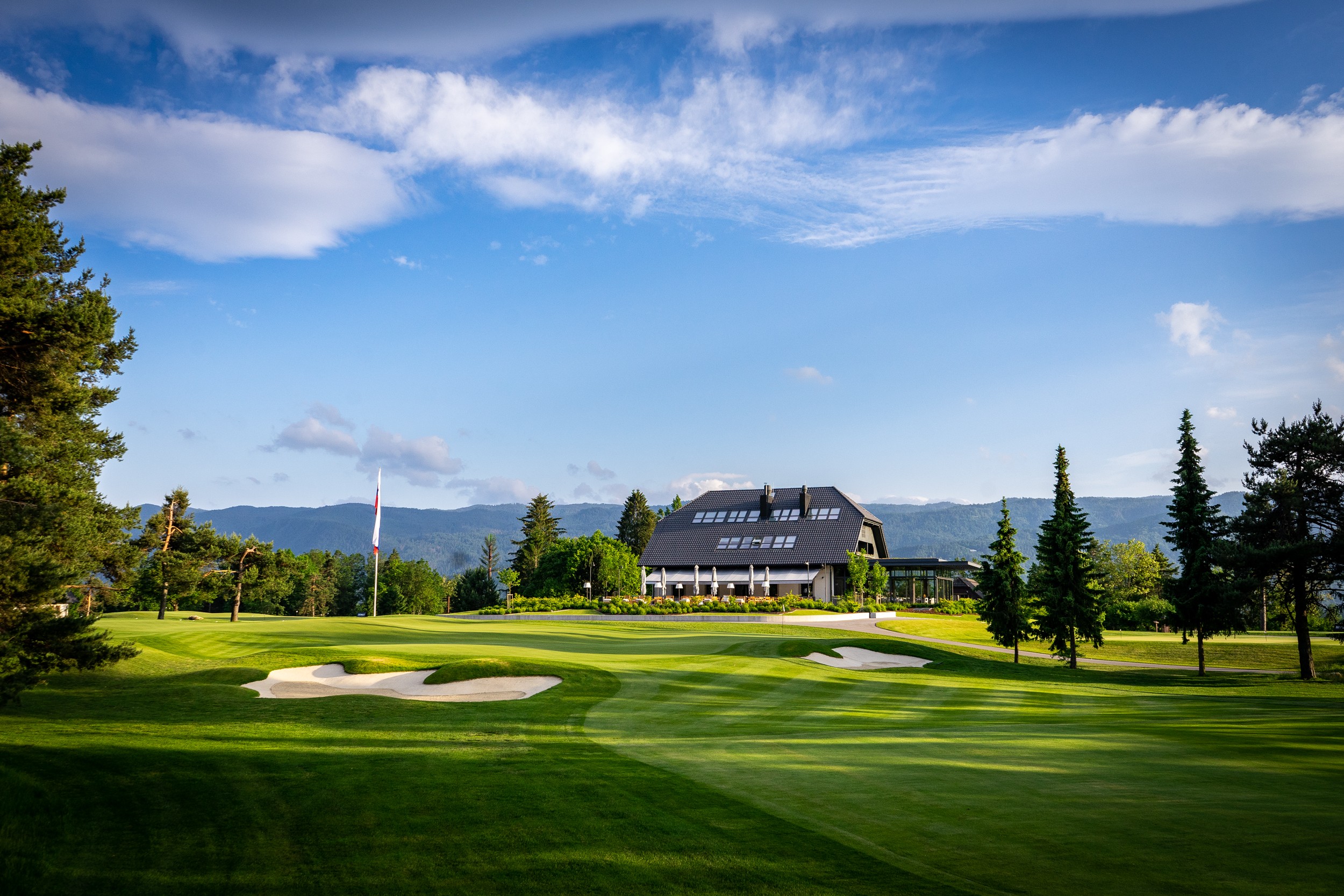
Europe’s golfing reputation is built on a handful of household names: St Andrews, Carnoustie, Valderrama, the Algarve’s resort belt. But scattered across the continent’s edges — Arctic islands, volcanic archipelagos, alpine valleys, and forgotten Mediterranean cliffs — are courses that rarely make it onto a golfer’s radar, despite offering scenery, design pedigree, and golfing history that rival the icons. These are the destinations worth seeking out before everyone else catches on.
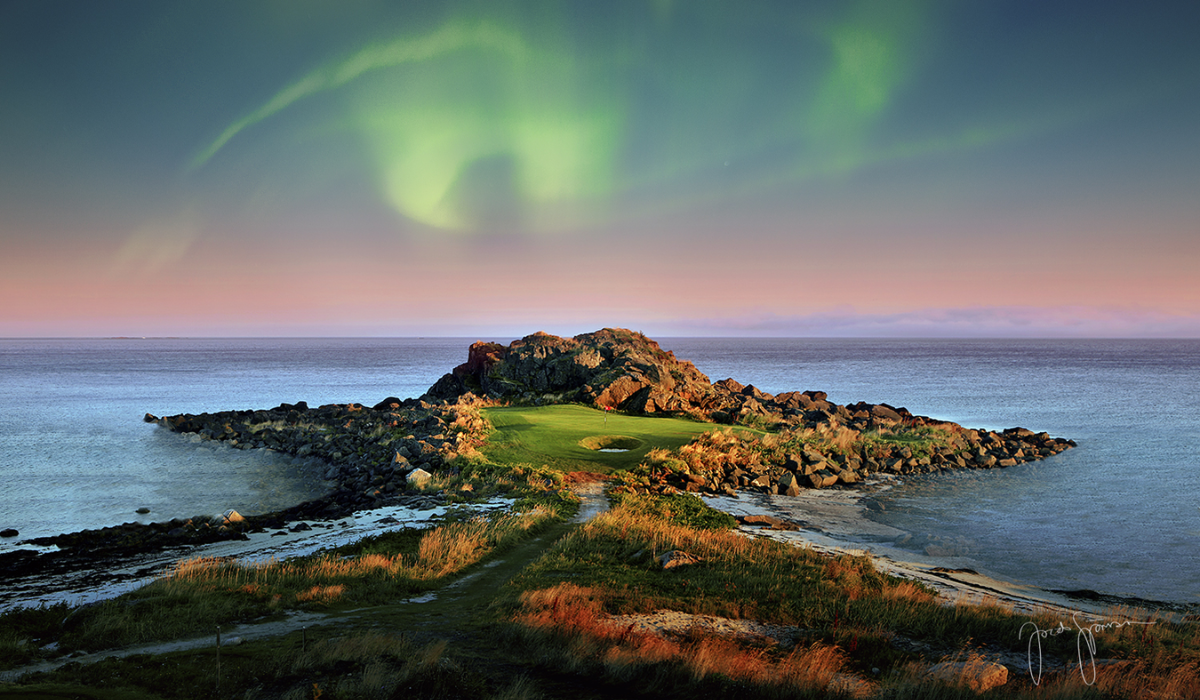
At 68 degrees north, on the island of Gimsøya in Norway’s Lofoten archipelago, sits what is essentially golf’s last frontier. Lofoten Links sits north of the Arctic Circle, where the course experiences the phenomenon of the midnight sun during the summer months, with the sun never fully setting for 55 consecutive days from May to July. That means tee times at midnight are not a gimmick but a genuine option — it’s the only Top 100 golf course that allows guests to play golf all night long because it is light for 24 hours a day.
The course itself has serious credentials. Opened in 2015 and designed by architect Jeremy Turner, the par-71 layout measures 6,662 yards and has been ranked #88 in Golf.com’s Top 100 Courses and #24 on Golf Digest’s World’s Best Golf Courses list. Its origins are refreshingly local: the land was once the Hov family farm, and in the 1980s Tor Alfred Hov began dreaming of building a world-class course on the family’s Arctic Ocean-front property after a friend’s trip to Scotland inspired the idea.
The signature hole is the par-3 2nd, often referred to as one of the most scenic in Europe, playing directly along the coastline with the green perched beside rocky outcrops and backed by a pristine white-sand beach. Reviewers who have made the trek describe the experience in superlatives — the sea is an integral part of six of the nine holes, and despite a modest handicap, the natural surroundings are breathtakingly beautiful and wild, demanding plenty from the golfer.
Getting there requires commitment: fly into Bodø or Evenes airport and rent a car, or arrive by ferry. The season runs from May through October, since winter brings near-total darkness to the region. For golfers chasing a genuinely once-in-a-lifetime round — Northern Lights in autumn, the midnight sun in summer — nothing else in Europe compares.
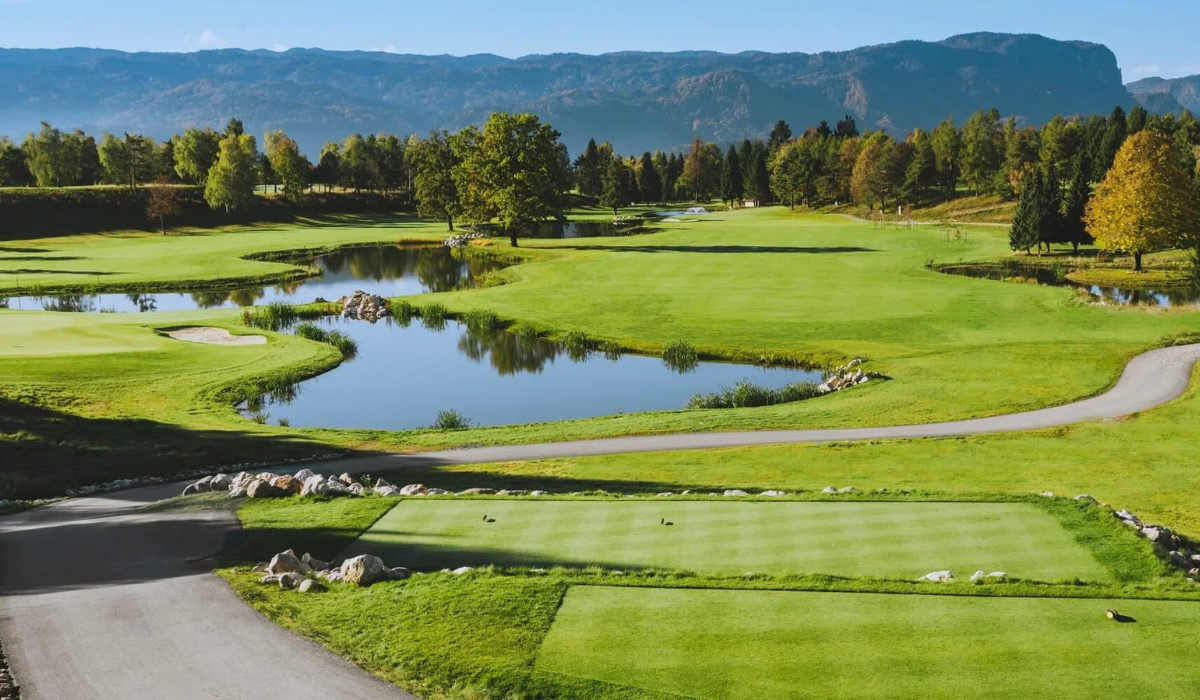
Tucked beneath the Julian Alps, two hours from Ljubljana, Royal Bled is one of Europe’s oldest courses and arguably its most quietly spectacular. Built in 1937 at the initiative of the Yugoslav Royal Family of Karađorđević — hence the “Royal” in its name — the club is the largest and oldest golf course in Slovenia, surrounded by the Karavanke Alps to the north and the Julian Alps and Mount Triglav to the west.
The history reads like a small chapter of European royal life. Construction began in 1936 after the Drava Banovina purchased the Hraška meadow specifically for a golf course, with Austrian architect Rudolf von Gelmini choosing the site and Hungarian architect Desedier Lauber completing the design; the first official round of golf in Slovenia was played on the new nine holes in 1937. The course fell into disrepair during the Second World War before being revived — it was largely abandoned after the outbreak of WWII before its resurrection by Donald Harradine in 1972. A more recent transformation came courtesy of British architect Howard Swan: in 2014, Swan was commissioned by new owners to bring the course up to modern standards while respecting the original heritage, and the King’s Course reopened in 2017 after a two-year renovation.
Today, the facility comprises two layouts. The King’s Course plays to a par of 72 over 7,275 yards, while the Lake Course is a par-36 stretching 3,332 yards. The setting is genuinely unusual for European golf — the course sits two kilometres east of Lake Bled on a terrace 60 metres above the canyon of the River Sava, at elevations between 504 and 520 metres. A few hours of golf here pairs naturally with a stroll around Lake Bled itself, plus the option to cross into Austria or Italy for more alpine rounds — there are as many as seven different golf courses within an hour’s drive of Bled.
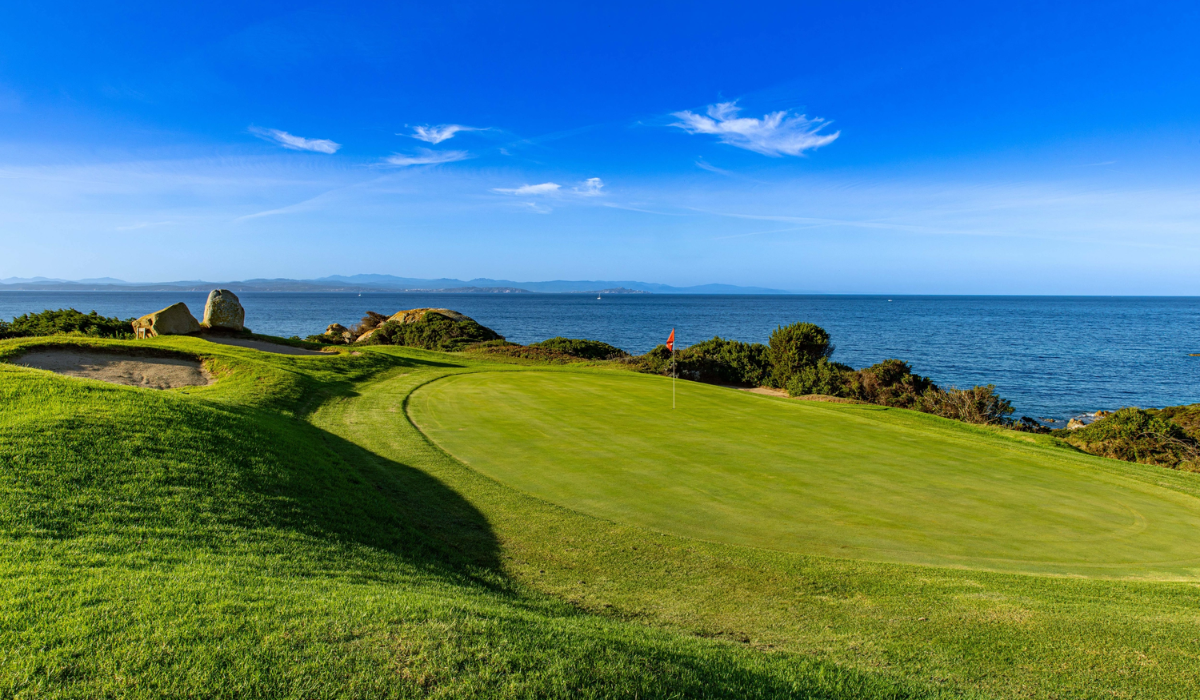
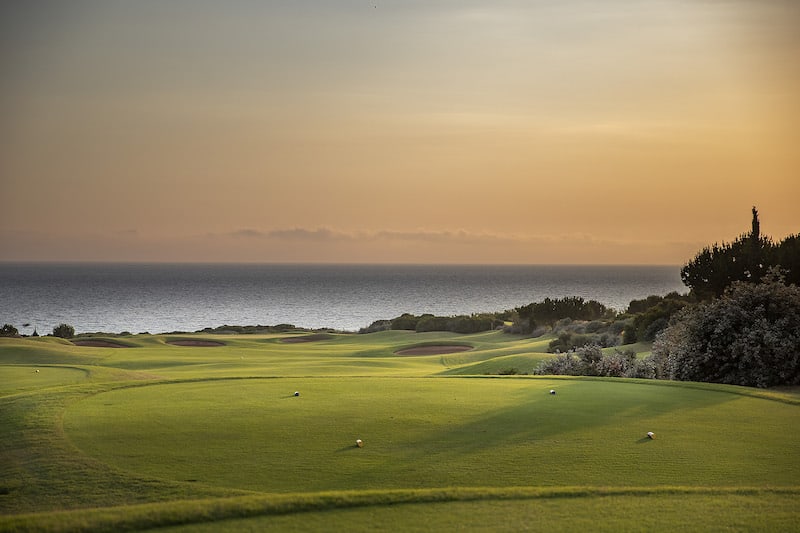
If golf had a “best-kept secret in the Mediterranean” category, Spérone on the southern tip of Corsica would be a strong contender. Located in Bonifacio on the so-called Isle of Beauty, Spérone is an 18-hole, par-72 course measuring roughly 5,842 metres, set within 73 hectares and opened in 1990. It was the final European project of one of golf architecture’s biggest names: designed by Robert Trent Jones Sr., it remains the only 18-hole golf course on Corsica.
The course’s reputation rests largely on its closing stretch along the cliffs. Trent Jones himself described holes 12 to 16 as comparable to the seaside holes at Pebble Beach and Cypress Point, calling the tee at 12 one of the most beautiful in the world. The standout is the 16th — a dazzling hole that allows players to drive over a stretch of turquoise sea, considered one of the most beautiful in the world.
Beyond the views, Spérone offers a genuinely sensory experience of the Corsican landscape. Off the fairways, the rough is genuine maquis scrubland — a heady mixture of myrtle, heather, lavender, thyme, and rosemary, with scents intensified by the Mediterranean heat. Pair a round here with a few days exploring Bonifacio’s citadel and the nearby Lavezzi Islands, and you have one of Europe’s most underrated golf-and-scenery combinations.
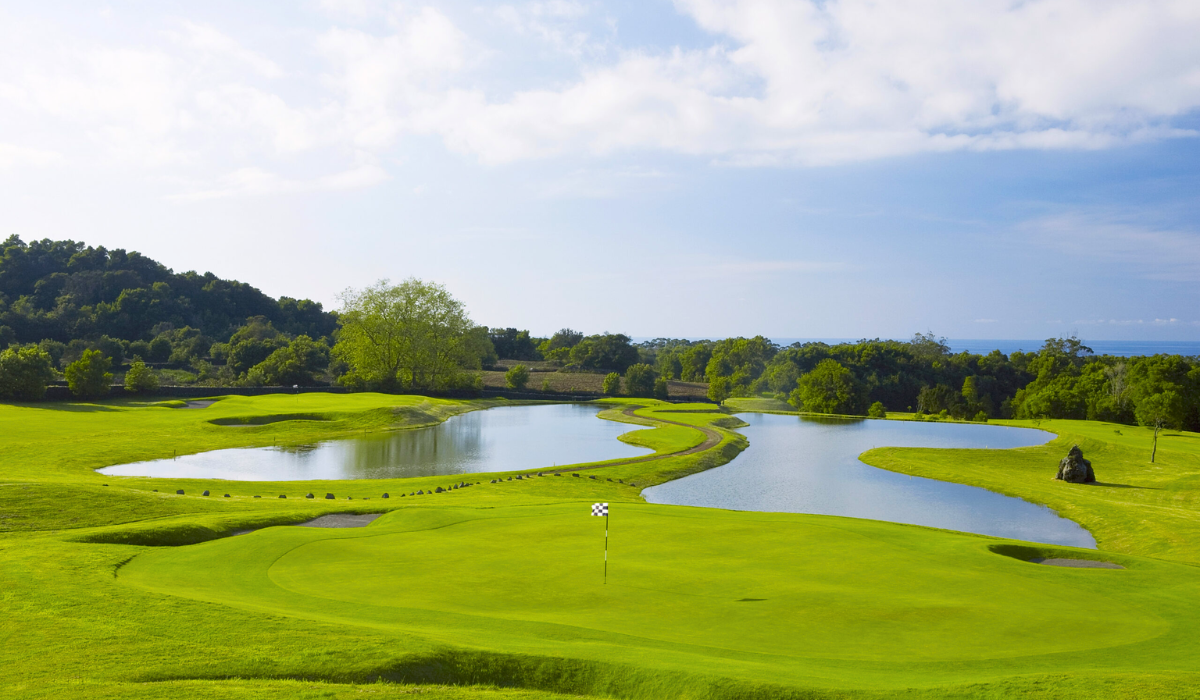
Most golfers associate Portugal with the Algarve, but nine hours west by plane from Lisbon — and far closer for anyone in continental Europe — the Azores archipelago offers a completely different kind of Portuguese golf: green, volcanic, and refreshingly uncrowded. The islands offer year-round golfing thanks to a mild climate, with temperatures ranging between 16–25°C, and there are three main courses — Batalha and Furnas on São Miguel Island, and Terceira Golf Club on Terceira Island.
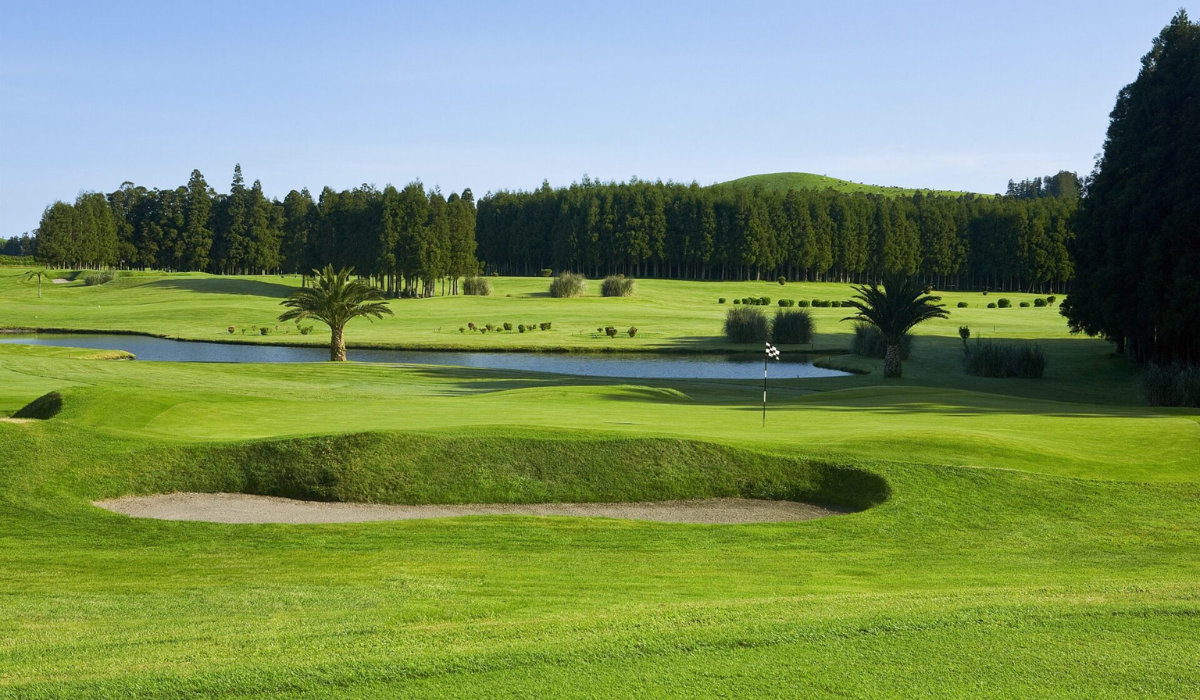
Furnas, the elder statesman of Azorean golf, has a particularly rich backstory. Located on São Miguel, the course sits in one of the archipelago’s most scenically rewarding regions, near the picturesque crater lakes of Furnas and the natural hot springs that define the area’s character. Designed by Scottish architect Mackenzie Ross in 1939 — one of the archipelago’s oldest facilities — the course was extended with nine additional holes under Cameron Powell’s direction in 1986, without altering its original character. The result, per a 6,232-metre par-72 layout, features varied parkland design with undulating greens and diverse hole construction.
What makes Furnas unmistakably Azorean is its setting. Built on volcanic ground, the course is excellently integrated into the landscape, with panoramic views and rich colours of ocean blue, green in every shade, and lush hydrangeas in bloom. The layout unfolds across the Furnas Valley, an area shaped by volcanic origins and defined by lush vegetation, mineral waters, and a mild climate that allows golf year-round, with greens featuring elevated plateaus and bunkers filled with volcanic lava sand and pebbles. Sitting on a plateau at around 500 metres altitude above Furnas and its lake, it’s the oldest course in the Azores and the second-oldest in all of Portugal, with its first nine holes dating back to 1934.
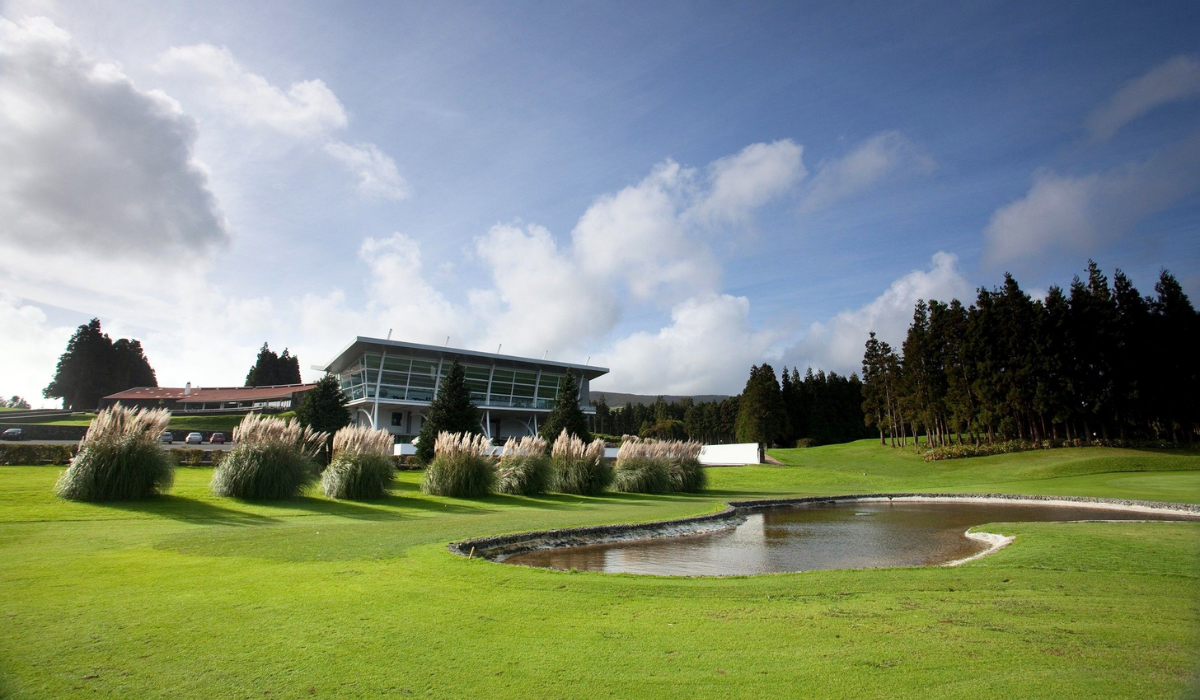
After your round, the islands deliver an experience no clubhouse can match: the famed cozido das furnas — a traditional Azorean stew cooked underground using volcanic heat — alongside fresh seafood, plus thermal hot springs, beaches, and charming villages to explore between rounds. With direct flights from several European hubs and the Azores’ growing reputation as a sustainable, nature-first destination, golf here feels less like a round and more like an expedition.
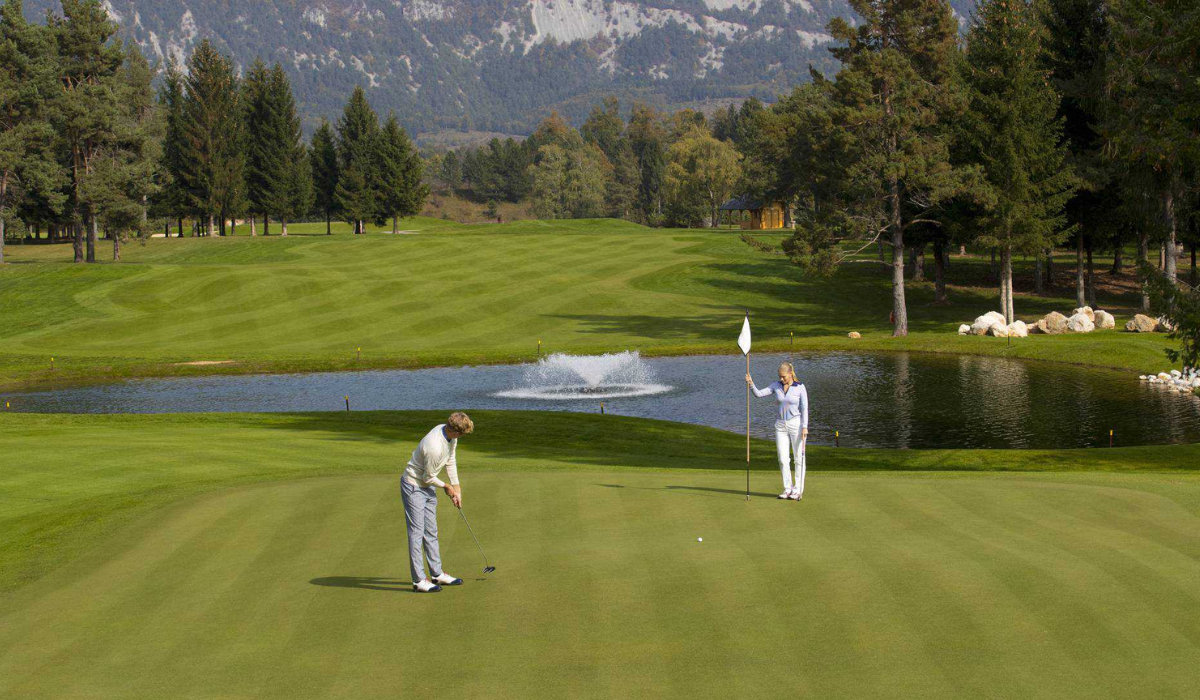
Each of these destinations shares a common thread: world-class design pedigree (Robert Trent Jones, Donald Harradine, Mackenzie Ross, Jeremy Turner) paired with a setting so remote or so niche that mainstream golf tourism has largely passed it by. That is changing — Lofoten Links has climbed steadily up global rankings, and Cabot’s recent investment in the Scottish Highlands shows how quickly an “undiscovered” region can become a headline destination once the right operator gets involved. When Castle Stuart joined the Cabot family of golf destinations in 2022, it marked the beginning of a new chapter for one of the Highlands’ most celebrated courses, and the 2025 debut of the Tom Doak-designed Old Petty course turned the property into a true multi-round destination.
For now, though, a tee time at Bled, Spérone, Furnas, or Lofoten still feels like a private discovery rather than a bucket-list checkbox — which, for golfers who value solitude as much as scenery, is exactly the point.
Course Reviews
Zimbali Golf Resort
Located along South Africa‘s beautiful south-east coast, nestled between forest and the Indian Ocean, Zimbali Golf Resort combines world-class golf with five-star luxury for a relaxing, luxurious vacation. The resort is only a half hour drive from Durban and 20 minutes from The King Shaka International Airport. Golf Course The resort is home to one […]
Course Reviews
Praia D’El Rey Golf & Beach Resort
Visitors have long flocked to Lisbon to soak up the fabulous architecture, history and cuisine. Head out of capital, onto the glorious Silver Coast and you will find one of Portugal’s finest golf resorts. Home to sun-soaked beaches and world-class golf Praia D’El Rey occupies a privileged position close to the medieval town of Obidos, […]