


Course Reviews
Tee Off in Tuscany: Golfing Italy’s Most Picturesque Countryside
Explore 33,000+ golf courses in 180 countries.
Follow the latest news and trends in golf.
Connect with like-minded golfers.
Find everything you need for your golf equipment and gear needs.
Travel, golf resorts, lifestyle, gear, tour highlights and technology.
All Square
Suggestions
Course Reviews
Tee Off in Tuscany: Golfing Italy’s Most Picturesque Countryside
Course Reviews
Marrakech vs Agadir for Golf: Which Moroccan Destination Should You Choose?
Accessories
Best Push Carts and Electric Trolleys for Golf in 2026
Course Reviews
Rediscover Monte Rei: Portugal’s Iconic Golf Course Reopens After Major Renovation
Course Reviews
Best Golf Courses Around Rome: Where Ancient History Meets Modern Golf
Instruction
Links vs Parkland vs Heathland: What’s the Difference?
Clubs
The Best Irons on the Market in 2026
Clubs
Austin Smotherman WITB: The Clubs Behind His 2026 Bank of Utah Championship Win
Destinations
Barrière Golf Properties: French Golf Escapes Where the Resort Is Part of the Experience
Destinations
Conrad Algarve Renovations: A New Chapter of Luxury in Quinta do Lago
Gear
Garmin Golf Watches Guide: Which Garmin Watch Is Right for Your Game?
PGA Tour
Presidents Cup 2026 Results & Winners: Team USA Completes Historic Comeback
Course Reviews
Cullinan Golf Links Resort, Belek: Where Golf Meets the Mediterranean
Course Reviews
New Opening: Limassol Greens — Cyprus’ New Golf Destination
PGA Tour
Presidents Cup 2026 Preview: Everything to Know Before Medinah
Clubs
Jacob Bridgeman WITB: The Clubs Behind His 2026 Biltmore Championship Victory
Course Reviews
Play Golf at Pebble Beach: What to Know Before You Go
Professional Golf
Solheim Cup Results & Winners 2026: Europe Reclaims the Trophy
Clubs
This Year’s Best Drivers on the Market: A 2026 Buyer’s Guide
Clubs
WITB: Ryan Fox’s Winning Clubs at the 2026 Open Championship
Community
How Modern Golf Courses Conserve Water and Protect Wildlife
PGA Tour
Changes on the PGA Tour from 2028
Course Reviews
The Best Golf Courses Near Pinehurst That Aren’t Pinehurst No. 2
Clubs
Bud Cauley WITB 2026: The Clubs Behind His RBC Canadian Open Victory
Clubs
J.J. Spaun’s Winning WITB: 2026 Valero Texas Open
Destinations
Details to Relaunch Donnafugata Golf Resort in Sicily
Clubs
The Titleist Vokey SM11: Refining an Icon That Was Already Winning
Destinations
Hotel & Spa du Castellet: A Provençal Golf & Lifestyle Retreat

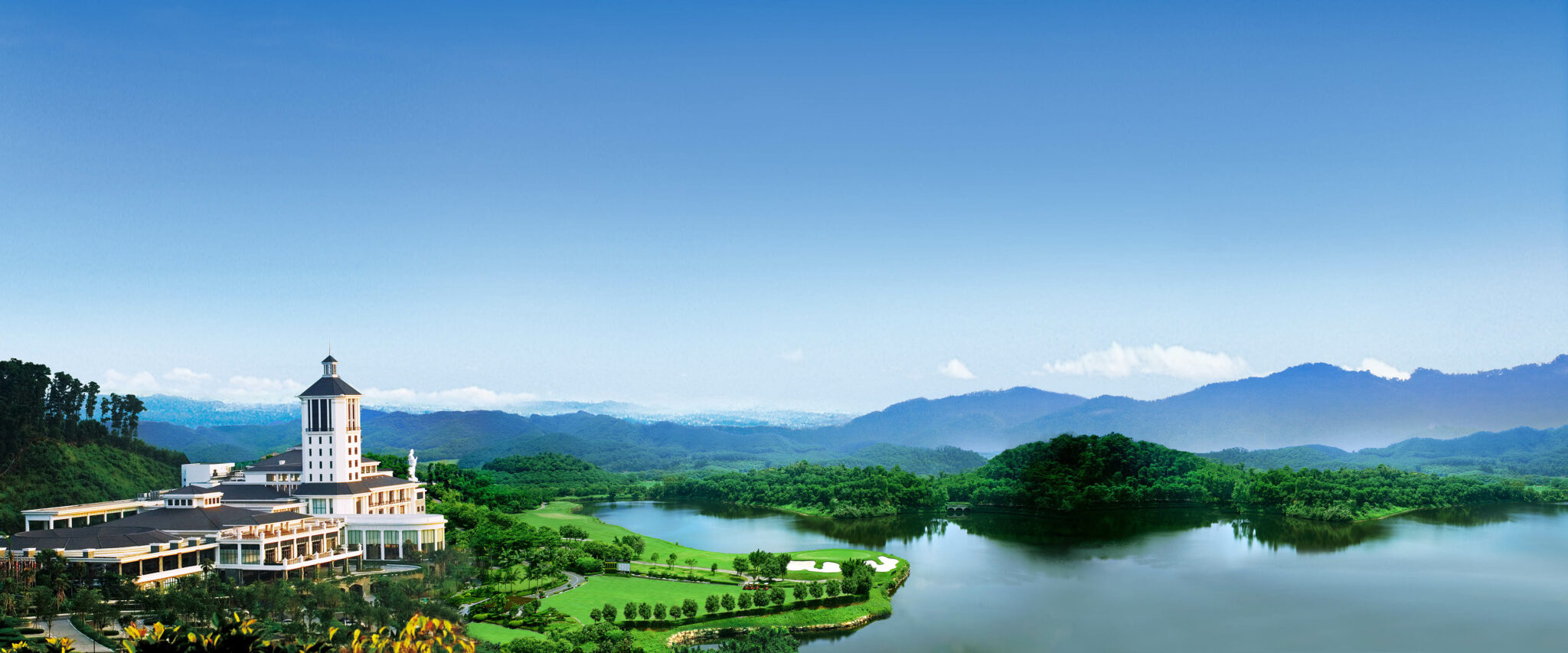
When one talks about golf in China, almost invariably the name Mission Hills springs to the fore. This is not a mere golf club, but a sprawling, multifaceted leisure and sporting empire whose footprint and ambition reflect not just China’s passion for “big projects,” but a deeper desire to place China on the world stage of luxury sports and travel.
The story begins in the early 1990s, when Dr. David Chu, a Hong Kong–born entrepreneur, resolved to create a golf destination unlike anything China had seen. He acquired land straddling Shenzhen and Dongguan in Guangdong Province — at the time, farmland and forest — and set about converting it into a massive golf resort complex.
In 1992, Mission Hills formally opened. The first 18 holes were commissioned, and soon Dr. Chu enlisted the talents of Jack Nicklaus to design one of the flagship courses. Over time, more designers were added: Greg Norman, Ernie Els, Nick Faldo, José María Olazábal, Vijay Singh, David Leadbetter, Ian Poulter / Justin Rose, and others.
By 2004, the resort had expanded to include 10 courses and 180 holes, capturing a Guinness World Record for “World’s Largest Golf Club.”Over the years, it has grown even further. Today, the Mission Hills Group’s main complexes in the Guangdong / Greater Bay Area plus its resort in Hainan account for a combined total of nearly 22 courses and 396 holes, according to some sources.
But Mission Hills is more than just volume. Its ambition was always to merge sport, luxury, entertainment, and tourism, and in that it has largely succeeded.
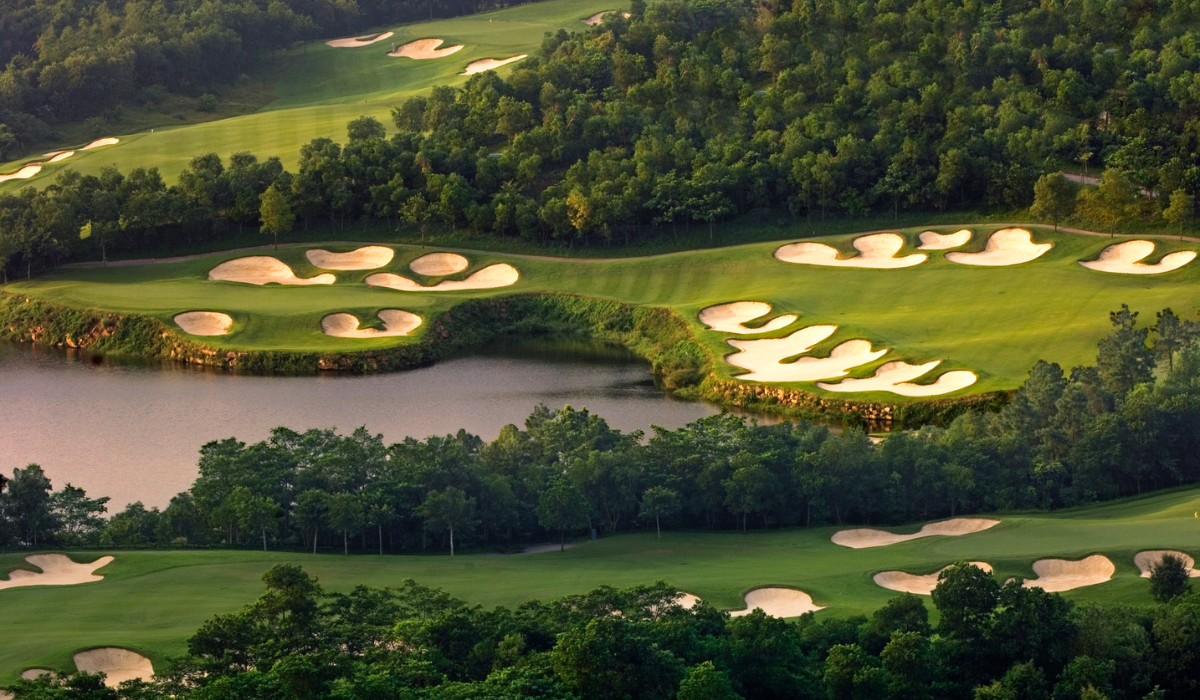
The original and flagship complex is located in the town of Guanlan (观澜), in the Shenzhen–Dongguan corridor in Guangdong Province. Strategically, it lies in the Guangdong–Hong Kong–Macau Greater Bay Area, which aligns with China’s broader plans to integrate those economically dynamic cities.
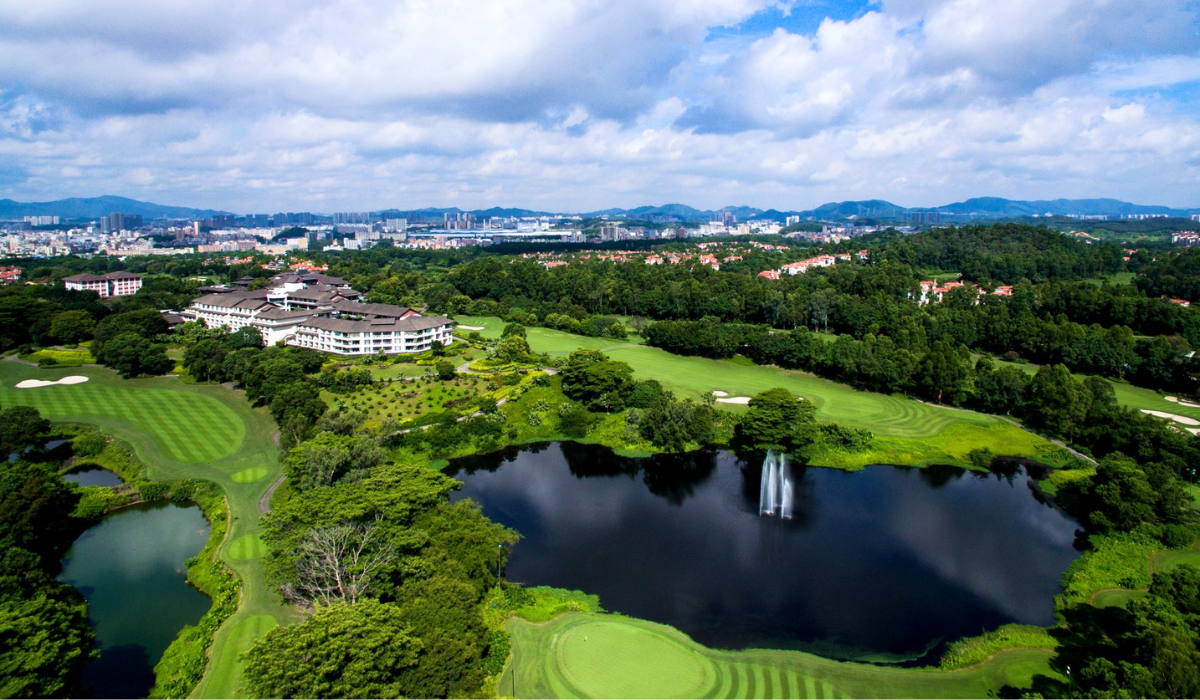
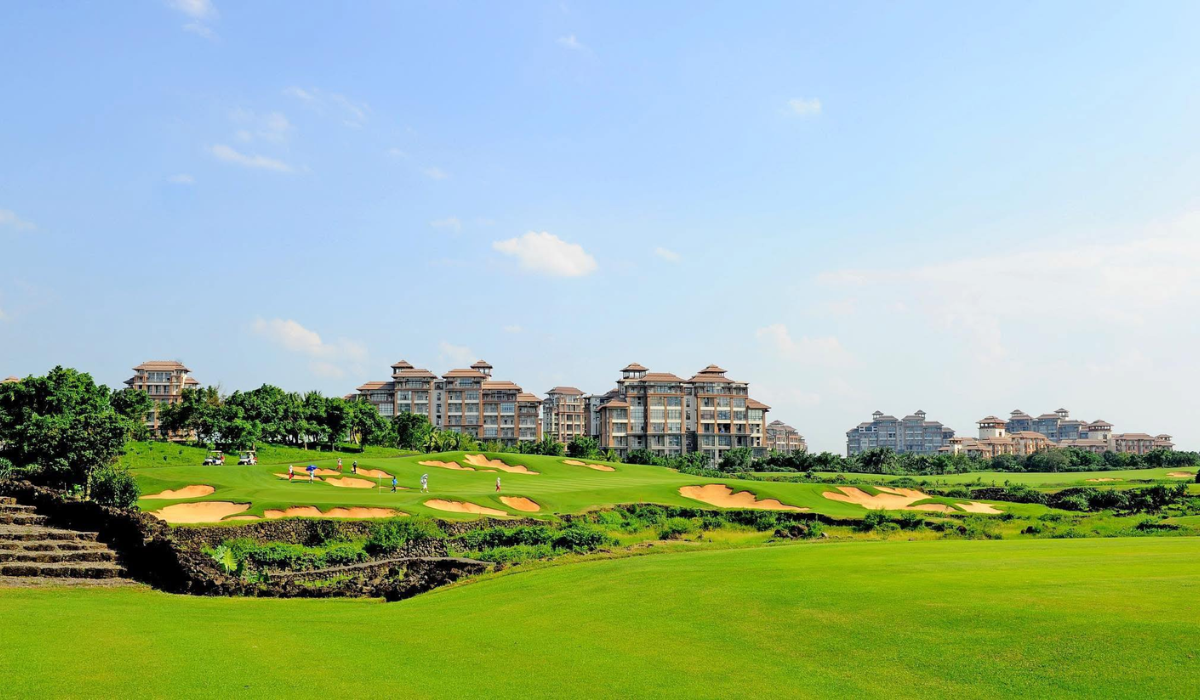
The Shenzhen / Dongguan complex (often referred to just as “Mission Hills Shenzhen”) currently features 12 courses: 11 full-length championship courses plus one par-3 course. Each of the championship courses was designed by a different golfing icon. Some highlights among those courses:
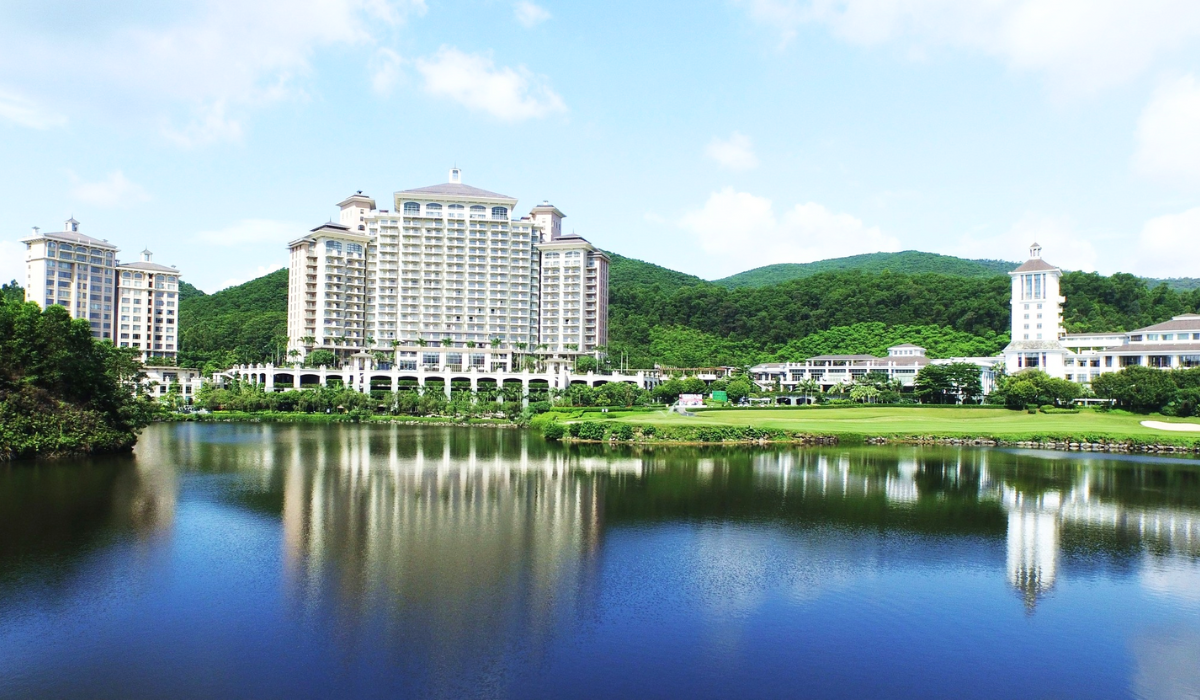
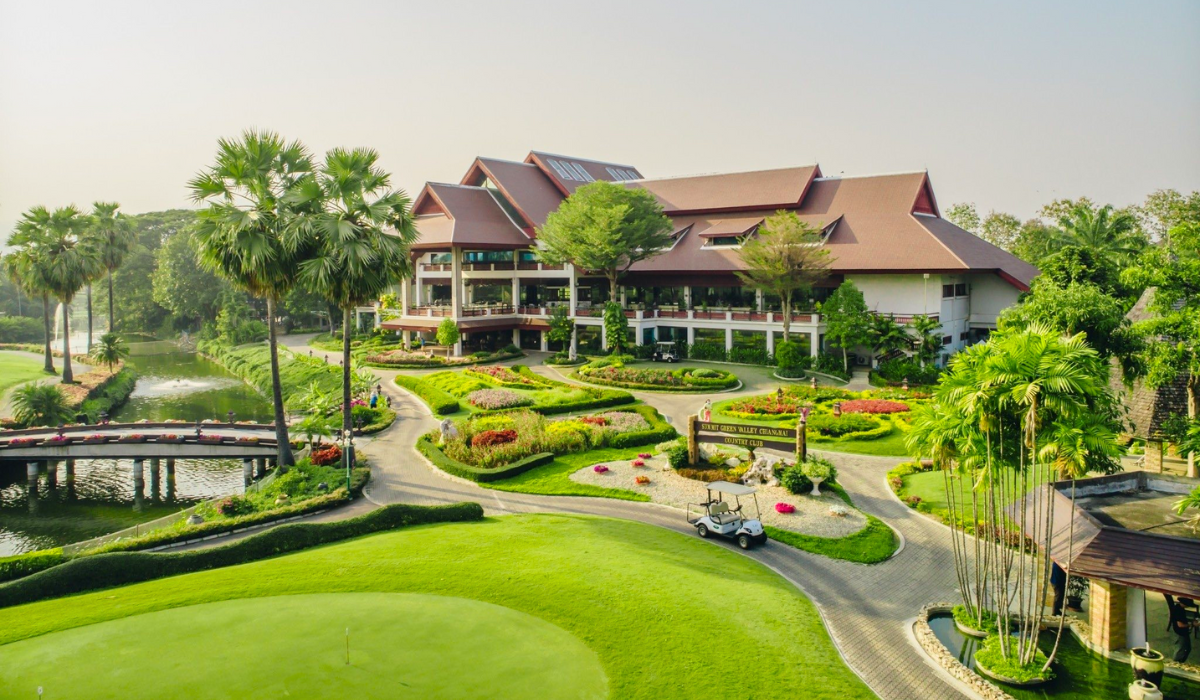
Beyond golf, the complex houses a luxury clubhouse, spa facilities, tennis centers, driving ranges, and residential development. The China-centric ambitions also include large-scale mixed-use developments: “Mission Hills Centreville,” a comprehensive HOPSCA (Hotel, Offices, Parks, Shopping, Convention, Apartments) complex adjacent to the golf courses, is intended to anchor the resort’s lifestyle appeal. Mission Hills also maintains reciprocal relationships with elite golf clubs worldwide, making membership more than just local access. It’s worth noting that while visitor reviews are generally positive about scale and ambition, some raise practical complaints — distance between courses, air quality, and service consistency, among them.
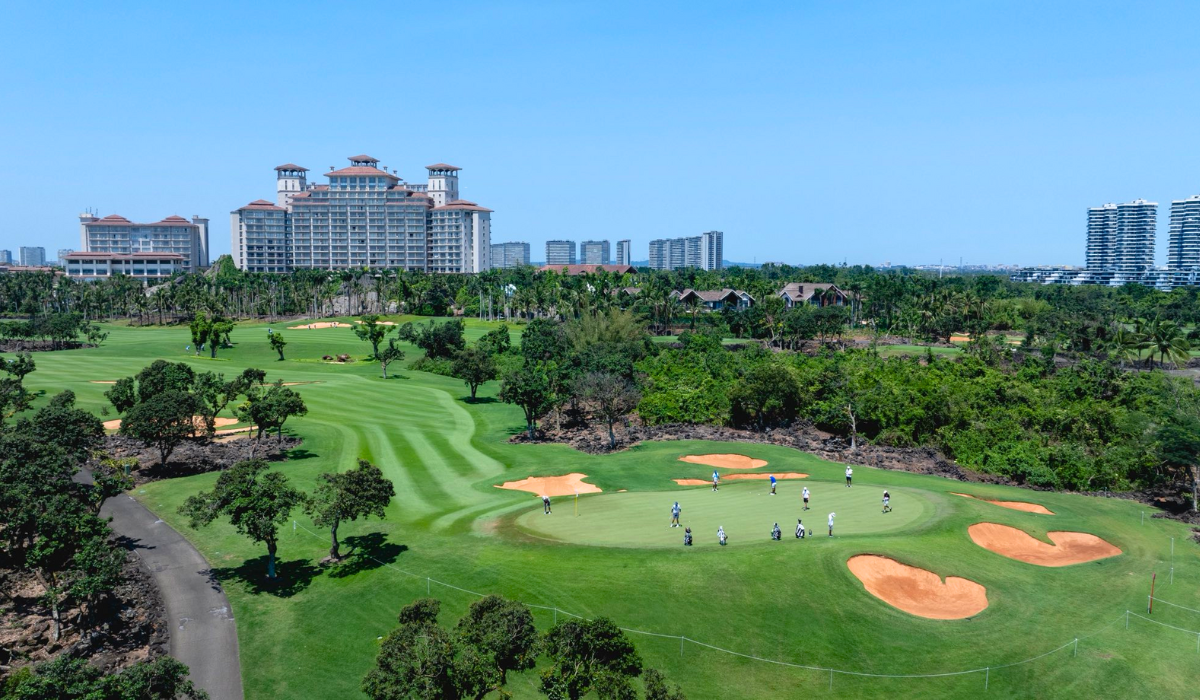
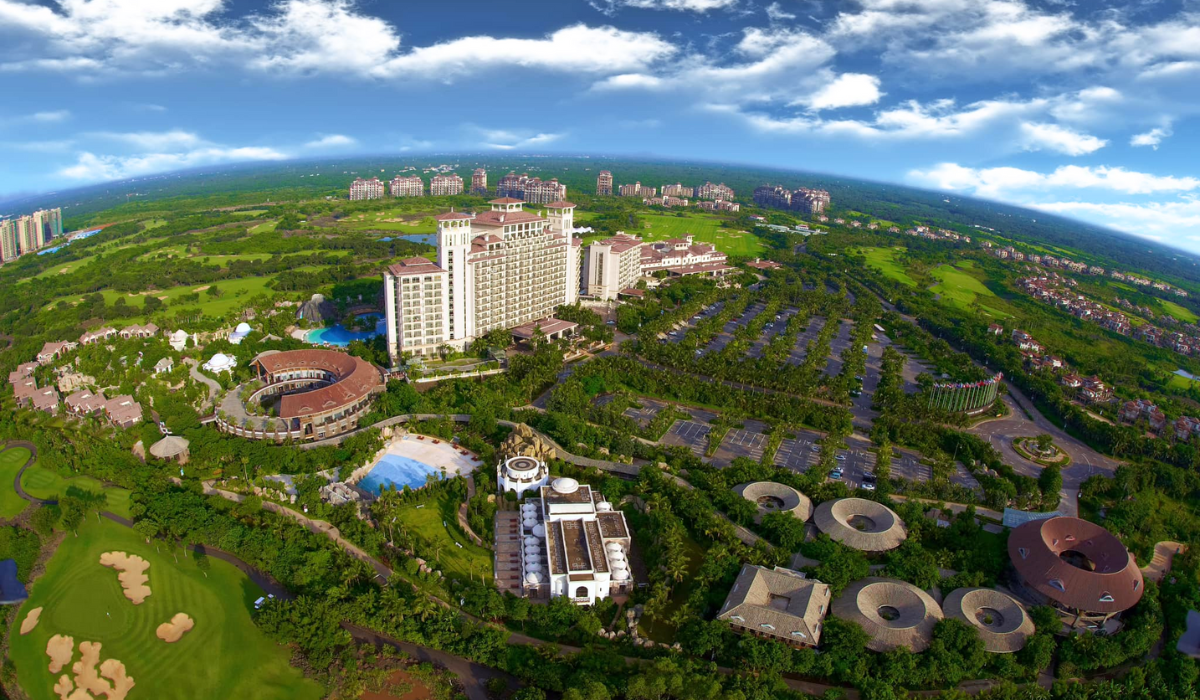
A critical piece of the Mission Hills network is its Hainan presence, known as Mission Hills Haikou (on Hainan Island). Since in many parts of China golf courses became restricted by regulatory limits after the early 2000s, Hainan (officially a free-trade port and special zone) offered breathing room for new developments. Located about 10–15 kilometers south of Haikou city and conveniently close to Haikou International Airport, the resort spans roughly 20 km² and features 10 championship courses.
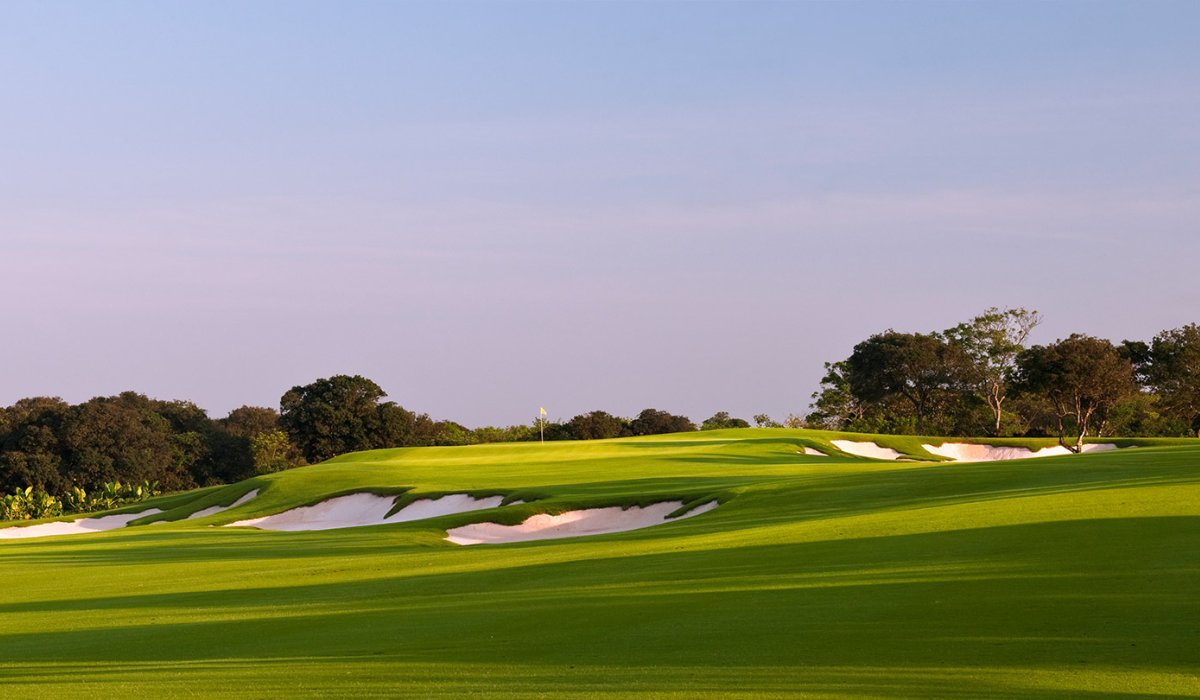
What makes Haikou especially intriguing is its volcanic terrain, tropical landscape and wetland ecosystems. Courses wind around lava rock formations, mature lychee groves, jungle interstices, and sweeping wetland corridors.
One notable layout is the Blackstone Course, designed by Brian Curley. Its routing emphasises natural integration: fairways and bunkers blend into lava-rock waste areas; elevation changes are dramatic. Another is the Lava Fields Course, which can stretch to a massive 7,475 yards from championship tees and is characterised by large waste bunkers and open vistas.
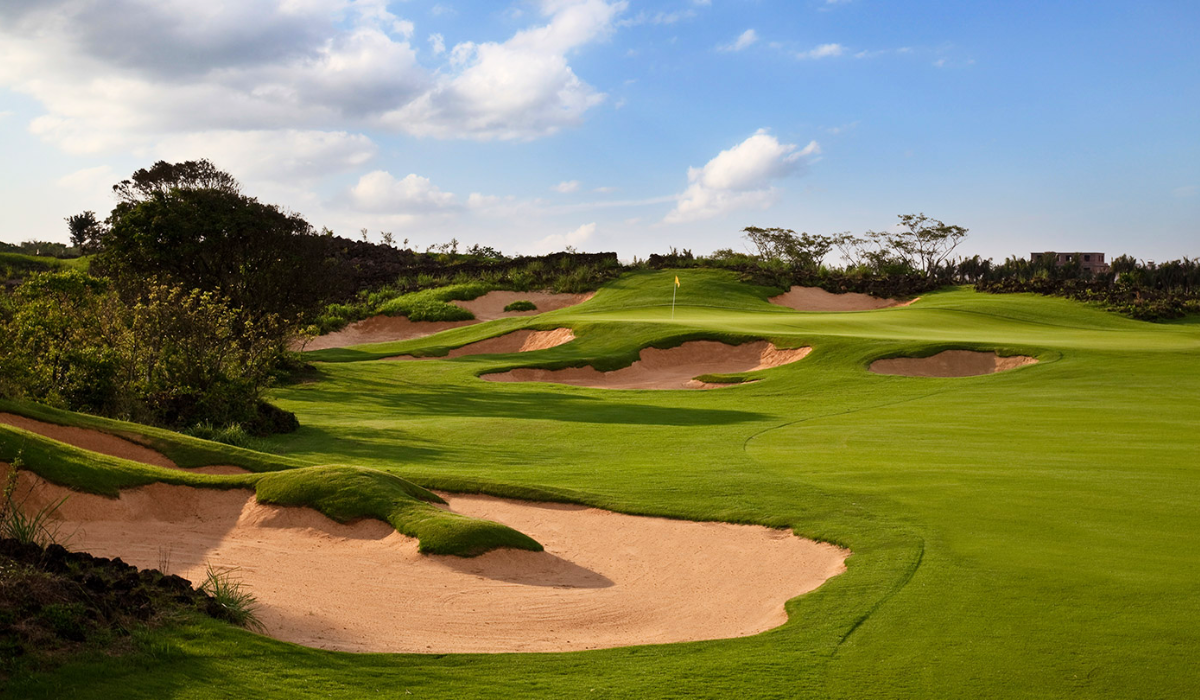
The resort is not only for golfers: it offers a full suite of amenities, such as a 5-star resort hotel, spa, mineral springs (among the largest in Asia), shopping and dining in its Centreville district, and a water park. From an event perspective, Haikou has hosted prominent tournaments. For example, the 2011 Omega Mission Hills World Cup took place here, with the U.S. team winning. More recently, the 2025 Hainan Classic, a stop on the DP World Tour’s Asian Swing, is set to be held on the Blackstone Course, with significant prize money and ranking points at stake.
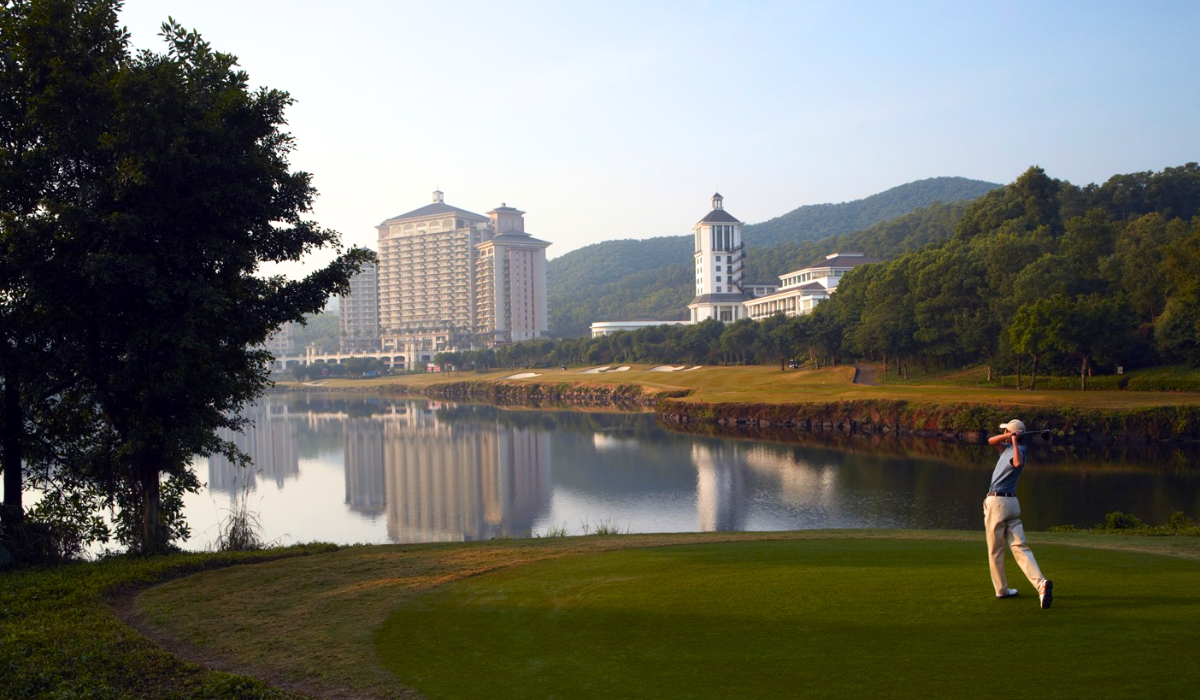
To visit Mission Hills is to confront both grandeur and challenge. The distances between courses can be significant, so logistical planning is essential. The quality of greens, service, and landscaping is often praised, though the massive scale sometimes dilutes intimacy and localised attention.
In Hainan, especially, the tropical light, island breezes, dramatic elevation shifts, and vivid courses make for memorable rounds. The integration of spa, mineral springs, shopping, and non-golf amenities adds to the holiday feel. Visitors often recall the mineral springs, spa treatments, and themed hot-spring baths as highlights beyond the golf itself.
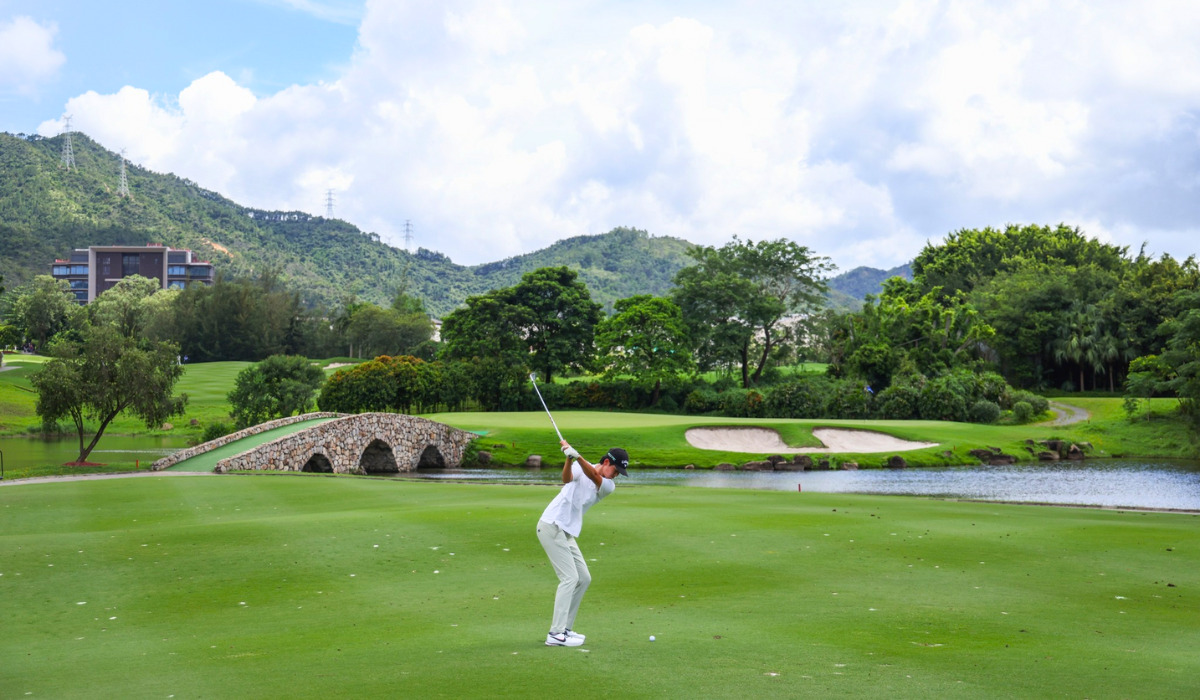
Tournaments at the resort allow golfers and fans to see top-level play in a scenic, relaxed setting. For example, the upcoming 2025 Hainan Classic will shine a global spotlight back on the Blackstone Course, highlighting its challenges and beauty.
Mission Hills in China is more than a golf destination — it is an audacious marriage of sport, business, tourism, and placemaking. From its bold beginnings in Guangdong through its tropical outpost in Hainan, it embodies China’s desire to anchor global luxury and experience brands on its soil. For golfers, it offers an unparalleled palette of courses, terrains, and design philosophies. For observers, it poses fascinating questions about scale, sustainability, and how leisure can shape region and identity.

Clubs
What’s in Billy Horschel’s winning golf bag
Billy Horschel beat Rory McIlroy in a play-off to win the BMW PGA Championship at Wentworth in England. Here’s what the American had in the bag. Horschel, McIlroy and Thriston Lawrence all finished tied at the top of the leaderboard on 20 under, before Lawrence found the water at the first play-off hole. Second time […]

Destinations
Discover the Best Courses in Glasgow, the Birthplace of Golf
As the tag line for the city goes ‘people make Glasgow’ and it is very true. A city with an interesting past and an exciting future, Glasgow is the most populous city in Scotland and a great destination. From one of the world’s premier shopping destinations, Buchanan St, to a host of art galleries and […]