


Course Reviews
Golf in Madeira: Cliffs, Clouds and Two Unforgettable Courses
Explore 33,000+ golf courses in 180 countries.
Follow the latest news and trends in golf.
Connect with like-minded golfers.
Find everything you need for your golf equipment and gear needs.
Travel, golf resorts, lifestyle, gear, tour highlights and technology.
All Square
Suggestions
Course Reviews
Golf in Madeira: Cliffs, Clouds and Two Unforgettable Courses
Destinations
Thai Caddie Culture Explained: Tipping, Etiquette and What to Expect
Course Reviews
Best Golf Courses Around Munich: Where Championship Golf Meets Bavarian Beauty
Course Reviews
Marrakech vs Agadir for Golf: Which Moroccan Destination Should You Choose?
Accessories
Best Push Carts and Electric Trolleys for Golf in 2026
Course Reviews
Rediscover Monte Rei: Portugal’s Iconic Golf Course Reopens After Major Renovation
Course Reviews
Best Golf Courses Around Rome: Where Ancient History Meets Modern Golf
Instruction
Links vs Parkland vs Heathland: What’s the Difference?
Clubs
The Best Irons on the Market in 2026
Clubs
Austin Smotherman WITB: The Clubs Behind His 2026 Bank of Utah Championship Win
Destinations
Barrière Golf Properties: French Golf Escapes Where the Resort Is Part of the Experience
Destinations
Conrad Algarve Renovations: A New Chapter of Luxury in Quinta do Lago
Gear
Garmin Golf Watches Guide: Which Garmin Watch Is Right for Your Game?
PGA Tour
Presidents Cup 2026 Results & Winners: Team USA Completes Historic Comeback
Course Reviews
Cullinan Golf Links Resort, Belek: Where Golf Meets the Mediterranean
Course Reviews
New Opening: Limassol Greens — Cyprus’ New Golf Destination
PGA Tour
Presidents Cup 2026 Preview: Everything to Know Before Medinah
Clubs
WITB: Ryan Fox’s Winning Clubs at the 2026 Open Championship
Community
How Modern Golf Courses Conserve Water and Protect Wildlife
PGA Tour
Changes on the PGA Tour from 2028
Course Reviews
Tee Off in Tuscany: Golfing Italy’s Most Picturesque Countryside
Course Reviews
The Best Golf Courses Near Pinehurst That Aren’t Pinehurst No. 2
Professional Golf
Solheim Cup Results & Winners 2026: Europe Reclaims the Trophy
Destinations
From Vineyard to Fairway: Wine-Infused Golf Trips
Clubs
McLaren Golf: What Golfers Need to Know About the F1 Team’s New Equipment Brand
Clubs
J.T. Poston WITB: Memorial Tournament 2026
Course Reviews
A Golf Trip to the Scottish Highlands
Amateur Golf
Charlie Woods Signs with TaylorMade: What’s in His Bag?

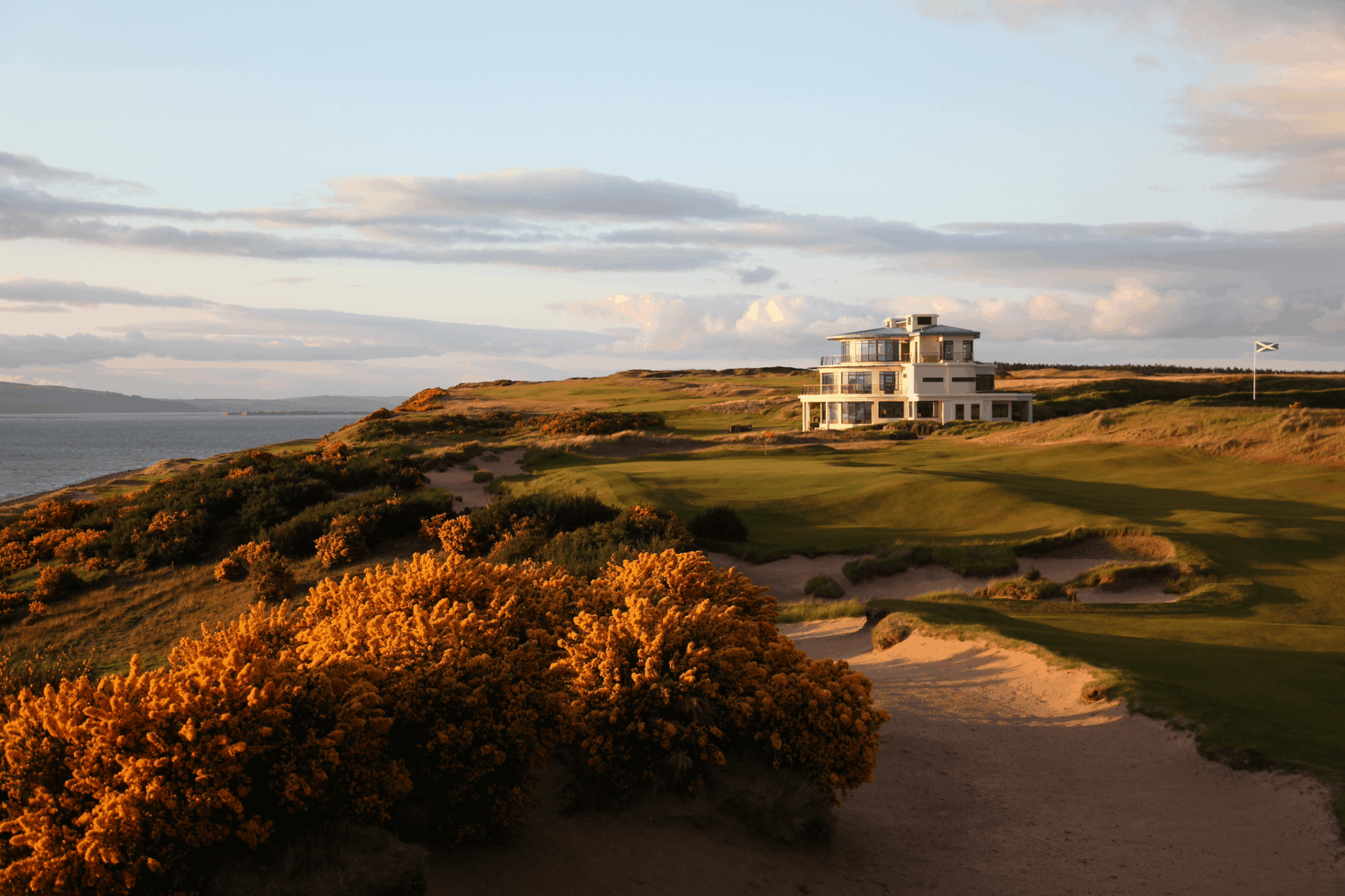
There are golf destinations, and then there is the Scottish Highlands. Few places on earth demand a golfer’s attention quite so insistently — not merely for the courses, which are extraordinary, but for the overwhelming sense that here, the game has always been exactly as it should be: played on natural terrain, beneath wide skies, in the teeth of an unpredictable coastal wind that no amount of range time will prepare you for. The Highlands are a pilgrimage, and once you’ve made it, nowhere else quite compares.
Golf tourism in the Scottish Highlands is booming. A 2026 survey from Golf Highland — a co-operative representing 34 clubs across the region — reported that annual green fees had surpassed £12 million, double the figure recorded when the organisation first commissioned research in 2018. Golf is now a key economic driver in the area, injecting an estimated £60 million into the wider Highland economy each year. That growth is being driven not just by the headline destinations like Royal Dornoch and Cabot Highlands Castle Stuart, but by a rising tide of visitors discovering the region’s extraordinary range of lesser-known layouts as well.
Add to that a wave of investment — including Royal Dornoch’s recent unveiling of a new £13.9 million clubhouse, Cabot Highlands’ appointment of Tom Doak to design a second course (Old Petty, which opened for preview play in 2025), and new developments on the horizon — and it becomes clear that the Highlands are not resting on their considerable reputation.
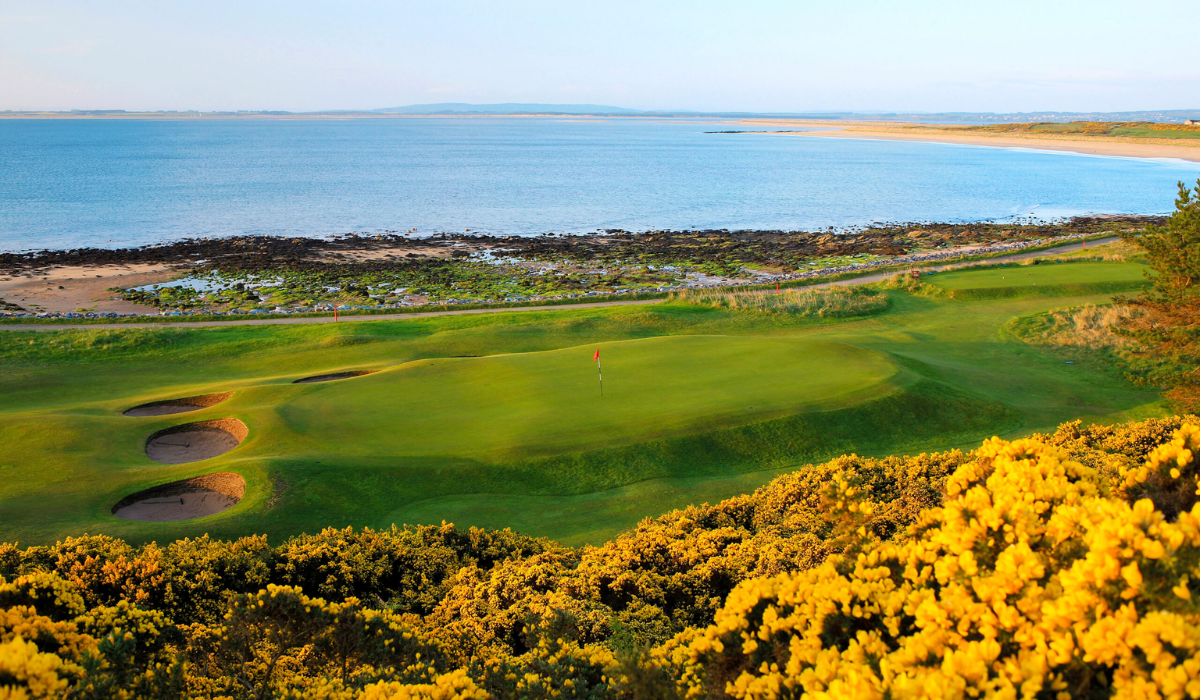
For those who take their golf seriously, Royal Dornoch is not so much a destination as an obligation. Ranked among the world’s top ten courses by virtually every major publication, it consistently sits at or near the top of the GB&I rankings — reaching No. 5 in Golf World’s 2022 list — and yet, for a course of this stature, it retains a remarkable sense of quiet, unhurried belonging.
Golf has been played at Dornoch since at least 1616, making it the third-oldest golf club in the world. The Championship Course was shaped by Old Tom Morris, who laid out the first nine holes in 1886. What followed over the subsequent century was a course that evolved with the land rather than against it: flowing, natural, intellectually demanding without ever being brutal. The elevated, sloping green complexes are the defining feature — miss your approach on the wrong side, and you will be relying on a short game as sharp as the wind itself.
Royal Dornoch sits roughly an hour north of Inverness, and the journey — crossing the Dornoch Firth Bridge, following the coastline with the firth opening up to the east — is itself worth the detour. The club also runs a second course, the Struie, which offers a somewhat shorter, gentler introduction to links golf at the same historic address.
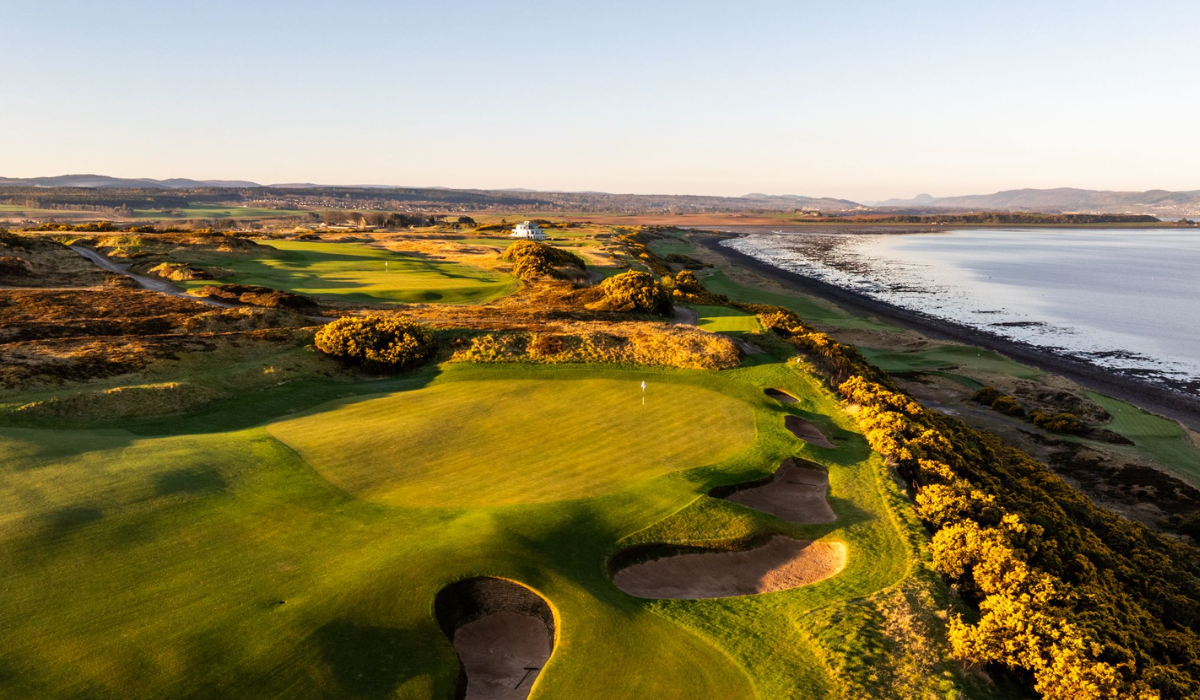
If Royal Dornoch represents the soul of Highland golf, Cabot Highlands Castle Stuart — situated just outside Inverness on the southern shores of the Moray Firth — is its most compelling argument for the contemporary. Designed by Mark Parsinen and Gil Hanse and opened in 2009, the course was carved from a site that Parsinen identified after an exhaustive search of Scotland’s coastline following the triumphant success of Kingsbarns.
The result is a course ranked 22nd in the Top 100 UK & Ireland by Golf Monthly, praised for its wide, rolling fairways, infinity-style greens tumbling towards the firth, and dramatic elevation changes that make almost every hole feel like a moment. It has hosted the Scottish Open multiple times and quickly established itself as a must-play for any serious Highland itinerary.
In 2022, development company Cabot acquired Castle Stuart and engaged Tom Doak to design a second layout on the same estate. That course — Old Petty — opened for preview play in 2025 and is already generating considerable anticipation. It is an investment, but one that almost universally delivers.
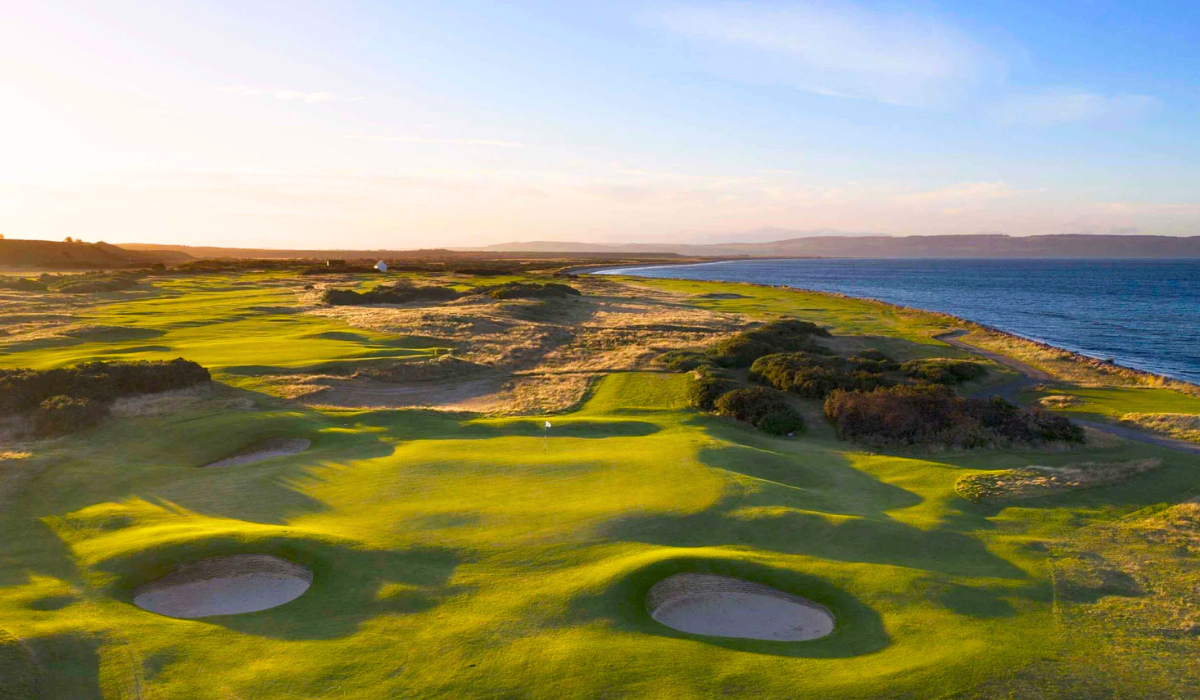
Established in 1887 with design input from Old Tom Morris, Archie Simpson, James Braid, and Ben Sayer, Nairn’s Championship Course occupies a curious position in Highland golf: widely loved, consistently underrated, and perpetually overlooked in favour of its more famous neighbours. That is a mistake.
Set on the Moray Firth about 15 minutes east of Inverness, Nairn is a powerful, traditional links course where the prevailing westerly wind turns what appears manageable on the card into something altogether more humbling in practice. Every hole frames a view across the firth; the par-4 holes are notably testing, and the combination of gorse, heather, and firm, fast fairways gives the course a texture and character that rewards repeat visits. It has hosted both the Walker Cup and the Curtis Cup, which ought to say all that needs saying about its quality.
Together, Royal Dornoch, Cabot Highlands Castle Stuart, and Nairn form the core of the Highland Golf Links partnership — a co-operation that packages rounds at all three courses with luxury accommodation at properties including Culloden House Hotel, Links House at Royal Dornoch, and the Kingsmills Hotel in Inverness.
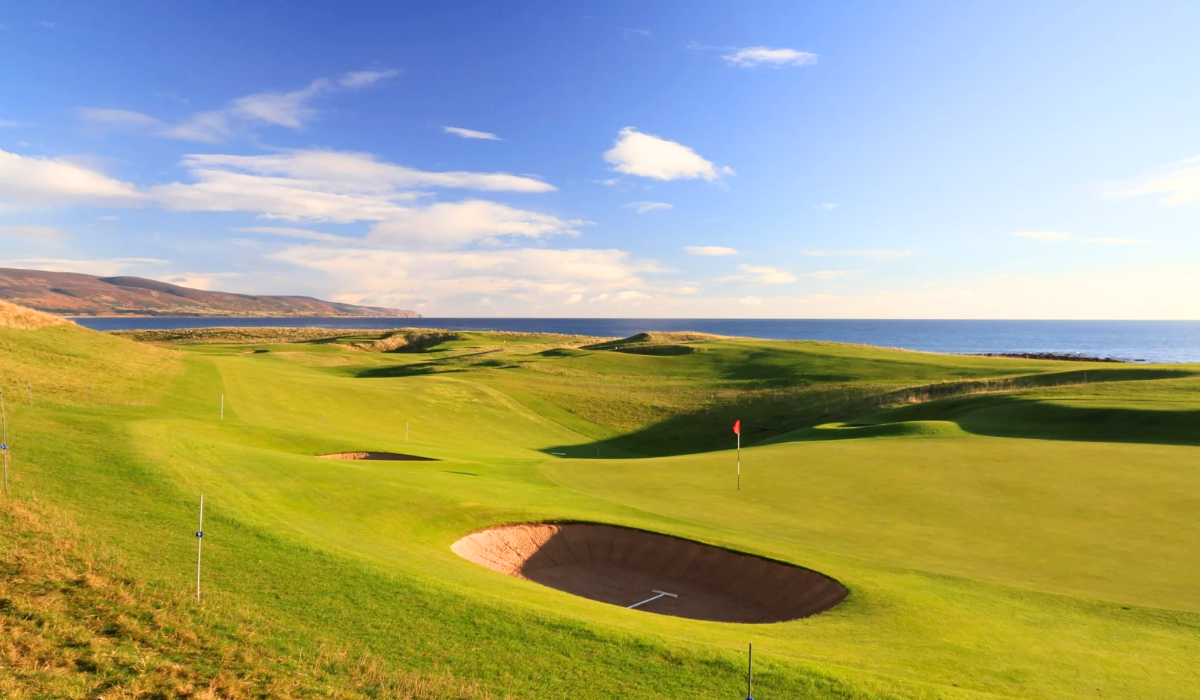
Serious Highland golfers do not stop at the main trio. Drive thirty minutes north of Dornoch on the A9 — a road of exceptional coastal beauty, skirting Loch Fleet and passing within sight of the fairytale turrets of Dunrobin Castle — and you reach Brora, a course that five-time Open Champion Peter Thomson once called the best traditional links course in the world.
Designed by James Braid and ranked 27th in Scotland by Golf World in 2024, Brora is pure, unvarnished links golf — out-and-back along the North Sea, with firm fairways, pot bunkers, deceptive hidden greens, and the memorable company of a resident flock of sheep and Highland cattle who graze the course freely. Electric fences protect the greens from overly curious livestock. It stretches only 6,100 yards from the tips, but plays far longer than the card suggests, and no two rounds here feel remotely alike.
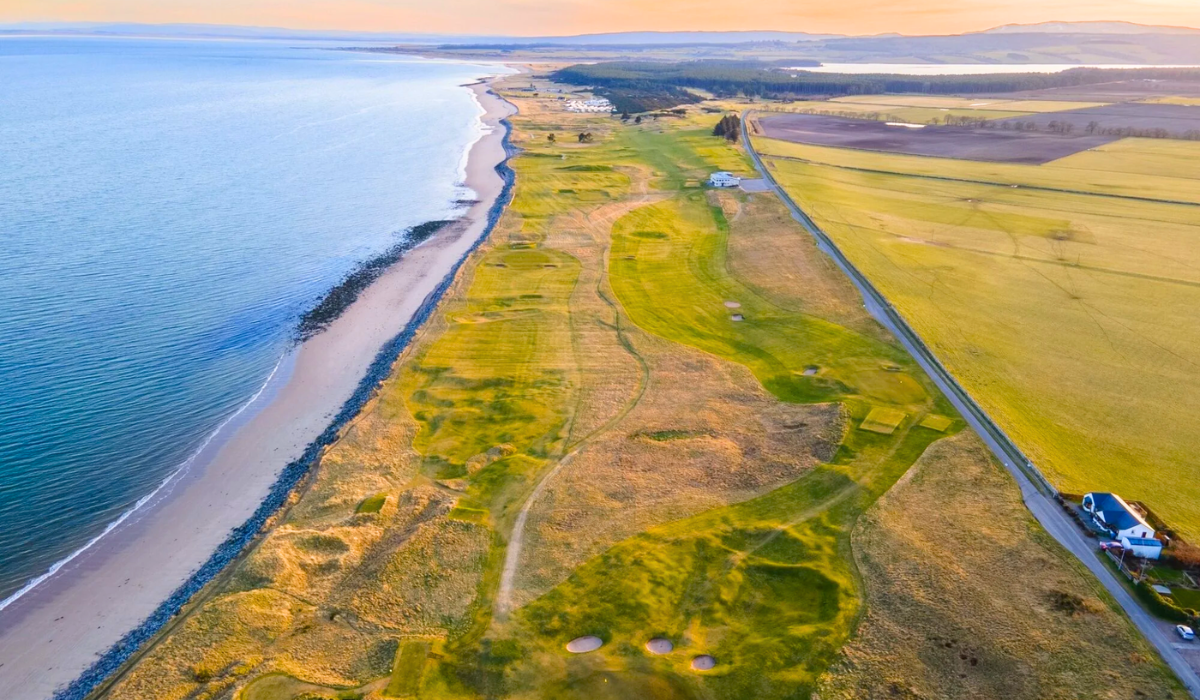
Just south of Brora lies Golspie, another James Braid design — this one blending links, heathland, and parkland terrain across a setting that frames Ben Bhraggie on one side and the Dornoch Firth on the other. Golspie was rated the highest-value course north of Inverness by National Golfer magazine. And further south still, Tain Golf Club — designed by Old Tom Morris — offers a combination of links and heathland with panoramic views across the Dornoch Firth, where heather and gorse demand accurate driving and the undulating greens reward imagination over power.
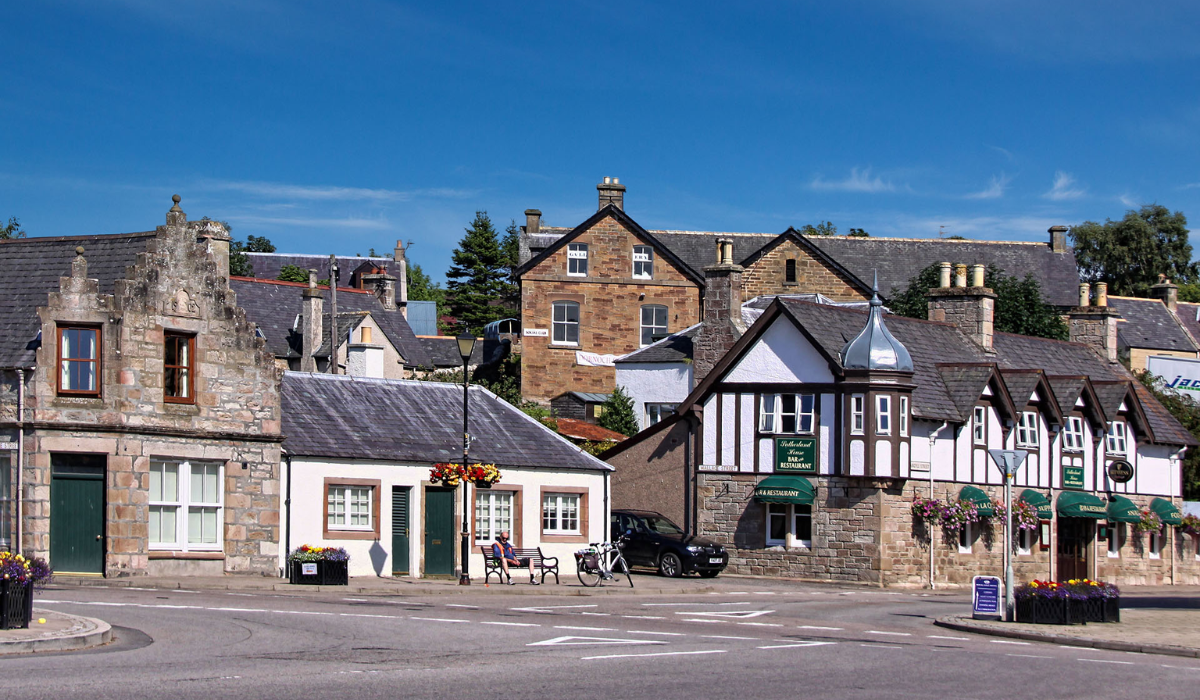
A golf trip to the Highlands that does not venture beyond the fairway is a trip half-lived. The region that produced the game is also the heartland of Scotch whisky, dramatic landscape, and a culture of unhurried hospitality that makes every evening after a round genuinely restorative.
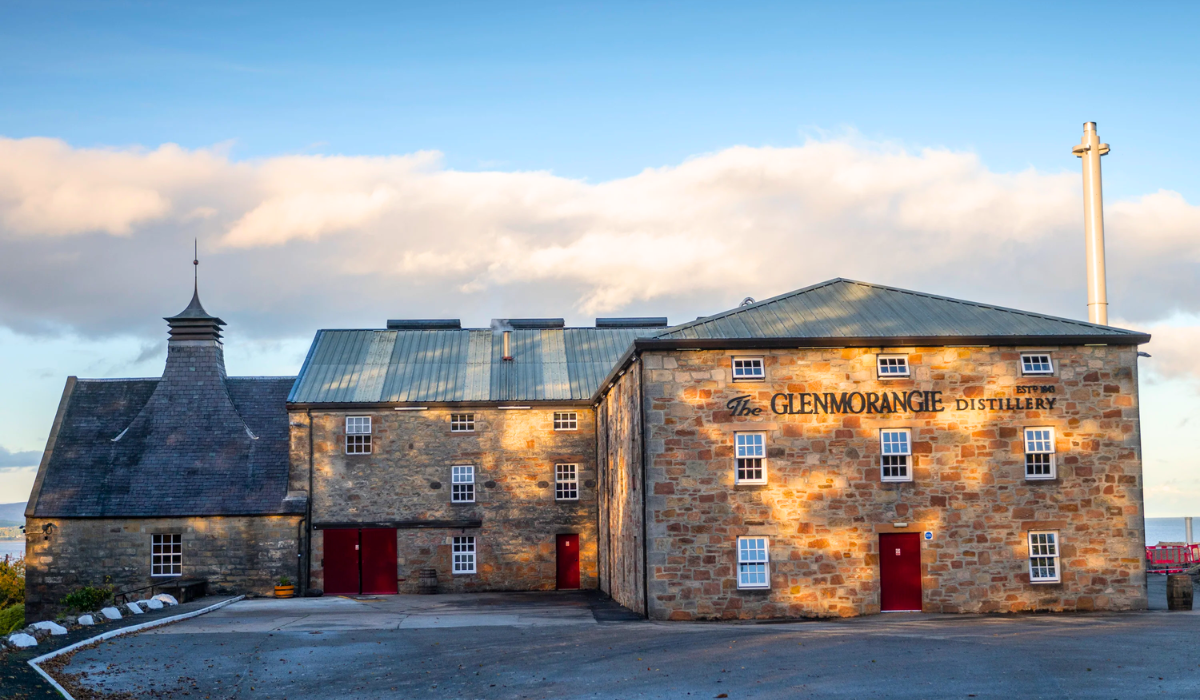
Glenmorangie Distillery, just fifteen minutes from Royal Dornoch near the town of Tain, is one of Scotland’s most recognisable single malts — famous for its unusually tall stills and fruit-forward style. Its modern visitor centre offers tours and tastings that slot naturally into a Highland itinerary. Clynelish, roughly twenty-five minutes from Dornoch, offers a more rugged, coastal-influenced expression. Both sit within easy reach of the golf corridor, making an evening distillery visit entirely compatible with an early tee time the following morning.
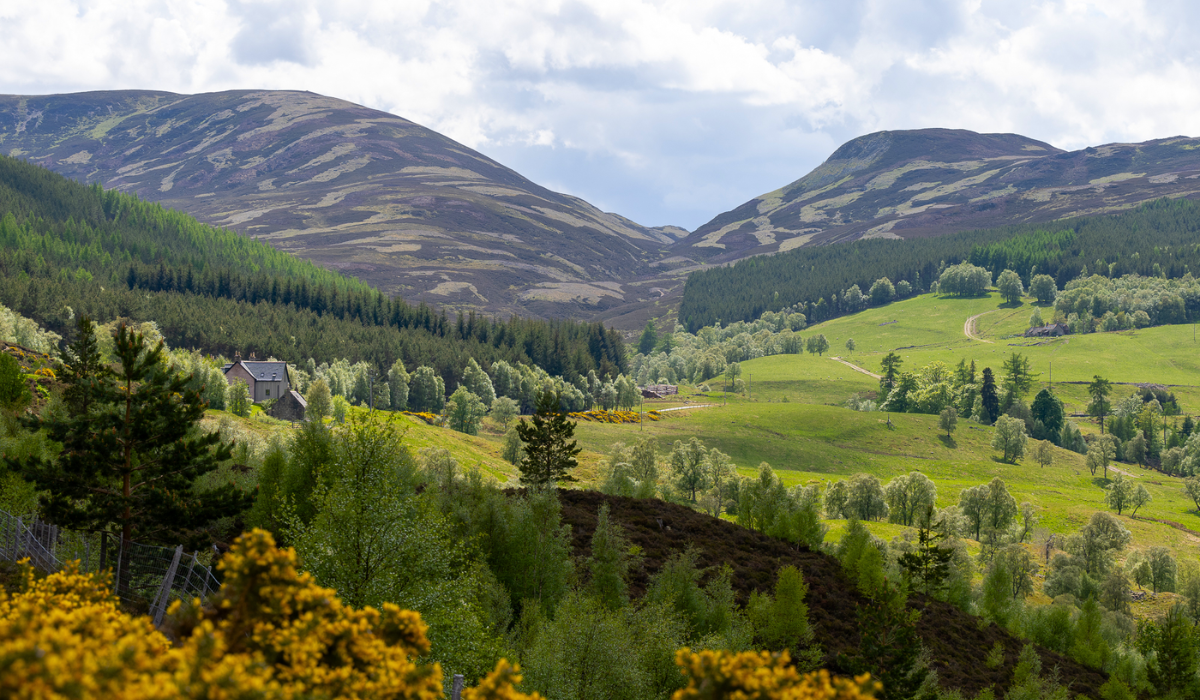
Beyond whisky, the Highland landscape insists on your attention. The Cairngorms National Park — the largest in the UK — sits inland from the golf coast and offers everything from mountain walks to red squirrel spotting. The North Coast 500 road route, which loops around the northern tip of Scotland, passes through some of the most dramatic scenery in Europe: sea stacks, sandy beaches that would not look out of place in the Caribbean, and glens so remote that mobile reception is a distant memory.
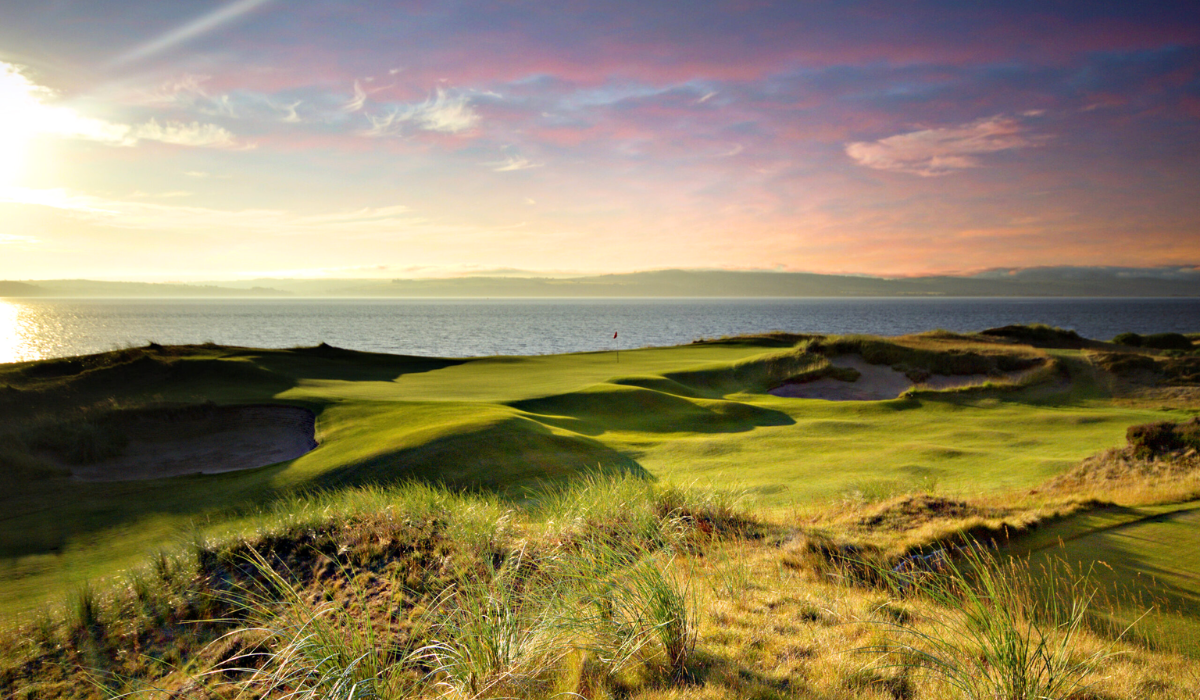
The Highland golf season runs broadly from late March through November, with peak season from May to October when daylight stretches to nine or ten o’clock in the evening and the courses are at their fullest and most vibrant. Temperatures in summer average around 15–19°C, though sheltered glens can feel considerably warmer. Scottish weather, even in high summer, is famously unpredictable — layers and waterproofs are not optional packing, regardless of the forecast.
April and October represent an interesting sweet spot: course conditions are typically excellent, green fees at some venues are meaningfully lower, and the landscapes are coloured by spring growth or autumn gold in ways that summer cannot quite match. Midges — the notorious tiny biting insects of the Highlands — are far less prevalent in spring and early autumn, which is an underrated practical consideration for anyone spending time outdoors.
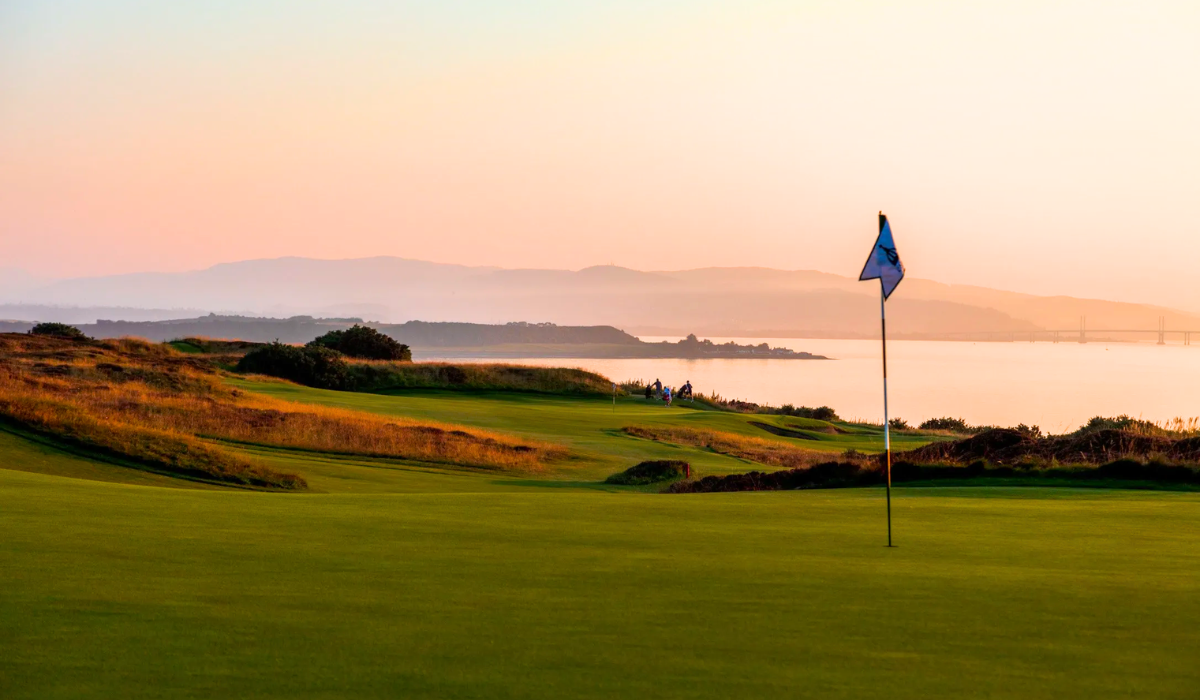
The Scottish Highlands reward careful planning. Tee times at Royal Dornoch and Cabot Highlands can sell out months in advance; accommodation in Dornoch is limited and books up fast during peak season; and getting the most from a week in the region means sequencing courses, distillery visits, and travel time in a way that maximises every day.
All Square Golf offers curated travel packages to the Scottish Highlands, designed to take the logistics off your hands and put you on the right courses at the right time. Whether you are looking for a focused links itinerary centred on Royal Dornoch, Cabot Highlands, and Nairn, or a wider Highland escape that incorporates Brora, Golspie, and some of the region’s more remote gems, the team will build a package around your handicap, travel style, and ambitions. Accommodation, tee times, transfers, and insider recommendations are all taken care of — leaving you to concentrate entirely on the golf, the whisky, and the view.
Book your Scottish Highlands golf package through All Square Golf and make the pilgrimage north.
Course Reviews
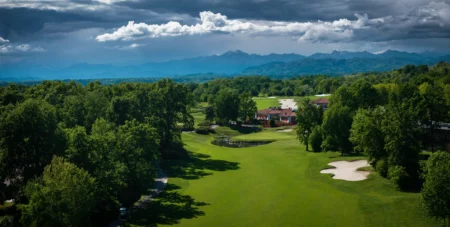
Bogogno Golf Resort: Championship Golf in Northern Italy
Hidden amidst the rolling hills of the Piedmont region in northern Italy lies Bogogno Golf Resort, an elegant retreat where top-tier golfing intertwines with a tranquil, almost safari-like experience. Just an hour’s drive from Milan and a short journey from Lake Maggiore, this lush estate has been quietly building its reputation as one of Italy’s […]
Destinations
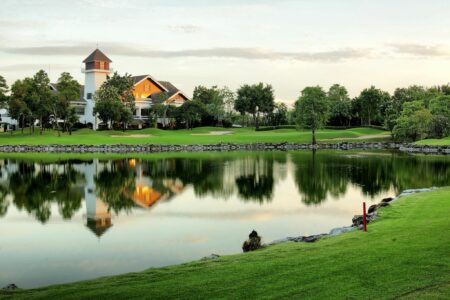
Exciting golf trip to Bangkok
Thailand’s vibrant capital is a heady mix of exciting nightlife, ancient heritage and incredible street food. It also has plenty to offer golfers with an abundance of excellent courses and places to stay. There’s few destinations as thrilling for golfers as Bangkok, and the year-round warm weather provides great golfing conditions and an escape for […]