



Course Reviews
Marrakech vs Agadir for Golf: Which Moroccan Destination Should You Choose?
Explore 33,000+ golf courses in 180 countries.
Follow the latest news and trends in golf.
Connect with like-minded golfers.
Find everything you need for your golf equipment and gear needs.
Travel, golf resorts, lifestyle, gear, tour highlights and technology.
All Square
Suggestions
Course Reviews
Marrakech vs Agadir for Golf: Which Moroccan Destination Should You Choose?
Accessories
Best Push Carts and Electric Trolleys for Golf in 2026
Course Reviews
Rediscover Monte Rei: Portugal’s Iconic Golf Course Reopens After Major Renovation
Course Reviews
Best Golf Courses Around Rome: Where Ancient History Meets Modern Golf
Instruction
Links vs Parkland vs Heathland: What’s the Difference?
Clubs
The Best Irons on the Market in 2026
Clubs
Austin Smotherman WITB: The Clubs Behind His 2026 Bank of Utah Championship Win
Destinations
Barrière Golf Properties: French Golf Escapes Where the Resort Is Part of the Experience
Destinations
Conrad Algarve Renovations: A New Chapter of Luxury in Quinta do Lago
Gear
Garmin Golf Watches Guide: Which Garmin Watch Is Right for Your Game?
PGA Tour
Presidents Cup 2026 Results & Winners: Team USA Completes Historic Comeback
Course Reviews
Cullinan Golf Links Resort, Belek: Where Golf Meets the Mediterranean
Course Reviews
New Opening: Limassol Greens — Cyprus’ New Golf Destination
PGA Tour
Presidents Cup 2026 Preview: Everything to Know Before Medinah
Clubs
Jacob Bridgeman WITB: The Clubs Behind His 2026 Biltmore Championship Victory
Course Reviews
Play Golf at Pebble Beach: What to Know Before You Go
Professional Golf
Solheim Cup Results & Winners 2026: Europe Reclaims the Trophy
Clubs
This Year’s Best Drivers on the Market: A 2026 Buyer’s Guide
Clubs
WITB: Ryan Fox’s Winning Clubs at the 2026 Open Championship
Community
How Modern Golf Courses Conserve Water and Protect Wildlife
PGA Tour
Changes on the PGA Tour from 2028
Course Reviews
Tee Off in Tuscany: Golfing Italy’s Most Picturesque Countryside
Course Reviews
The Best Golf Courses Near Pinehurst That Aren’t Pinehurst No. 2
LPGA
Solheim Cup 2026 Preview & FAQ: Everything to Know Before Bernardus
Clubs
TaylorMade Spider ZT Putter Review: What It Is, How It Performs, and Whether It’s Worth the Upgrade
Course Reviews
Fancourt: The Garden Route Estate Where South African Golf Grew Up
Course Reviews
Playing Golf on the Edge: Cliffside Courses Worth the Nerves
Destinations
The Rise of Wellness-Integrated Golf Hotels
Course Reviews
Why Comporta, Portugal, Is the Next Big Golf Destination

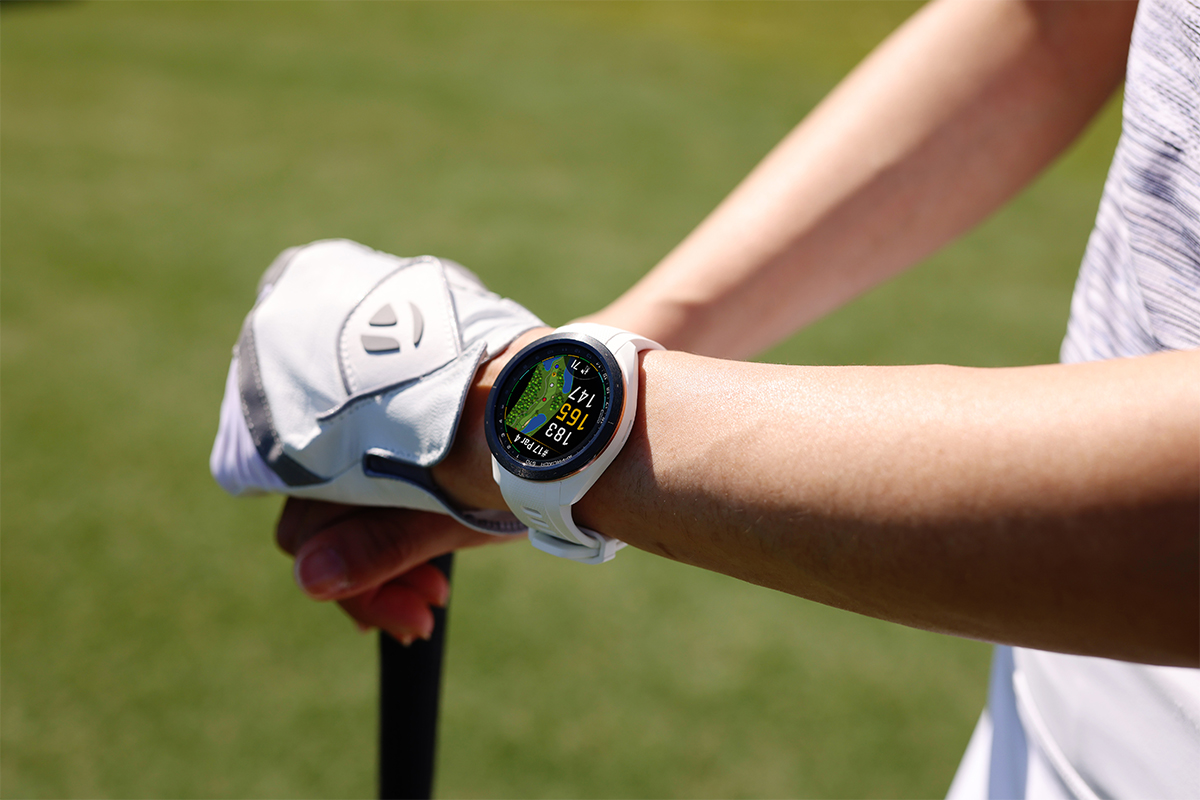
A golf watch used to be a fairly simple proposition: glance at your wrist, check the distance to the green and choose a club. Garmin has turned that idea into something considerably more sophisticated. Today, its golf watches can map tens of thousands of courses, adjust distances for elevation and environmental conditions, track shots, analyse performance and, on the most advanced models, even suggest which club to play.
But Garmin’s golf range is no longer a one-watch-fits-all lineup. The current collection stretches from straightforward GPS watches designed to replace a traditional yardage book to premium smartwatches that combine detailed golf analytics with health, fitness and everyday smartwatch features.
So, which Garmin golf watch makes sense for your game? And what do you actually get as you move up the range?

Garmin currently positions its dedicated Approach watches across three broad levels: essential, advanced and premium. The Approach S12 sits at the simpler end of the spectrum, while the S44 and S50 bring colour AMOLED displays and progressively more smartwatch and performance features. At the top of the dedicated Approach range is the Approach S70, Garmin’s premium golf smartwatch.
The broader Garmin golf ecosystem also includes products such as the Approach CT1 and CT10 club-tracking sensors, Z-series laser rangefinders and the G82 launch monitor and GPS handheld. Premium alternatives outside the Approach family include the MARQ Golfer and selected multisport Garmin watches with golf functionality.
That means choosing a Garmin is less about simply asking “Which watch is the best?” and more about deciding how much information you want on your wrist — and how much of your game you want to analyse afterwards.
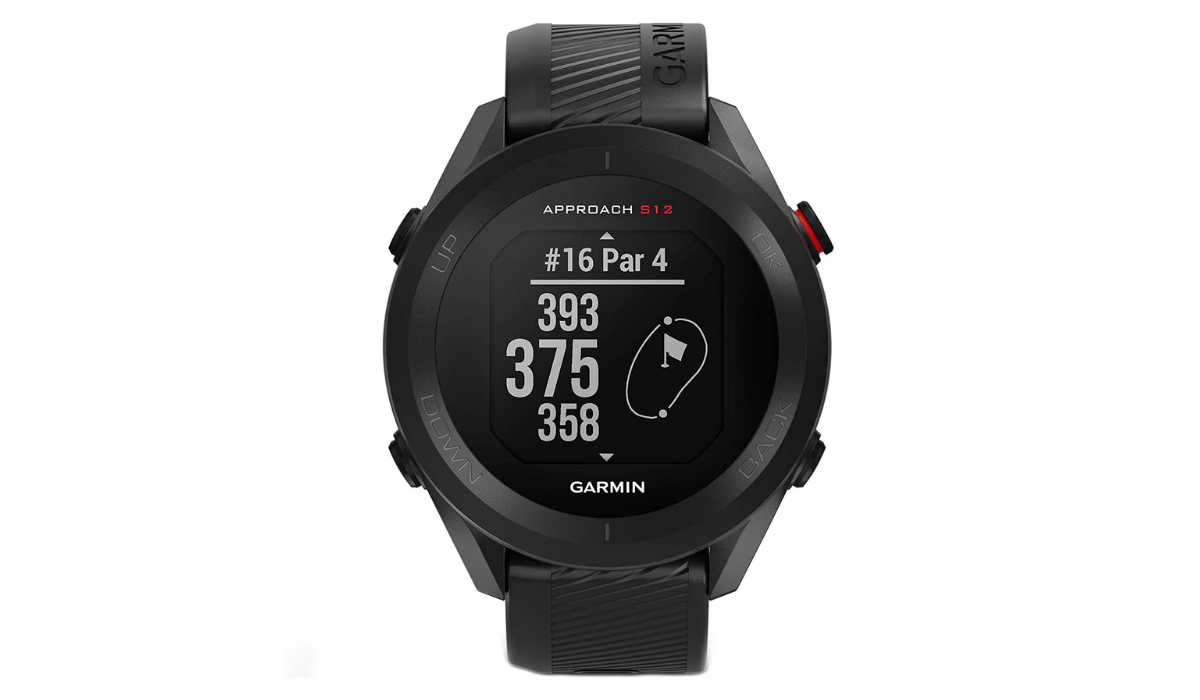
If you mainly want reliable GPS distances without turning your wrist into a full golf computer, the Approach S12 is the simplest route into Garmin’s golf ecosystem.
It provides distances to the front, middle and back of the green, along with information on hazards and layups. The S12 comes with more than 43,000 preloaded golf courses and can provide up to 30 hours of battery life, making it particularly suited to golfers who prioritise simplicity and long battery life.
Its monochrome display is deliberately uncomplicated, too. Rather than trying to replicate the look of a smartphone, the S12 focuses on information that can be read quickly while standing on the tee or walking down the fairway.
For a golfer who already knows their distances and simply wants to eliminate the need to pull out a phone or laser rangefinder for every shot, that can be all that is necessary.
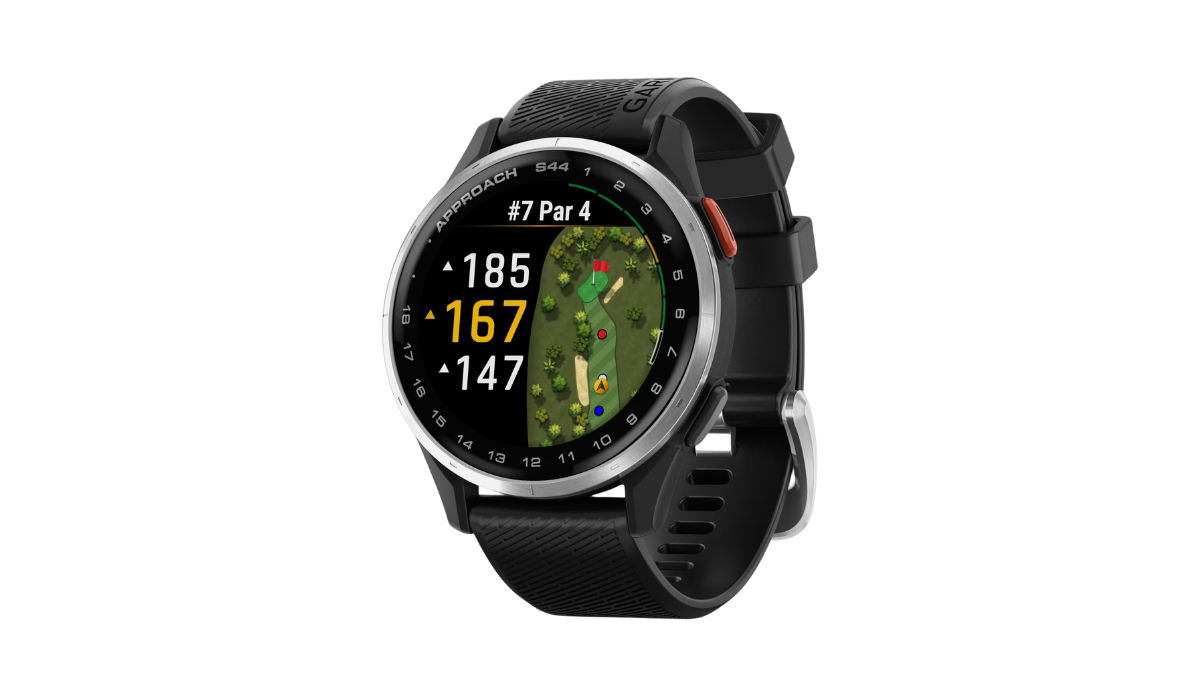
The Approach S44 is where Garmin’s golf watches start to feel much more like modern smartwatches.
Its 1.2-inch AMOLED touchscreen provides a colourful, high-resolution display while retaining the core golf functions of the S12. Golfers get more than 43,000 preloaded courses, hazard information, Green View and distances to the front, middle and back of the green. Garmin also added AutoShot game tracking and smart notifications when the watch is paired with a compatible smartphone.
One particularly useful difference is the presentation. A colourful touchscreen makes course information easier to interpret visually, especially when looking at the shape of a hole or green rather than simply checking a number.
The S44 can also be paired with Garmin’s CT1 club trackers or CT10 sensors for more detailed shot tracking. A Garmin Golf membership adds features such as Premium CourseView maps, Touch Targeting and Green Contour data.
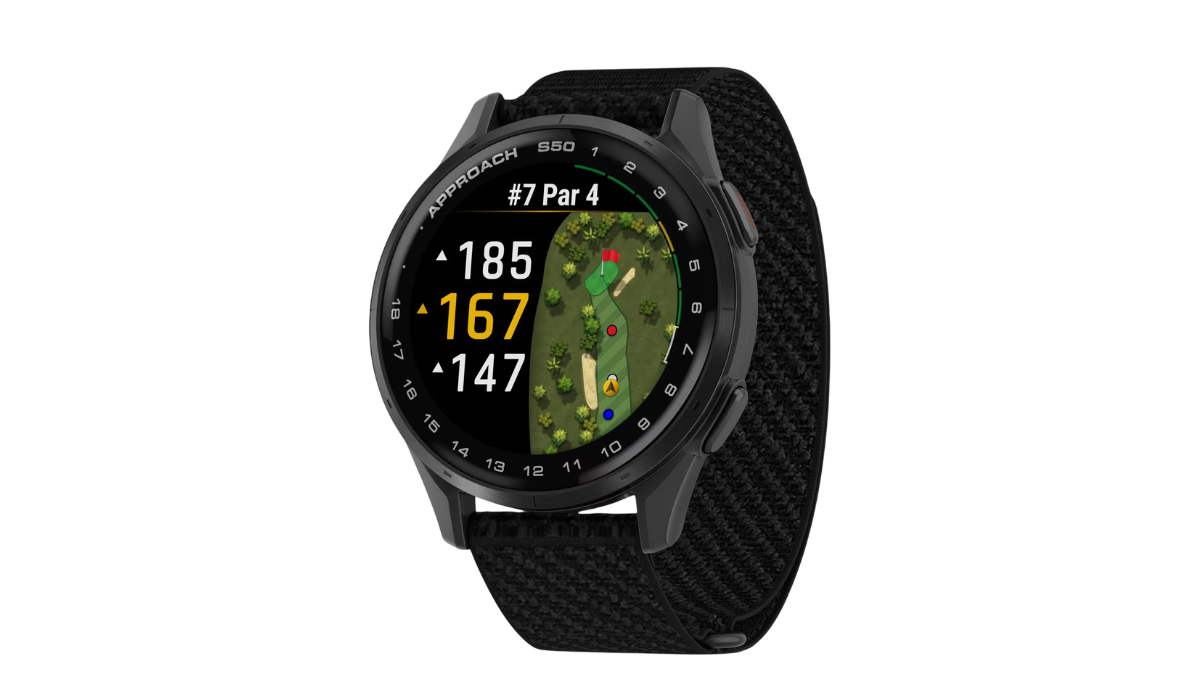
For golfers who want their golf watch to remain useful long after the 18th green, the Approach S50 is a significant step up.
It retains the S44’s 1.2-inch AMOLED display and core golf features but adds PlaysLike Distance, which adjusts yardages for elevation. It also introduces a much broader collection of health and fitness functions, including wrist-based heart rate, sleep monitoring, stress tracking, Body Battery and multiple activity profiles.
This changes the character of the watch. Instead of being primarily a golf GPS that happens to have smartwatch features, the S50 is designed to work as an everyday fitness smartwatch that happens to be particularly useful on the golf course.
Golfers can also use features such as Garmin Pay and music services, while the watch can display smartphone notifications. Garmin lists up to 15 hours of battery life in GPS mode for the S44 and S50.
For someone who plays golf regularly but also runs, trains at the gym, walks or simply wants one watch for everyday use, the S50 occupies an interesting middle ground.
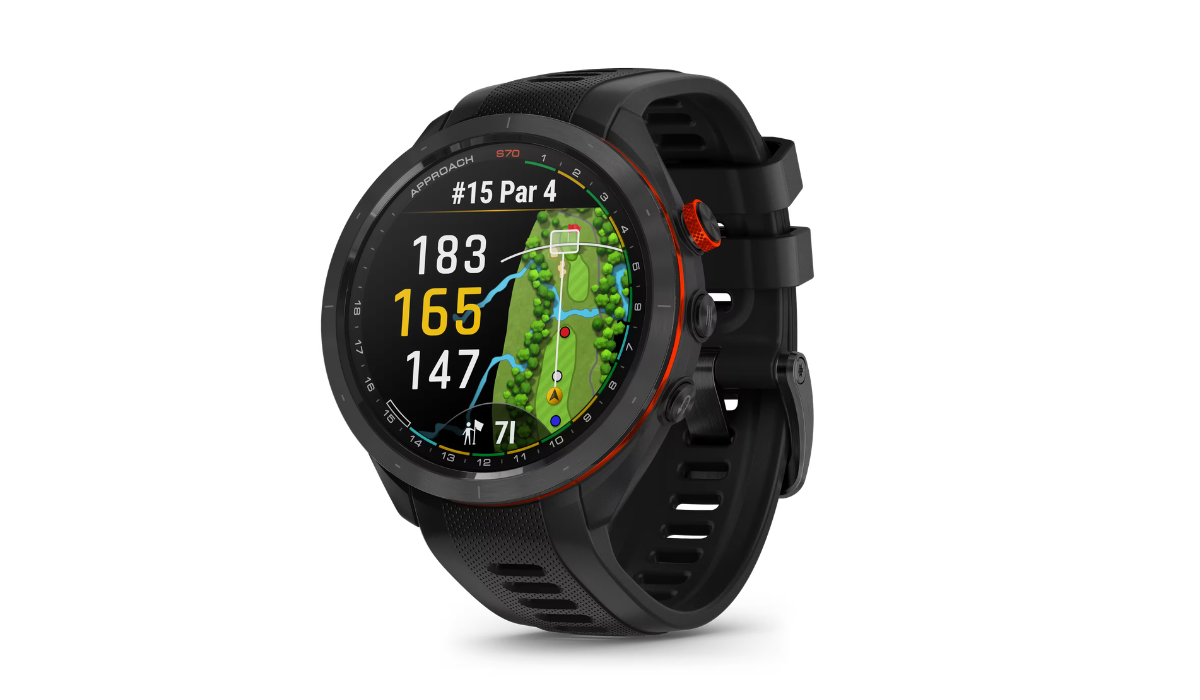
At the top of Garmin’s dedicated Approach range sits the Approach S70.
This is where Garmin’s golf technology becomes much more strategic. The S70 is available in 42 mm and 47 mm versions and uses a bright AMOLED touchscreen. It comes preloaded with more than 43,000 full-colour CourseView maps and adds advanced features including Virtual Caddie, enhanced PlaysLike Distance and Green Contour data.
The battery figures are also impressive for a full-featured smartwatch. Garmin’s current specifications list up to 10 days of typical smartwatch use for the 42 mm model and up to 16 days for the 47 mm version. In all-satellite mode, the figures are up to 15 and 20 hours, respectively. Actual battery life varies according to settings and connected features.
But the most interesting part of the S70 isn’t the screen or battery. It is the way Garmin tries to turn accumulated playing data into on-course decisions.
Virtual Caddie is one of Garmin’s most distinctive golf features.
Rather than simply telling you that the flag is 157 yards away, the system can use information such as your previous performance, the hole, wind and other course factors to provide a club recommendation. The S70 can also display a shot-dispersion area, giving you an indication of how your shots with the suggested club typically behave.
Virtual Caddie isn’t simply an artificial-intelligence-style recommendation that magically knows your game from day one. Garmin says the feature requires golfers to play five rounds with compatible Approach sensors or enable Club Prompt and upload scorecards, with the watch connected to the Garmin Golf app.
That makes the feature more interesting than a generic club calculator. The longer you use the Garmin ecosystem and build up your playing history, the more personalised the information can become.
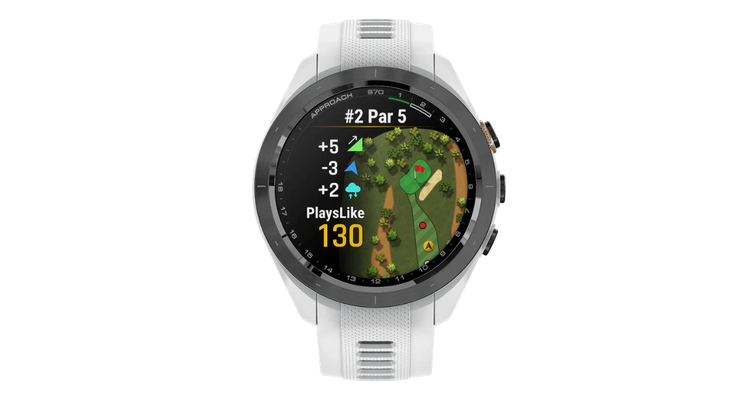
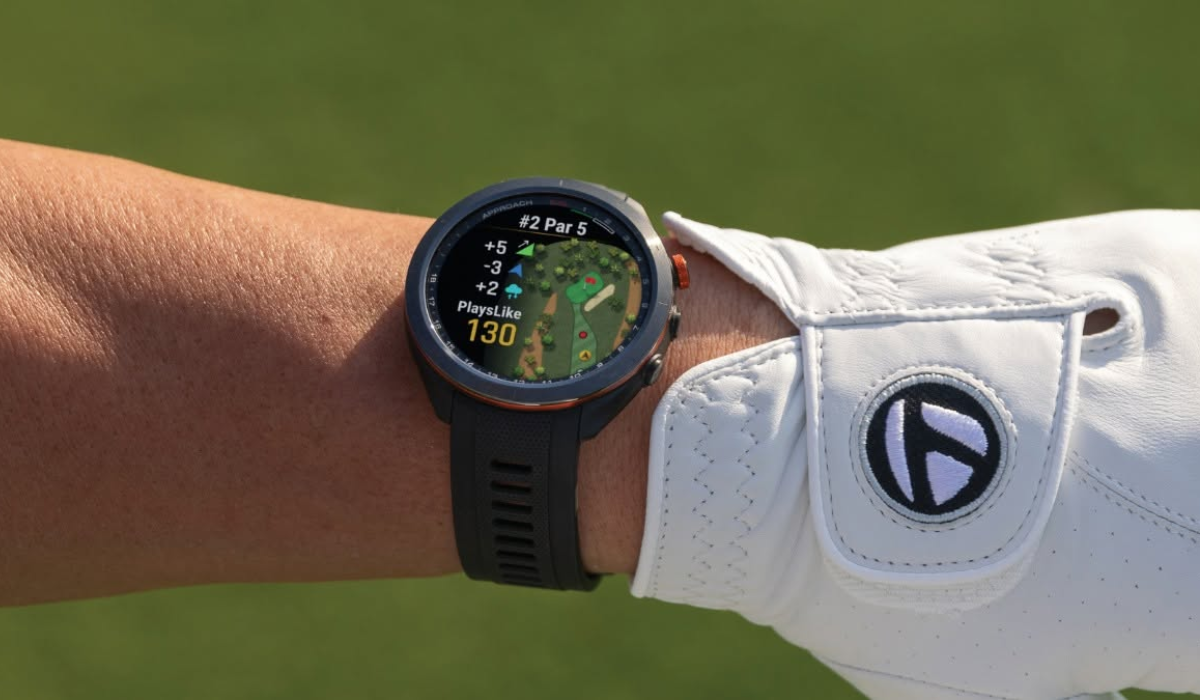
One of the biggest advantages of modern GPS golf technology is that golfers no longer have to think only about the physical distance between the ball and the flag.
A 150-yard shot uphill does not necessarily play like a flat 150-yard shot. Garmin’s PlaysLike Distance accounts for elevation changes, while on compatible models and configurations it can also incorporate environmental conditions.
On the S70, Garmin’s settings allow wind and weather information to contribute to PlaysLike adjustments. Weather-related calculations can incorporate air density, while altitude, temperature and humidity can also be considered.
In practical terms, the feature is designed to answer a more useful question:
“How far is this shot actually playing?”
That distinction can be particularly valuable on hilly courses, where relying exclusively on straight-line yardage can make club selection surprisingly difficult.
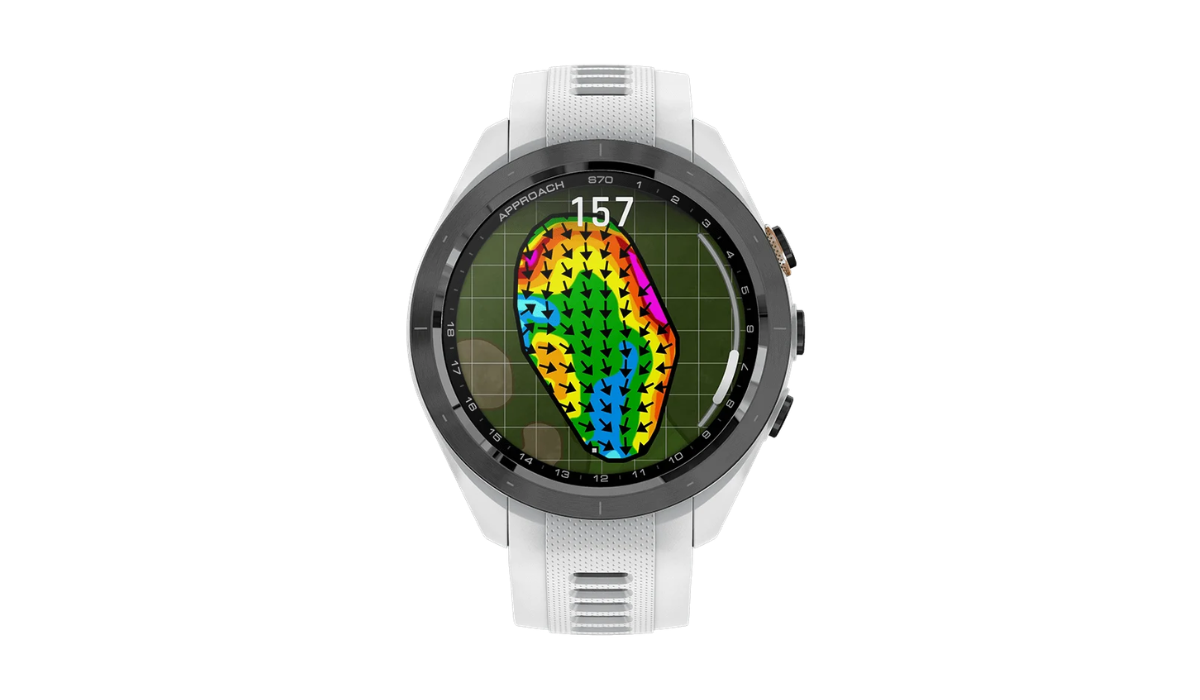
Distance is only half the battle once you reach the green.
Garmin’s Green Contour Data provides information about the slope direction of selected greens. Instead of seeing the putting surface simply as an outline, golfers can use the contour information to understand how the green rises and falls.
That can influence more than the putt itself. Garmin points out that contour information can help golfers anticipate how much a ball might release after an approach, decide which side of the hole offers a better putting position and identify potential areas where missing the green or pin may leave a more manageable next shot.
The feature is available on compatible devices with an active Garmin Golf membership, and coverage varies by course.
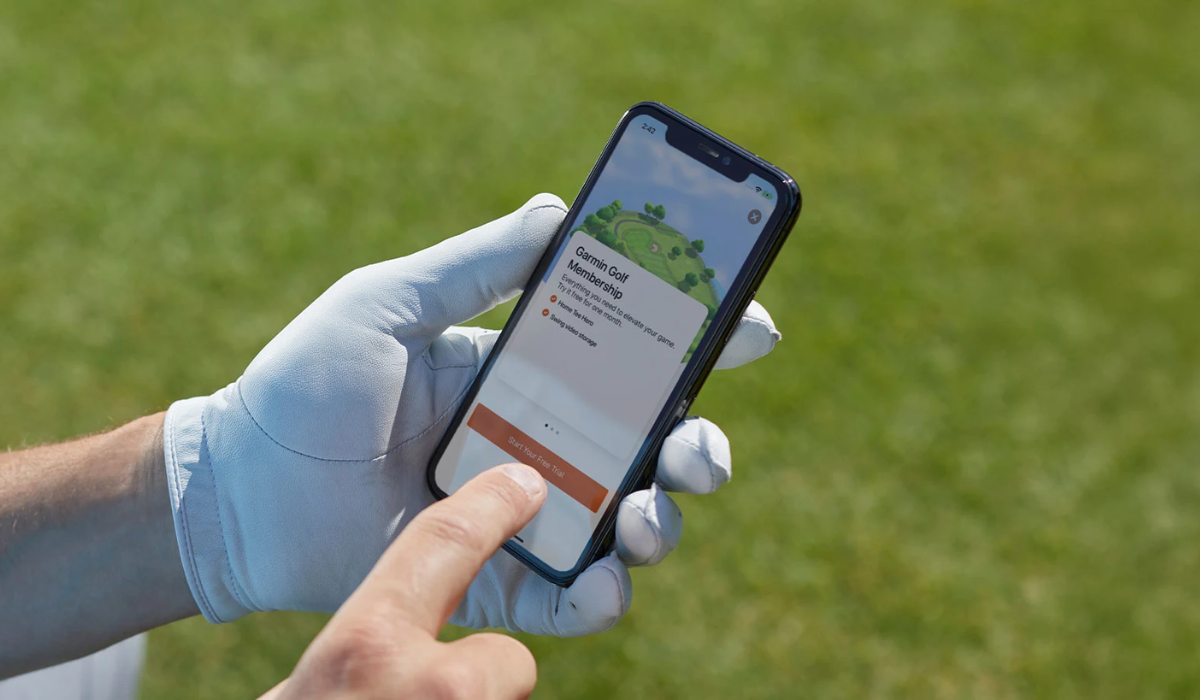
This is an important consideration when comparing Garmin watches because the price of the watch isn’t necessarily the complete cost of accessing every golf feature.
Garmin Golf membership unlocks additional features on compatible devices, including enhanced course information, Touch Targeting and Green Contour data. Garmin currently lists the membership at 9.99€ per month or 99.99€ per year in Europe, although pricing can vary by market.
The key point is that you do not need a membership simply to use a Garmin golf watch for basic GPS distances. Many core functions, including course maps and yardages, are already built into the devices.
The subscription becomes more relevant if you want to access the additional layer of detailed course information and green data.
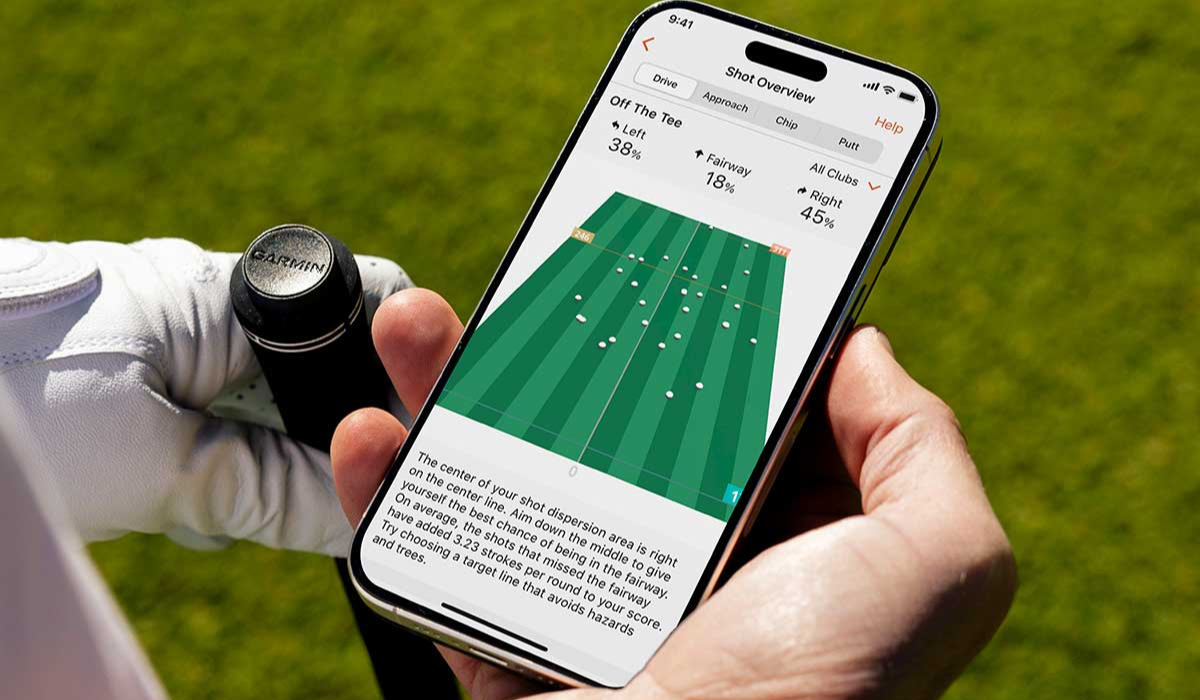
Garmin’s ecosystem becomes considerably more powerful when you move beyond simply checking yardages.
The company offers Approach CT1 and CT10 club-tracking sensors, which attach to clubs and allow compatible Garmin devices to record additional information about the clubs being used.
The CT1 system requires the golfer to tap the relevant tag to the watch before each shot, while CT10 sensors can provide automatic club tracking after they have been installed and paired with a compatible device. Garmin says the resulting information can be used in the Garmin Golf app for statistics and strokes-gained analysis.
This is where a Garmin watch can become more than a GPS device.
Instead of remembering that you felt like you were missing too many fairways, you can start looking at the data and identifying patterns in your game.
Are you losing strokes off the tee? Are approach shots the bigger problem? Are certain clubs consistently producing poor results? Over multiple rounds, the data can provide a much more objective picture.
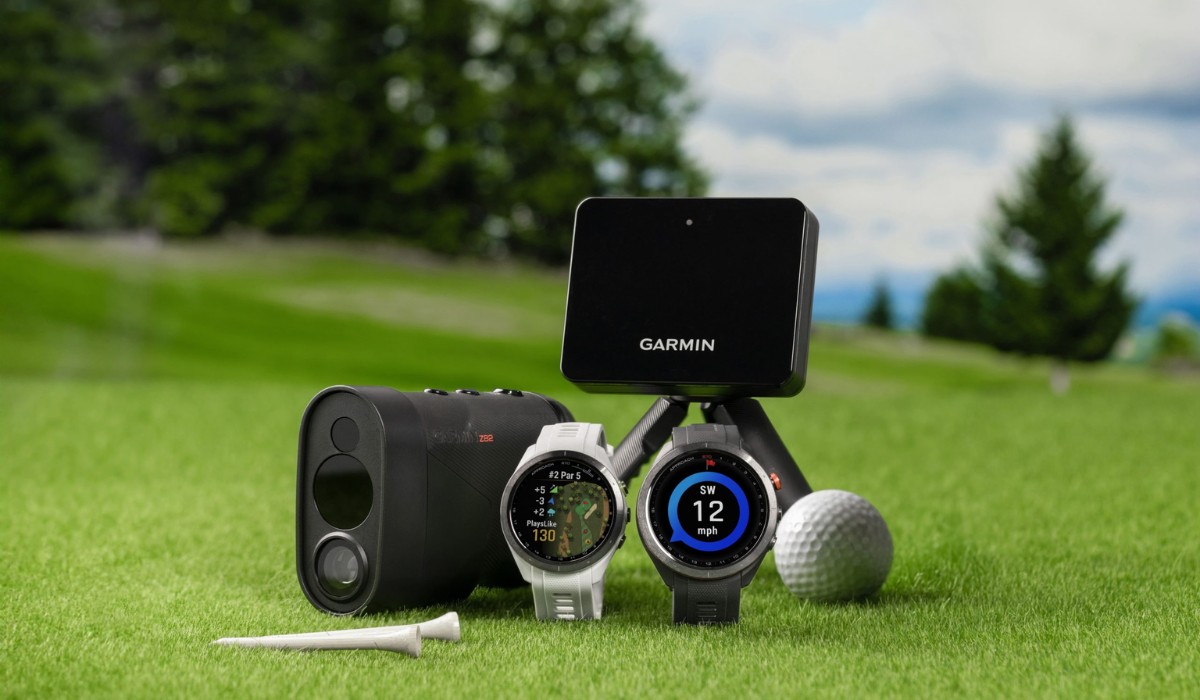
Garmin’s golf strategy is increasingly about connecting multiple devices rather than treating the watch as a standalone product.
The Approach Z82, for example, is a laser rangefinder with built-in GPS golf features, while the Approach G82, introduced in January 2026, combines a large 5-inch GPS display with a built-in launch monitor.
The G82 is particularly interesting for golfers who want to work on their game away from the course. Its radar-based practice features can measure metrics such as ball speed, club speed, smash factor and tempo, while new putting metrics provide additional information about stroke length, tempo and club and ball speed.
Garmin also designed the G82 to work with its wider golf ecosystem. Bag mapping data can feed into Virtual Caddie recommendations, while compatible laser rangefinders can work with the device through Garmin’s Range Relay feature.
In other words, the Garmin experience can grow with the golfer. You can start with a watch and later add sensors, a rangefinder or a launch monitor rather than replacing the entire setup.
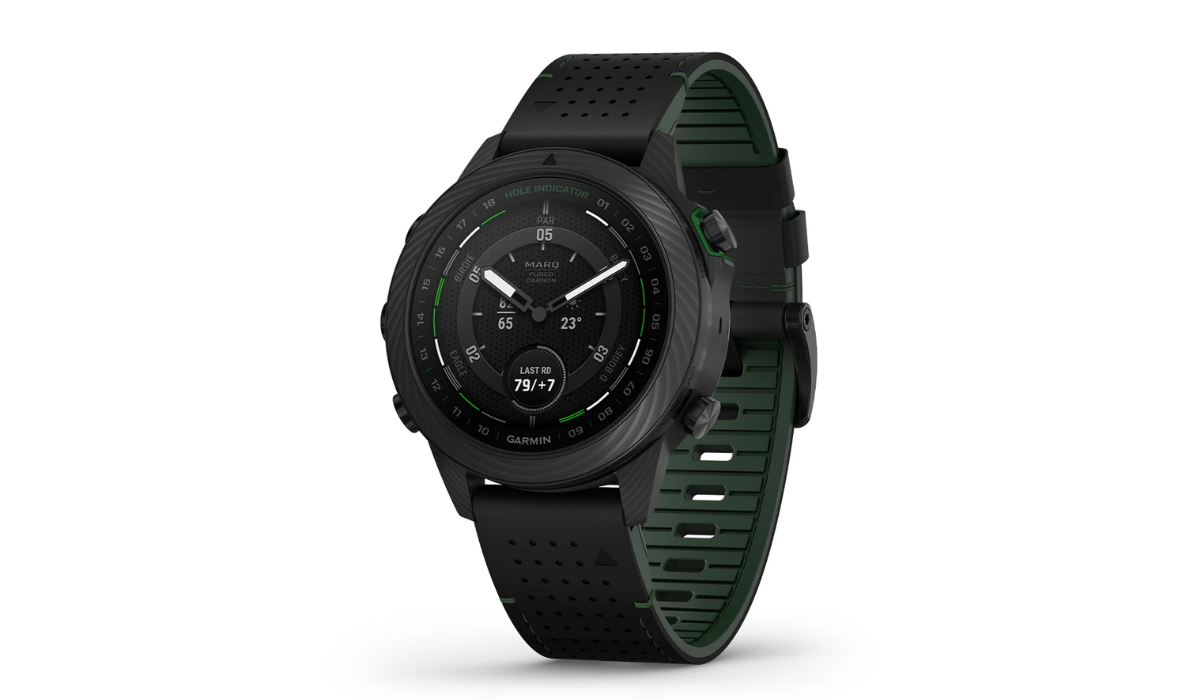
For golfers who see a watch as a luxury timepiece as much as a piece of sports technology, Garmin’s MARQ Golfer (Gen 2) occupies a different category.
The MARQ Golfer combines Garmin’s golf technology with premium materials and a more traditional luxury-watch approach. The Gen 2 Carbon Edition, for example, uses Garmin’s Fused Carbon Fiber construction and a domed sapphire lens, while retaining golf features such as Virtual Caddie, PlaysLike Distance and Green Contour data.
It is therefore less about adding functionality that the S70 cannot provide and more about combining Garmin’s golf ecosystem with premium construction and design.
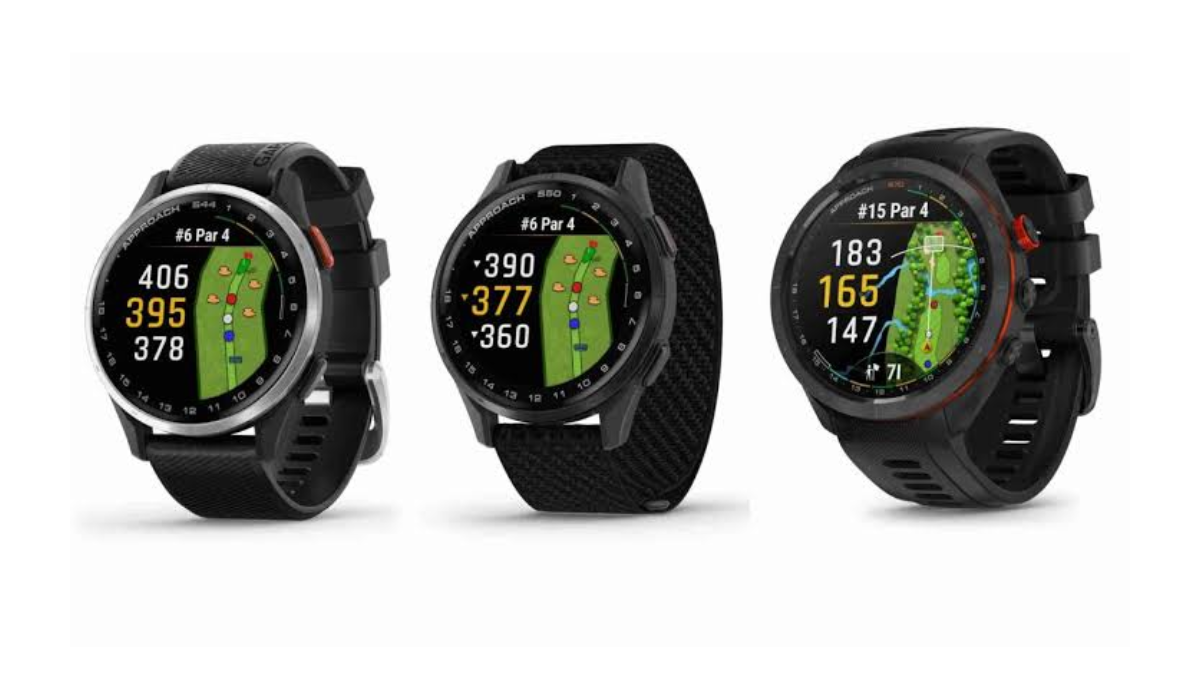
The differences between Garmin’s current mainstream golf watches become easier to understand when you think about what you want the watch to do.
The S44 is primarily about accessible golf information in a modern AMOLED smartwatch. It covers the essentials while adding AutoShot and connected features.
The S50 takes that foundation and adds PlaysLike Distance plus a much broader health and fitness package, making it more suitable as an everyday smartwatch.
The S70 takes golf strategy considerably further, adding features such as Virtual Caddie, enhanced PlaysLike Distance, shot dispersion information and Green Contour Data, while retaining extensive health and fitness functionality.
The difference is therefore not simply about screen quality or battery life. It is about how much of your golf decision-making you want technology to support.
For a golfer who simply wants accurate distances and scorekeeping, the Approach S12 covers the fundamentals without unnecessary complexity.
The Approach S44 makes sense for golfers who want those essentials presented on a colourful AMOLED screen and want some additional shot-tracking and smartwatch functionality.
The Approach S50 is the more natural choice for someone who wants one watch for both golf and everyday fitness. Its combination of PlaysLike Distance, health monitoring, activity profiles and smartwatch functions gives it a broader role beyond the golf course.
The Approach S70 is aimed at golfers who are particularly interested in course strategy and performance data. Its Virtual Caddie, enhanced PlaysLike calculations, shot-dispersion information and Green Contour features make it the most comprehensive dedicated Approach golf watch in Garmin’s current lineup.
And if your idea of a golf setup extends beyond the wrist, Garmin’s wider ecosystem lets you add club trackers, laser rangefinders and launch-monitor technology.
This Year’s Best Wedges on the Market
Ping G440 Family Explained: Inside the Most Complete Game-Improvement Lineup in Golf

Accessories
Best Golf Equipment for Beginners in 2025
Golf is a game of precision, patience, and, let’s be honest, a fair bit of gear. For beginners stepping onto the course in 2025, the array of equipment options can feel like navigating a fairway bunker — daunting and full of traps. But the right tools can make all the difference, turning those early swings […]

Accessories
WannaHaves: Christmas stocking list
Put these highly desired items from Odyssey, Mizuno, Garmin and FootJoy on your Christmas stocking list. New Odyssey Ai-One and Ai-One Milled putters Artificial Intelligence is popping up more and more and it now features in Odyssey’s new Ai ONE and Ai ONE Milled putters. Both feature AI-designed inserts that are designed to produce more […]