



Amateur Golf
How to Play Better Golf on an Unfamiliar Course
Explore 33,000+ golf courses in 180 countries.
Follow the latest news and trends in golf.
Connect with like-minded golfers.
Find everything you need for your golf equipment and gear needs.
Travel, golf resorts, lifestyle, gear, tour highlights and technology.
All Square
Suggestions
Amateur Golf
How to Play Better Golf on an Unfamiliar Course
Destinations
Where to Play Golf in Europe Every Month of the Year
Clubs
WITB: Marco Penge’s Winning Equipment at the 2026 RSM Classic
Destinations
48 Hours of Golf: The Best European Golf City Breaks
Amateur Golf
How Much Does It Really Cost to Own a Home Golf Simulator?
Destinations
The Best Golf Resorts for Couples When Only One Person Plays Golf
Accessories
What Happens to Golf Equipment Performance After Five Years?
Amateur Golf
Golf and Longevity: Why Walking 18 Holes Can Be Part of a Healthy Lifestyle
Amateur Golf
Golf Club Fitting Explained: Is a Custom Fitting Worth It for Amateur Golfers?
Amateur Golf
Your First Golf Holiday: A Beginner’s Guide
Clubs
WITB: Blades Brown’s Winning Equipment at the 2026 World Wide Technology Championship
Course Reviews
Your Next Golf Getaway to Lanzarote: Volcanic Landscapes, Ocean Views and Year-Round Sunshine
Amateur Golf
Understanding Course Rating and Slope: How Difficult Is a Golf Course Really?
Clubs
New Ping G450 Drivers: Four Models, New Technology and a Surprise Mini Driver
Course Reviews
Shoulder-Season Golf: Where to Play for Better Value and Fewer Crowds
Clubs
Andrew Novak WITB 2026: What’s in the Bag at the VidantaWorld Mexico Open?
Destinations
Your Golf Trip to Australia: A First-Time Guide to the Land Down Under
Course Reviews
Rosapenna Hotel & Golf Resort: A Legendary Links Golf Escape on Ireland’s Wild Atlantic Way
Course Reviews
Night Golf and Floodlit Courses: Where to Play After Dark
Clubs
WITB: Ryan Fox’s Winning Clubs at the 2026 Open Championship
Community
How Modern Golf Courses Conserve Water and Protect Wildlife
PGA Tour
Changes on the PGA Tour from 2028
Course Reviews
Tee Off in Tuscany: Golfing Italy’s Most Picturesque Countryside
Course Reviews
The Best Golf Courses Near Pinehurst That Aren’t Pinehurst No. 2
Course Reviews
The Best Golf Courses Around London: A Practical Guide
DP World Tour
DP World Tour 2026: The Full Calendar & Race to Dubai Journey
Course Reviews
Sustainability in Golf: The World’s Most Environmentally Conscious New Courses
Course Reviews
A New Chapter on an Old Fairway: Inside the Hyatt Regency Vilamoura Algarve
Course Reviews
Fancourt: The Garden Route Estate Where South African Golf Grew Up
Course Reviews
Vietnam’s Hoiana Shores and Da Nang’s Best Golf Courses


The first tee shot on a new course can look wide open. Then you check the hole map and discover that the fairway runs out at 235 yards, right where your driver usually finishes. Meanwhile, the bunker that looks intimidating from the tee is well beyond your reach. The view gives you one impression. The yardages give you a plan.
That’s one of the pleasures of playing somewhere new. You get to work out what the architect is asking of you, one shot at a time. A few good decisions before the round, and a habit of looking beyond the flag, can help you score while you’re still learning the course.
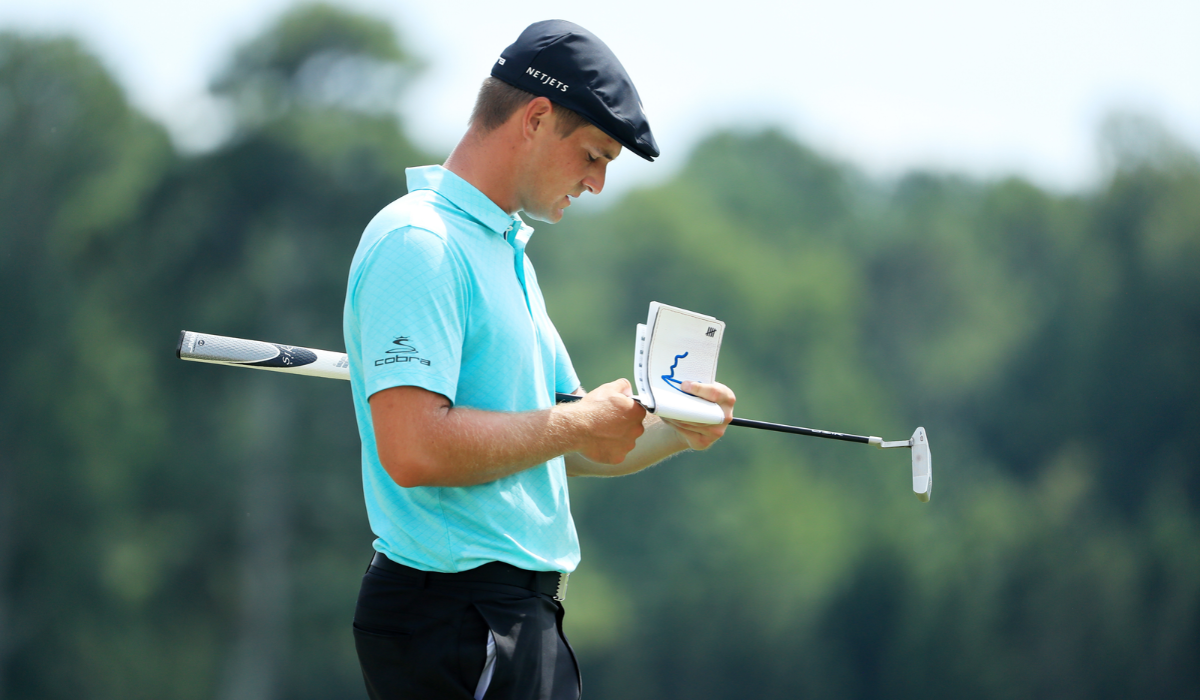
Spend a few minutes with the scorecard and the club’s hole guide. Look for the holes where the map tells you something you might miss from the tee. A dogleg that runs out, a creek hidden below a ridge and a par 3 with a shallow green can all change your club selection. For each of those holes, find a useful number such as the distance to the end of the fairway or the carry over the front bunker.
If there’s a starter, ask where first-time visitors tend to get caught out. A specific question often gets a specific answer. You might learn that the fairway on the sixth feeds everything towards the right rough, or that the bunker on the ninth is 25 yards short of the green and makes the approach look closer than it is.

Two sets of tees with similar total yardages can play very differently. One might give you a run of mid-iron approaches, while the other asks you to carry water on several holes and stop a hybrid on a narrow green. Look at the longest par 3s, the forced carries, and a few of the longer par 4s before choosing where to play.
The USGA’s Best Tees system uses 7-iron hitting distance as a starting point and also accounts for course playability. Its guidance considers features such as elevation, fairway width, forced carries and green contours. If the back tees bring several carries close to your usual limit, moving forward can give you more chances to play the holes as they were designed, with decisions about angles and placement still in play.

On each tee, ask where your ball is likely to finish with your normal shot. That includes your usual miss and, on firm ground, the rollout. A bunker at 225 yards means something different if your driver normally carries 215 and rolls out another 20. On a dry downhill fairway, the same shot might run farther still.
Imagine a 365-yard dogleg where the fairway ends at 235 yards on your intended line. A club that finishes around 205 leaves roughly 160 yards and room for a firmer bounce. Driver could be a good choice if there’s a wide landing area on a different line and you can reach it with your usual ball flight. The hole map helps you choose between those options before you commit.
On a blind tee shot, check the club’s recommended line and use a fixed landmark you can see from the tee. If the target is a post on a ridge, pick an individual tree or another distant feature behind it so you can keep the same aim as you step into your stance.
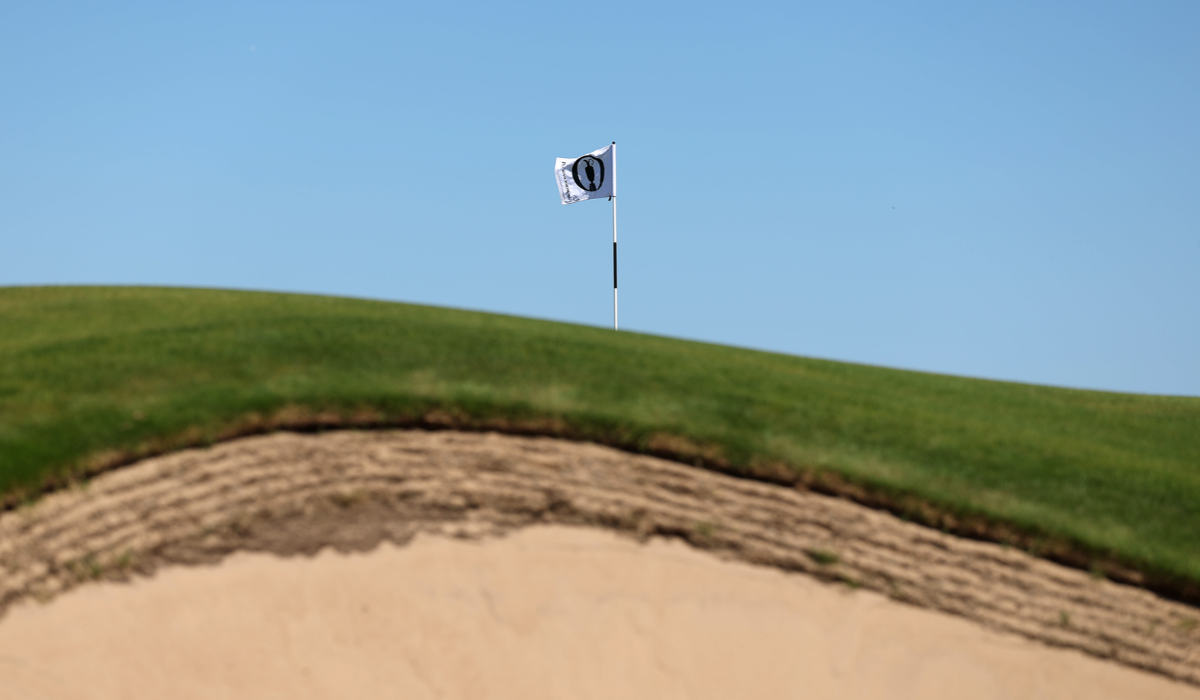
Find the distance to the front, the flag and the back of the green. Then check for anything you need to carry along your chosen line. A flag at 150 yards can sit three paces beyond a bunker or in the middle of a deep, open green. The same number on the rangefinder can call for two very different shots.
Suppose the flag is at 150 yards, the bunker on the flag line takes 145 to carry and the back edge is 170. If your 150-yard club sometimes carries 140, you could take a longer club that still fits comfortably inside 170, or aim away from the bunker towards an open part of the green. If trouble sits directly behind the green, the open side becomes even more valuable.
An analysis of more than six million approach shots recorded by Arccos found that 40% finished short of the green, eight times the share that finished long. That’s a good reason to check your normal carry when there’s trouble across the front. Factor in the lie and wind, especially when the shot needs to clear something in the air.

A hole guide can show you where the slopes are. The first few holes tell you what the ball actually does when it lands on them. Watch whether tee shots release through the fairway, whether approaches stop near their pitch marks and how the ball comes out of the rough. If a well-struck iron lands pin-high and rolls over the back, give the next shot on a similar green more room to release.
Pay attention when the course changes character. A sheltered opening stretch can give way to exposed holes where the wind has a much bigger effect. On a firm links fairway with an open entrance, you may be able to land the ball short and run it onto the green. On a raised green with a bunker across the front, you’ll need enough carry to reach the putting surface and enough room for the ball to stop.

The centre of the green is a useful starting point when you haven’t seen the contours before. Adjust if the green has a steep tier, a fall-off or a narrow section around the flag. A putt from the centre can be awkward if it has to climb a ridge and then race downhill, while a slightly longer putt on the same tier may be easier to judge.
Picture a flag tucked on the right behind a deep bunker. If your irons tend to drift right, a target several yards left gives that miss room to finish on the green. A shot that finishes farther left may still leave a straightforward putt or chip. Look at where your ordinary shots are likely to finish, then choose the target that leaves you the most playable outcomes.

On the practice green, roll a few medium and long putts uphill and downhill. A useful drill is to putt towards the fringe from different distances and try to stop the ball just before it reaches the edge. You’ll get a feel for pace without judging every stroke by whether it goes in. Use your first couple of on-course putts to see how closely the practice surface matches the greens.
As you approach an unfamiliar green, notice where it rises, where it falls away and whether a ridge crosses the line of your putt. On a long putt over a tier, focus on the speed you want the ball to have as it reaches the crest. That’s often easier to picture than trying to judge the entire putt from behind the ball.
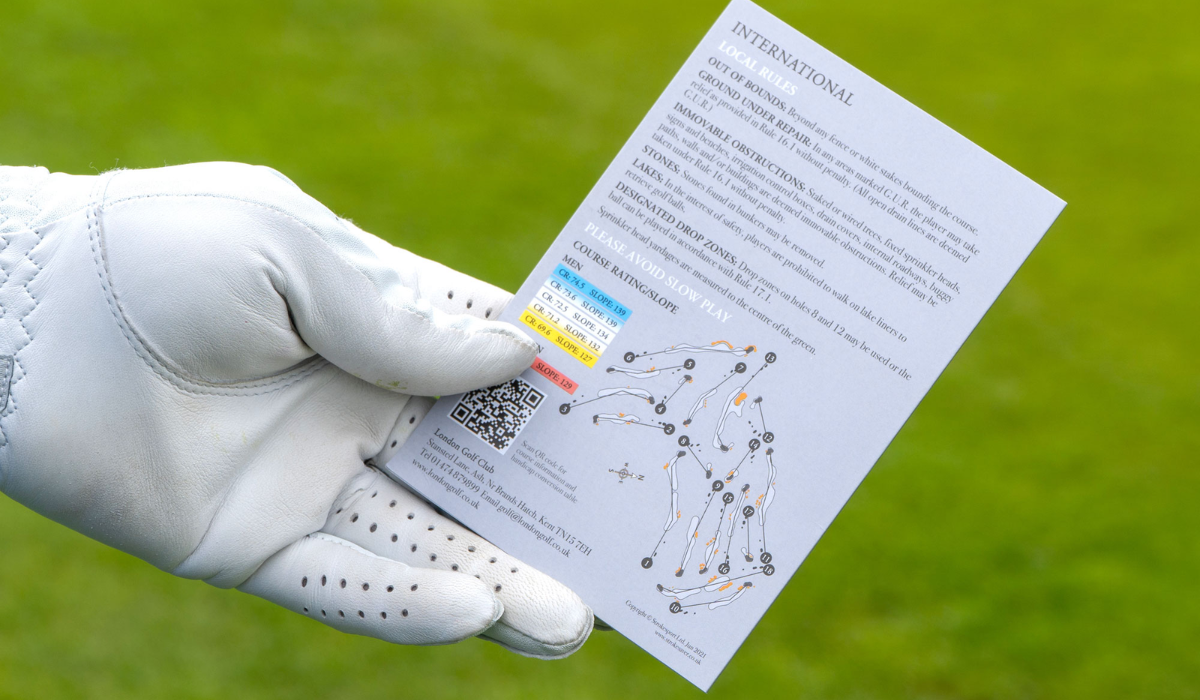
A yardage book or GPS can be particularly helpful on a first visit. In competition, Rule 4.3 generally allows devices to provide distance and direction, while features that measure elevation changes or recommend a club or line based on the ball’s location are prohibited. Check the competition’s Local Rules as well, since the committee can prohibit electronic distance-measuring devices.
Find out how the course marks out of bounds and penalty areas, and whether any holes have a designated dropping zone. Red and yellow penalty areas both offer stroke-and-distance and back-on-the-line relief for one penalty stroke. Red penalty areas also offer lateral relief. If a shot might be lost outside a penalty area or might be out of bounds, you can generally save a walk back by announcing and playing a provisional before going forward to search.
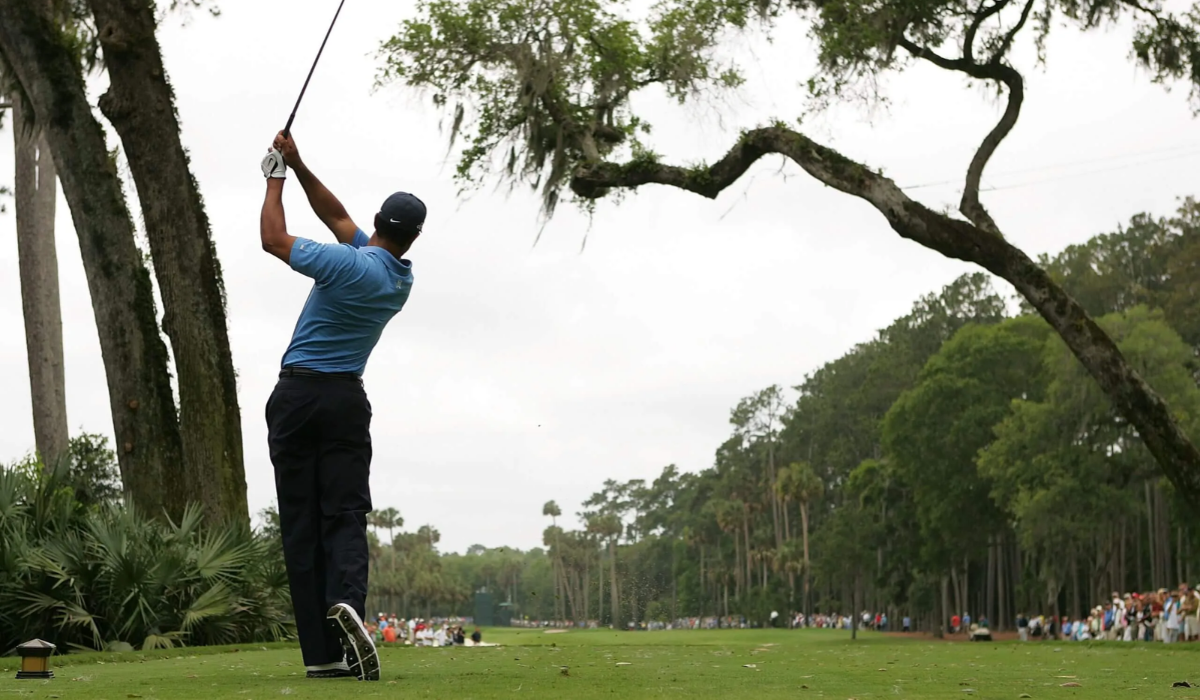
When a drive disappears behind trees or leaves you on a steep downslope, look first for the widest route back into play. Work out what approach that route would leave. On a par 4, a simple pitch back to the fairway followed by a wedge can still give you a putt for par. A low shot through a narrow gap might save a stroke if you pull it off, but only if it has somewhere useful to finish once it clears the trees.
After the round, jot down the details you’d actually use on a return visit. The third tee shot runs farther than it looks. The front bunker on seven needs a full carry. The approach to 14 feeds left. Those are the things a scorecard rarely tells you, and by the eighteenth, you’ll have worked out quite a few of them for yourself.
How Much Does It Really Cost to Own a Home Golf Simulator?
What Happens to Golf Equipment Performance After Five Years?

Course Reviews
Tee Off in Style: Park Hyatt Marrakech
Morocco has long held a quiet fascination for golfers — a land where the scent of orange blossom drifts across the morning air, where the distant silhouette of snow-capped peaks frames every approach shot, and where the ancient rhythms of a medina feel worlds away from the tranquillity of a well-kept fairway. Marrakech, for decades […]

Course Reviews
Golfing on the Edge at Pinnacle Point
Perched on the rugged cliffs of Mossel Bay, Pinnacle Point Estate is a golfer’s paradise that offers an experience unlike any other. With its dramatic ocean views, world-class golf course, and luxurious amenities, this South African gem has cemented its reputation as one of the most spectacular golf destinations in the world. Whether you’re an […]