



Clubs
Andrew Novak WITB 2026: What’s in the Bag at the VidantaWorld Mexico Open?
Explore 33,000+ golf courses in 180 countries.
Follow the latest news and trends in golf.
Connect with like-minded golfers.
Find everything you need for your golf equipment and gear needs.
Travel, golf resorts, lifestyle, gear, tour highlights and technology.
All Square
Suggestions
Clubs
Andrew Novak WITB 2026: What’s in the Bag at the VidantaWorld Mexico Open?
Course Reviews
Rosapenna Hotel & Golf Resort: A Legendary Links Golf Escape on Ireland’s Wild Atlantic Way
Amateur Golf
How Much Does It Really Cost to Own a Home Golf Simulator?
Destinations
The Best Golf Resorts for Couples When Only One Person Plays Golf
Accessories
What Happens to Golf Equipment Performance After Five Years?
Amateur Golf
Golf and Longevity: Why Walking 18 Holes Can Be Part of a Healthy Lifestyle
Amateur Golf
Golf Club Fitting Explained: Is a Custom Fitting Worth It for Amateur Golfers?
Amateur Golf
Your First Golf Holiday: A Beginner’s Guide
Clubs
WITB: Blades Brown’s Winning Equipment at the 2026 World Wide Technology Championship
Course Reviews
Your Next Golf Getaway to Lanzarote: Volcanic Landscapes, Ocean Views and Year-Round Sunshine
Amateur Golf
Understanding Course Rating and Slope: How Difficult Is a Golf Course Really?
Clubs
New Ping G450 Drivers: Four Models, New Technology and a Surprise Mini Driver
Course Reviews
Shoulder-Season Golf: Where to Play for Better Value and Fewer Crowds
Destinations
Your Golf Trip to Australia: A First-Time Guide to the Land Down Under
Course Reviews
Night Golf and Floodlit Courses: Where to Play After Dark
Clubs
Austin Smotherman WITB 2026: What’s in the Bag at the Butterfield Bermuda Championship?
Course Reviews
Golf in Madeira: Cliffs, Clouds and Two Unforgettable Courses
Destinations
Thai Caddie Culture Explained: Tipping, Etiquette and What to Expect
Course Reviews
Best Golf Courses Around Munich: Where Championship Golf Meets Bavarian Beauty
Course Reviews
Marrakech vs Agadir for Golf: Which Moroccan Destination Should You Choose?
Clubs
WITB: Ryan Fox’s Winning Clubs at the 2026 Open Championship
Community
How Modern Golf Courses Conserve Water and Protect Wildlife
PGA Tour
Changes on the PGA Tour from 2028
Course Reviews
Tee Off in Tuscany: Golfing Italy’s Most Picturesque Countryside
Course Reviews
The Best Golf Courses Near Pinehurst That Aren’t Pinehurst No. 2
Destinations
From Vineyard to Fairway: Wine-Infused Golf Trips
Instruction
Links vs Parkland vs Heathland: What’s the Difference?
Course Reviews
Play Golf at Pebble Beach: What to Know Before You Go
Clubs
Chris Gotterup WITB 2026: Clubs Used to Win the John Deere Classic

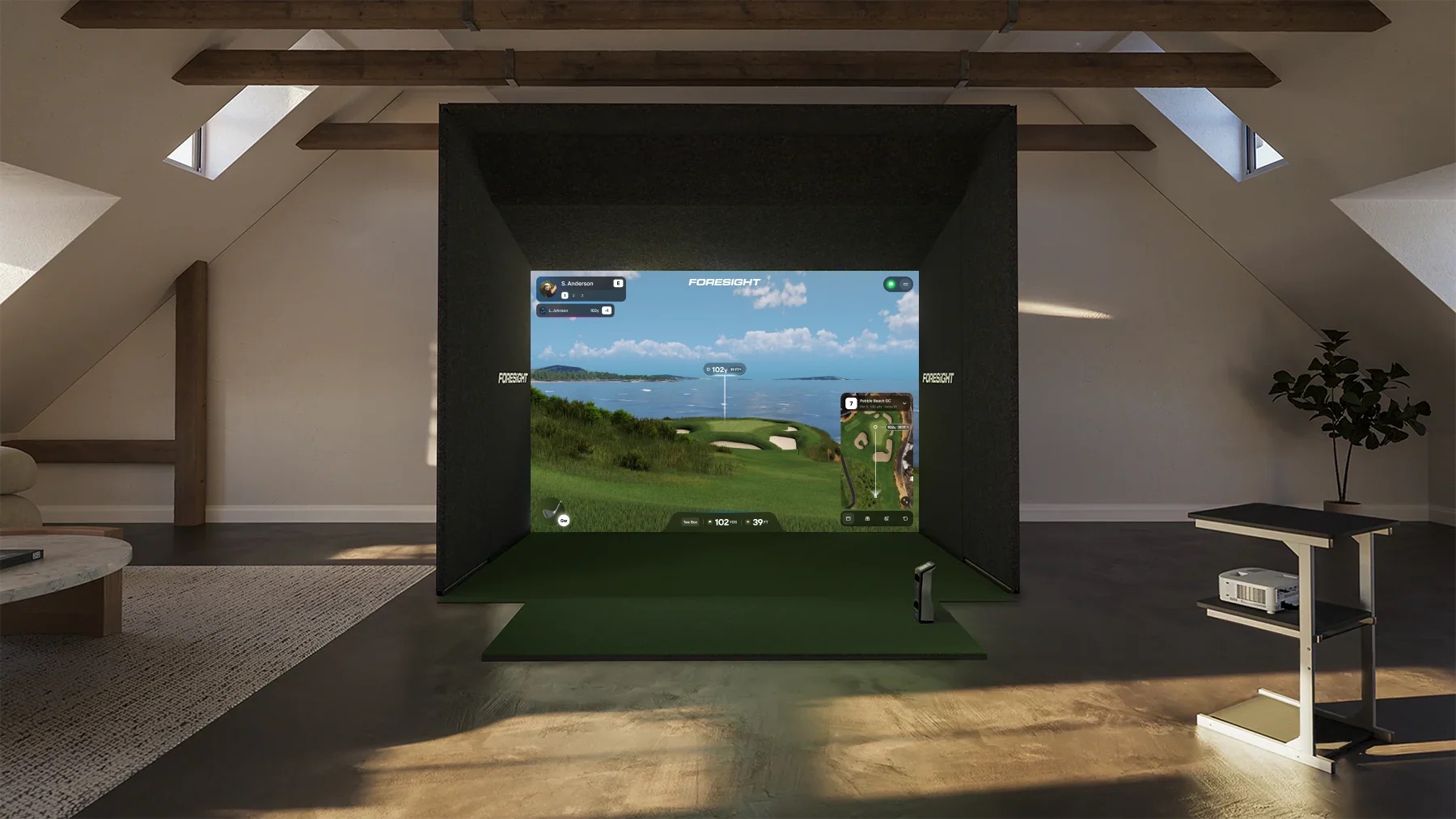
The first price you’ll see when shopping for a home golf simulator is usually the price of the launch monitor. The number that matters is what it costs to hit a real ball indoors, see where it would have landed and do it again next winter without an unexpected software bill.
As a rough planning budget, €1,100–€1,800 can get you a practice setup with a net if you already own a compatible phone or tablet. A projected simulator in a room that’s ready to use can land around €5,000–€7,300, while a premium installation can easily exceed €13,600.
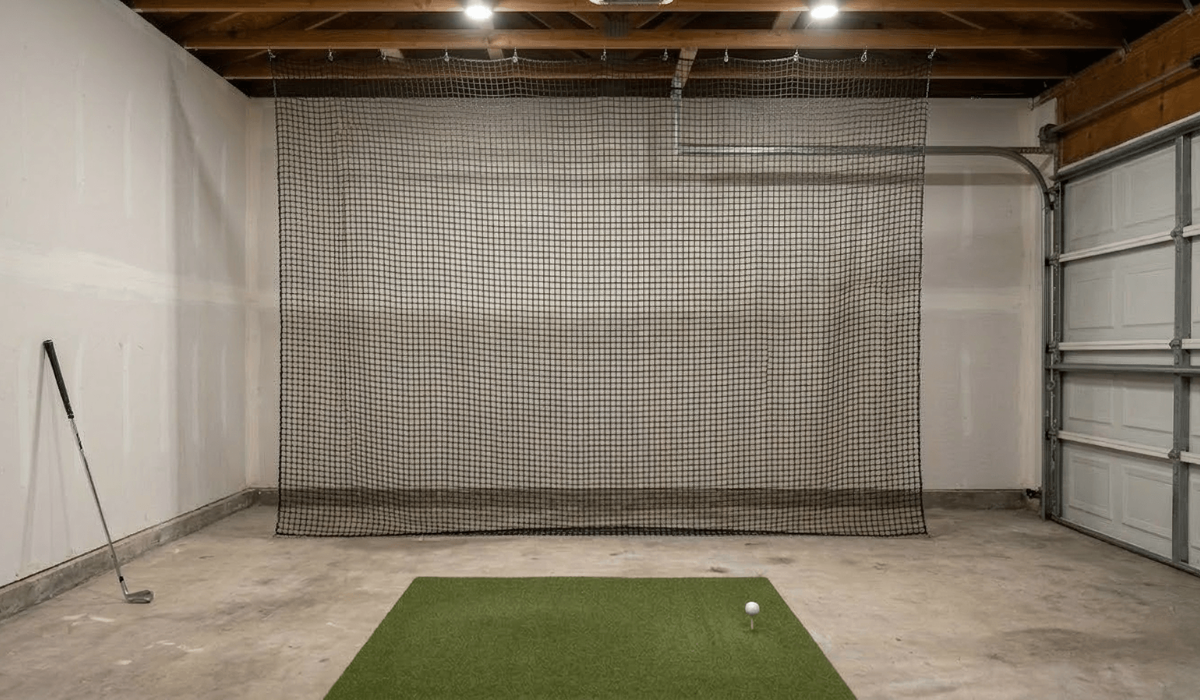
If your main goal is to work on carry distances or keep your swing going through winter, a portable launch monitor, a sturdy net and a decent hitting mat can cover the essentials. You can read shot data on a phone or tablet and add virtual rounds if your monitor supports them. Garmin, for example, launched a standalone Home Tee Hero app for Approach R10 users in 2026, with upgraded course graphics and an on-course practice mode.
Room depth is the catch with some lower-cost radar units. Garmin recommends placing the R10 six to eight feet behind the ball and leaving at least eight feet from the ball to the net or screen. That’s 14–16 feet from the monitor to the screen before allowing for any space the net or screen needs behind it. If your garage is short, a launch monitor that reads shots from beside the ball may make better use of the room.
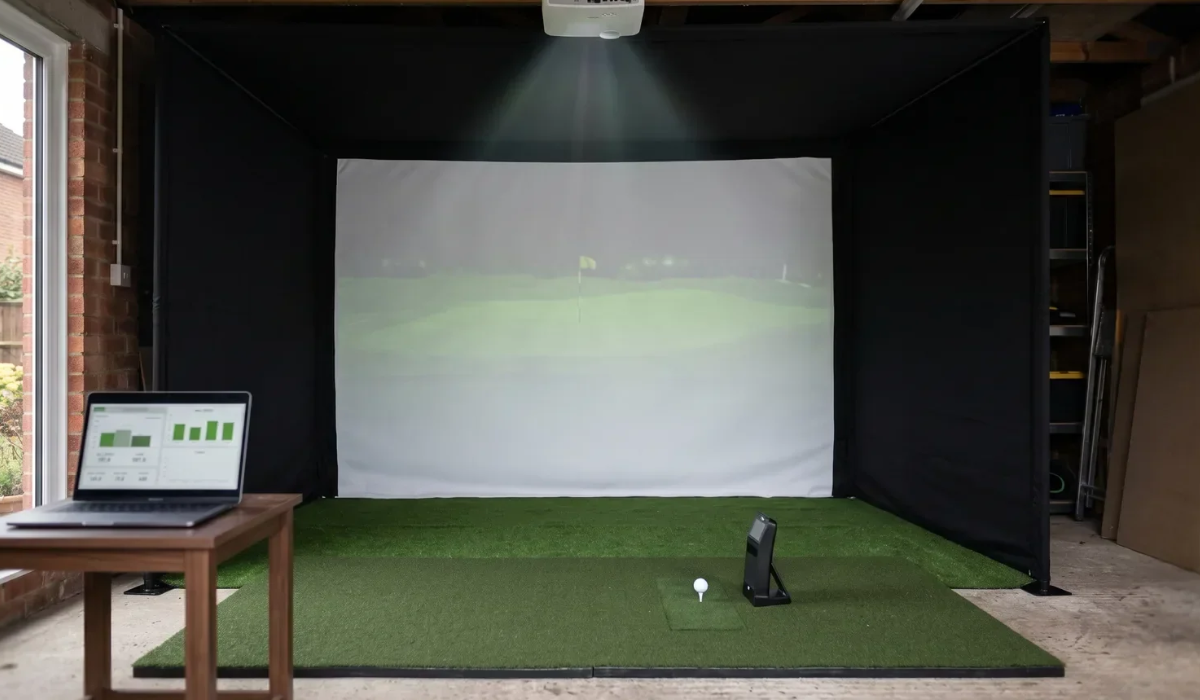
A projected bay gives you a full-size view of the hole, but it also adds an impact screen, an enclosure, a projector and a way to mount it. Check the bundle before pricing each part separately. The SkyTrak ST MAX Standard Studio Package, for example, has a regular US price equivalent to approximately €5,000 and includes a short-throw projector and a 5-by-5-foot hitting mat. The ST MAX monitor alone is equivalent to approximately €2,725 before promotions. Check whether you already own a device that can run the software you want, since a dedicated computer can push the project beyond the bundle price.
At the premium end, Trackman lists its ceiling-mounted iO from the equivalent of approximately €12,730. When comparing a starting price with an installer’s quote, look at the scope of each. A finished room can involve wall and ceiling protection, electrical work, projector mounting and flooring. If you regularly host both right- and left-handed golfers, check whether both can swing comfortably from the same hitting position before committing to the layout.
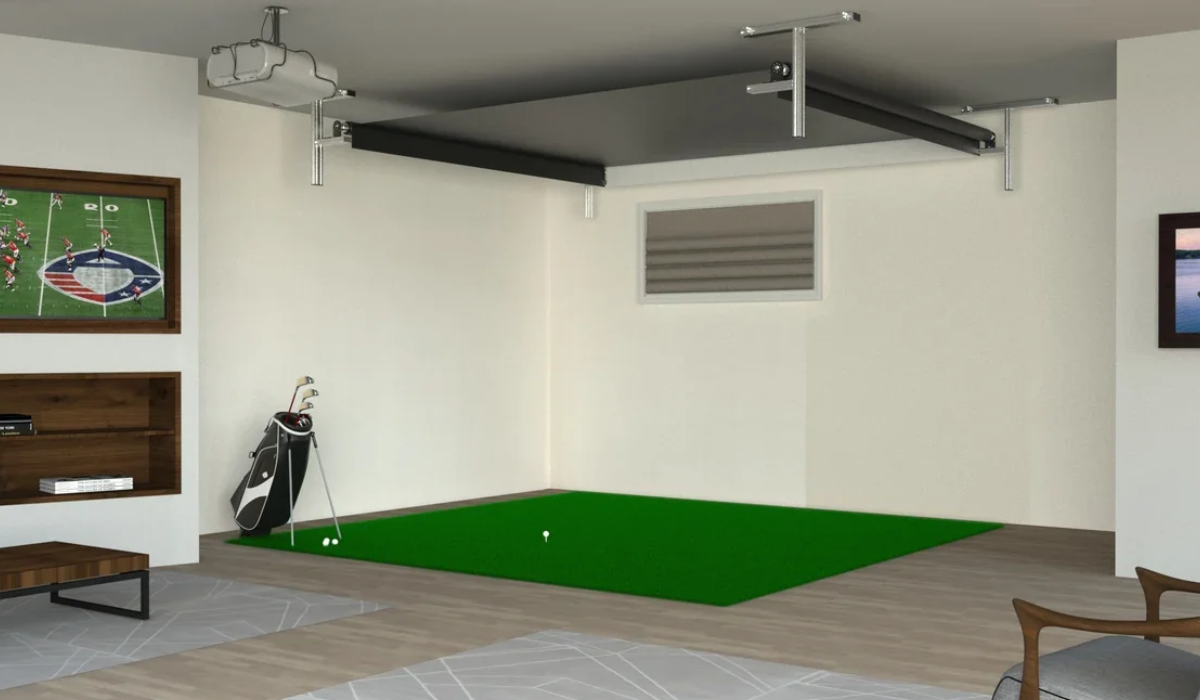
A simulator can fit on paper and still feel cramped with a driver in hand. Measure from the top of the hitting mat to the lowest obstruction, including lights, beams and garage-door tracks. Then check where the projector can go without casting your shadow across the screen. A room that already has enough clearance, usable outlets and a good mounting position can save a surprising amount of work.
Think about which surfaces will take the most wear. If you hit hundreds of wedges from the same spot, a mat with a replaceable hitting strip lets you change the worn section on its own. An impact screen also deserves a line in the long-term budget, especially if several people use the simulator. And if the bay sits below a bedroom or shares a wall with a neighbour, consider how the sound of repeated ball strikes will affect when you can practise.
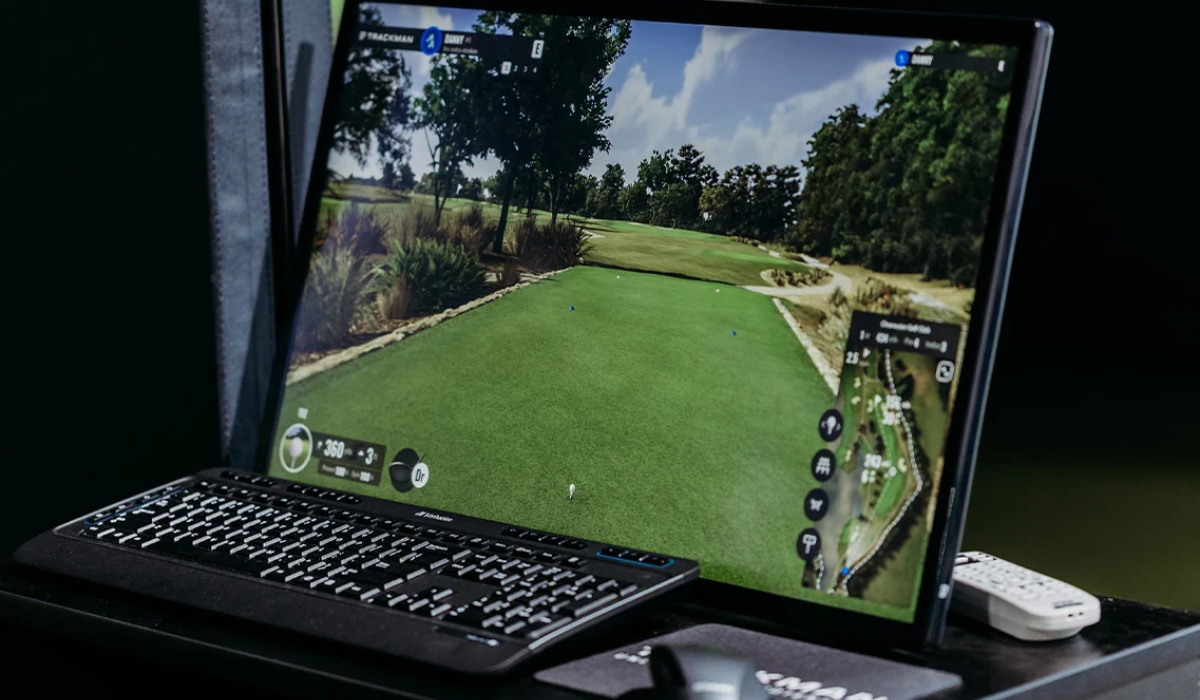
Check what you can do with the launch monitor out of the box, then price the features you’ll actually use. GSPro costs approximately €227 a year before applicable taxes when converted from its US price. SkyTrak’s Course Play memberships translate to approximately €273 a year for Core and €546 for Elite. These are examples of different software options. The subscription you need depends on your monitor, the courses you want to play and whether your chosen software requires a separate manufacturer membership.
The arithmetic is easy to overlook at checkout. A €5,000 setup with a €273 annual membership costs €6,365 over five years if the subscription price stays the same. That’s before delivery, installation, electricity or replacement parts. If a package includes the first year of software, check the renewal price while you’re comparing offers.
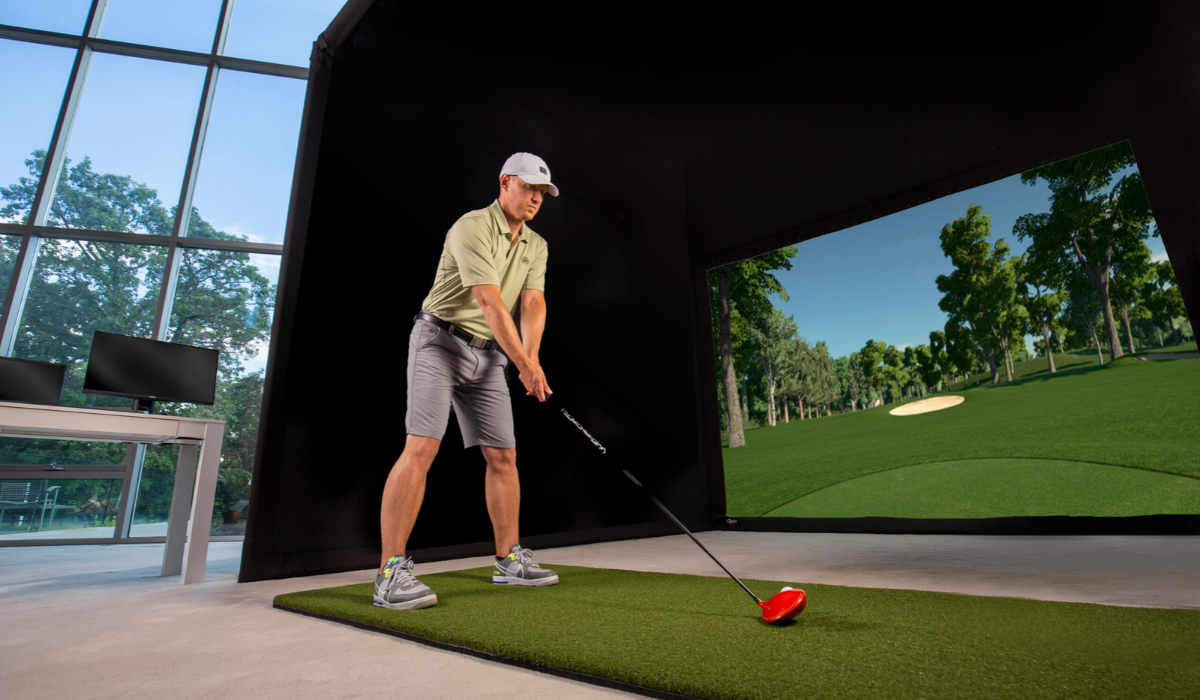
Suppose your local simulator bay charges €41 an hour and you’d otherwise book 50 hours a year. That’s €2,050 a year in rentals. Using the €5,000 home setup and €273 annual membership above, the purchase would take just under three years to match the rental cost, assuming the same usage and excluding other ownership expenses. At 20 hours a year, it would take a little over nine years on the same assumptions.
Think about what you’d actually do with the room on a Tuesday evening. If you’d hit 30 balls after work, a good mat, a net and reliable carry numbers may be all the simulator you need. If you picture friends coming over for a full round every week, the screen, projector and course library are the parts you’ll get the most out of.
What Happens to Golf Equipment Performance After Five Years?
Golf and Longevity: Why Walking 18 Holes Can Be Part of a Healthy Lifestyle

Accessories
TaylorMade Special Golf Bags for the Majors
TaylorMade has released its new special-edition golf bag for The Open, following on from their previous designs for the Masters, US PGA and US Open championships. They could make a great investment. The special-edition 149th “British Open Golf Bag” was used by TaylorMade staffers Rory McIlroy, Dustin Johnson, Collin Morikawa, Tommy Fleetwood, Robert MacIntyre and […]

Clubs
Best new putters 2021 part 2
Let’s take a look at the new putter ranges from Ping, TaylorMade and Odyssey for 2021. Designed to be more forgiving and easier to aim, they could take your putting game to a new level. Ping 2021 Range Ping’s new putter line-up for the 2021 has 11 models, all with a focus on maximum forgiveness. […]