


Course Reviews
Best Golf Courses Around Rome: Where Ancient History Meets Modern Golf
Explore 33,000+ golf courses in 180 countries.
Follow the latest news and trends in golf.
Connect with like-minded golfers.
Find everything you need for your golf equipment and gear needs.
Travel, golf resorts, lifestyle, gear, tour highlights and technology.
All Square
Suggestions
Course Reviews
Best Golf Courses Around Rome: Where Ancient History Meets Modern Golf
Instruction
Links vs Parkland vs Heathland: What’s the Difference?
Clubs
The Best Irons on the Market in 2026
Clubs
Austin Smotherman WITB: The Clubs Behind His 2026 Bank of Utah Championship Win
Destinations
Barrière Golf Properties: French Golf Escapes Where the Resort Is Part of the Experience
Destinations
Conrad Algarve Renovations: A New Chapter of Luxury in Quinta do Lago
Gear
Garmin Golf Watches Guide: Which Garmin Watch Is Right for Your Game?
PGA Tour
Presidents Cup 2026 Results & Winners: Team USA Completes Historic Comeback
Course Reviews
Cullinan Golf Links Resort, Belek: Where Golf Meets the Mediterranean
Course Reviews
New Opening: Limassol Greens — Cyprus’ New Golf Destination
PGA Tour
Presidents Cup 2026 Preview: Everything to Know Before Medinah
Clubs
Jacob Bridgeman WITB: The Clubs Behind His 2026 Biltmore Championship Victory
Course Reviews
Play Golf at Pebble Beach: What to Know Before You Go
Professional Golf
Solheim Cup Results & Winners 2026: Europe Reclaims the Trophy
Clubs
This Year’s Best Drivers on the Market: A 2026 Buyer’s Guide
Course Reviews
Fancourt: The Garden Route Estate Where South African Golf Grew Up
Course Reviews
Best Golf Courses Around Madrid
Clubs
TaylorMade Spider ZT Putter Review: What It Is, How It Performs, and Whether It’s Worth the Upgrade
Course Reviews
Your Golf Trip to Tunisia: Courses, Costs, and What to Actually Expect
Clubs
WITB: Ryan Fox’s Winning Clubs at the 2026 Open Championship
Community
How Modern Golf Courses Conserve Water and Protect Wildlife
PGA Tour
Changes on the PGA Tour from 2028
Course Reviews
Tee Off in Tuscany: Golfing Italy’s Most Picturesque Countryside
Course Reviews
The Best Golf Courses Near Pinehurst That Aren’t Pinehurst No. 2
Destinations
From Tee to Table: Chef-Led Cooking Classes at Golf Resorts
Course Reviews
Minthis Resort: Cyprus Golf Escape
LPGA
Solheim Cup 2026 Preview & FAQ: Everything to Know Before Bernardus
Course Reviews
Le Golf National Unveils Its New Identity: Inside the Albatros Course’s Long-Awaited Reopening
Clubs
Matt Fitzpatrick’s Precision Triumph: Winning WITB at the 2026 Valspar Championship
Clubs
Nacho Elvira’s Dubai Breakthrough: WITB and a Moment to Remember

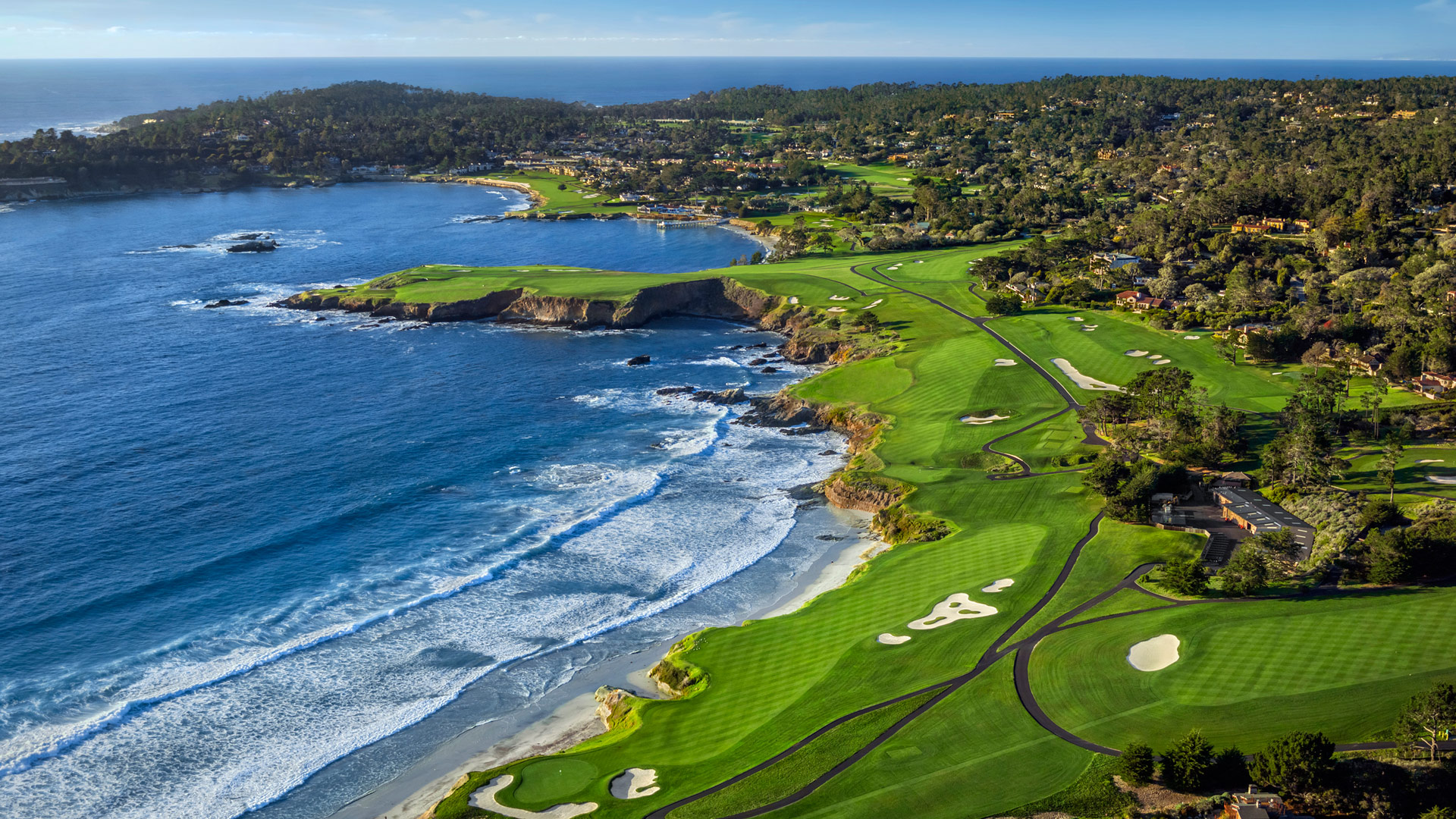
Few golf courses have the ability to make a golfer stop thinking about the scorecard and simply look around. Pebble Beach Golf Links is one of them. Set above the Pacific Ocean on California’s Monterey Peninsula, the course combines dramatic coastal holes, historic championship golf and some of the most recognisable views in the game.
The important detail for visiting golfers is that Pebble Beach is not a private club. It is open to the public, meaning a round here is genuinely possible for an amateur golfer. The challenge is planning it: tee-time rules, resort requirements, pricing and the popularity of the course mean that a Pebble Beach round needs more preparation than an ordinary golf holiday.
Pebble Beach Golf Links is unusual because its reputation does not depend solely on its tournament history. The course is spectacular even when there is no championship taking place.
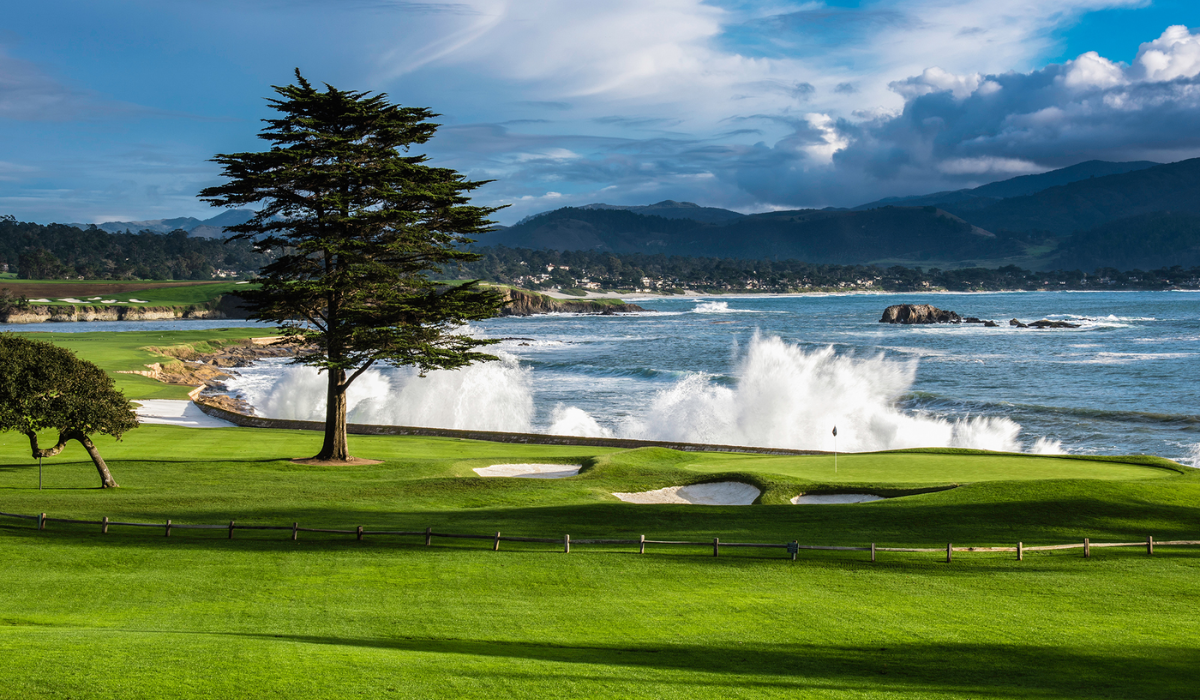
The layout follows the coastline of the Monterey Peninsula, with several holes playing directly beside the Pacific. The most dramatic stretch begins around the 4th hole and continues through the famous oceanfront holes, creating a round in which the scenery is constantly changing.
Pebble Beach has also been rated No. 1 among America’s public golf courses by Golf Digest since the rankings began in 2003, giving the course a particularly important distinction: you do not need to belong to an exclusive private club to experience one of America’s most famous layouts.
For golf travellers, that combination of accessibility and championship pedigree is a major part of the appeal.
Pebble Beach Golf Links is an 18-hole, par-72 course measuring 6,828 yards from the back tees. Its current course rating is 75.1, with a 145 slope rating, so despite the relatively modest yardage by modern championship standards, it is far from an easy course.
The original course was designed by Jack Neville and Douglas Grant and opened in 1919. The layout has subsequently been influenced by several important architects and golfers, including William Herbert Fowler, Robert Hunter, H. Chandler Egan, Alister MacKenzie and Jack Nicklaus.
That history is particularly interesting because Pebble Beach was not originally created as a modern championship venue. Its coastal setting largely dictated the routing. As Jack Neville later explained, the designers had the natural landscape in front of them and needed relatively little clearing to create the course.
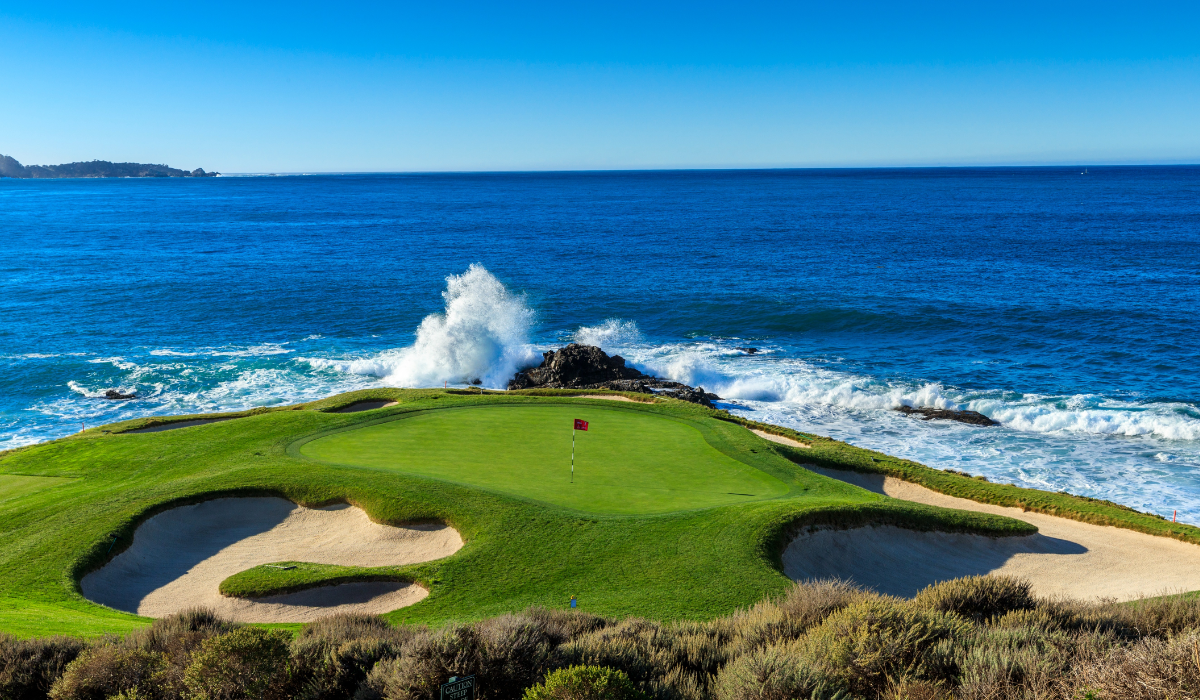
The course’s identity comes from a handful of holes that have become part of golf’s visual vocabulary.
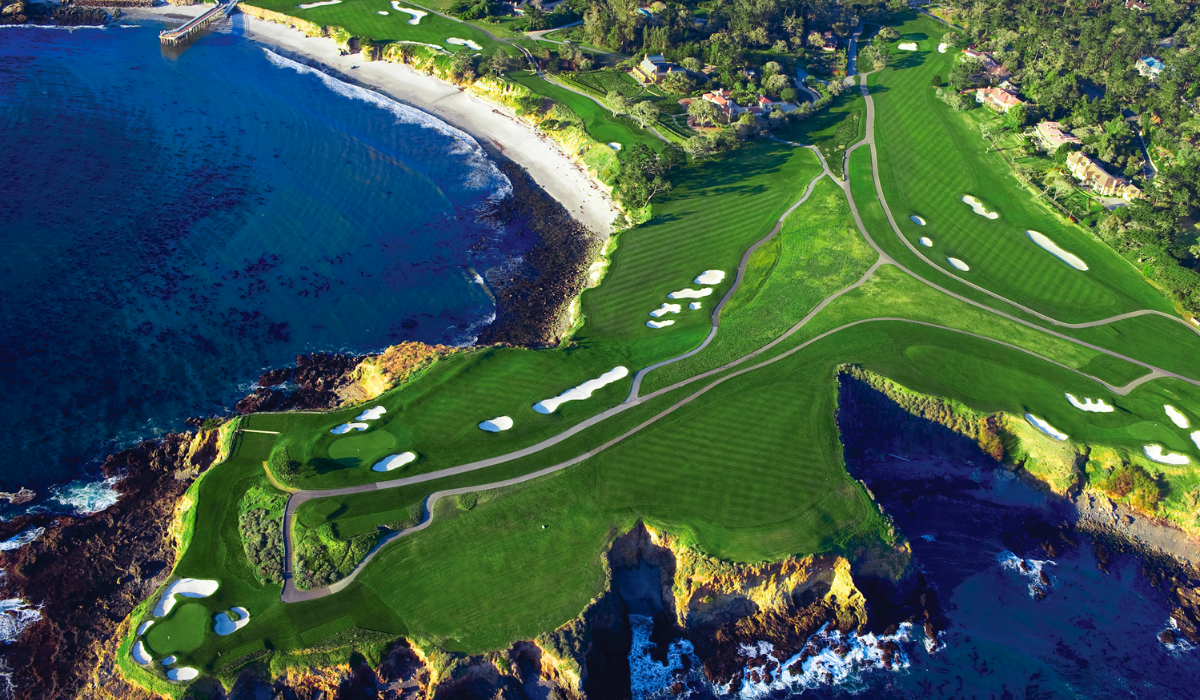
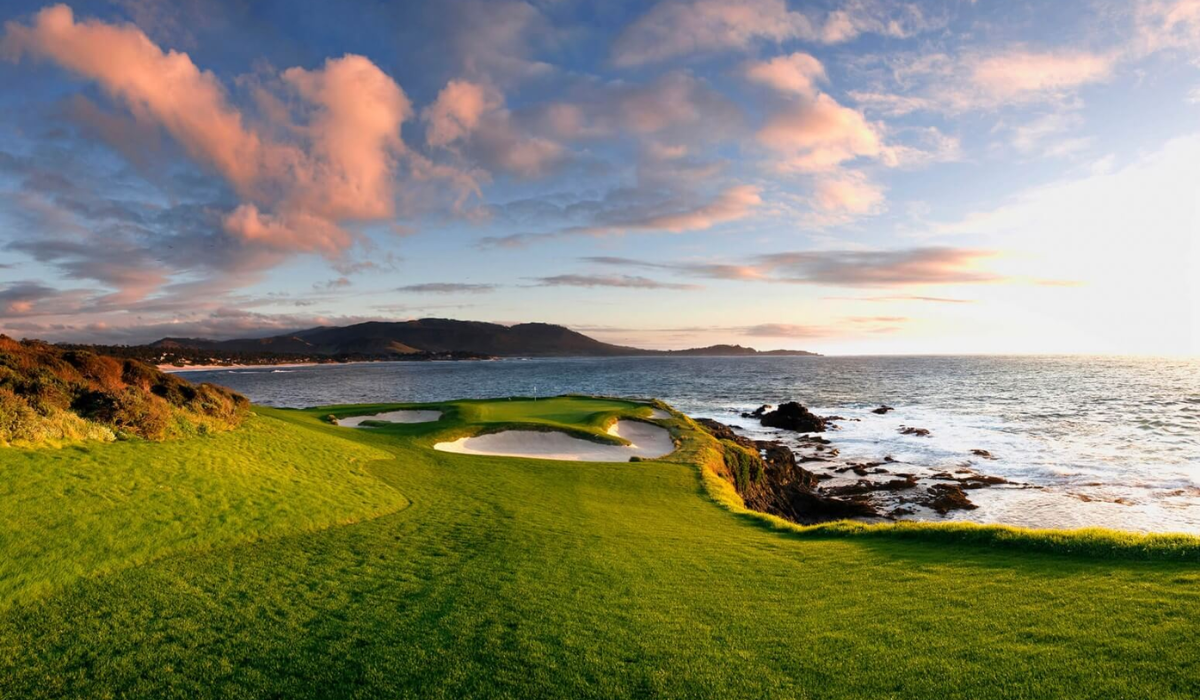
The 7th hole, a short par 3, is perhaps the most photographed. It measures just 106 yards from the regular championship-style yardage and plays toward a small green surrounded by the Pacific. Its apparent simplicity is deceptive: wind and the exposed location can completely change the character of the shot.
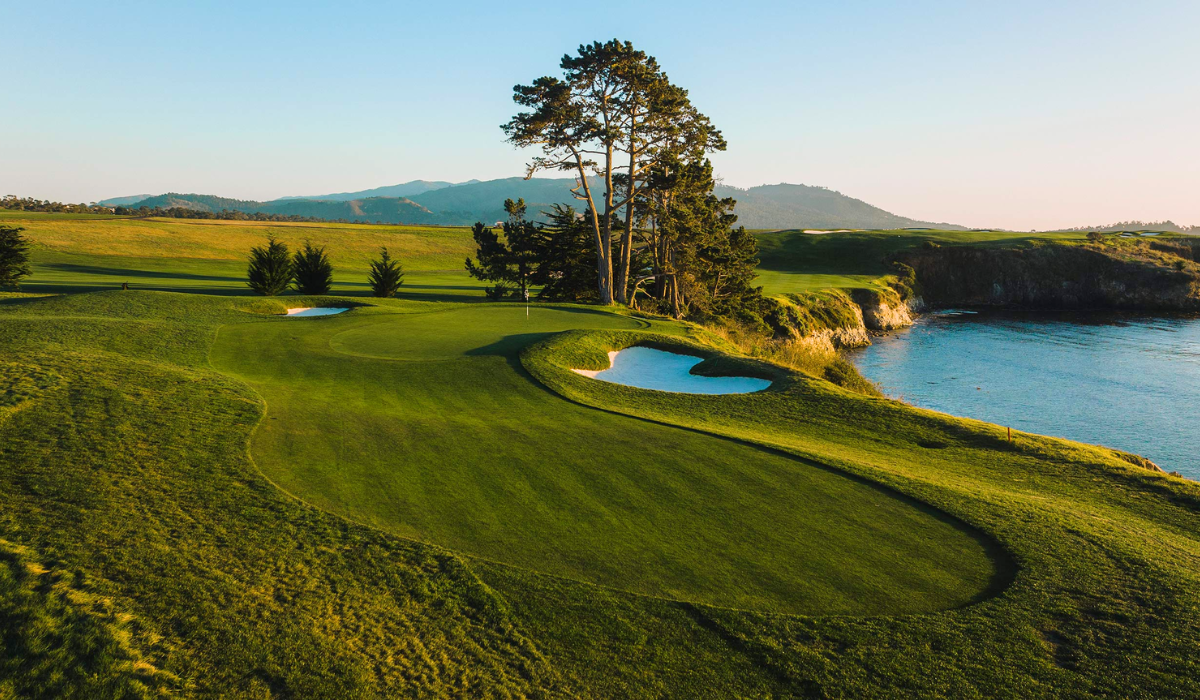
The 5th hole is another unusual piece of Pebble Beach history. The modern par 3 was designed by Jack Nicklaus and opened in 1998 after Pebble Beach Company acquired a parcel of oceanfront land that had long been targeted for the course. The green sits dramatically above Stillwater Cove.
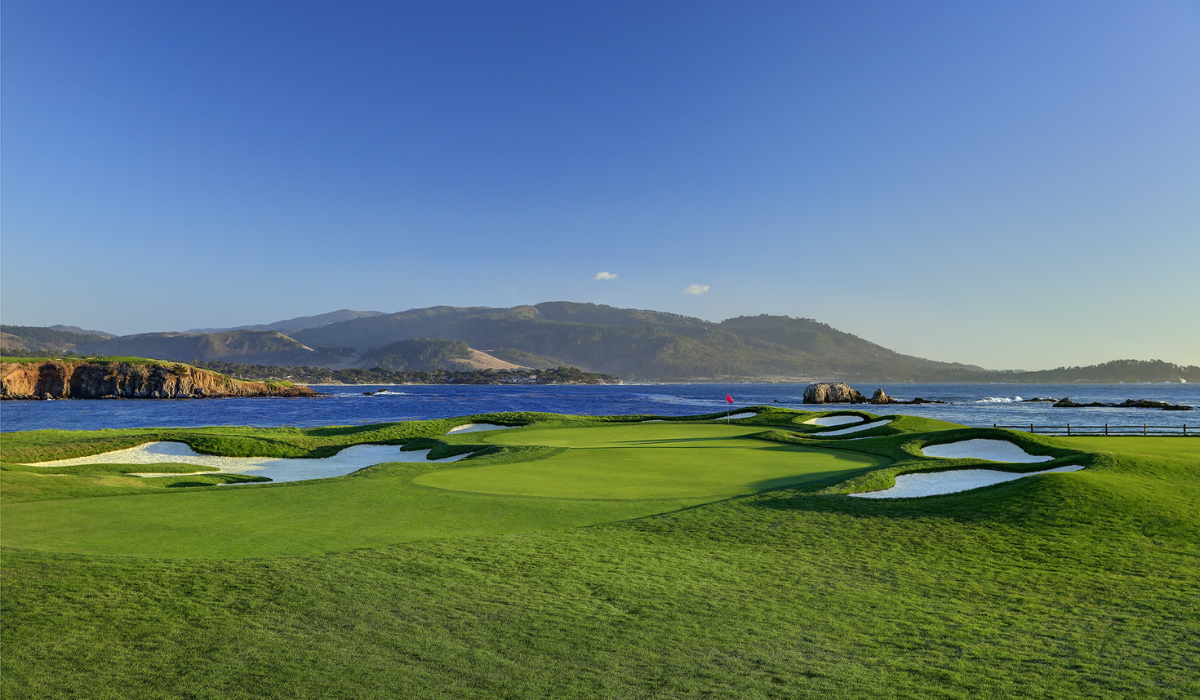
Then there is the 17th, whose hourglass-shaped green is one of the course’s most recognisable features. The hole can effectively change length depending on the location of the pin, making club selection particularly important.
But the hole most golfers are waiting for is the 18th.
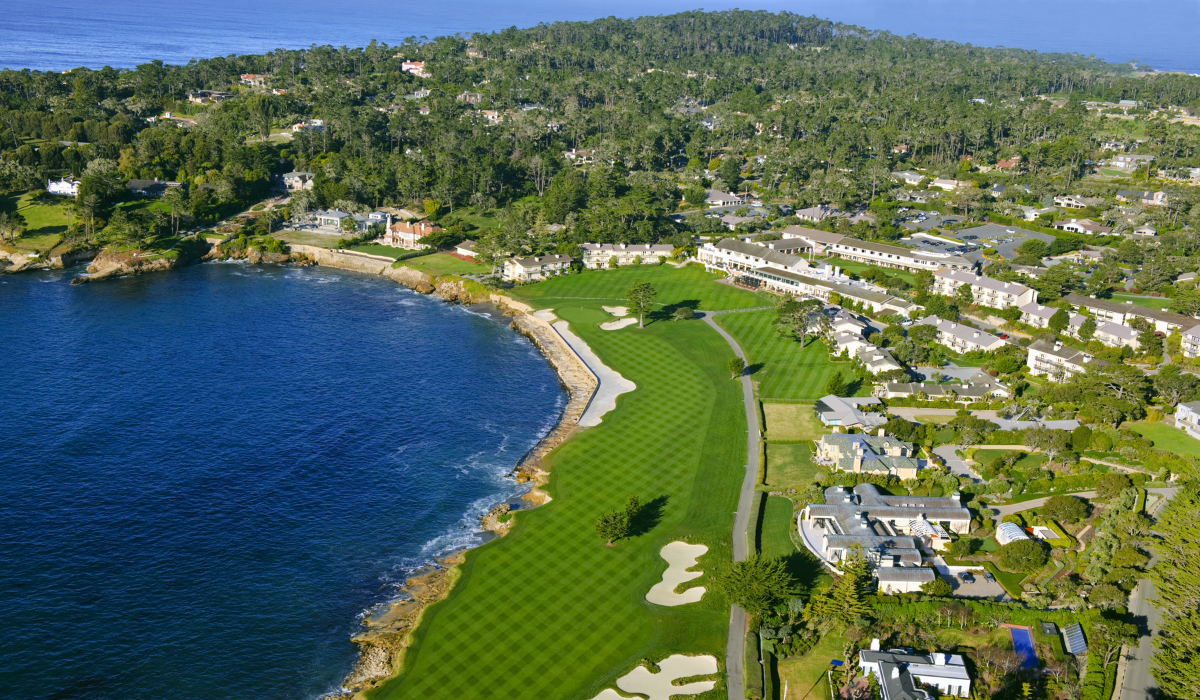
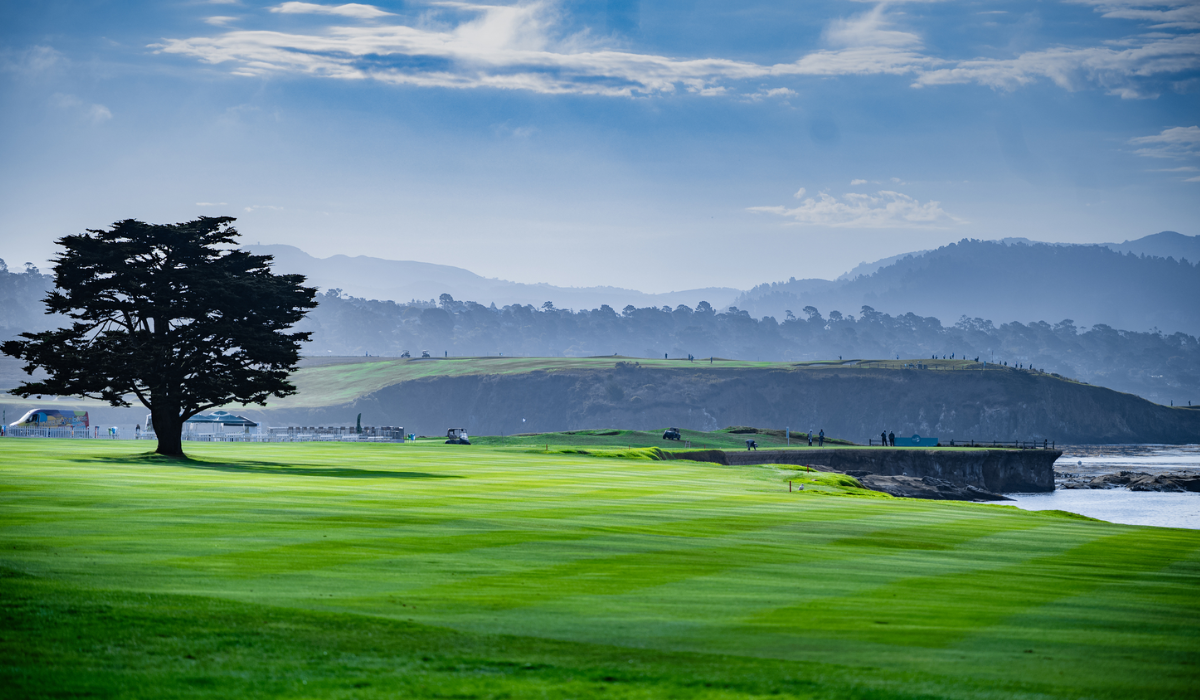
The 18th at Pebble Beach is one of golf’s great finishing holes.
It is a 541-yard par 5 that runs alongside the Pacific, with the ocean visible from much of the hole. The fairway presents a strategic decision immediately from the tee: an aggressive drive can take on the left side and potentially set up a chance to reach the green in two, while a safer line to the right allows the golfer to lay up and attack the green with a wedge.
The hole has produced some of Pebble Beach’s most memorable championship moments. In 2000, Tiger Woods finished his record-breaking U.S. Open victory here; in 2019, Gary Woodland closed his U.S. Open victory with a birdie putt on the 18th.
The 18th is therefore more than a beautiful finishing hole. It is a piece of golf history that visitors can actually play.
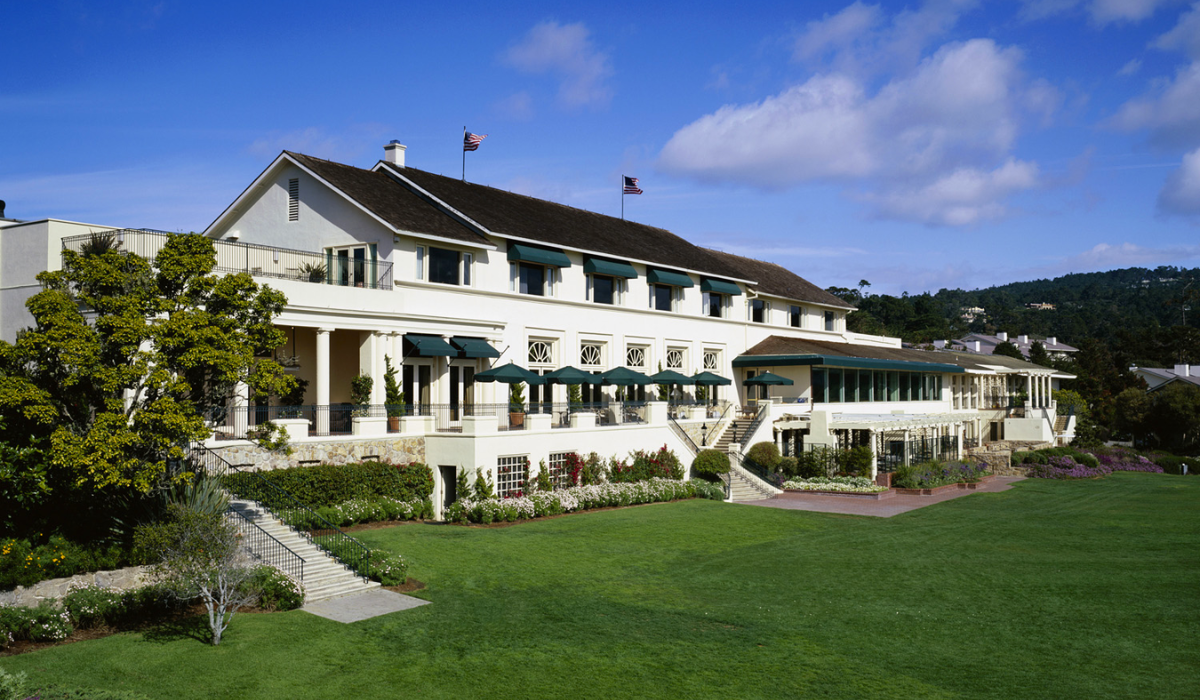
Yes. This is one of the most important things to know about Pebble Beach Golf Links: it is a public golf course. You do not need to be a member of a private club to play it. However, access depends on how you book.
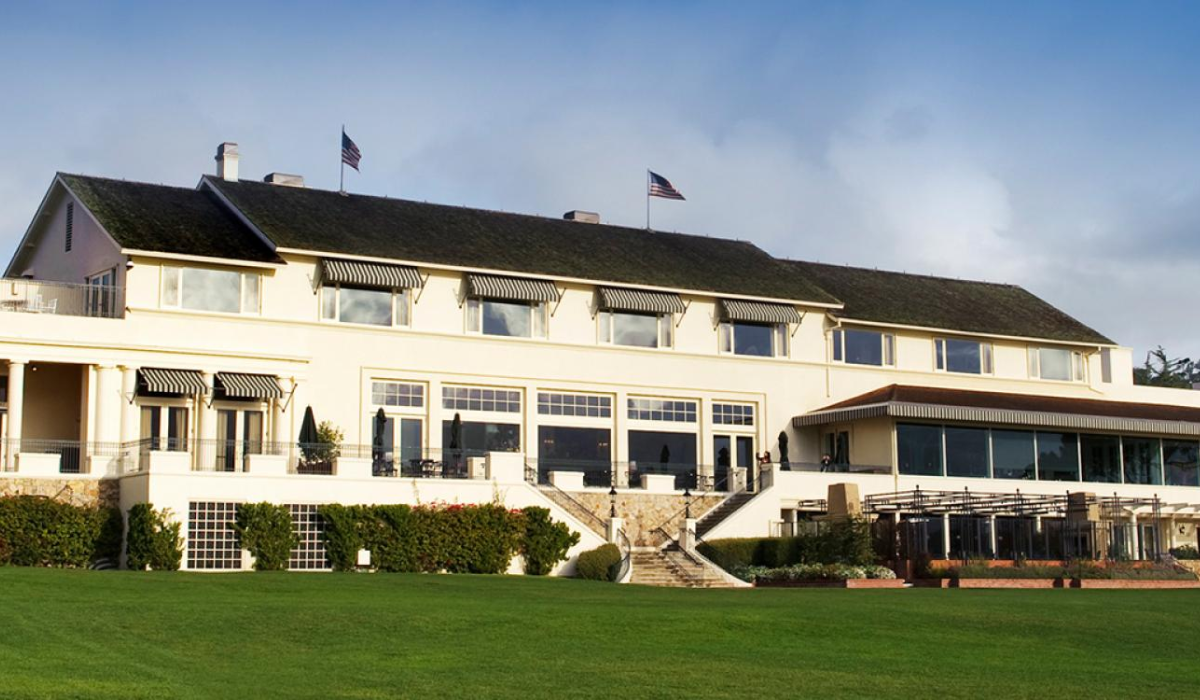
Guests staying at The Lodge at Pebble Beach or The Inn at Spanish Bay can request Pebble Beach tee times when booking their accommodation, with resort guests able to reserve golf up to 18 months ahead, subject to availability and the applicable minimum-stay requirements.
Non-resort guests have a much smaller booking window: Pebble Beach Golf Links can be booked one day in advance.
For most international golf travellers, staying at the resort and arranging the round as part of the accommodation booking is therefore the more straightforward way to plan the experience.
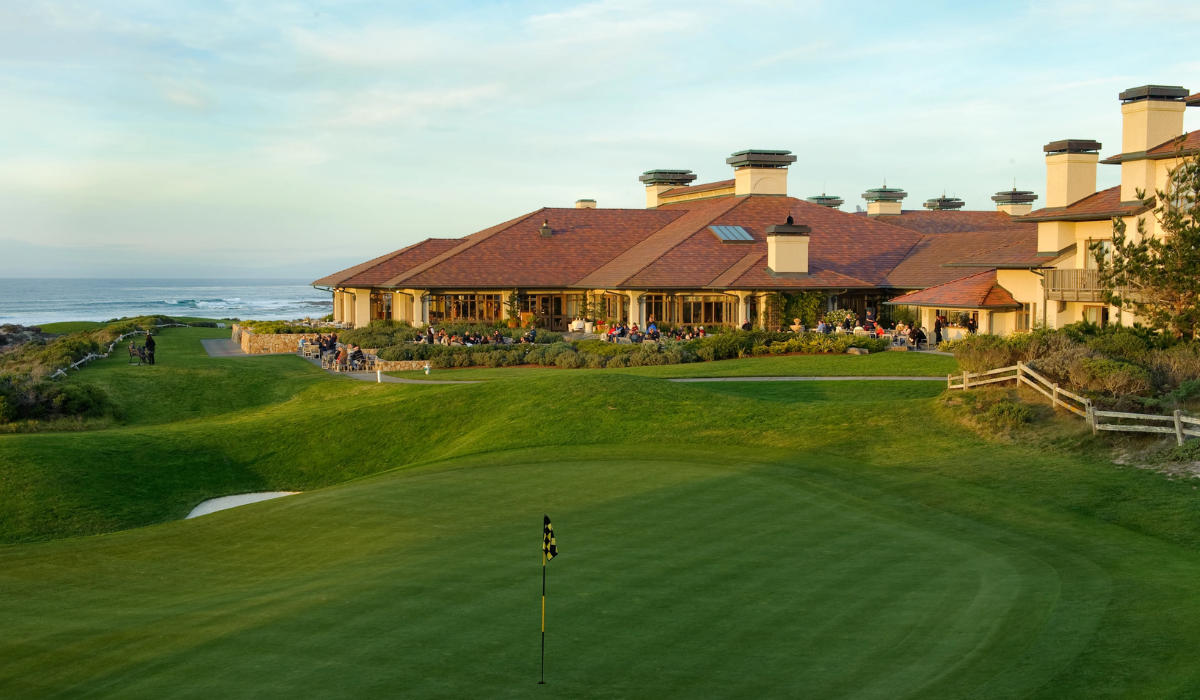
Pebble Beach Resorts is much more than one course.
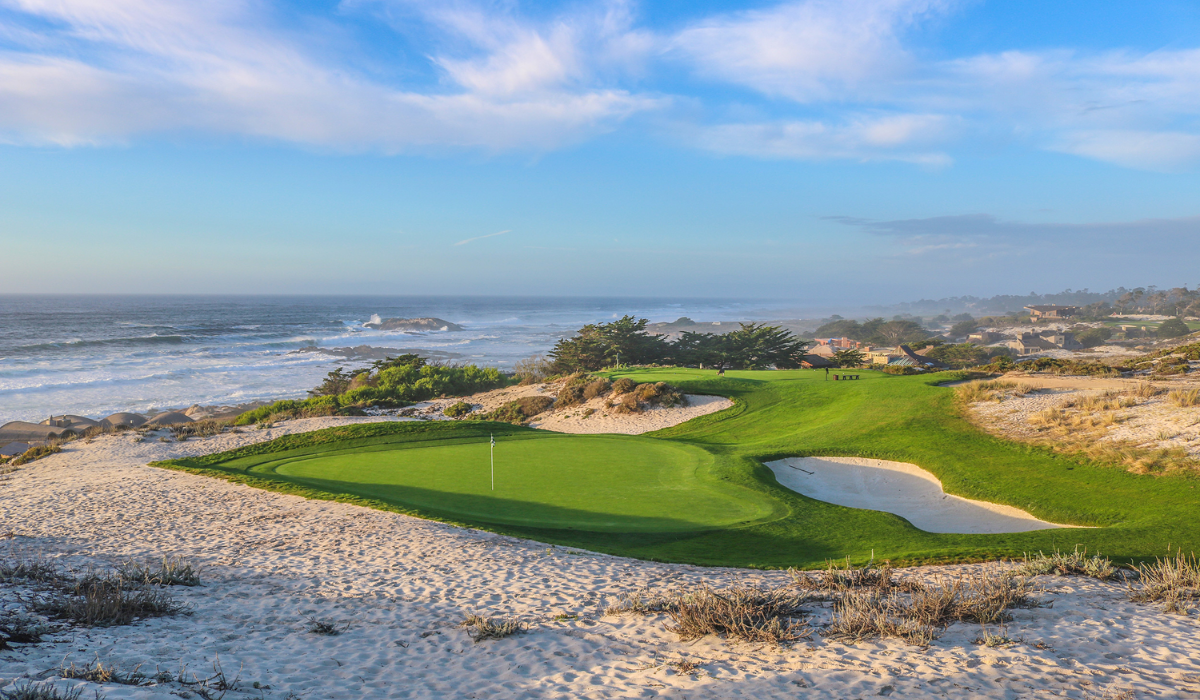
Spyglass Hill Golf Course is another major attraction. The 18-hole, par-72 layout measures 6,960 yards and has a 75.1 rating and 145 slope from the back tees. Its character is different from Pebble Beach, with pine forest, sand dunes and more inland-feeling holes complementing its coastal sections.
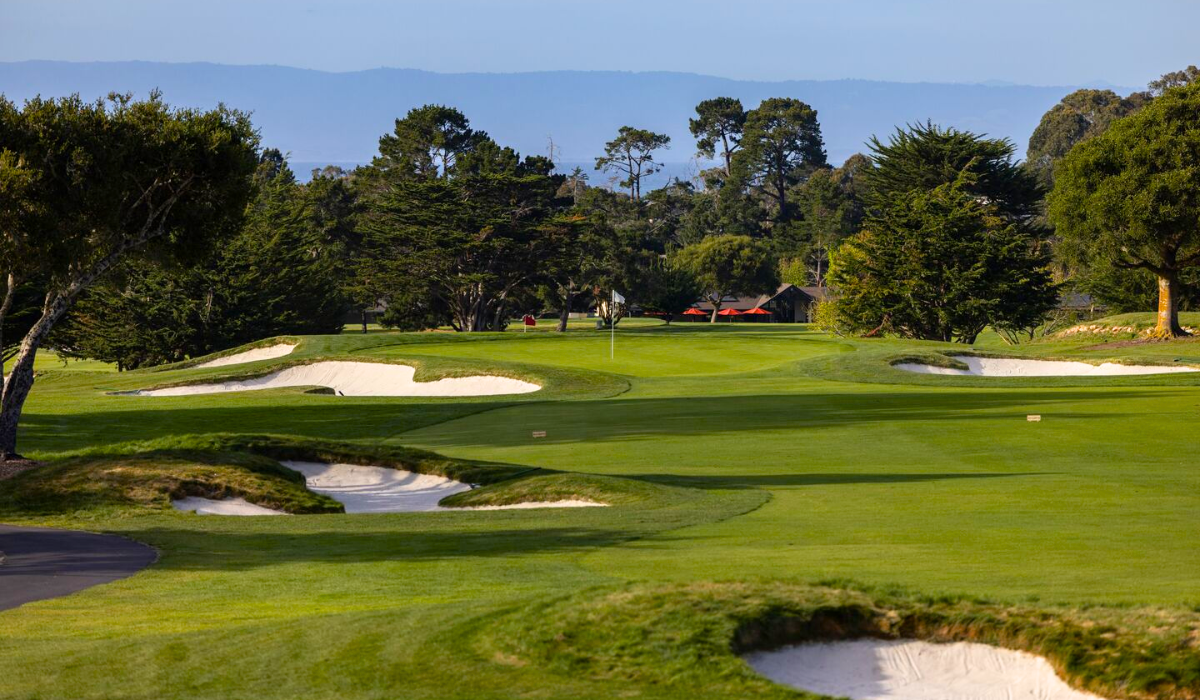
Del Monte Golf Course offers another contrast. Dating back to 1897, it is described by Pebble Beach Resorts as the oldest golf course in continuous operation west of the Mississippi. It currently measures 6,356 yards from the back tees.
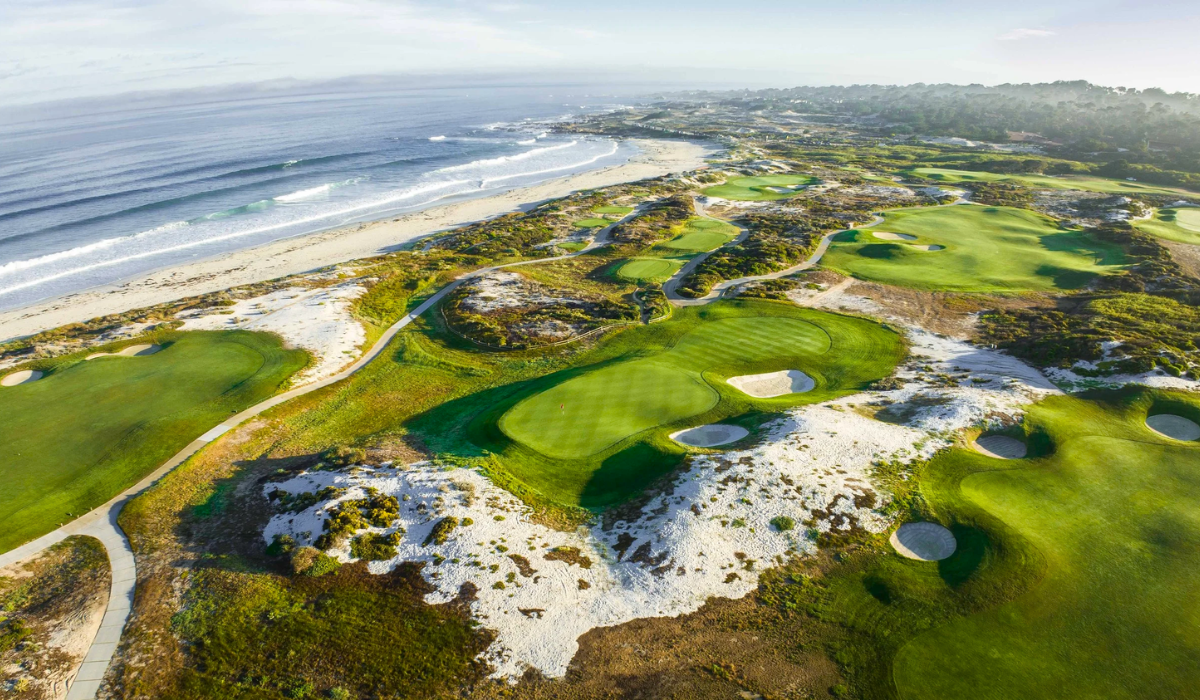
The Links at Spanish Bay would normally be another obvious addition, but there is an important current update for 2026: the course is closed while Gil Hanse and his team undertake a comprehensive renovation.
For a multi-day golf trip, Pebble Beach and Spyglass Hill are therefore particularly relevant choices while Spanish Bay is unavailable.
Pebble Beach can be played throughout the year, but the weather is an important part of the experience.
The Monterey Peninsula has a cool coastal climate, and conditions can change during the day. Pebble Beach Resorts recommends dressing in layers and carrying a water-resistant wind shirt or jacket. The resort also notes that rainfall is generally low from May through September.
For golfers coming from Europe, this is worth remembering: a sunny California golf trip does not necessarily mean hot weather on the course.
The Pacific Ocean can bring wind and cool temperatures, particularly around the exposed holes. A golfer who arrives expecting a warm inland California day can be surprised by the conditions on the coastline.
A golf trip here works particularly well because the surrounding destination adds value beyond the round.
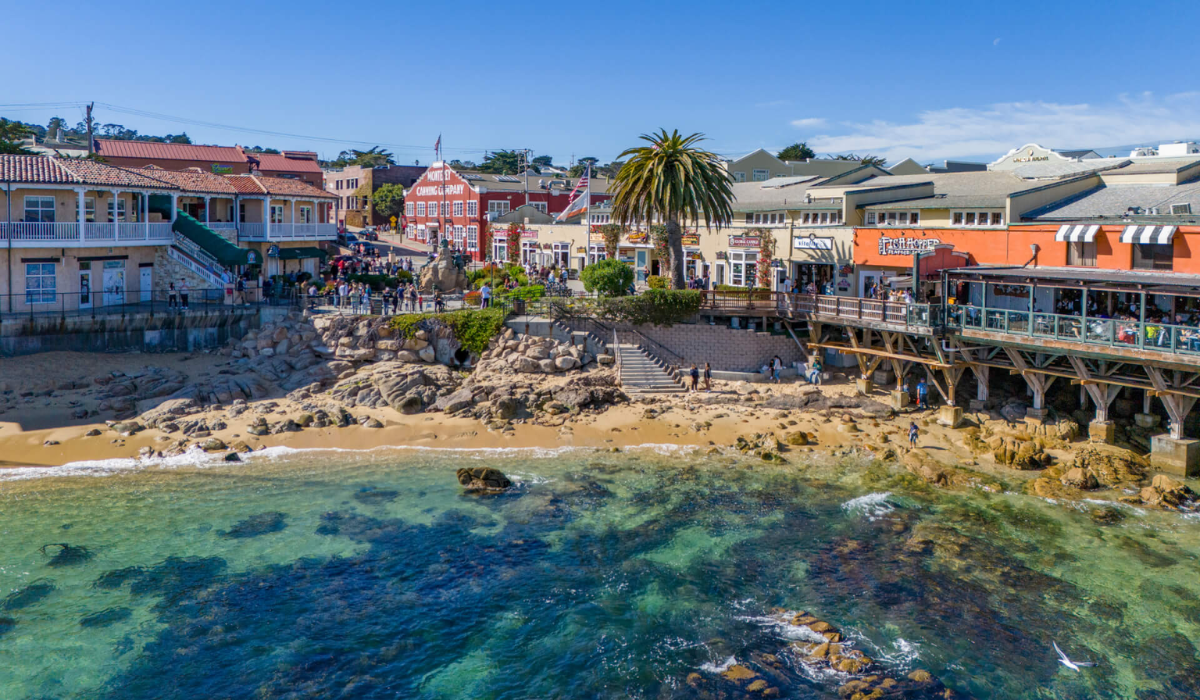
Pebble Beach sits on the Monterey Peninsula, close to Monterey, Carmel-by-the-Sea and Big Sur. The resort is also connected with the famous 17-Mile Drive, which follows the coastline through Del Monte Forest and past landmarks including the Lone Cypress.
For international golfers, this makes it possible to build a trip around golf while still having plenty to do away from the course. Monterey provides restaurants and waterfront attractions, Carmel offers galleries and independent shops, while Big Sur gives the trip a very different coastal landscape.
Pebble Beach is consequently better approached as a golf destination than simply a golf course.
A round at Pebble Beach is expensive, and the planning requirements are more involved than at most public courses. But what makes it distinctive is that the golfer is not simply paying for a famous name.
You are playing a 1919 coastal layout, walking fairways that have hosted seven U.S. Opens by the time the 2027 championship is completed, standing on greens where some of the most important shots in golf history have been played, and finishing beside the Pacific on one of the game’s most recognisable 18th holes.
For a golf traveller building a California itinerary around memorable courses, Pebble Beach is therefore less about checking off a famous name and more about experiencing a place where course architecture, landscape and championship history all happen in the same round.
And that is perhaps the most compelling reason to play Pebble Beach: few golf courses allow an amateur golfer to step directly into such a deep part of the game’s history while still offering a genuinely public tee time.

Community
Pirin Golf & Country Club — A Hidden Gem in the Heart of Bulgaria
Tucked between snow-capped peaks and lush valleys, Pirin Golf & Country Club is more than just a golf destination — it’s a complete alpine resort experience. Set against the dramatic backdrop of the Pirin, Rila, and Rhodope Mountains, this luxurious retreat near the town of Razlog and just a short drive from Bansko, combines championship-level […]

Destinations
Iceland, a true golfing adventure
With 24-hour tee times in the height of summer and fairways alongside lava fields and glacier rivers, Iceland is one of the world’s most adventurous golf experiences. Here’s our quick guide. Despite a population of just over 360,000, Iceland is home to over 60 golf courses. Most of them are concentrated around the capital Reykjavik, […]