


Accessories
Best Push Carts and Electric Trolleys for Golf in 2026
Explore 33,000+ golf courses in 180 countries.
Follow the latest news and trends in golf.
Connect with like-minded golfers.
Find everything you need for your golf equipment and gear needs.
Travel, golf resorts, lifestyle, gear, tour highlights and technology.
All Square
Suggestions
Accessories
Best Push Carts and Electric Trolleys for Golf in 2026
Course Reviews
Rediscover Monte Rei: Portugal’s Iconic Golf Course Reopens After Major Renovation
Course Reviews
Best Golf Courses Around Rome: Where Ancient History Meets Modern Golf
Instruction
Links vs Parkland vs Heathland: What’s the Difference?
Clubs
The Best Irons on the Market in 2026
Clubs
Austin Smotherman WITB: The Clubs Behind His 2026 Bank of Utah Championship Win
Destinations
Barrière Golf Properties: French Golf Escapes Where the Resort Is Part of the Experience
Destinations
Conrad Algarve Renovations: A New Chapter of Luxury in Quinta do Lago
Gear
Garmin Golf Watches Guide: Which Garmin Watch Is Right for Your Game?
PGA Tour
Presidents Cup 2026 Results & Winners: Team USA Completes Historic Comeback
Course Reviews
Cullinan Golf Links Resort, Belek: Where Golf Meets the Mediterranean
Course Reviews
New Opening: Limassol Greens — Cyprus’ New Golf Destination
PGA Tour
Presidents Cup 2026 Preview: Everything to Know Before Medinah
Clubs
Jacob Bridgeman WITB: The Clubs Behind His 2026 Biltmore Championship Victory
Course Reviews
Play Golf at Pebble Beach: What to Know Before You Go
Professional Golf
Solheim Cup Results & Winners 2026: Europe Reclaims the Trophy
Clubs
This Year’s Best Drivers on the Market: A 2026 Buyer’s Guide
Clubs
WITB: Ryan Fox’s Winning Clubs at the 2026 Open Championship
Community
How Modern Golf Courses Conserve Water and Protect Wildlife
PGA Tour
Changes on the PGA Tour from 2028
Course Reviews
Tee Off in Tuscany: Golfing Italy’s Most Picturesque Countryside
Course Reviews
The Best Golf Courses Near Pinehurst That Aren’t Pinehurst No. 2
Course Reviews
The Masterpiece Reawakens: Aronimink 2026
Course Reviews
Your Perfect Trip to The K Club, Ireland
Course Reviews
Streamsong’s Newest Masterpiece: Why Bone Valley Might Be Its Boldest Statement Yet
Clubs
Chris Gotterup WITB 2026: Clubs Used to Win the John Deere Classic
Clubs
WITB: Anthony Kim’s Long-Awaited Return to Glory in Adelaide
Clubs
Kristoffer Reitan’s Winning WITB at the 2026 Truist Championship


The third major of the year returns to one of the most feared addresses in American golf. From June 18 to 21, the 126th U.S. Open will be staged at Shinnecock Hills Golf Club in Southampton, New York, marking the storied Long Island links’ sixth turn hosting the championship and its first since the chaos-tinged 2018 edition won by Brooks Koepka. With Scottie Scheffler chasing history, a deep leaderboard of major champions, and a course capable of humbling anyone who steps onto its exposed, wind-raked fairways, this year’s U.S. Open carries no shortage of storylines. Here’s a full preview built around the questions golf fans are asking most.
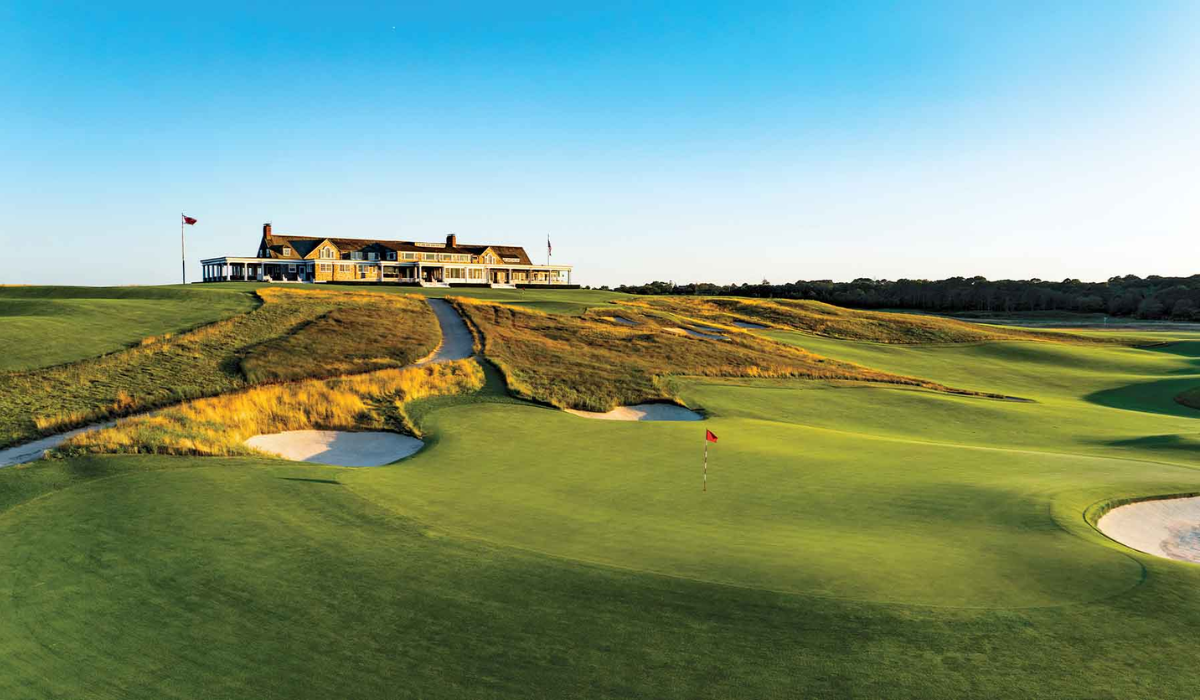
Championship rounds run Thursday through Sunday, June 18–21, with practice rounds open June 15–17. The venue is Shinnecock Hills Golf Club, a private course roughly 90 miles east of Manhattan in the Hamptons. The USGA expects more than 150,000 spectators across the full seven-day week, a reflection of how much pull Shinnecock has with golf fans even decades after its founding.

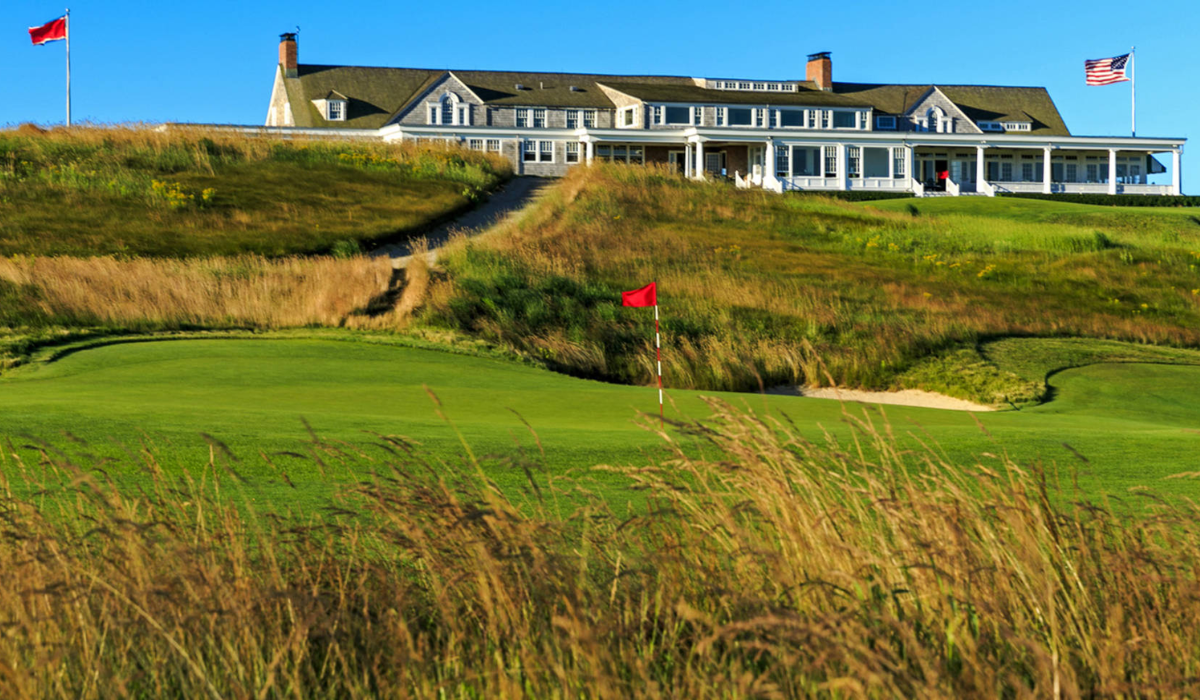
Few American courses can claim a history this layered. Shinnecock opened in 1891 and is recognised as one of the five charter clubs that founded the USGA, with a clubhouse often cited as the oldest in the country. The club hosted just the second U.S. Open ever played, in 1896, when Scottish-born professional James Foulis won at a course measuring a mere 4,423 yards — the shortest in championship history. That tournament also produced one of the sport’s earliest barrier-breaking moments: a 16-year-old named John Shippen Jr., whose father was the pastor at the local Shinnecock Indian Nation church, briefly held the lead before finishing fifth, making him one of the first Americans of colour to compete in a major championship.
After a long gap, the championship returned in 1986, when Raymond Floyd held off the field a full century after Foulis’s win. Corey Pavin claimed his only major title there in 1995, a tournament also remembered for Neal Lancaster’s astonishing final-round 29 on the back nine. In 2004, Retief Goosen edged Phil Mickelson in a tense duel, though the week is better remembered for greens that dried out so severely that several were nearly unplayable. Shinnecock’s most recent visit, in 2018, saw Koepka go back-to-back as U.S. Open champion, while runner-up Tommy Fleetwood closed with a 63 — at the time only the sixth sub-64 round in U.S. Open history. That same week, Mickelson incurred a two-stroke penalty for swatting a moving ball on the 13th green out of pure frustration, a moment that still defines how unforgiving Shinnecock’s putting surfaces can become.
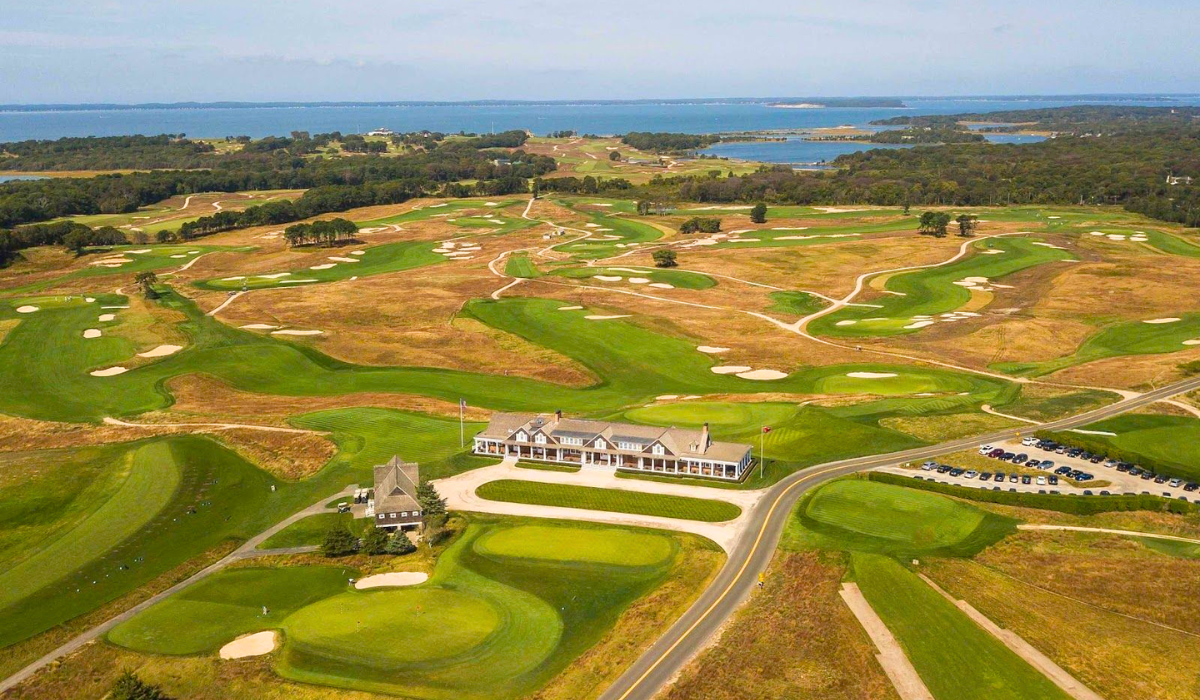
The layout players face this year is the product of William Flynn’s 1931 redesign, built using the natural rolling terrain of eastern Long Island and later restored by architects Bill Coore and Ben Crenshaw ahead of the 2018 championship. That restoration removed hundreds of trees to let prevailing winds back into play and reinstated an alternate fairway option on at least one hole, giving players a genuine strategic choice off the tee rather than a single forced line. The course generally plays to a par of 70 and roughly 7,440 yards, figures that can shift depending on how the USGA chooses to set tees for the week. Golf Digest ranked Shinnecock fourth on its list of America’s 100 Greatest Courses following the restoration, with panellists praising how the removal of trees let the wind become a defining feature again.

World No. 1 Scottie Scheffler heads the betting board at roughly 11/2, and the storyline attached to him is hard to overstate. He has already won the Masters twice (2022 and 2024), the 2025 PGA Championship, and the 2025 Open Championship, leaving the U.S. Open as the only major missing from his resume. A win at Shinnecock would make him just the seventh golfer in history to complete the career Grand Slam, and the timing is almost too neat: the championship concludes on Father’s Day, which also happens to be Scheffler’s 30th birthday.
Right behind him is Rory McIlroy, fresh off back-to-back Masters titles and chasing his first U.S. Open win since 2011, when he won at Congressional. Jon Rahm, the 2021 U.S. Open champion, arrives with momentum after a runner-up finish at this year’s PGA Championship, where Aaron Rai claimed the title. Tommy Fleetwood, Matt Fitzpatrick, Xander Schauffele, Ludvig Åberg, and Cameron Young round out the next tier of contenders on most sportsbooks. Two-time U.S. Open winner Bryson DeChambeau enters with far less buzz than usual after back-to-back missed cuts in this year’s majors, while defending champion J.J. Spaun — who beat the field with a closing birdie at Oakmont last June for his first major title — sits as more of a long shot in his title defence.

Brooks Koepka returns to the scene of his 2018 triumph, hoping to rediscover the form that once made him the sport’s most dominant major-week player. Justin Rose, Justin Thomas, Collin Morikawa, Viktor Hovland, Patrick Reed and Patrick Cantlay all carry enough major pedigree to factor in if Shinnecock’s firm, wind-exposed conditions reward patience over power. And given the course’s history of separating contenders from pretenders by Sunday afternoon, it would be no surprise if someone outside the top tier of odds ends up hoisting the trophy, much like Spaun did a year ago.

The U.S. Open remains the most democratic major in golf. Any professional, along with any amateur carrying a USGA Handicap Index of 0.4 or better, can enter before the spring deadline. This year the USGA accepted 10,201 entries, just one short of the record set ahead of the 2025 championship at Oakmont. The youngest entrant was 13-year-old Niko Ameredes, a two-time Drive, Chip and Putt national finalist, while the oldest was 71-year-old club professional Mike Caporale.
Slightly less than half of the 156-man field arrives through exemption categories tied to world ranking, recent major and PGA Tour performance, and amateur championship results. The rest earn their spot through local qualifying followed by 36-hole Final Qualifying, an event nicknamed Golf’s Longest Day. This year’s final qualifying was spread across ten U.S. sites plus stops in England, Japan and Canada, with sectional rounds played May 18, May 25 and June 8. Among the notable qualifiers were former U.S. Amateur champion Peter Uihlein, who medaled in Texas, and LSU golfer Árni Sveinsson, who won a playoff in Ohio to become the first Icelander ever to qualify for the U.S. Open. Only two players in history have ever won the championship after coming through both local and final qualifying — Ken Venturi in 1964 and Orville Moody in 1969 — though several others, including Steve Jones, Michael Campbell and Lucas Glover, won after advancing solely through Final Qualifying.

The U.S. Open is a straightforward 72-hole stroke-play event. After 36 holes, the field is cut to the low 60 scores and ties, a notably tighter cut than most PGA Tour events. Should two or more players remain tied after the full 72 holes, the championship is decided by a two-hole aggregate playoff held immediately afterward, a format the USGA adopted in 2018 to replace the old next-day 18-hole playoff. Last year’s purse at Oakmont stood at $21.5 million, with Spaun collecting $4.3 million for the win; the USGA typically confirms the 2026 figure during tournament week itself, though a similar number is expected. Beyond the prize money, the champion receives the U.S. Open Championship Trophy, first awarded in 1895 (the original was destroyed in a 1946 fire and later replaced), along with the Jack Nicklaus Medal.

Coverage is split across NBC, USA Network and Peacock. Early rounds on Thursday and Friday begin on USA Network in the morning before handing off to NBC and Peacock in the afternoon and evening, while weekend coverage similarly splits between USA Network for early action and NBC’s broadcast window in the afternoon. Peacock carries extended streaming coverage throughout the week for viewers who want to follow groups beyond the featured broadcast pairings.
If there’s one constant at Shinnecock, it’s wind, and forecasts suggest this year will be no exception. Early outlooks point to highs in the mid-70s to near 80, with gusts potentially reaching 30 mph or more, particularly around the second round. There’s a meaningful chance of rain Thursday, which could soften the famously fast, firm turf that made both the 2004 and 2018 championships so controversial — in 2004, the greens dried out to the point of near-unplayability, and the USGA has been vocal about avoiding a repeat. A bit of overnight moisture combined with wider fairways from the Coore-Crenshaw restoration could make for a fairer, if still demanding, test than Shinnecock has produced in the past.

The USGA anticipates more than 150,000 fans across the full championship week, with grounds-access Gallery tickets available for both practice and championship rounds through usopen.com. USGA Experiences serves as the event’s official ticket and hospitality provider, offering packages that range from single-day grounds passes to weeklong hospitality options with behind-the-scenes access. Given Shinnecock’s location on eastern Long Island, most visiting fans rely on the Long Island Rail Road’s dedicated U.S. Open service, since on-site parking is limited.

Win or lose, this week adds another chapter to one of golf’s most respected venues — and it won’t be the last time Shinnecock takes center stage. The U.S. Open already has a full slate of future hosts confirmed through the 2030s, including Pebble Beach in 2027 and Winged Foot in 2028, with Shinnecock itself booked to return once more in 2036. For now, though, all attention turns to Long Island, where a course that has tested legends since the 1890s prepares to do it again.
Bud Cauley WITB 2026: The Clubs Behind His RBC Canadian Open Victory

Course Reviews
Tropical Golf Getaway
Tee off in the tropics alongside palm-fringed beaches and the ocean at these dazzling golf courses in Hawaii, Thailand, Indonesia, Fiji and Mexico. Kapalua Plantation Course – Hawaii Kapalua Resort is nestled in one of Hawaii’s largest nature preserves on the island of Maui, and features two 18-hole golf courses, white sandy beaches and award-winning […]

Course Reviews
A Golf Trip to the Scottish Highlands
There are golf destinations, and then there is the Scottish Highlands. Few places on earth demand a golfer’s attention quite so insistently — not merely for the courses, which are extraordinary, but for the overwhelming sense that here, the game has always been exactly as it should be: played on natural terrain, beneath wide skies, […]